




English Silver Plated Centrepiece
An English silver plated centrepiece anchors a dining table with monumental presence, combining reflective metal with cut glass for dramatic focal displays.
English Silver Plated Centrepiece
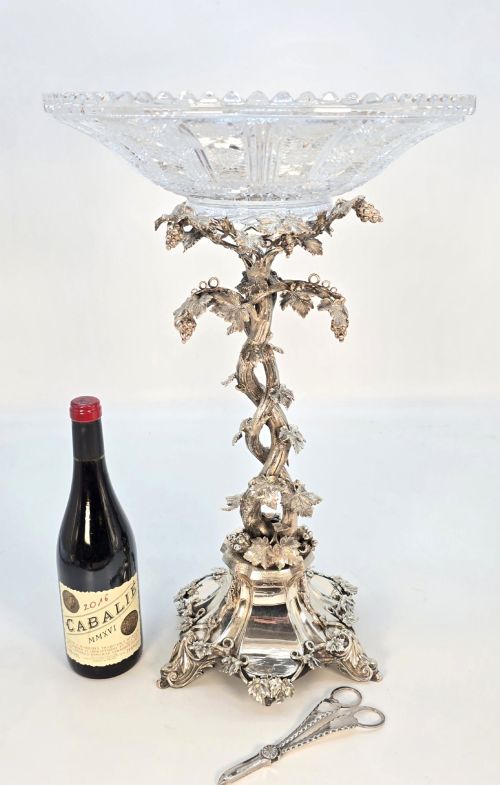
When you search for an english silver plated centrepiece, you encounter large tableaus designed to hold fruit, flowers, or illumination. The most common forms on this page include towering tiered dishes, presentation bowls, and candelabras that dominate the centre of a dining arrangement.
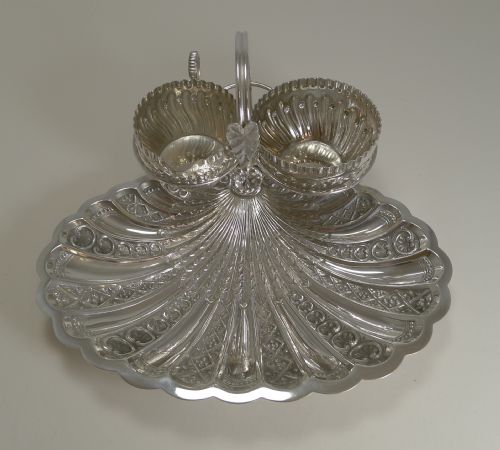
The objects span from the Regency period through Victorian and Edwardian eras up to the mid twentieth century. Alongside traditional table centrepieces, the selection incorporates related serveware such as asparagus serving dishes, wine coolers, and novelty spoon warmers.
Makers and styles draw heavily on Neoclassical Revival and Victorian Aesthetic Movement design principles. These pieces range from nautical themed showpieces to simpler double heart shaped dishes and cut crystal baskets.
Materials and construction
Makers built these objects using a base metal coated in silver, alongside EPNS, copper, and structural elements of wood and stone. Early examples utilise Old Sheffield Plate techniques, while later pieces rely on electroplating over white metal alloys.
Vessels and baskets incorporate heavy cut glass and cut crystal inserts that slot securely into plated mounts. Cast and chased details bring grape vines, nautical motifs, and campana shapes to life across the metal surfaces.
A novelty shoe shaped spoon warmer reminds us that Victorian dining tables frequently indulged in playful whimsy.
Evaluating craftsmanship and condition
Quality rests in the crispness of the chased decoration and the depth of the silver deposition over the base metal. Superior examples maintain intact plating without thinning, and retain their original heavy cut crystal or glass inserts rather than modern replacements.
Proportion and weight separate standard production items from grand exhibition pieces. Substantial gauge metal and intricate cast components indicate superior manufacture by established silversmiths.
Barker Ellis·Mappin and Webb·Roberts and Belk
The English Silver Plated Centrepiece Glossary
- Old Sheffield Plate
- A method of fusing a thin sheet of silver to a thicker copper core by heat and pressure. This technique precedes modern electroplating and produces a warm tone where the underlying copper occasionally telegraphs through.
- EPNS
- Electroplated Nickel Silver. A common base material introduced in the nineteenth century that uses an electric current to bond a coating of pure silver to a nickel brass alloy.
- Campana
- A vase shape resembling an inverted bell, widely used in Regency and Victorian wine coolers and urns. It provides stability and balance for heavy vessels filled with ice or wine.
- Chasing
- A metalsmithing technique where the artisan punches and hammers the metal from the front to raise decorative motifs in relief. This creates the textural grape vines and scrollwork seen on quality mounts.
- Cut Glass
- Glass decorated by grinding facets and patterns into the surface using wheels. It adds brilliance and weight to centrepiece bowls and baskets.
English Silver Plated Centrepiece: Frequently Asked Questions
Are cut glass inserts usually original?
Many surviving pieces retain their heavy cut crystal or glass bowls, which were custom-ground to fit the specific metal frame. Replacements are common due to breakage over decades of use.
Examine the rim and base of the glass for matching wear patterns and thickness that align with the age of the silver plated mount.
How were these centrepieces used?
Victorian and Edwardian hosts placed these large vessels in the middle of the dining table to serve fruit, sweetmeats, or floral displays. They acted as conversation pieces and symbols of hospitality during formal dinners.
Candelabras and candle sticks integrated into the table scheme provided ambient lighting alongside the reflective qualities of the silver and cut glass.
What is the difference between Old Sheffield Plate and EPNS?
Old Sheffield Plate involves mechanically fusing silver and copper sheets together before shaping the object. This older technique often reveals a faint reddish copper hue along exposed edges.
EPNS uses an electrical bath to deposit silver onto a nickel alloy base, a process that became standard from the mid nineteenth century onward and yields a more uniform white metal appearance.