




Porcelain Shell Dish
These porcelain shell dish examples bring marine form into ceramics, offering a decorative surface shaped by nature for display and service.
Porcelain Shell Dish
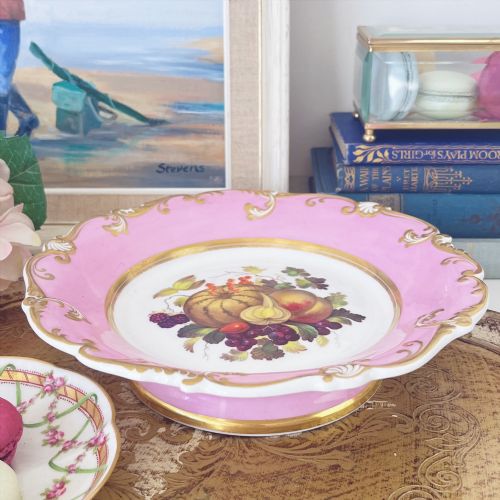
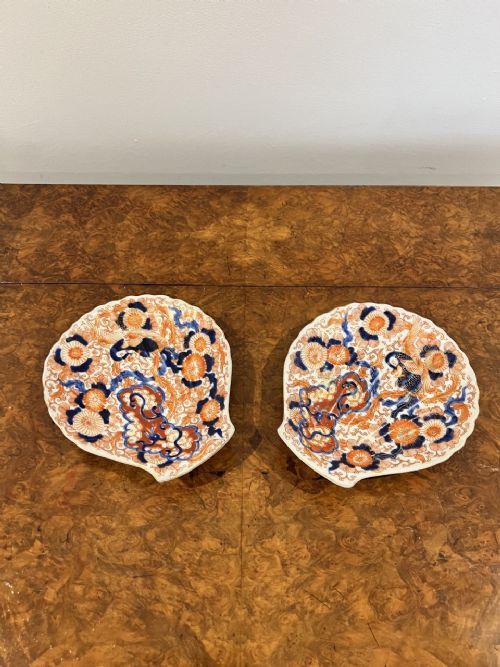
A porcelain shell dish takes the natural contours of sea shells, such as scallops, clams, and whelks, and translates them into ceramic vessels. This selection includes pieces from the eighteenth and nineteenth centuries, spanning Georgian, Regency, Victorian, and Edwardian eras, alongside Japanese Imari and Edo Period examples.
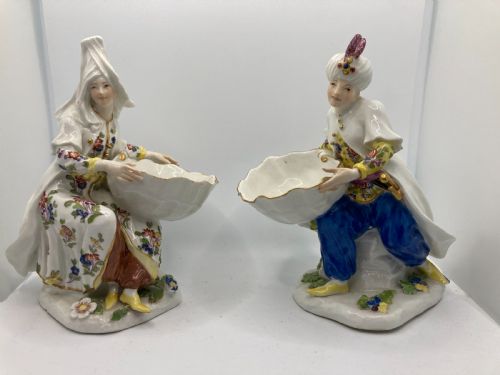
The domestic forms range from pickle dishes and sweetmeat stands to dessert plates and large centrepieces. British factories such as Worcester, Derby, Coalport, and H & R Daniel appear frequently, alongside continental manufactories and Japanese export pieces.
Buyers encounter these in various configurations, from single cabinet pieces to matched pairs intended for formal table service. Their maritime shapes make them distinct from standard circular or square ceramic plates.
Judging Quality
Quality rests upon the crispness of the moulding and the fidelity with which the ceramic captures organic shell structures. Sharp fluting and well-defined edges separate superior vessels from softer, less detailed castings.
The precision and hand of the painting dictate the upper tier of these works, particularly on eighteenth-century Worcester or Derby surfaces. Finer items exhibit careful brushwork in floral sprays and intricate Imari patterns rather than mechanical uniformity.
The application and survival of gilding and enamel colours influence the overall standing of a piece. Intact gold leaf and vibrant, stable enamels indicate careful preservation and superior original manufacture.
Porcelain Shell Dish Retail Price Guide 2026
Typical asking prices for porcelain shell dish among the pieces listed under this phrase on Sellingantiques today, from the lower quarter to the upper quarter. They describe what is for sale here now, not the wider market.
Listings feature eighteenth-century soft-paste porcelain alongside nineteenth-century hard-paste bodies and twentieth-century figural centrepieces.
Barr Flight and Barr·Royal Dux·H and R Daniel·Chamberlain Worcester·Meissen·Old Derby·Coalport·Ridgway
The Porcelain Shell Dish Glossary
- Soft-paste porcelain
- An artificial porcelain composition fired at lower temperatures than hard-paste, common in eighteenth-century British factories. It yields a warm, slightly softer glaze texture.
- Sweetmeat stand
- A small tiered or pedestal vessel designed for serving confectionery, nuts, or small delicacies at a formal dessert course. Many utilise shell motifs to hold the sweetmeats.
- Kakiemon style
- A Japanese decorative scheme featuring asymmetric arrangements, fine enamel colours, and motifs such as quails and flowering branches. European factories frequently copied these palettes on shell plates.
- Comport
- A raised vessel or tazza used for presenting fruit or sweet dishes on the dining table. They often stand upon a short foot or pedestal base.
- Gilding
- The application of gold leaf or powdered gold to ceramic surfaces, typically along rims and moulded details. It enhances the decorative presence of the dish.
- Pickle dish
- A small, shallow vessel intended for serving pickles or relishes during formal meals. Scallop shell shapes were a favoured form for these functional items.
Porcelain Shell Dish: Frequently Asked Questions
How were shell dishes used originally?
These dishes served distinct functions at the dining table, ranging from holding small portions of pickles or sweetmeats to presenting fruit on raised comports. Their decorative forms allowed them to function both as utilitarian tableware and as ornamental centrepieces.
In grand dining settings, matched pairs or sets arranged on tables added variety to the geometric layout of the service. Over time, many transitioned from active dining use to cabinet display.
How do I identify First Period Worcester?
First Period Worcester pieces date from the eighteenth century and typically feature fine soft-paste bodies with characteristic underglaze blue painting, enamel decoration, or early gilding. Look for crescent marks, square seal marks, or finely painted motifs such as the two-peony rock bird.
The potting tends to be delicate, capturing the natural ribs of scallop and clam shapes with precision. The glaze often shows slight pooling or characteristic specking typical of early British manufacturing.
What is the difference between Imari and Kakiemon?
Japanese Imari ceramics generally combine underglaze blue with iron red and gilt, creating a rich and dense decorative surface. The patterns often feature brocade designs and complex panels.
Kakiemon porcelain employs a more restrained palette with asymmetric compositions, featuring soft iron red, yellow, blue, and turquoise enamels. Both styles were extensively copied by European factories on shell-shaped blanks.
How should I care for antique porcelain?
Display these items away from direct sunlight to protect handpainted enamels and delicate gilt highlights from fading. Hand wash them gently in lukewarm water using mild soap when necessary, avoiding dishwashers entirely.
Ensure that pieces with footed bases or delicate handles rest on stable, vibration-free surfaces. Avoid stacking them directly to prevent friction damage to the glazed and gilded rims.