
English Porcelain Dish
An English porcelain dish brings hand-painted botanicals, moulded shell forms, and historic factory heritage straight to the table.

English porcelain dish
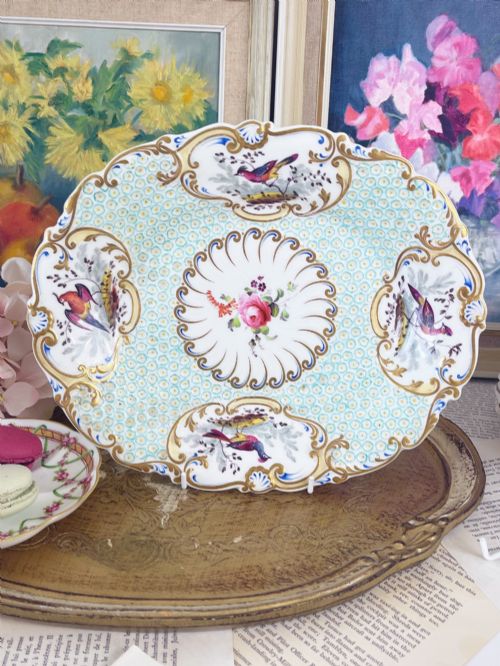
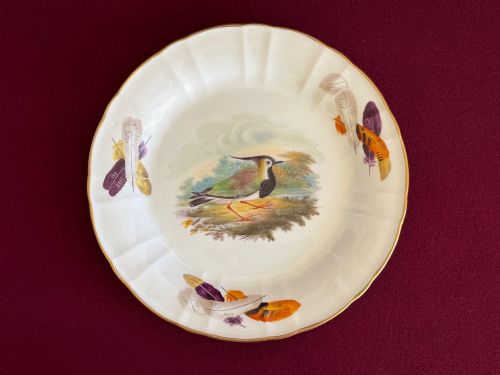
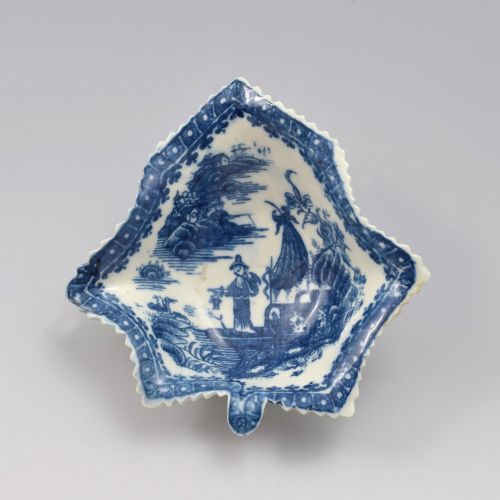
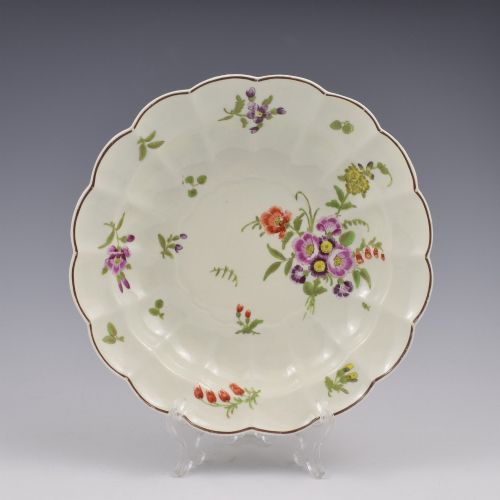
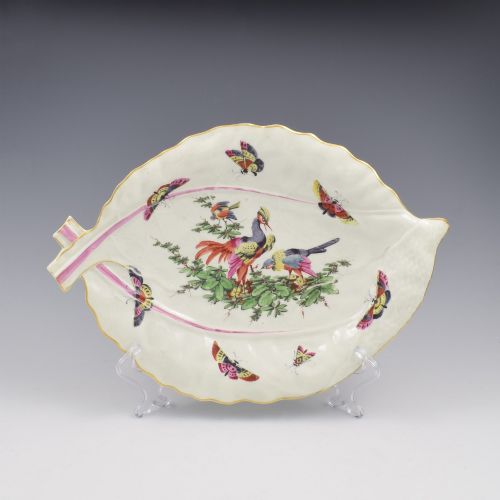
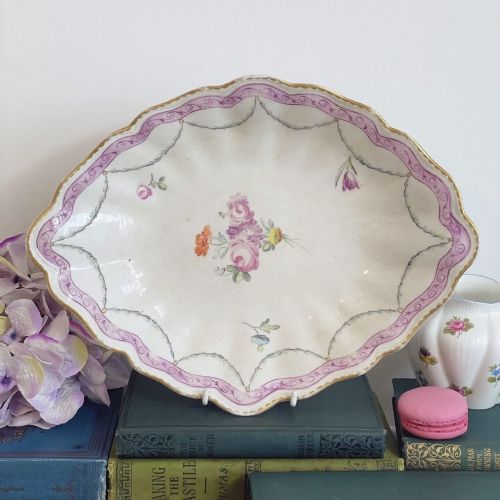
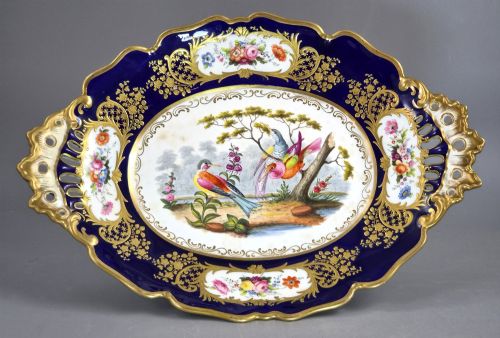
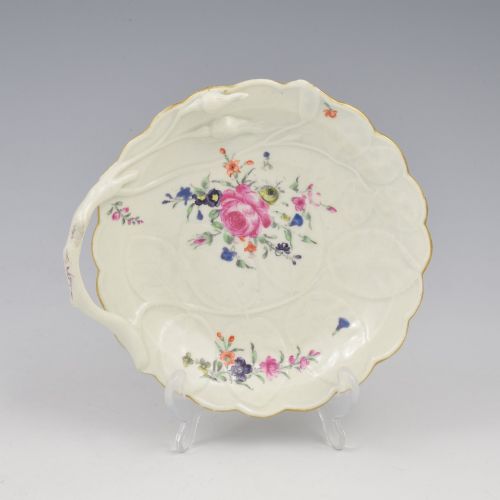
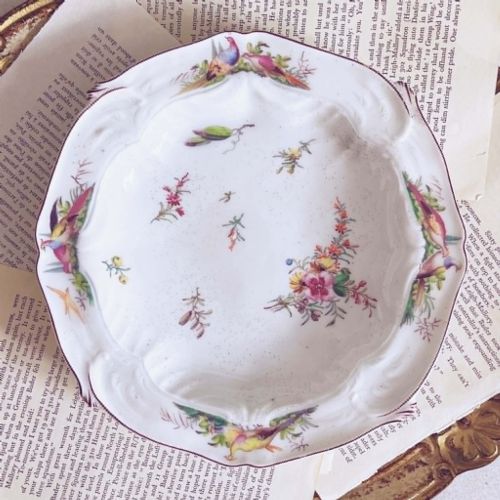
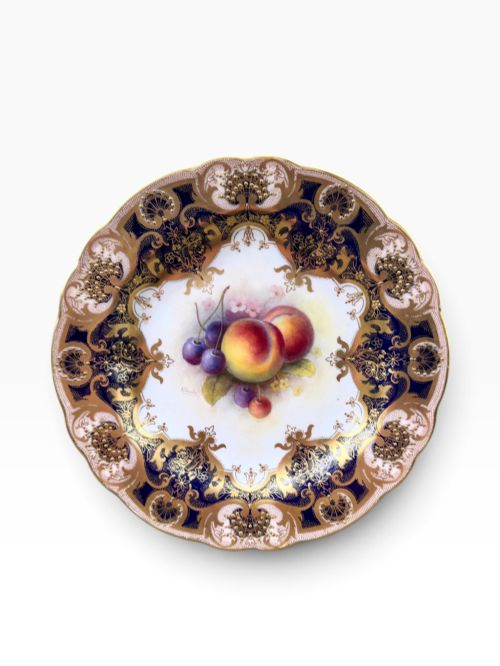
An English porcelain dish encompasses decorative plates, serving vessels, and baskets produced across the Georgian, Regency, Victorian, and Edwardian eras. These pieces range from cabinet specimens painted with orchids to twin-handled serving vessels and shell-moulded dessert dishes.
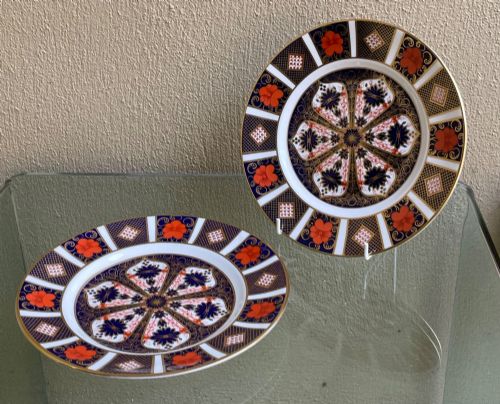
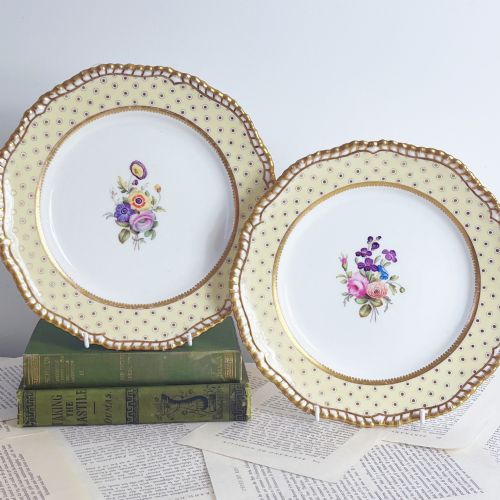
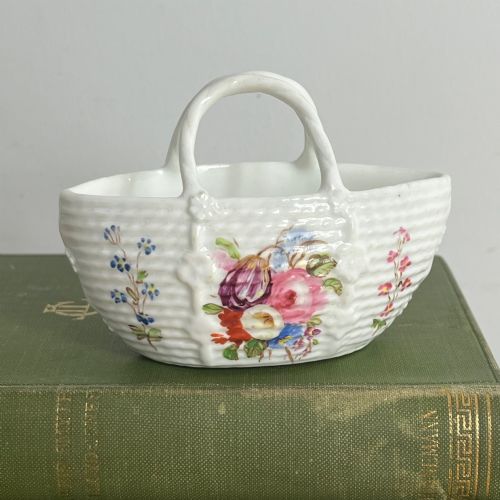
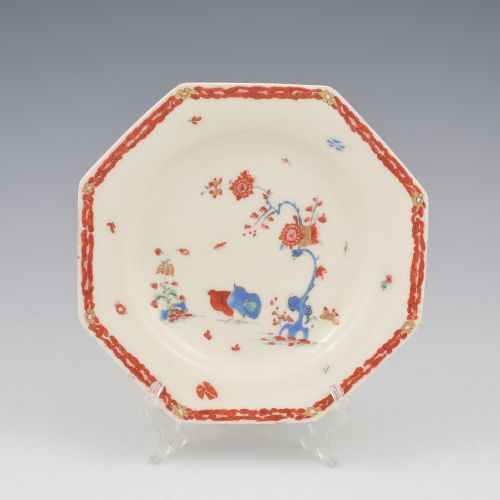
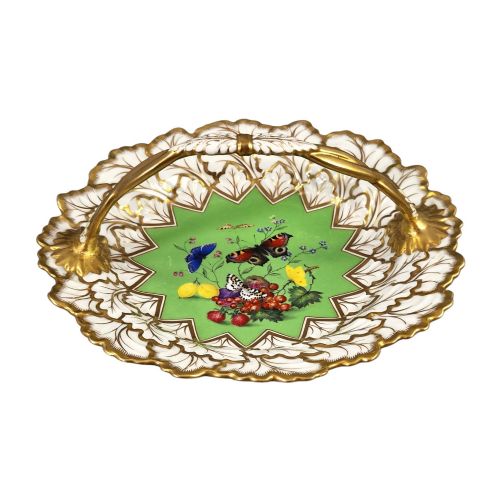
The selections encountered here span the early nineteenth century up to the early twentieth century, showing a clear lineage of domestic utility and display. Forms vary from botanical plates featuring hyacinths to Kakiemon-patterned shell plates and pierced baskets.
Origins trace directly to notable domestic factories such as Worcester, Derby, and Ridgway, alongside probable Spode and Royal Doulton productions. Buyers find both individual serving dishes and cabinet pieces designed for visual impact rather than heavy everyday dining.
How they were made
Production relies upon fine porcelain and bone china bodies, shaped through moulding or throwing to create specialised forms like acanthus-moulded lilac shells and pierced baskets. Potters applied detailed hand-painted enamel decoration depicting natural subjects such as butterflies, birds, and flowers.
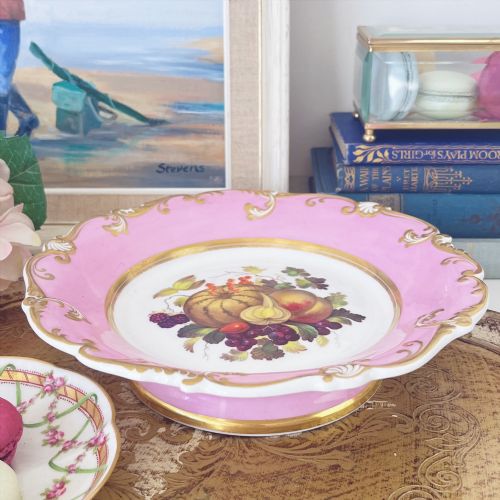
Decoration frequently incorporates gold leaf and gilt highlights to frame painted scenes and borders. Firing techniques fixed these enamels and gilding securely to the white ceramic ground, resulting in durable finishes that survived across centuries.
Retail Price Guide 2026
Typical UK retail prices for english porcelain dish, calculated from the Sellingantiques database of over a million retail prices indexed since 2003. This retail price guide relies exclusively on Sellingantiques data; no external sources or auction records are used, so the figures do not describe the wider market.
What varies in quality
Quality rests upon the precision of the hand-painting and the sophistication of the moulding, particularly in botanical subjects like orchids and hyacinths where fine brushwork defines botanical accuracy. The crispness of relief elements, such as acanthus leaves on shell dessert dishes, distinguishes superior output from simpler wares.
The application of gold leaf and gilt work creates another tier of distinction, where careful burnishing provides rich contrast against the porcelain body. Rarity of specific factory marks, such as Chamberlain's Worcester or Barr, Flight & Barr, elevates certain examples above unmarked or attributed pieces.
David Dewsberry·Chamberlain’s Worcester·Derby·Barr, Flight & Barr Worcester·Chamberlain Worcester·Ridgway·Spode
The English Porcelain Dish Glossary
- Bone china
- A type of porcelain incorporating bone ash, developed to create a durable, brilliantly white ceramic body used extensively for English tableware.
- Enamel
- Opaque vitreous composition applied in liquid form over the glaze and fired to create colourful painted motifs.
- Gilt
- A thin layer of gold applied to ceramic surfaces for decoration, often highlighting rims, handles, and moulded details.
- Kakiemon
- A style of Japanese enamelling featuring asymmetrical floral and bird motifs, widely adopted by English porcelain factories in the eighteenth and nineteenth centuries.
- Shell plate
- A serving dish moulded in the natural shape of a scallop or similar shell, popular for dessert services during the Georgian and Regency periods.
Frequently Asked Questions
What are these dishes?
These are historic ceramic table and display vessels produced by English factories across the Georgian, Victorian, and Edwardian eras. They include serving pieces, dessert plates, and decorative baskets.
They reflect the artistic styles of their respective periods, ranging from classical Regency shell moulding to late Victorian cabinet painting.
How were they used?
Historic owners utilised these dishes for serving desserts, fruits, and small sweetmeats during formal meals, or displayed them in cabinets.
Botanical and pictorial pieces served as conversation pieces for guests, showcasing the homeowner's refined taste and appreciation for natural history.
How do I live with them?
These pieces integrate easily into modern interiors as wall displays, cabinet centerpieces, or decorative accents on sideboards.
Hand washing in warm water preserves the historic enamels and gilt highlights, ensuring these fragile ceramics remain stable for daily viewing.
How do I tell periods apart?
Stylistic clues such as Regency shell moulding, early nineteenth-century botanical painting, and Edwardian cabinet piece signatures help assign dates.
Factory marks, body weights, and enamel palettes also provide direct evidence for distinguishing Georgian items from later Victorian productions.