






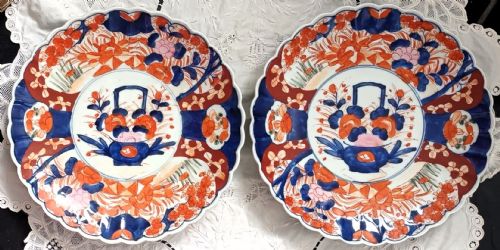
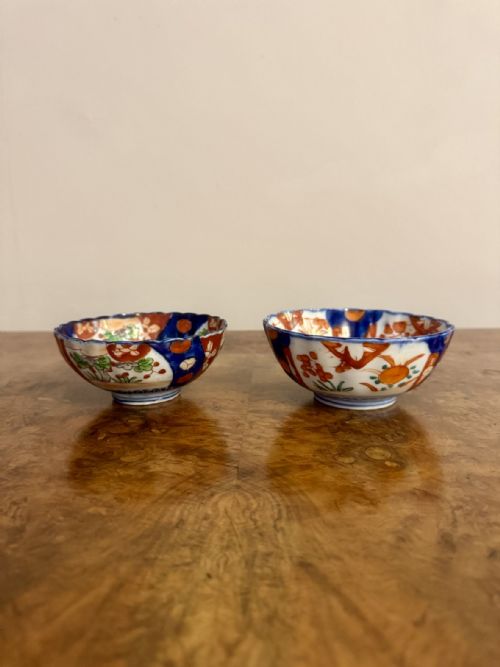
Scalloped Porcelain Dish
A scalloped porcelain dish brings shaped edges and hand-painted detail to a table, offering a decorative form seen across various centuries and origins.
Scalloped Porcelain Dish
A scalloped porcelain dish combines utility with a shaped, indented rim that defines the outline of the piece. When searching this phrase, a buyer encounters forms ranging from shallow bowls and dessert dishes to large chargers and decorative plates.
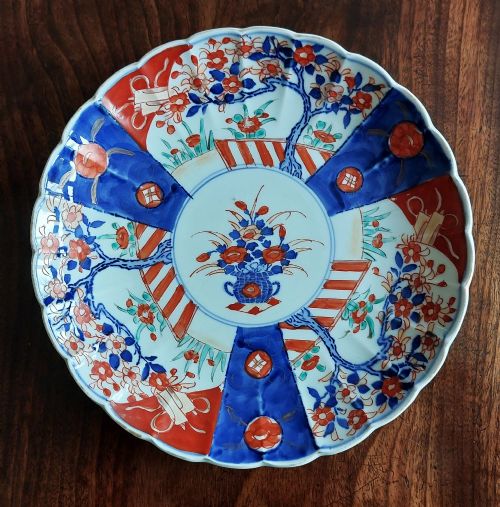
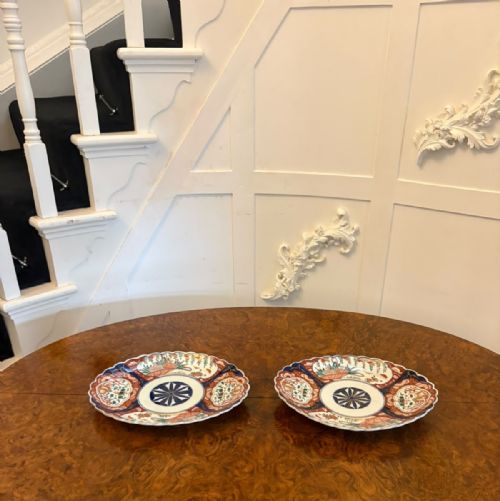
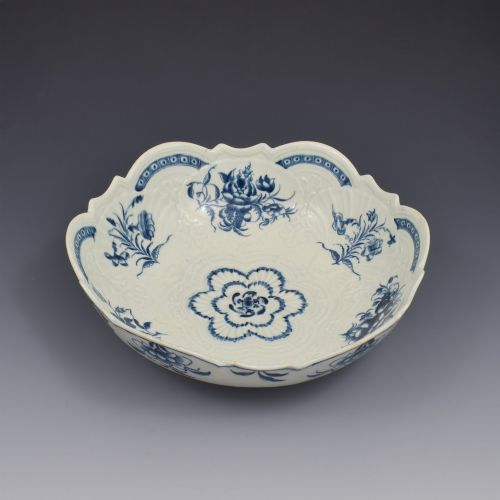
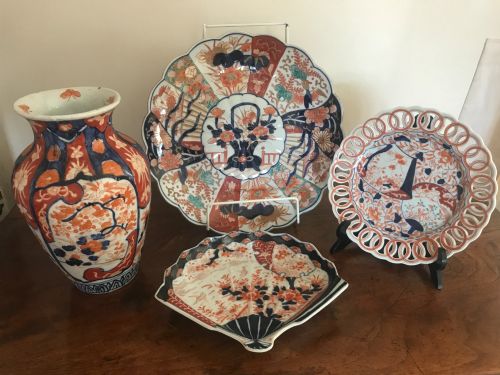
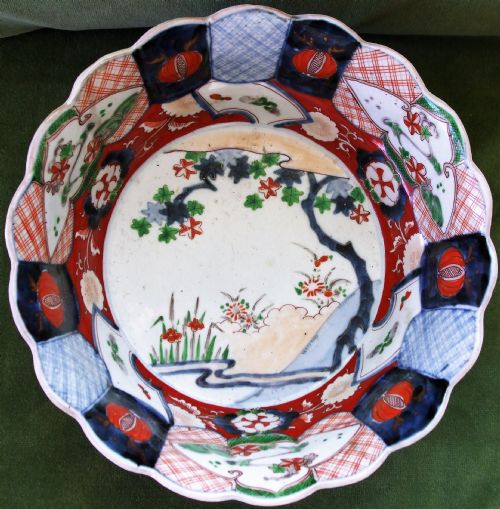
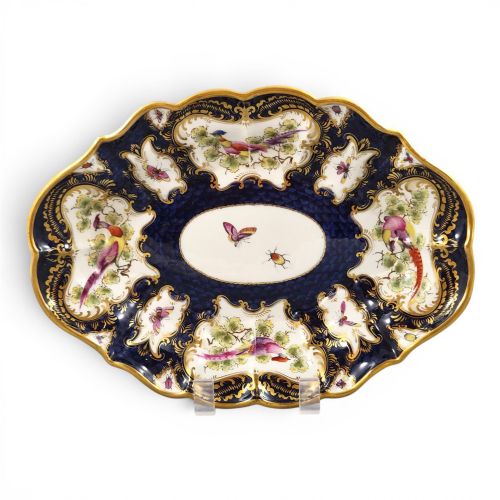
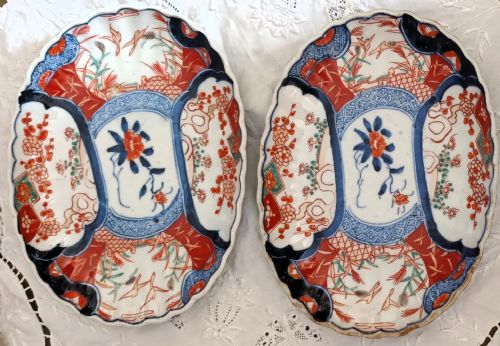
The pieces appearing on this page span several distinct periods, with a strong representation of Japanese Imari from the nineteenth century and the Meiji period alongside eighteenth-century English soft-paste porcelain.
Makers and origins vary from Japanese export kilns to historic English factories such as Worcester, producing items intended for display, dessert service, or table use.
How they were made
Production relies upon ceramic bodies including porcelain and soft-paste porcelain, shaped by hand or moulded to create the characteristic wavy or lobed rims. Artisans then applied underglaze blue, enamel colours, and gilding or gold leaf before firing.
Japanese Imari examples utilise hand-painted cobalt blue and iron red combined with gilt highlights, while English factories such as Worcester employ blue and white transfer printing or hand-painted floral and bird designs beneath a clear glaze.
Scalloped Porcelain Dish Retail Price Guide 2026
Typical asking prices for scalloped porcelain dish among the pieces listed under this phrase on Sellingantiques today, from the lower quarter to the upper quarter. They describe what is for sale here now, not the wider market.
Several dishes depict the Seven Lucky Gods sharing space with exotic birds on scalloped porcelain.
What varies in quality
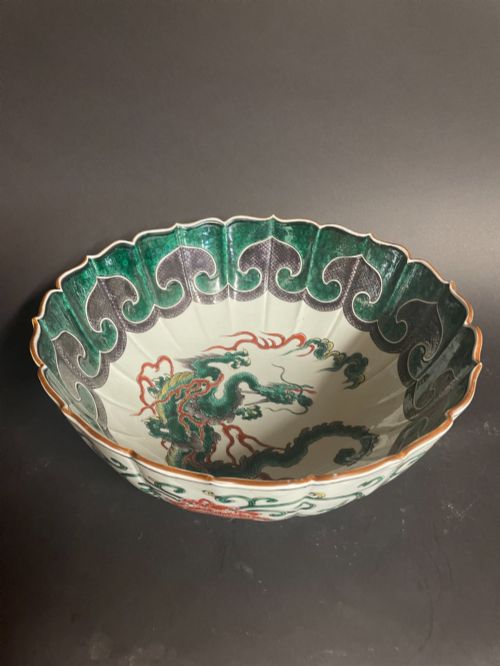
Quality rests upon the crispness of the moulded or shaped edge and the precision of the hand-painted brushwork. Pieces with finely delineated botanical or figural motifs show superior control compared to simpler production ware.
The preservation of the enamel colours and gilding directly influences the visual strength of the object, as surface wear on gold leaf or painted iron red diminishes the definition of the design.
Royal Worcester·Rockingham Pottery·Barr Flight And Barr·Meissen
The Scalloped Porcelain Dish Glossary
- Imari
- A style of Japanese porcelain decorated in underglaze blue, iron red, and gilt. This palette became prominent during the Edo period and remained popular for export throughout the Meiji period.
- Soft-paste porcelain
- A ceramic material composed of clay and glass frit used by European factories before the discovery of true hard-paste porcelain. It produces a warm texture beneath the glaze.
- Charger
- A large decorative plate or dish intended primarily for display on a sideboard or wall rather than for active dining service.
- Glaze
- A glassy coating fused to the ceramic body by firing, which seals the porous clay and provides a smooth, protective finish.
Scalloped Porcelain Dish: Frequently Asked Questions
What is a scalloped porcelain dish used for?
These items functioned historically as dessert dishes, pickle dishes, or decorative chargers for display on tables and sideboards. Their shaped rims added visual texture to formal dining settings.
Today, collectors use them primarily for display, wall hanging, or holding small items while appreciating their historic manufacture.
How do I identify Japanese Imari pieces?
Japanese Imari pieces typically feature a distinct palette of cobalt blue, iron red, and gold leaf on a porcelain body. The designs frequently incorporate floral motifs, exotic birds, or figures.
Most examples seen on this page date from the nineteenth century and the Meiji period, reflecting traditional export production.
What is the difference between a plate and a charger?
A charger is substantially larger than a standard dining plate, designed specifically as a centrepiece or decorative wall dish. They provide a wider canvas for detailed hand-painted scenes.
Plates and dessert dishes remain smaller and were historically utilised for serving specific courses at the table.
How can I tell eighteenth century English porcelain apart?
Eighteenth-century English pieces, such as those from Worcester, often utilise soft-paste porcelain and feature blue and white floral or bird patterns. Examination of the base often reveals characteristic unglazed foot rims or early factory marks.
These pieces show distinct hand-painted brushwork and glaze variations unique to early European ceramic experimentation.