



Blue White Imari Plate
A blue white imari plate brings together bold cobalt pigments and porcelain forms, offering a decorative surface that collectors seek for dining rooms and display cabinets.
Blue White Imari Plate
The assortment spans traditional Japanese Arita production, Meiji period items, and eighteenth-century examples alongside Victorian English ceramic equivalents like ironstone meatplatters. These pieces function as decorative plates, chargers, and display dishes suited for wall mounting or cabinet presentation.
How They Were Made
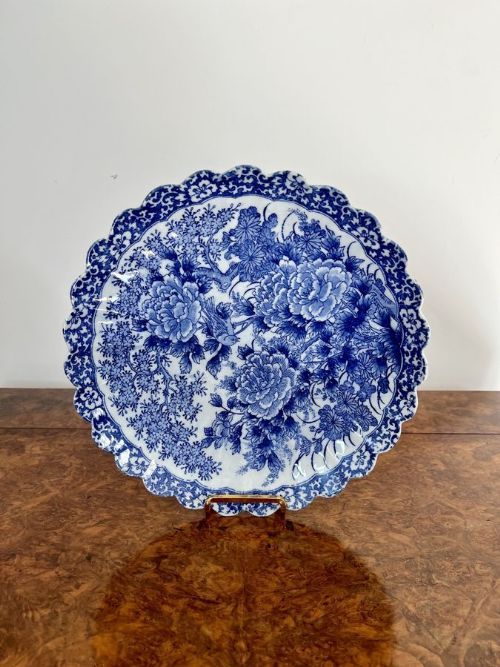
Potters shaped porcelain, ceramic, and ironstone bodies by hand or mould before applying cobalt underglaze pigments to create intricate scrolling foliate borders and central motifs. Selected pieces incorporate additional surface enrichment through enamel painting and gold leaf details fused during subsequent kiln firings.
The glazing technique uses cobalt glaze to achieve deep blue tones beneath a transparent vitreous coating, ensuring durability across large chargers and serving platters alike.
Listings feature porcelain, ceramic, and ironstone materials decorated with cobalt glaze, enamel, and gold leaf.
What Varies in Quality
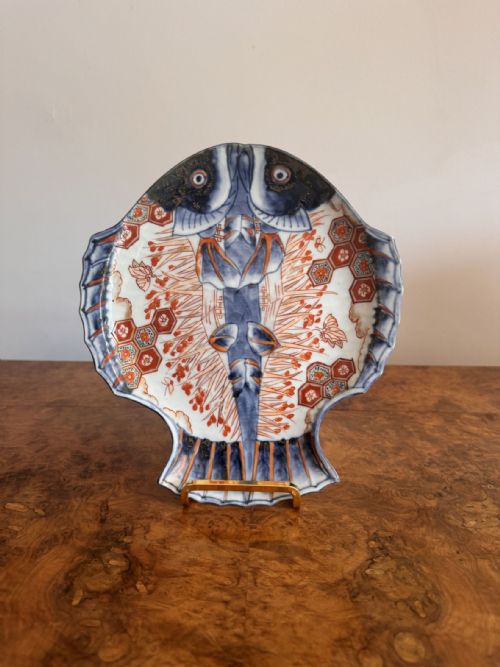
Quality rests upon the precision of the hand-painted cobalt underglaze work and the complexity of the porcelain form, with standard round dishes sitting below unusual moulded shapes such as fish and shell profiles. Crispness in scrolling foliate borders and the depth of the glaze separate ordinary production wares from exceptional chargers.
The presence of supplementary enamel work and gold leaf details elevates certain pieces, whilst the weight and clarity of the ceramic body dictate the overall standard of the object.
John Ridgway·Minton·Mason
The Blue White Imari Plate Glossary
- Imari
- A style of ceramic originating in Japan and exported widely, traditionally recognised by its palette of cobalt blue and iron red alongside gold highlights. Collectors value these for their vibrant decorative schemes.
- Charger
- A large decorative plate or platter utilised historically for service or display rather than standard dining use. These substantial pieces often form the centrepiece of a collection.
- Arita
- The Japanese town and surrounding region renowned as the birthplace of Japanese porcelain production. Kilns here produced the fine blue and white wares seen in this collection.
- Underglaze
- A decoration method where pigments are applied to the raw ceramic body before the glaze and firing process. This technique protects the painted design beneath a glassy protective layer.
- Ironstone
- A heavy, durable type of earthenware patented in the nineteenth century as a robust alternative to porcelain. English potteries used it extensively for large serving platters and meat dishes.
Blue White Imari Plate: Frequently Asked Questions
Were these plates used for dining?
Larger chargers and platters served primarily for ceremonial presentation or meat service during grand meals rather than daily dining. Smaller dishes functioned both at the table and as decorative interior elements.
Over time, collectors shifted many of these items toward wall display and cabinet presentation to protect their hand-painted surfaces from cutlery wear.
How do I identify Japanese Arita ware?
Arita pieces typically display fine porcelain bodies with cobalt underglaze painting depicting traditional landscapes, flora, or scrolling foliate borders. The weight and crispness of the blue pigment offer key indicators of origin.
Many examples date from the Meiji period or earlier Edo traditions, showing distinct stylistic traits in their hand-painted motifs.
What is the difference between an imari plate and a charger?
A standard plate is sized for individual service or moderate display, whereas a charger measures significantly larger, often exceeding thirty centimetres in diameter. Chargers were designed to command visual attention on large sideboards or walls.
Both share the characteristic blue and white palette, but chargers usually feature more complex border patterns and central designs.
How should I clean my antique ceramic plate?
Dusting gently with a dry, soft cloth remains the safest maintenance method for antique porcelain and ironstone pieces. Avoid harsh chemical cleaners or submerging items with delicate gold leaf details in water.
Professional display stands help support heavier chargers securely without putting undue stress on the ceramic body.