





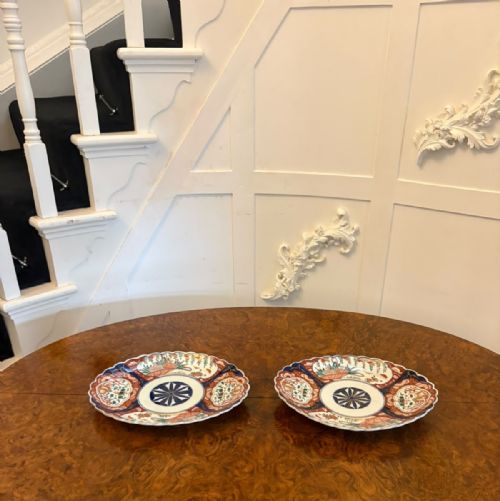
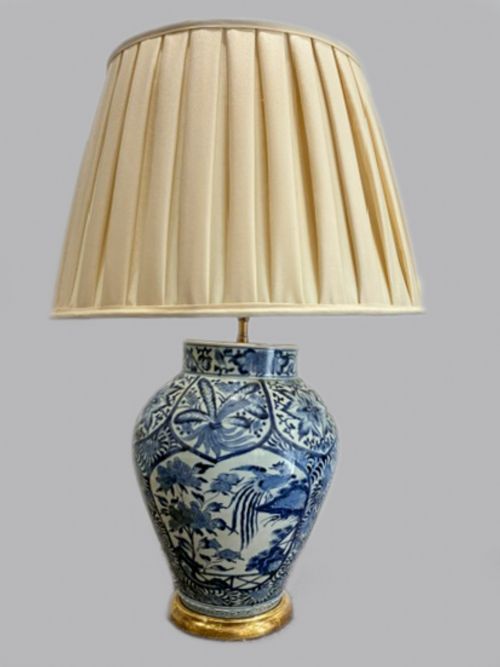

Hand Painted Imari Porcelain
Hand painted imari porcelain brings together rich iron-red and cobalt-blue palettes on robust ceramic bodies, prized for dense patterns that catch the eye from across a room.
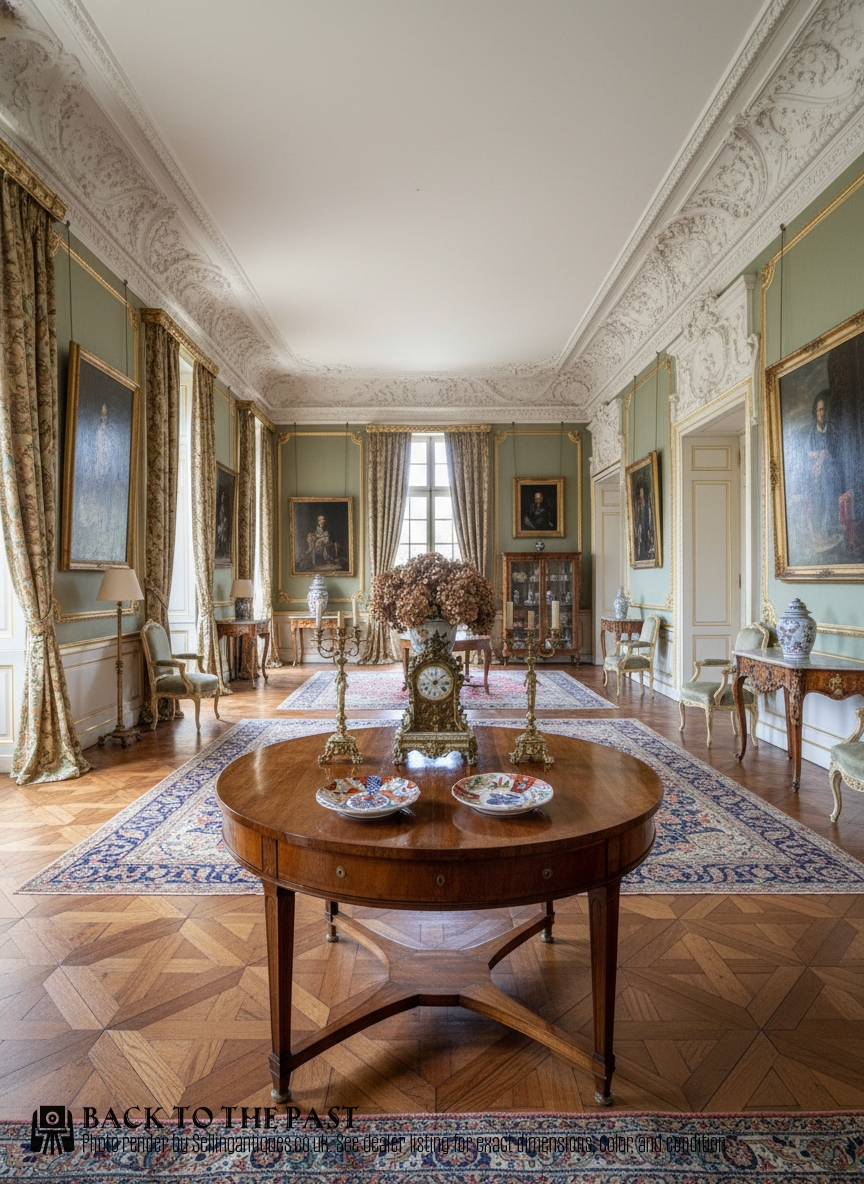
Hand Painted Imari Porcelain
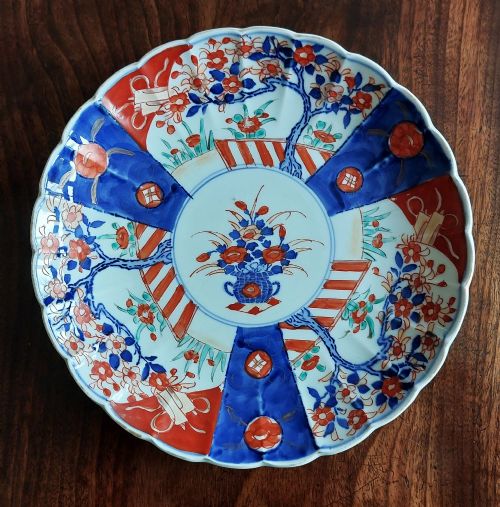
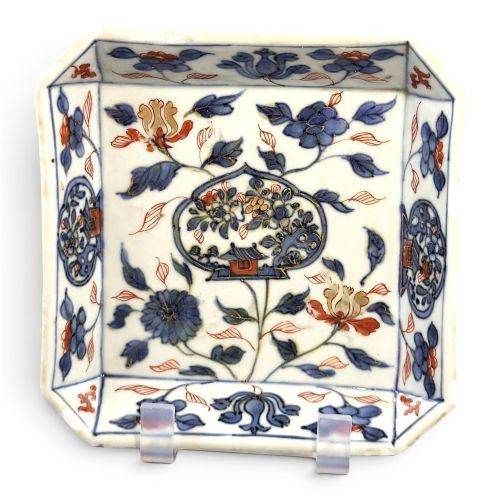
Hand painted imari porcelain encompasses decorative plates, chargers, bowls, and large floor vases spanning from the late seventeenth century through the twentieth century. These pieces predominantly originate from Japanese kilns in Arita during the Edo and Meiji periods, alongside Chinese export works and nineteenth-century English interpretations.
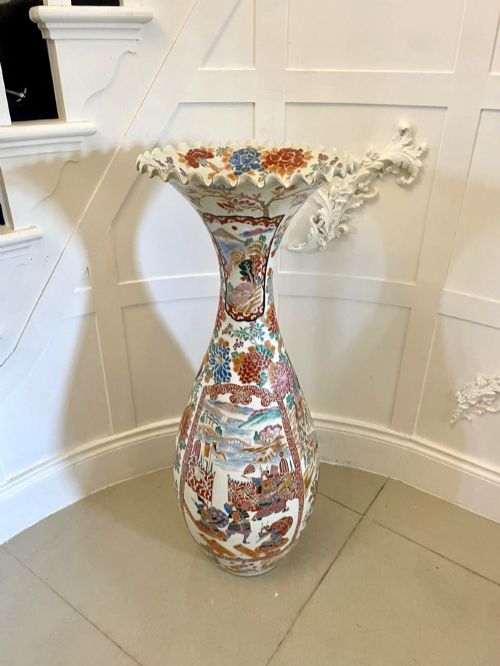
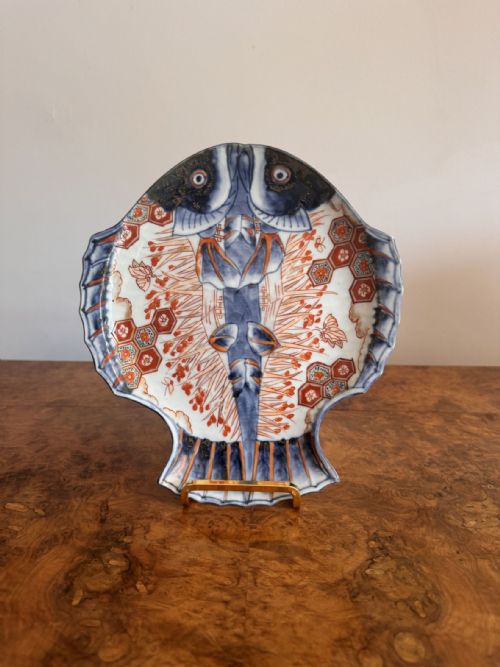
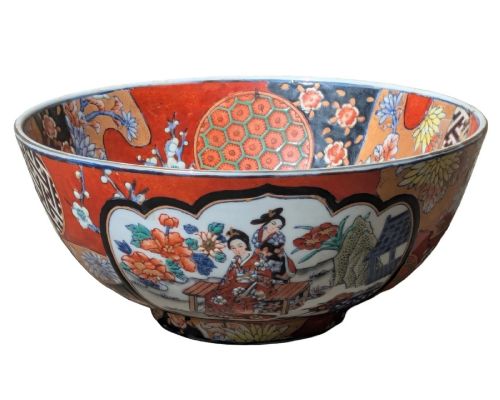
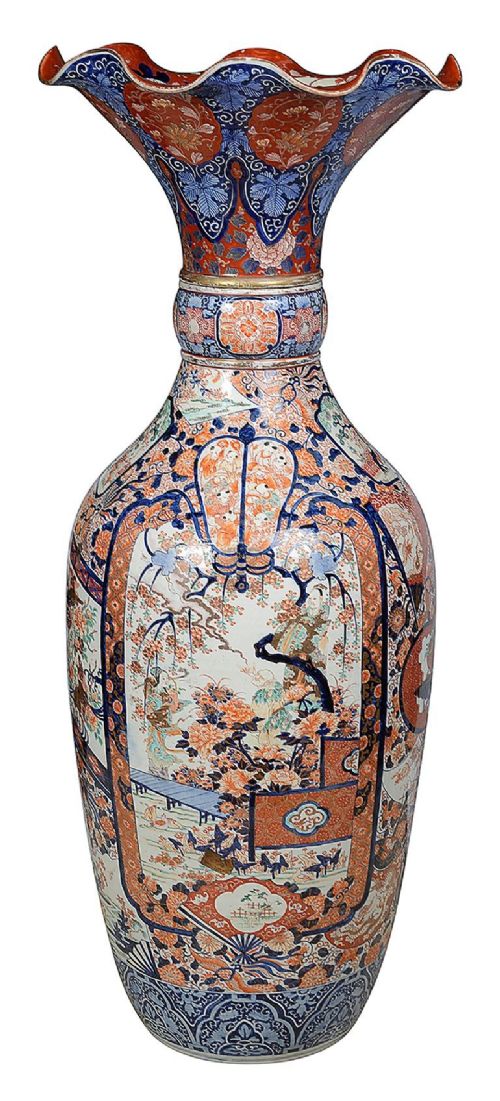
Buyers frequently encounter nineteenth-century Meiji period plates, scallop-edge bowls, and massive floor standing vases decorated with complex floral and avian motifs. The selection also includes rarer forms shaped like fish and shells, alongside converted lamps and jardiniere planters.
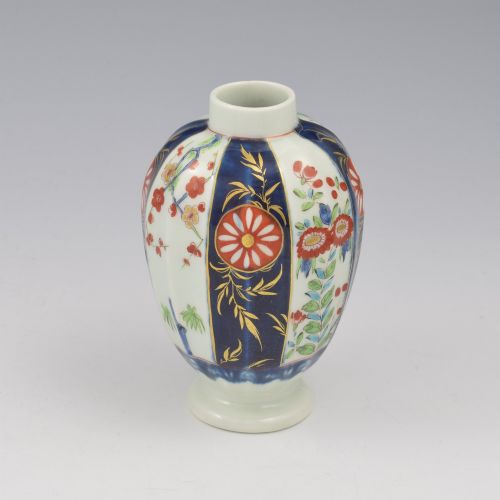
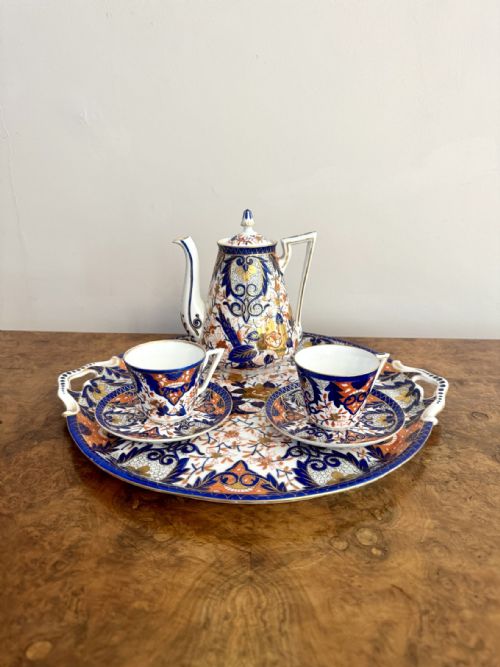
While Japanese examples dominate the selection, the category extends to English ironstone and pottery factories adopting the distinctive palette on domestic tea sets, comports, and jugs. This variety allows collectors to trace the influence of eastern export designs on Georgian and Victorian ceramic production.
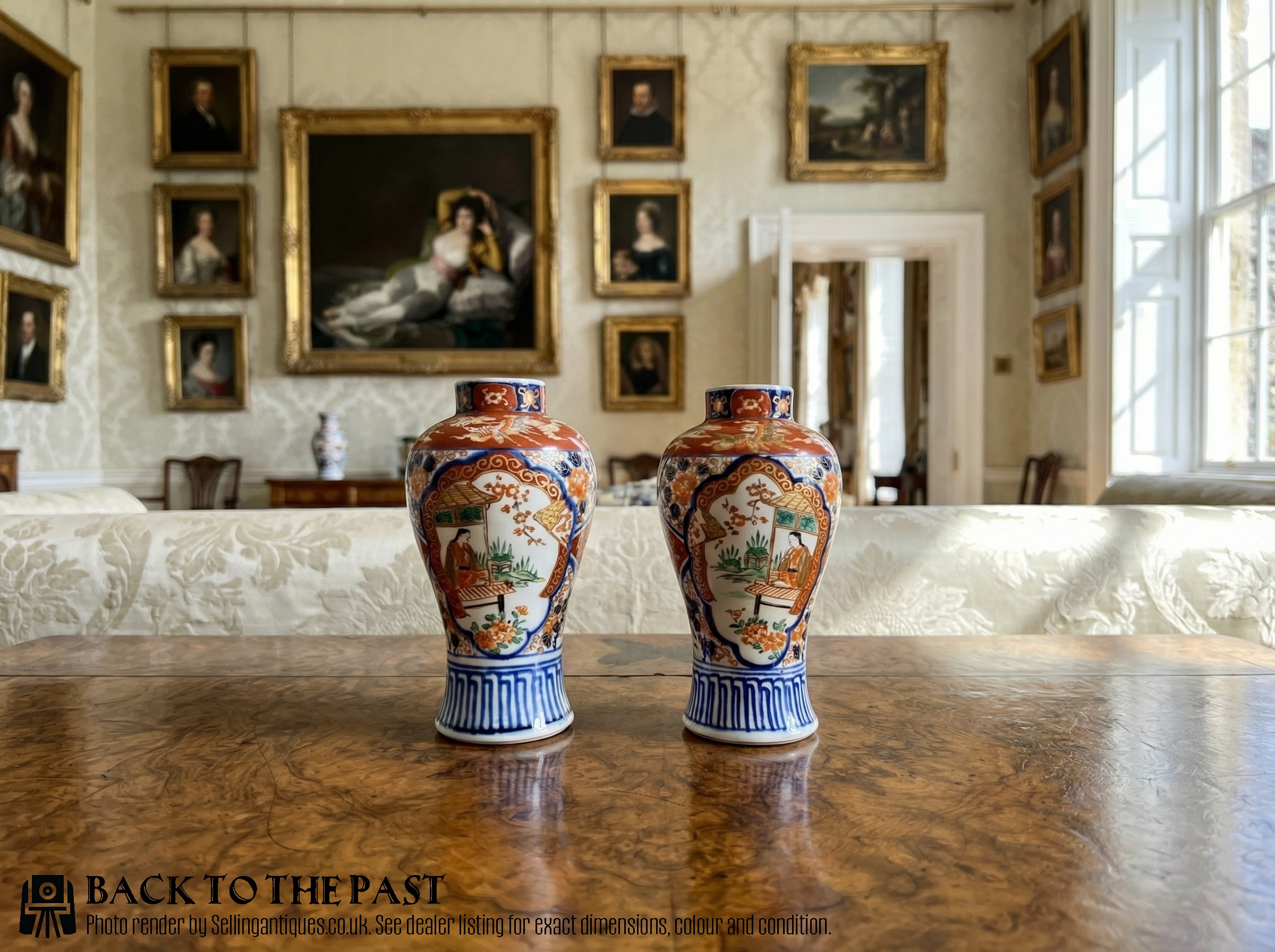
How they were made
Potters shaped porcelain, ceramic, earthenware, and ironstone into robust vessels before applying underglaze cobalt blue pigments. Artisans then added overglaze iron-red enamel, enamel detailing, and gold leaf highlights to create the signature layered look.
Kiln workers fired these pieces multiple times to set the underglaze blue, fuse the overglaze enamels, and bond the delicate gilding and gold leaf accents to the glazed surface. This rigorous firing process ensured durability while producing the characteristic contrasting sheen of the finished wares.
Hand Painted Imari Porcelain Retail Price Guide 2026
Typical asking prices for hand painted imari porcelain among the pieces listed under this phrase on Sellingantiques today, from the lower quarter to the upper quarter. They describe what is for sale here now, not the wider market.
Listings feature porcelain, ironstone, and earthenware bodies spanning from the late seventeenth century to the twentieth century.
What varies in quality
The precision and density of the hand painted brushwork dictate much of the distinction between standard vessels and exceptional examples. Finer pieces display crisp botanical and exotic bird motifs executed with controlled lines that sit neatly within the compartmentalised borders.
The application of gold leaf and overglaze enamel highlights creates further separation across the range. Superior items retain rich, thickly applied gilding and vibrant iron-red tones that resist rubbing, whereas lesser pieces show thin or faded decoration from heavy use.

Hicks and Meigh·John Davenport of Longport·Ginshōtei Gyokushi
The Hand Painted Imari Porcelain Glossary
- Charger
- A large decorative plate intended for display on a wall or dresser rather than for dining use. These items provide a wide canvas for intricate narrative or floral compositions.
- Meiji Period
- The era in Japanese history lasting from 1868 to 1912, marked by industrialisation and a surge in decorative porcelain exported to Western markets. Pieces from this time often exhibit elaborate detail.
- Gilding
- The application of gold leaf or powdered gold onto the surface of ceramic wares to accent specific design elements. This technique enhances the visual richness of the painted motifs.
- Edo Period
- The period in Japanese history spanning from 1603 to 1867, encompassing the early development of Arita export wares. Surviving examples from this time display deep historical provenance.
Hand Painted Imari Porcelain: Frequently Asked Questions
How do I hang a heavy charger?
Large decorative chargers require robust, coated wire spring hangers that distribute the weight evenly around the rim without putting pressure on the ceramic body. Secure the hanging hardware directly into a wall stud to ensure safe support for the piece.
Avoid adhesive disc hangers, as the weight of nineteenth-century porcelain can cause the glue to fail over time. Check the tension of the springs periodically to maintain a firm grip on the scalloped or straight edge.
How do I distinguish Japanese from English imari?
Japanese imari typically uses a dense, bright porcelain body with cobalt blue underglaze and iron-red overglaze painted in complex compartmentalised patterns. The motifs often feature stylised landscapes, chrysanthemums, and exotic birds.
English imari, produced by factories like Davenport or English ironstone makers, usually employs heavier earthenware or ironstone bodies with slightly softer transfer-printed outlines filled in by hand. The overall weight and clay composition reveal the distinct geographic origins.
What is Arita porcelain?
Arita porcelain refers to ceramic wares produced in the Hizen province of Japan around the town of Arita, where local clay deposits allowed for the creation of fine, durable white porcelain. These kilns supplied the vast majority of exported imari wares.
Master potters in Arita perfected the firing techniques required to handle large vessels like jardiniers and floor vases. Their output set the aesthetic standard for export ceramics across the seventeenth and eighteenth centuries.