




Antique Imari Ware
Antique imari ware comprises hard-paste porcelain pieces painted in distinctive iron red, blue, and gold, bringing vibrant decoration to any table or cabinet.
Antique Imari Ware
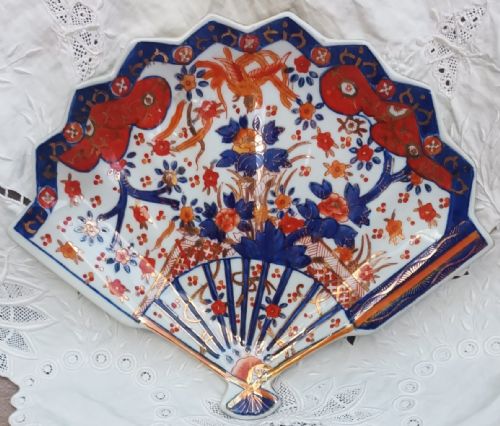
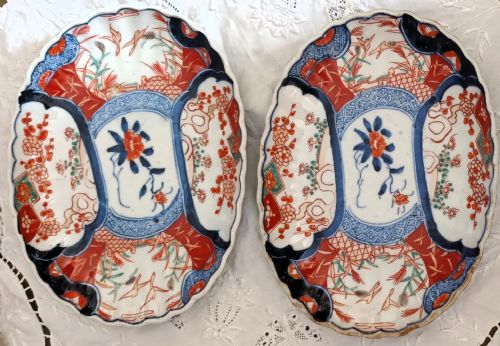
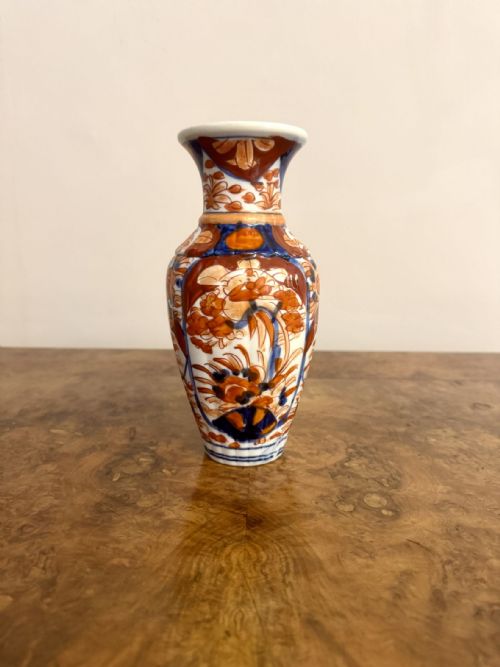
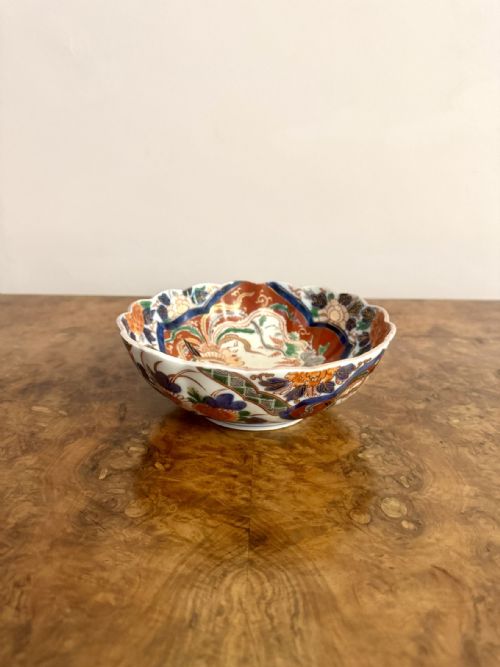
When searching for antique imari ware, buyers encounter striking Japanese and English porcelain pieces shaped as decorative plates, chargers, bowls, vases, and dishes. These items stem from various periods including the Edo period, Meiji period, and Edwardian eras, reflecting centuries of ceramic tradition.
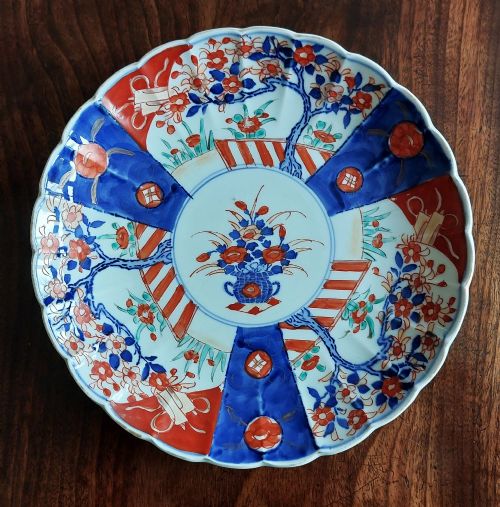
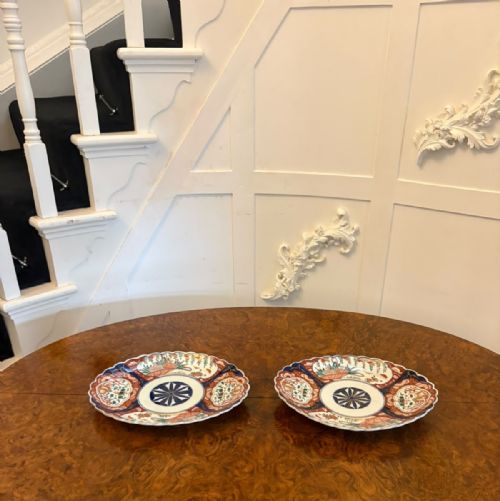
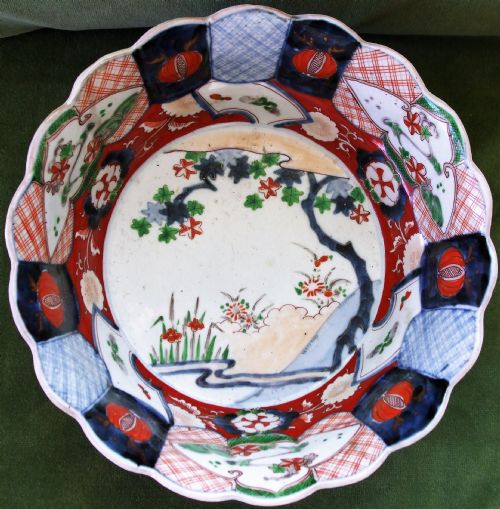
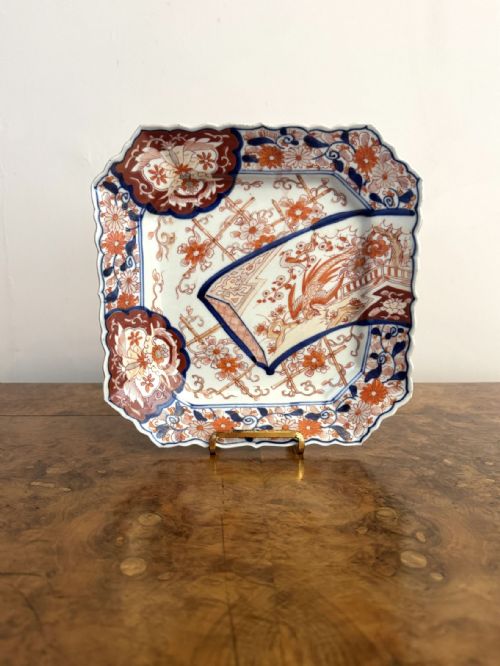
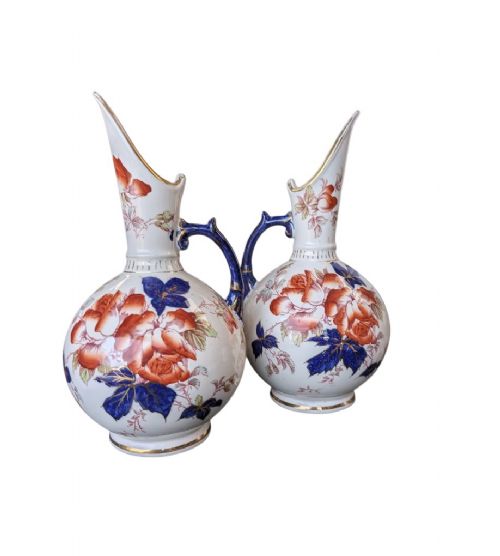
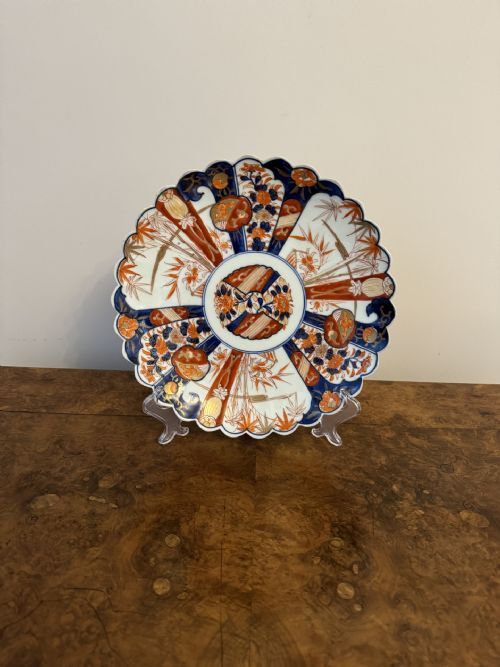
The most common examples on this page are Japanese Imari items from the nineteenth century and around nineteen hundred, featuring characteristic scalloped edges and floral bird designs. Alongside these, buyers find larger chargers, jars, and occasional European interpretations such as Royal Crown Derby vases.
The forms range from utilitarian vessels like biscuit barrels and pitchers to grand garnitures of shaped vases and large jardinieres. Each piece demonstrates the distinctive palette and decorative techniques that defined export ceramics of these periods.
How they were made
These pieces utilise hard-paste porcelain as a base, shaped into bowls, plates, and vases before undergoing initial firing. Artisans then applied underglaze blue and overglaze enamel colours, frequently incorporating gold leaf, gilt, and gilding to highlight the intricate patterns.
The decoration relies heavily on hand-painted floral and bird designs, executed with fine brushwork over the glaze. Subsequent firings set the enamel and gold details firmly onto the hard-paste porcelain surface, creating the durable finished objects seen today.
Listings feature hard-paste porcelain items spanning the Edo period, Meiji period, Edwardian era, and the nineteenth century.
What varies in quality
Quality in these ceramics rests on the precision of the hand-painted brushwork and the vibrancy of the enamel and gold leaf application. Finer examples display crisp floral and bird designs with careful attention to the characteristic red and blue colour separation.
The weight and consistency of the hard-paste porcelain body also distinguish finer pieces, alongside the symmetry of scalloped edges on plates and bowls. Superior items maintain rich gilding and clean glaze surfaces that withstand centuries of handling.
The Antique Imari Ware Glossary
- Imari ware
- Japanese and European porcelain decorated in a distinctive palette of underglaze blue, iron red, and gilt. These items were originally exported from the port of Imari in Japan.
- Hard-paste porcelain
- A dense, vitrified ceramic material fired at high temperatures. It forms the durable white body characteristic of these antique vessels.
- Gilt
- A thin layer of gold applied to the surface of the porcelain. It is used to accent patterns and add metallic highlights to the painted design.
- Challenger
- A large decorative plate designed for display rather than dining. These pieces often feature expansive hand-painted scenes across their wide surfaces.
- Meiji Period
- A period in Japanese history spanning from eighteen sixty-eight to nineteen twelve. Many pieces on this market originate from this era of prolific ceramic production.
- Jardiniere
- A large ornamental pot or container intended for holding plants or flowers. These sturdy ceramic vessels often feature elaborate moulded or painted decoration.
Antique Imari Ware: Frequently Asked Questions
Where were these ceramics made?
The majority originate from Japan, particularly associated with the Arita kiln traditions and the port of Imari where they were shipped for export. Some later pieces also stem from European potteries inspired by these Japanese aesthetics.
This cross-cultural exchange produced both traditional Japanese export wares and British adaptations like Edwardian Derby porcelain.
What shapes are available?
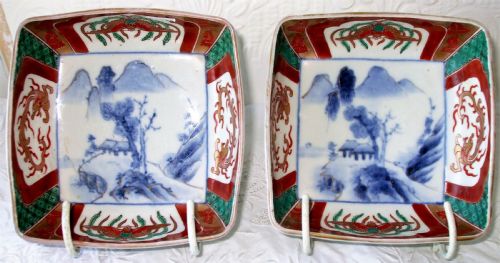
The selection includes a wide variety of forms ranging from flatware like decorative dishes and scalloped plates to deep bowls and chargers. Vases, garnitures, pitchers, and biscuit barrels also appear among the offerings.
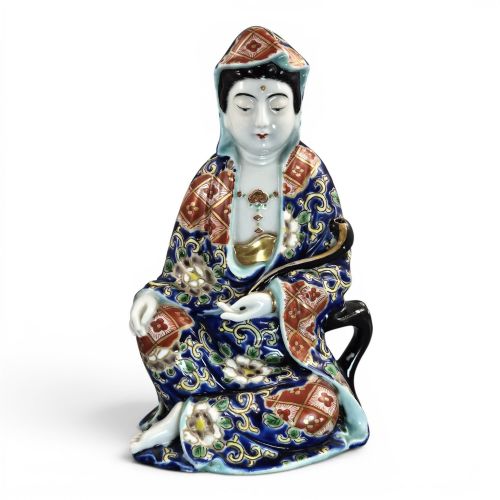
Specialist items such as Arita clam shell dishes and ceramic figures further expand the range of available forms.
How should I clean my Imari bowl?
Dust the surface gently with a soft, dry cloth to remove everyday particles. Avoid harsh chemical cleaners or abrasive scouring pads that might damage the delicate enamel and gilding.
If washing is necessary, use lukewarm water with mild soap and dry thoroughly by hand immediately afterwards.