

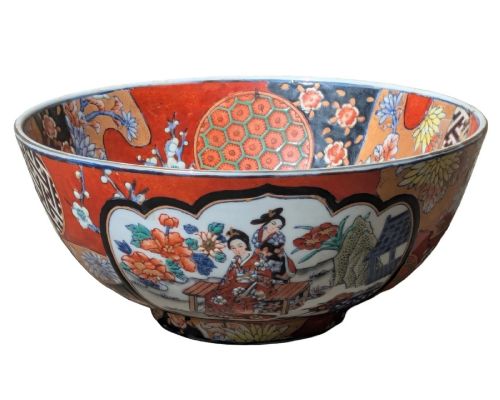




Japanese Decorative Charger Bowl
A japanese decorative charger bowl brings intricate Meiji period craftsmanship and rich Imari palettes straight into a modern interior.
Japanese Decorative Charger Bowl
A japanese decorative charger bowl typically encompasses wide porcelain plates, shallow dishes, and large display bowls designed primarily for visual impact. Most examples appearing here stem from the nineteenth century, particularly the Meiji period, alongside select earlier Edo period pieces and later 1930 Showa items.
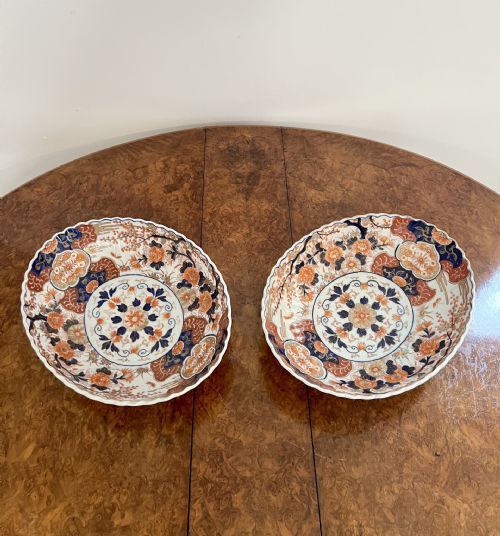
The dominant aesthetic centres on Japanese Imari porcelain, recognisable through traditional iron-red, underglaze blue, and gilt detailing applied to scalloped or fluted forms. Alternatively, buyers encounter substantial cloisonne enamel chargers featuring complex avian, marine, or single-dragon motifs.
These items range from modestly scaled plates to large thirty-six centimetre display chargers intended for prominent placement on furniture or walls. Their origins span traditional kilns and workshops such as Arita and Hizen, reflecting centuries of ceramic tradition.
Materials and production methods
Ceramic pieces rely on dense porcelain bodies shaped into bowls, plates, and shallow chargers, frequently finished with hand-painted underglaze blue pigments and vibrant overglaze enamels. Artisans frequently added gold leaf and gilt highlights to accentuate intricate panel designs and floral borders.
Cloisonne enamel chargers utilise a copper or brass base fitted with fine brass wire to outline distinct pictorial cells before application of coloured enamel pastes. Firing and polishing these metal surfaces creates a smooth, glossy decorative face capable of depicting detailed shrimp or dragons.
Objects span the seventeenth century through to the 1930s Showa period.
Distinctions in craftsmanship
Quality rests upon the precision of the hand-painted brushwork and the complexity of the compositional layout across the surface. Finer Imari porcelain exhibits crisp cobalt blue tones balanced carefully with rich iron-red and gold leaf applications.
Cloisonne examples derive their merit from the fineness of the brass wirework and the depth of the enamel filling, where skilled execution prevents pitting or blurring. Signed pieces and those retaining distinct workshop signatures generally indicate superior artisanal output.
The Japanese Decorative Charger Bowl Glossary
- Imari
- A traditional style of Japanese porcelain originating from Arita, characterised by a distinct palette of underglaze blue, iron-red, and gilt highlights. This aesthetic dominated export wares during the Edo and Meiji periods.
- Meiji Period
- The era of Japanese history spanning from 1868 to 1912, noted for a surge in high-quality decorative arts exported to Western markets. Pieces from this time often display exceptional technical refinement.
- Cloisonne
- A metalwork technique where fine wire is soldered to a copper or brass base to form compartments, which are then filled with enamel paste and fired. Chargers made this way present vivid pictorial scenes.
- Charger
- A large decorative plate or shallow bowl historically used for ceremonial display rather than practical dining. These substantial pieces provide a wide canvas for intricate narrative or botanical designs.
- Edo Period
- The period in Japanese history lasting from 1603 to 1867, preceding the Meiji era and establishing foundational ceramic traditions. Surviving works from this time are valued for their historical depth.
Japanese Decorative Charger Bowl: Frequently Asked Questions
How do I identify Imari porcelain?
Imari porcelain is readily identified by its characteristic tripartite colour scheme of deep underglaze blue, vivid iron-red, and supplementary gold leaf or gilt. The designs frequently incorporate floral panels and brocade patterns.
Most examples found here also feature white porcelain bodies with scalloped or fluted edges, typical of the nineteenth-century export trade.
What does Meiji period mean?
The Meiji period designates the reign of the Emperor Meiji from 1868 to 1912, a time of rapid modernisation and flourishing export arts in Japan. Craftspeople during this era produced highly detailed ceramics and metalwork for international buyers.
Items from this timeframe often combine traditional motifs with exceptional technical precision in enamel and porcelain production.
Are these bowls fragile?
Like most antique ceramics and metalwork, these chargers require careful handling to prevent chipping the porcelain edges or scratching the enamel surfaces. Placing them on stable, flat surfaces or secure display stands ensures their safety.
Routine maintenance involves gentle dusting with a soft, dry cloth rather than immersion in water, particularly for pieces with delicate gold leaf or copper wire elements.