





French Gilt Bronze Inkwell
A french gilt bronze inkwell brings nineteenth-century weight and polish to a desk, cast in metal and mounted on stone.
French Gilt Bronze Inkwell
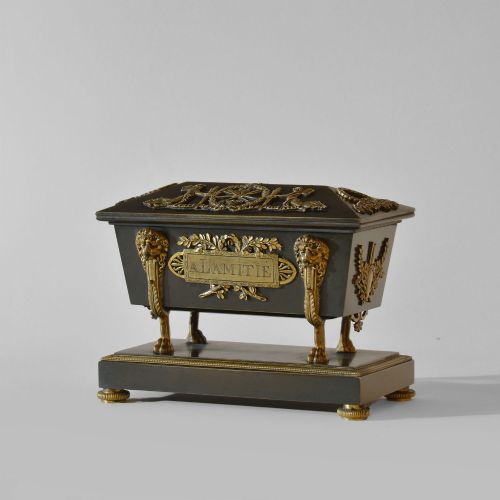
A french gilt bronze inkwell takes the form of an encrier, desk set, or single well designed to hold writing equipment on a nineteenth-century desk. These pieces emerge primarily from the nineteenth century, spanning periods such as the French Empire, Napoleon III, and Art Nouveau.
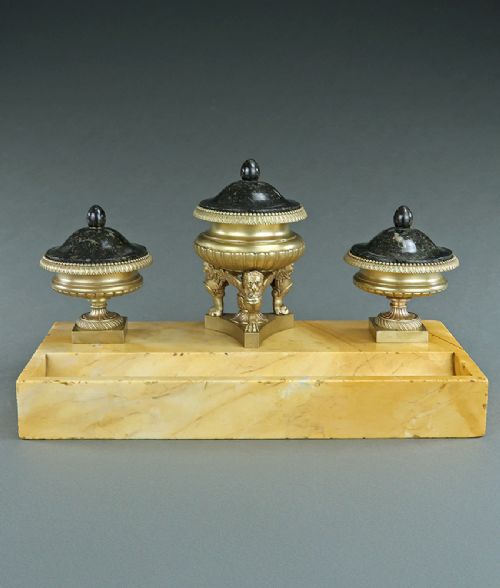
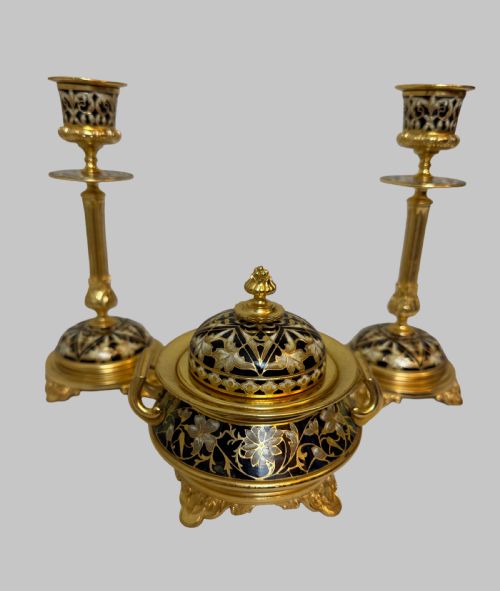
The version most frequently met on this page pairs cast bronze, ormolu, or gilded metal with a heavy marble base, often incorporating glass liners or matched candlestands. Forms range from simple single wells to elaborate desk sets featuring animalier figures, marble plinths, and champleve enamel.
Origins trace back to French workshops and Paris makers utilising classical motifs, floral tendrils, and figural subjects like lions, cats, or historical busts. Walnut and mahogany wooden bases also appear alongside the stone foundations.
Gradations in execution
The quality of a french gilt bronze inkwell depends on the crispness of the chasing in the metal and the depth of the fire-gilding. Superior examples display sharp relief work on figures and foliage, whereas lesser pieces show softer, shallower casting details.
The choice and preparation of the stone base mark another distinction, with dense, richly coloured marbles like Sienna or vert marble elevating the piece above standard slate or simple metal bases. Matched components, such as accompanying candlestands or integrated desk clocks, indicate higher workshop ambition.
French Gilt Bronze Inkwell Retail Price Guide 2026
Typical asking prices for french gilt bronze inkwell among the pieces listed under this phrase on Sellingantiques today, from the lower quarter to the upper quarter. They describe what is for sale here now, not the wider market.
Several desk sets feature playful bronze animals, including kittens at play and lions guarding the ink.
Albert Marionnet
The French Gilt Bronze Inkwell Glossary
- Encrier
- A desk stand or inkstand designed to hold inkwells, sanders, and pen trays. This French term applies to portable writing sets made of bronze, marble, and wood.
- Ormolu
- Gilded bronze produced by applying a mercury and gold amalgam to a bronze object and heating it until the mercury vaporised. The technique creates a durable, warm golden surface found on nineteenth-century desk accessories.
- Champleve
- An enamelling technique where troughs or cells are hollowed out of a metal surface and filled with vitreous enamel paste before firing. It appears on decorative panels and borders of nineteenth-century desk pieces.
- Animalier
- A nineteenth-century artistic style focusing on the realistic depiction of animals. Desk sets in this style often feature cats, lions, or birds modelled in bronze.
- Sienna marble
- A yellow-hued decorative stone quarried in Italy with dramatic purple and grey veining. It forms the contrasting base for many nineteenth-century gilt metal desk stands.
French Gilt Bronze Inkwell: Frequently Asked Questions
How do I clean gilt bronze?
Gilt bronze requires gentle dusting with a soft, dry cloth to protect the delicate gold surface. Avoid chemical polishes or abrasive cleaners that can strip the original gilding.
Moisture should be kept away from any exposed marble or wooden elements incorporated into the desk stand.
Are the glass inserts original?
Many nineteenth-century inkwells retain their original blown or cut glass inserts designed to hold liquid ink safely inside the metal collars. Replacements are common due to the fragile nature of glass over time.
Examining the fit and wear patterns inside the bronze collar helps determine if the glass liner belongs to the period of the stand.
What is Napoleon III style?
Napoleon III style refers to French design produced during the Second Empire, known for eclectic revivals of past aesthetics. This period favoured rich materials, heavy gilt bronze mounts, and ornate ornamentation.
Desk accessories from this era often combine ormolu with coloured marbles and intricate champleve enamel work.