




Antique Marble Inkwell
An antique marble inkwell brings solid weight and carved mineral beauty to a desk, holding ink with quiet dignity.
Antique Marble Inkwell
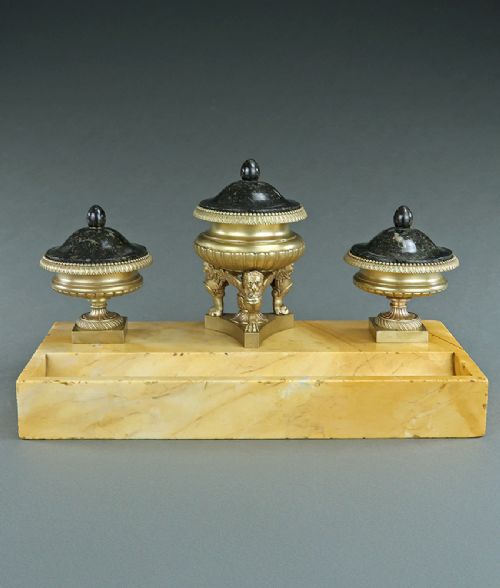
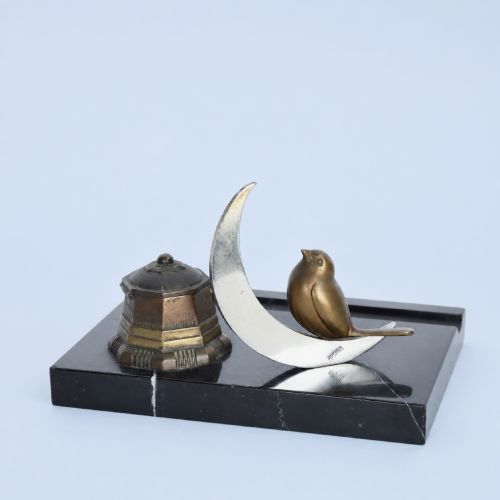
The pieces on this page span the nineteenth century into the twentieth, with French Empire, Neoclassical, Art Deco, and Art Nouveau styles appearing frequently. Most examples integrate a stone base with metal mounts, ink pots, and pen rests.
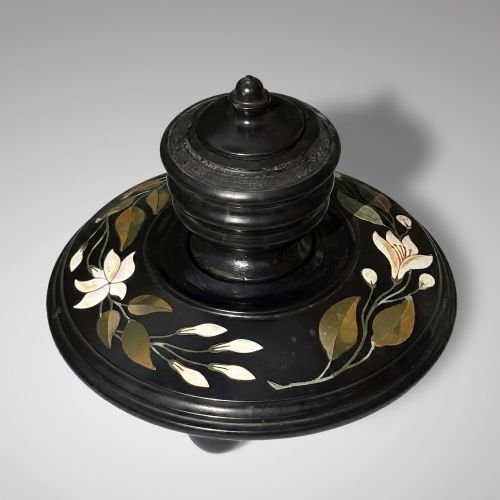
Sienna marble, onyx, and lapis lazuli feature prominently among the materials, often shaped into heavy desk tidies or Grand Tour souvenirs. These items range from simple block bases to elaborate figural compositions featuring bronze animals or classical motifs.
Evaluating Quality
Quality rests upon the crispness of the stone carving and the precision of the cast metal mounts fitted to the base. Finely rendered bronze figures or intricate pietra dura inlays elevate an object far beyond standard production pieces.
The harmony between the mineral body and its metallic ornamentation dictates the success of the design. Heavy stones combined with substantial fire-gilded ormolu represent the finest standards of nineteenth-century desk accessories.
Antique Marble Inkwell Retail Price Guide 2026
Typical asking prices for marble inkwell among the pieces listed under this phrase on Sellingantiques today, from the lower quarter to the upper quarter. They describe what is for sale here now, not the wider market.
Listings feature desk accessories utilising Sienna marble, onyx, lapis lazuli, and gilt bronze across French Empire, Neoclassical, and Art Deco styles.
Franz Bergmann·Lefebvre of Belgium·Albert Marionnet·Jules Dalou·Zimmermann
The Antique Marble Inkwell Glossary
- Ormolu
- Gilded brass or bronze applied to furniture and decorative objects. This technique creates a rich gold-coloured surface finish.
- Grand Tour
- A cultural journey undertaken by wealthy young Europeans visiting historical sites. Souvenirs from these travels often included marble architectural models and inkstands.
- Sienna marble
- A yellow-brown Italian marble featuring deep purple and grey veining. It was highly prized for decorative desk accessories.
- Ashford marble
- A Derbyshire limestone inlaid with various coloured minerals to create floral or geometric patterns. It was frequently worked into Victorian desk sets.
- Encrier
- The French term for an inkstand or inkwell. These pieces often incorporate troughs for pens and lidded glass ink inserts.
Antique Marble Inkwell: Frequently Asked Questions
What is an antique marble inkwell made from?
These desk accessories combine natural stones such as Sienna marble, green onyx, lapis lazuli, and Ashford marble with metals like bronze, brass, and ormolu. Glass inserts typically sit within the stone or metal reservoirs to hold the liquid ink safely.
Makers frequently added cold-painted bronze figures, silver mounts, or carved cameo intaglios to enhance the composition of the stand.
How do I date an antique marble inkwell?
Dating relies on stylistic clues, such as the symmetrical restraint of Neoclassical and French Empire pieces compared to the fluid lines of Art Nouveau or the geometric angles of Art Deco. Material choices and manufacturing signatures also help narrow the period of origin.
Nineteenth-century examples often lean toward classical architectural forms and heavy patinated bronze, whereas later twentieth-century pieces incorporate simplified onyx or black marble blocks.
How were these inkwells used originally?
Writers dipped quill or steel nibs into the central reservoir to load ink before writing letters or ledgers at a desk. The integrated trays and depressions served to hold dipping pens when not in use.
Desk stands often doubled as decorative centrepieces for libraries and studies, reflecting the status and taste of the owner through costly mineral and metal materials.
Are glass liners original to the inkwells?
Many surviving pieces retain their original blown glass or ceramic pots designed to fit snugly inside the stone or metal collars. Replacements are common due to the fragile nature of small glass liners over generations of use.
Collectors look for liners that match the aperture size and historical period of the surrounding inkstand.
How do I care for antique marble and bronze?
Dust the stone and metal surfaces gently with a soft, dry cloth to prevent the buildup of grime in carved crevices. Avoid harsh chemical cleaners or excess moisture, which can damage the polish of the marble or the gilding on bronze mounts.
Wax is rarely necessary on polished stone, but minimal application can protect dry metal finishes if handled with care.