




19th Century Marble Inkstand
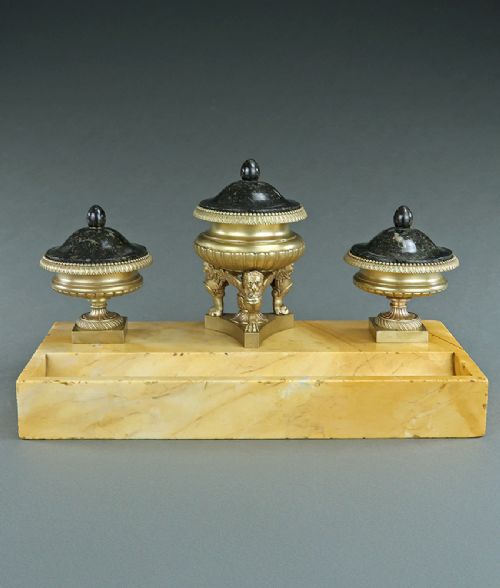
A 19th century marble inkstand brings desk accessories into the realm of sculpture, combining heavy stone bases with rich metal mounts.
19th Century Marble Inkstand
A 19th century marble inkstand is a substantial desk accessory designed to hold writing equipment, most frequently featuring stone bases paired with metal wells and pen rests. These pieces typically take the form of desk stands, caskets, or double inkwells intended for prominent display on library and office tables.
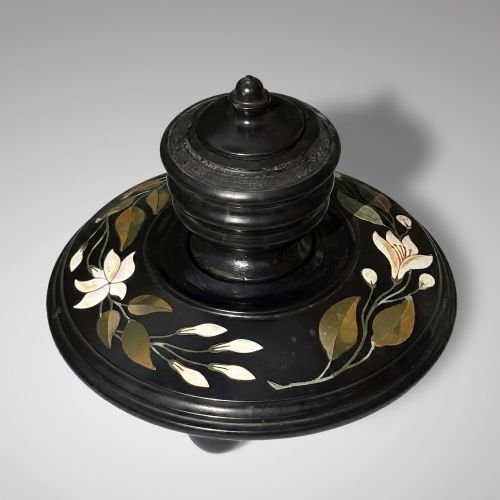
The versions most commonly met on this page combine polished stone such as Sienna, green, or Ashford black marble with gilt bronze, ormolu, or patinated bronze mounts. Many incorporate French Empire, Neoclassical, or Grand Tour styling, reflecting the prevailing decorative tastes of the nineteenth century.
How they were made
Makers constructed these inkstands using solid blocks of quarried stone, shaped and polished to create heavy bases for writing equipment. This stonework was frequently combined with cast metals, utilising gilt bronze or ormolu for feet, rims, and hinged lids.
Detailing often involved specialised decorative techniques such as hardstone inlay, micro-mosaics, or carved cameos set directly into the marble surfaces. Bronze elements were cast and chased by hand to achieve crisp ornamental definition before being fire-gilded or patinated.
19th Century Marble Inkstand Retail Price Guide 2026
Typical asking prices for 19th century marble inkstand among the pieces listed under this phrase on Sellingantiques today, from the lower quarter to the upper quarter. They describe what is for sale here now, not the wider market.
Materials recorded across the inventory range from patinated bronze and gilt metal to hardstone inlay and carved lava cameos.
What varies in quality
Quality in a 19th century marble inkstand lies in the selection of the stone and the precision of the metalwork. Richly figured marbles like Sienna or specialised regional varieties indicate a higher grade of manufacture than plain, uniform slabs.
The finish of the cast bronze mounts distinguishes finer examples from standard production. Sharp chasing, deep gilding, and the integration of specialised elements such as lava cameos or hardstone inlay elevate the piece.
Lefebvre of Belgium·Jules Dalou
The 19th Century Marble Inkstand Glossary
- Ormolu
- Gilded bronze produced by applying a mercury and gold amalgam to a bronze base and heating it. This technique creates a durable, warm metallic finish common on nineteenth-century desk accessories.
- Grand Tour
- A cultural journey undertaken by wealthy Europeans through France and Italy during the eighteenth and nineteenth centuries. Souvenirs from these travels often included carved marble and bronze desk items.
- Encrier
- The French term for an inkstand or inkwell. These pieces were essential fittings for domestic and administrative desks.
- Ashford Black Marble
- A dark, fine-grained limestone from Derbyshire that takes a high polish. It was frequently used for Victorian desk pieces and inlaid with coloured mineral specimens.
19th Century Marble Inkstand: Frequently Asked Questions
What is a 19th century marble inkstand?
A 19th century marble inkstand is a desk accessory built from polished stone and mounted with metal, designed to hold ink and pens.
These pieces served both a practical writing function and a decorative role on the desks of the period.
How were these inkstands used?
They were placed on writing tables to provide a stable reservoir for ink alongside rests for quill or steel pens.
The heavy stone base prevented the stand from tipping while writers dipped their pens during correspondence.
How do I identify a Grand Tour piece?
Grand Tour pieces often incorporate specific Italian stones, classical motifs, or souvenirs such as lava cameos and micro-mosaics.
These items were collected by travellers in Italy and brought back to Britain and France as decorative desk objects.
What marble types are common?
Listings frequently feature Sienna marble, green marble, Ashford black marble, and onyx.
These stones were chosen for their distinct colour variations and ability to take a smooth, glossy finish.