





Antique French Inkstand
An antique French inkstand brings nineteenth-century writing desks to life through heavy cast metals and carved stone.
Antique French Inkstand
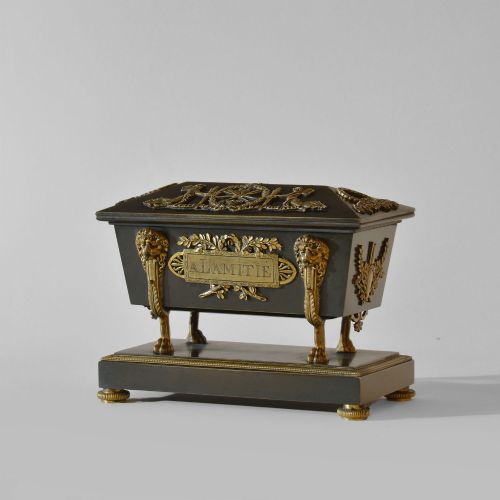
An antique French inkstand is a desk accessory designed to hold writing fluid, pens, and sanders for blotting. These pieces range from simple single inkwells mounted on stone bases to elaborate desk sets featuring candelabras, letter holders, and matching decorative boxes.
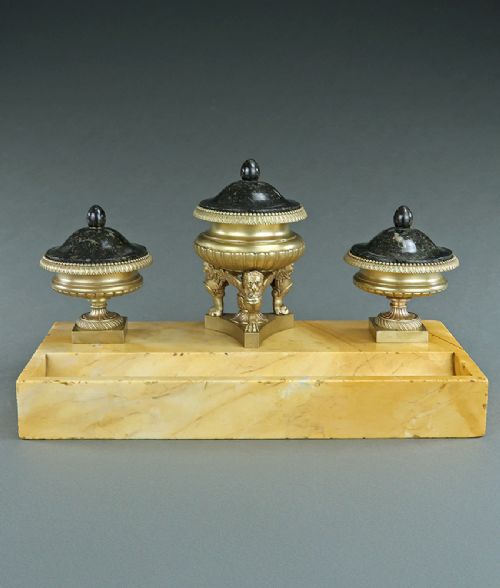
The most common examples encountered on this page date from the nineteenth century, spanning periods from the French Empire and Second Empire through to Art Nouveau. Buyers typically find bases fashioned from marble or mahogany fitted with cast metal wells.
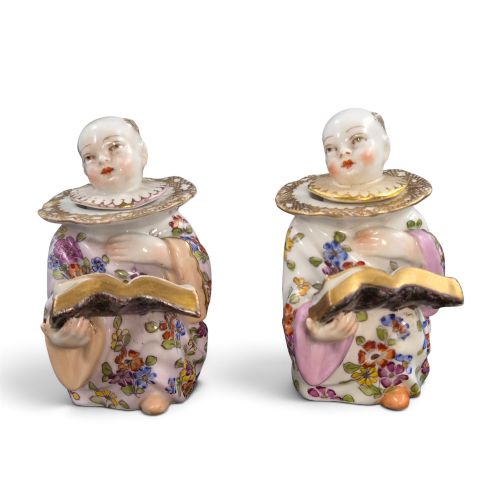
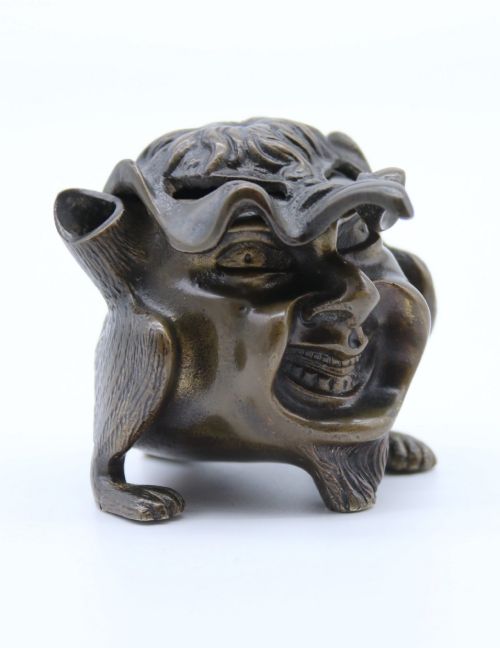
Forms vary from utilitarian double inkwells to figurative sculptures depicting animals, clowns, and mythological creatures. Many pieces incorporate compartments for stamps and nibs alongside the central glass or ceramic ink inserts.
Materials and construction methods
Maker workshops utilised lost-wax and sand-casting methods to shape bronze, brass, and ormolu mounts. These metal elements were frequently mercury-gilded or patinated to achieve rich surface tones before being bolted to heavy stone plinths.
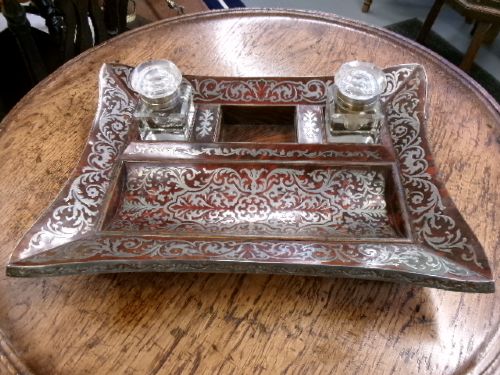
Bases were predominantly cut from green or sienna marble, while tortoiseshell and brass inlay embellished wooden desk stands in the Boulle technique. Glass and porcelain liners sat within the metal frames to contain the ink safely.
Antique French Inkstand Retail Price Guide 2026
Typical asking prices for french inkstand among the pieces listed under this phrase on Sellingantiques today, from the lower quarter to the upper quarter. They describe what is for sale here now, not the wider market.
Object forms range from simple desk clocks and letter holders to elaborate figural groups depicting animals and clowns.
Distinctions in quality
The choice of materials also dictates the standing of a piece, with dense vert or sienna marble bases and heavy fire-gilded ormolu mounts marking out superior workshop production.
Edmé Samson·Lefebvre of Belgium·Albert Marionnet·Jules Dalou·Maurice Dufrene·Ernest Louis Adnin
The Antique French Inkstand Glossary
- Ormolu
- Gilded bronze produced by applying an amalgam of gold and mercury to a bronze base and heating it. This technique creates a durable, warm golden finish characteristic of nineteenth-century decorative items.
- Champlevé
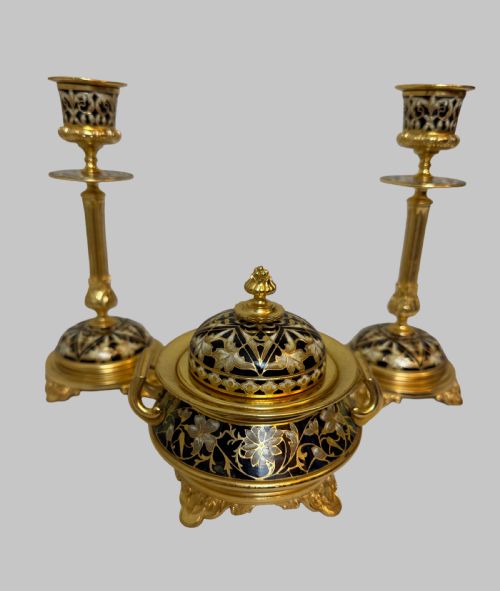
- An enamelling technique where troughs are dug into the surface of a metal object and filled with coloured glass paste before firing. The piece is then ground smooth and polished.
- Encrier
- The French term for an inkstand or inkwell. It appears frequently in descriptions of desk accessories originating from France.
- Boulle work
- A form of marquetry consisting of tortoiseshell and brass inlay developed in France. It creates intricate patterns across wooden desk stands and caskets.
Antique French Inkstand: Frequently Asked Questions
What is the difference between an inkstand and an inkwell?
An inkwell is simply the small pot that holds the ink, whereas an inkstand is the complete tray or desk stand that may house one or more inkwells along with pen rests.
Larger inkstands often incorporate compartments for stamps, sealing wax, and candlesticks.
How can I tell a Napoleon III inkstand from an Empire one?
Empire pieces lean heavily on classical antiquity with strict symmetry, military motifs, and austere patinated bronze.
Napoleon III stands display greater exuberance, often combining Boulle work, champlevé enamel, and rich ormolu mounts.
Are the glass inserts inside these inkwells usually original?
Glass and ceramic liners are frequently replaced because corrosive ink damaged the original vessels over decades of use.
Buyers should examine the fit of the insert against the metal collar to judge its period compatibility.
Where should I place an inkstand in a modern room?
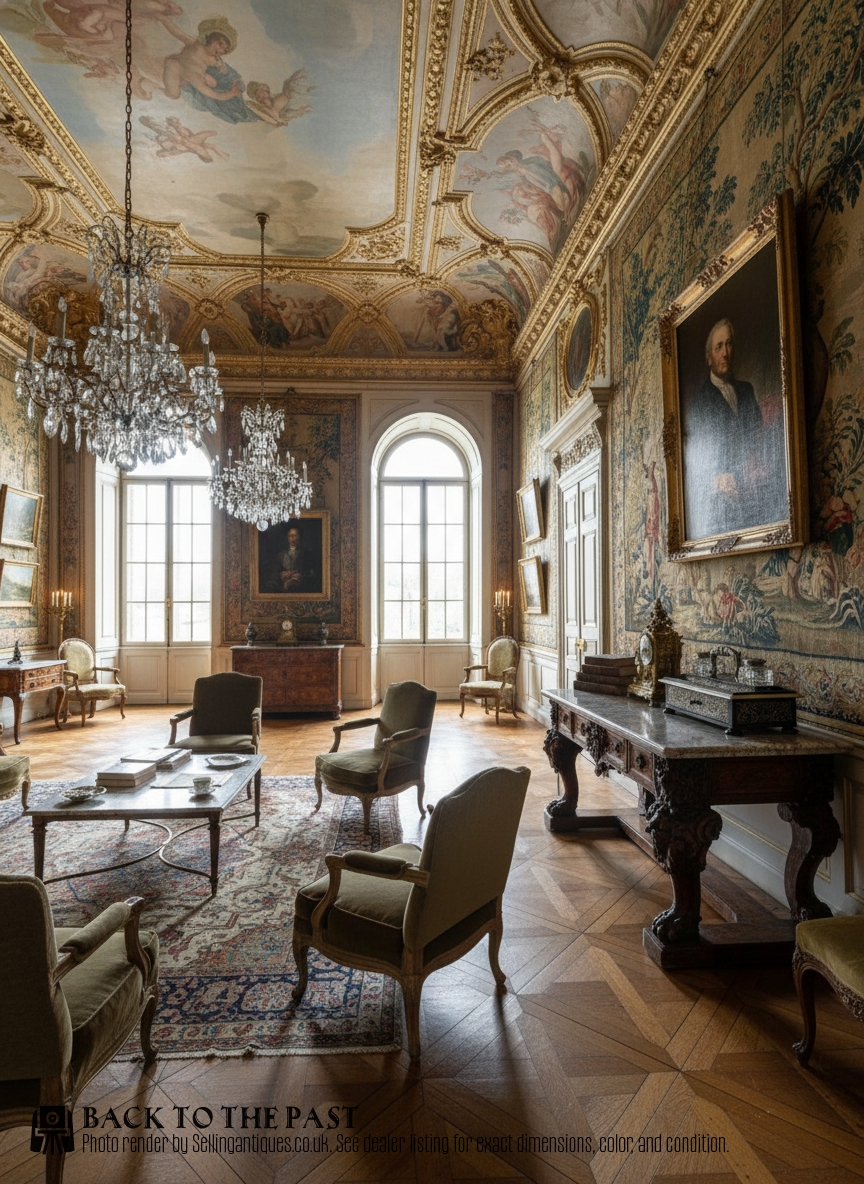
These pieces suit traditional writing desks, library tables, or mantelpieces where their heavy marble bases and metal figures provide a striking focal point.
Ensure the surface is level and sturdy enough to support the substantial weight of marble and bronze.