

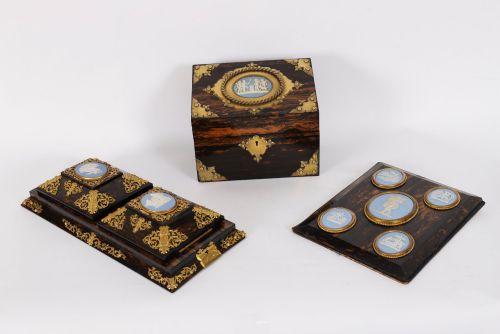


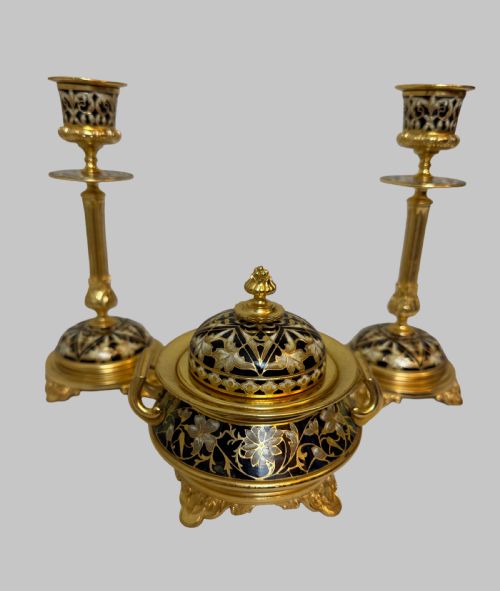


Ormolu Desk Set
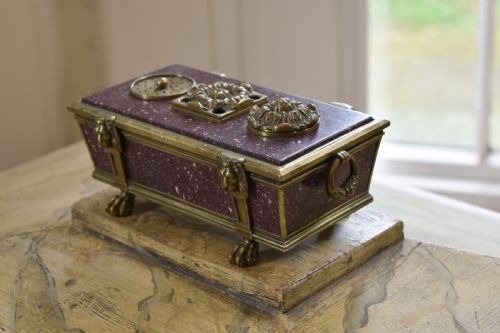
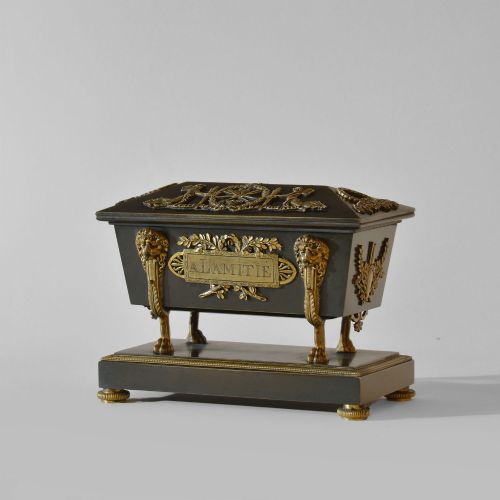
An ormolu desk set brings gilt metal and stone to a writing table, offering functional inkwells and stands designed in nineteenth-century French and English styles.
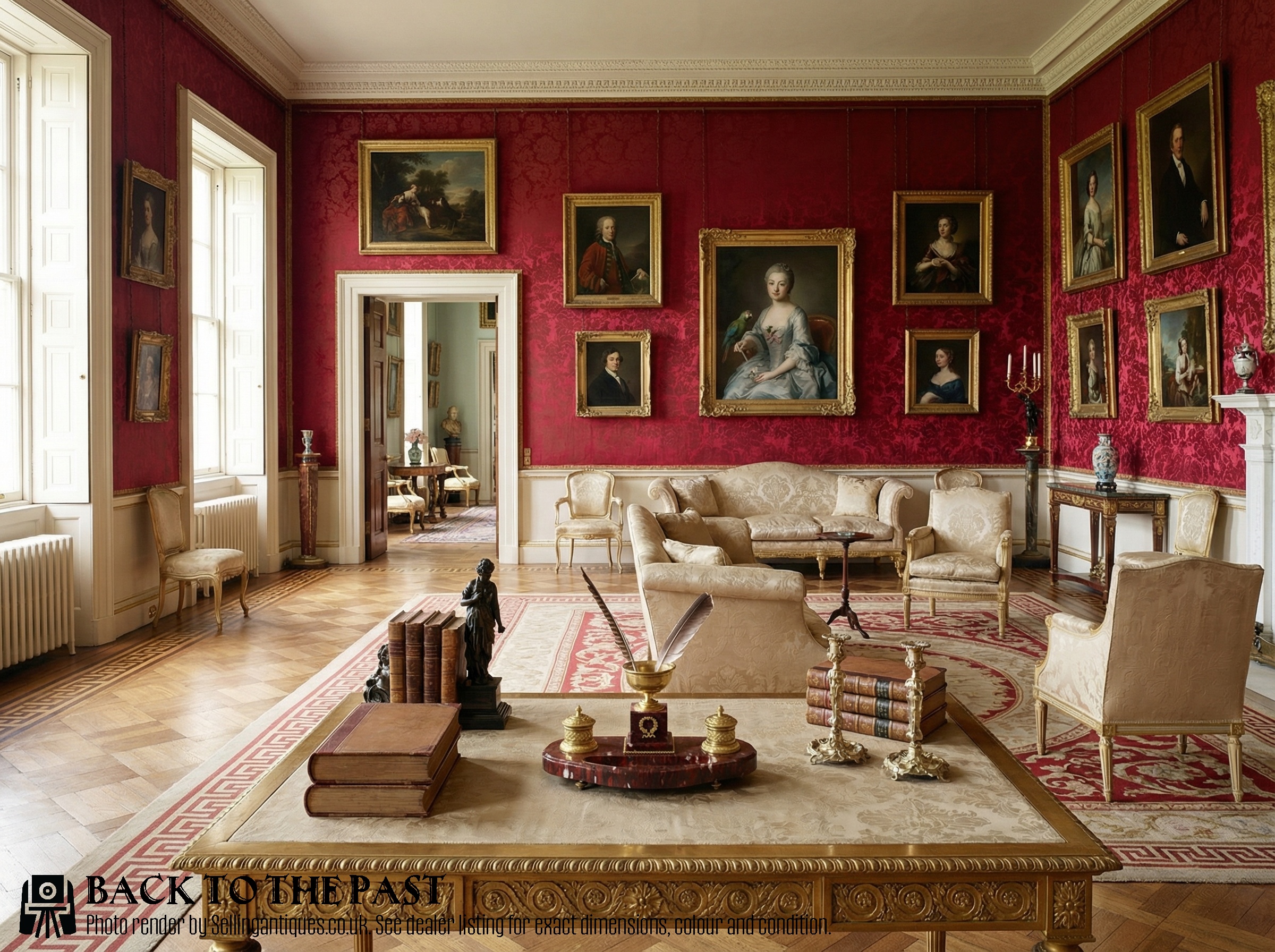
Ormolu Desk Set
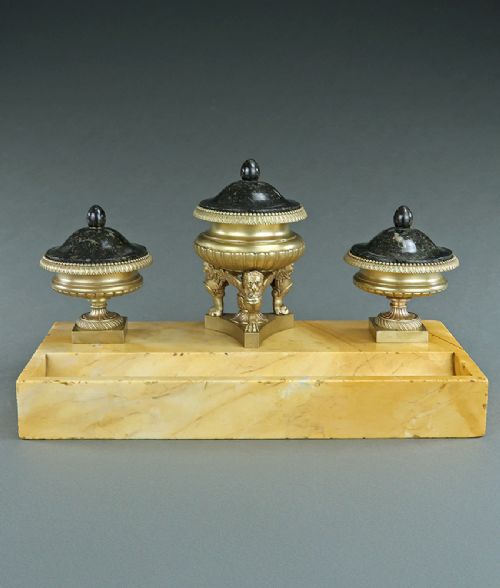
An ormolu desk set gathers writing accessories like inkstands, inkwells, and letter racks onto a shared base, often accompanied by candlestands or clock garnitures. These pieces emerge chiefly from nineteenth-century workshops, spanning French Empire, Victorian, and Louis XVI styles.
The version most commonly met on this page is the nineteenth-century French encrier or desk stand, combining gilded bronze with marble bases in vert, sienna, or onyx. English variations also appear, occasionally incorporating mahogany or coromandel-wood alongside gilt bronze mounts.
Materials and construction
Maker workshops built these sets using cast bronze finished with mercury gilding or modern electroplating to create the signature ormolu surface. This metalwork is mounted onto heavy stone plinths of marble, onyx, or sienna, providing stability for the inkwells and trays.
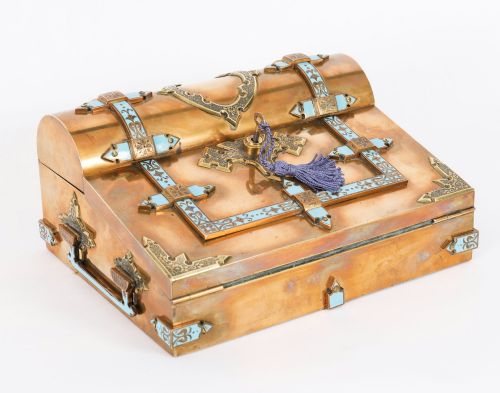
Detailing often includes champlevé enamel work, cut crystal glass inserts for ink pots, and patinated bronze figures such as animals or busts. Wood varieties like mahogany and coromandel also serve as foundation bases for English desk stands.
Ormolu Desk Set Retail Price Guide 2026
Typical asking prices for ormolu desk set among the pieces listed under this phrase on Sellingantiques today, from the lower quarter to the upper quarter. They describe what is for sale here now, not the wider market.
Listings feature nineteenth-century French and English desk accessories combining gilt bronze, marble, coromandel-wood, and champlevé enamel.
What separates the fine examples
The crispness of the bronze casting determines the visual weight of an ormolu desk set, separating sharp hand-chased foliage from soft, mass-produced detailing. Superior pieces display deep, uniform gilding that retains its lustre across intricate scrollwork and figural mounts.
The integration of materials dictates overall harmony, where fitted marble bases, unchipped crystal ink inserts, and intact champlevé enamel elevate the work. Maker signatures, such as those from documented Parisian foundries, separate standard utilitarian items from exhibition-grade garnitures.
Albert Marionnet·Raingo Fres, Paris·Ferdinand Berthoud·Japy Freres
The Ormolu Desk Set Glossary
- Ormolu
- Gilt bronze created by applying a gold and mercury amalgam to cast bronze, or through later electroplating methods. The technique produces a bright golden finish characteristic of decorative objects from the eighteenth and nineteenth centuries.
- Encrier
- A French term for an inkstand or inkwell set designed to hold writing implements and ink pots. These desk accessories frequently incorporate pen trays and candle holders.
- Champlevé
- An enamelling technique where troughs or cells are hollowed out of a metal surface and filled with vitreous enamel before firing. The method creates coloured patterns flush with the surrounding metal mount.
- Garniture
- A set of matching ornamental objects, typically comprising a clock flanked by candelabras or vases, designed to sit together on a mantelpiece or desk.
- Escapement
- The internal mechanism in a clock that regulates the release of gear train power to maintain steady timekeeping. Specific variants like the chaff-cutter escapement appear in period timepiece movements.
Ormolu Desk Set: Frequently Asked Questions
What pieces comprise a desk set?
A desk set typically centres on an inkstand or encrier containing one or more glass or ceramic ink pots, often accompanied by matching pen trays and letter racks.
Larger configurations integrate candlestands, small clocks, or matching garniture pieces designed to sit on a writing table.
How do I identify French Empire style?
French Empire style relies on classical motifs inspired by ancient Rome and Greece, featuring symmetrical bronze mounts, laurel wreaths, and patinated figures.
These pieces contrast dark patinated bronze with bright gilt ormolu against polished marble bases.
Are inkwells removable for cleaning?
Most period inkwells feature a removable glass or crystal insert that lifts out from the metal or stone collar for washing.
Original glass liners should fit snugly into their bronze housings without excessive lateral movement.
What is the difference between ormolu and brass?
Ormolu is a surface finish of applied gold on a cast bronze substrate, yielding a rich, warm yellow lustre after chasing.
Brass is an alloy of copper and zinc cast throughout as a solid yellow metal without a separate surface gilding layer.