

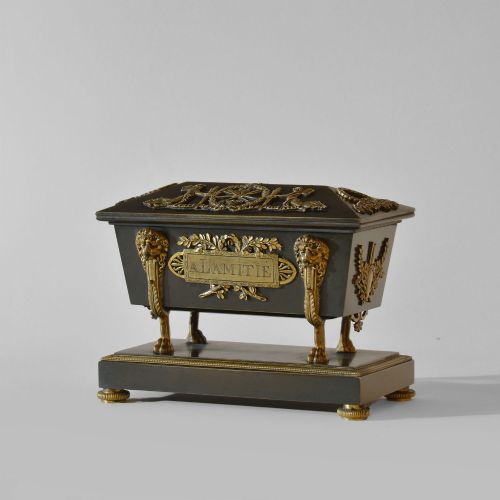
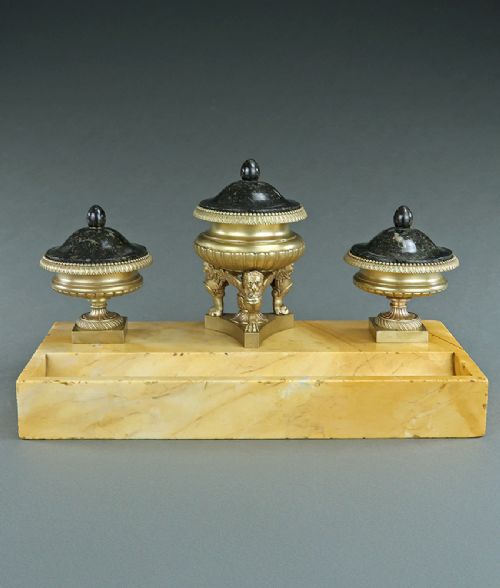


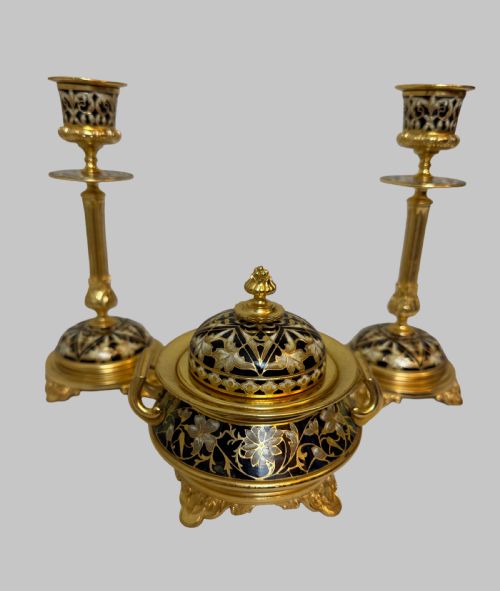


Gilt Bronze Inkwell
A gilt bronze inkwell brings tactile weight and golden warmth to a desk, holding centuries of correspondence in metal and stone.
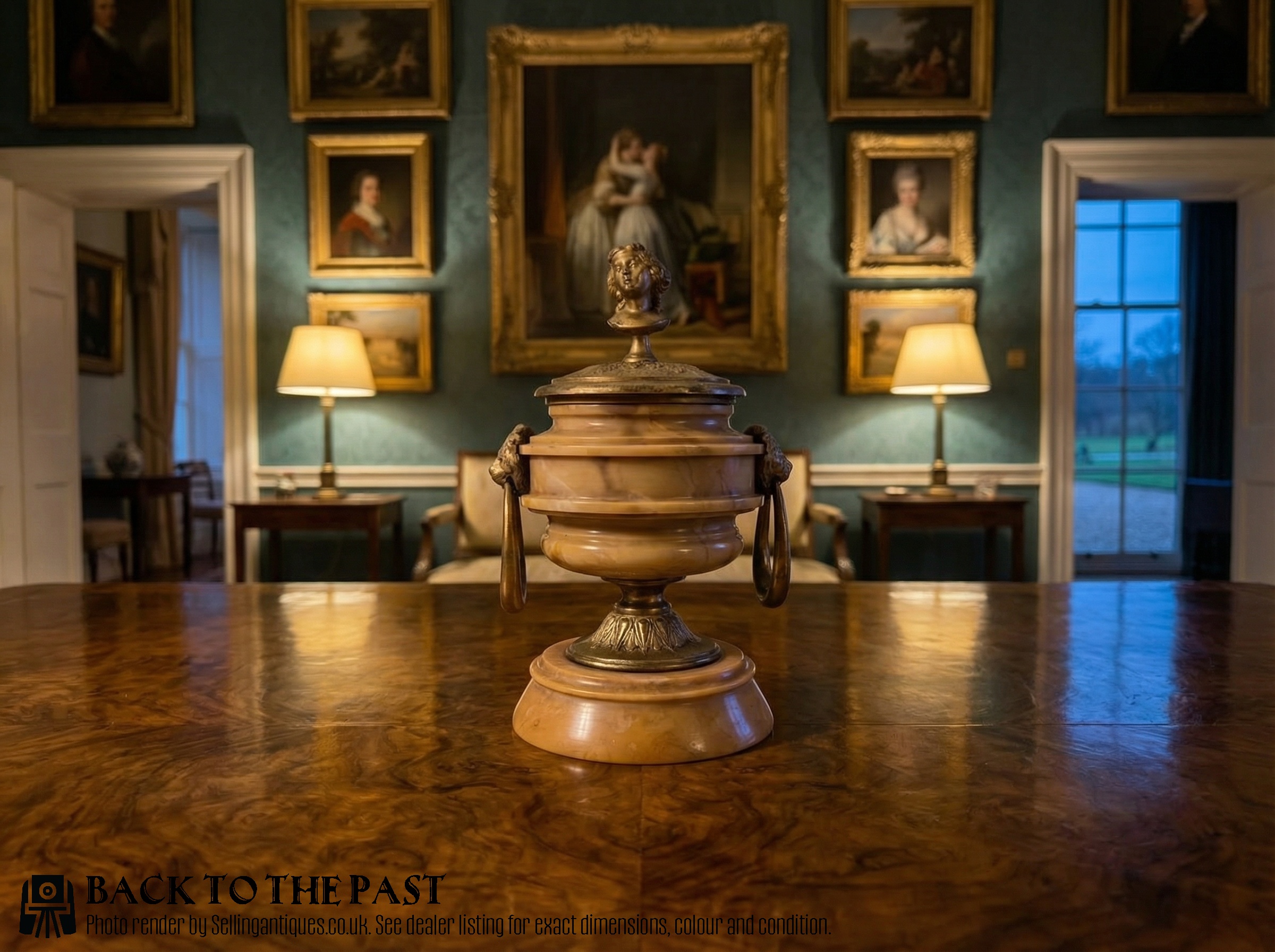
Gilt Bronze Inkwell
A gilt bronze inkwell combines cast metal with fitted glass liners or stone bases, appearing frequently as part of larger desk sets or as standalone inkstands. These pieces range from simple figural models to grand architectural structures designed for nineteenth-century writing desks.
French workshops produced many of the examples found here, favouring Empire, Neoclassical, and Second Empire styles. Collectors also encounter English, Austrian, and Chinese export designs featuring animals, figures, and classical mounts.
The most common versions on this page pair cast metal with marble bases in sienna, vert, or onyx. Animal figures, including foxes, cats, stags, and owls, recur alongside traditional architectural encriers.
Materials and Technique
Foundry workers cast these objects in bronze, brass, or allied copper alloys before applying fire gilding or gold leaf to create the characteristic ormolu finish. This surface treatment was often combined with patinated bronze to create tonal contrast on figures and mounts.
Carved marble, mahogany, coromandel-wood, and walnut frequently form the heavy bases and stands that anchor the metalwork. Glass inserts serve as the internal reservoirs for liquid ink, while champlevé enamel and rock crystal occasionally provide decorative highlights.
Gilt Bronze Inkwell Retail Price Guide 2026
Typical asking prices for gilt bronze inkwell among the pieces listed under this phrase on Sellingantiques today, from the lower quarter to the upper quarter. They describe what is for sale here now, not the wider market.
Qualities of Execution
The precision of the metal chasing dictates the clarity of fine details such as feathers, fur, and architectural mouldings. Superior pieces retain crisp lines and deep relief where the metalcutter has refined the raw casting by hand.
The harmony between materials distinguishes finer examples, such as when a carved marble base fits flush with bronze mounts or when heavy glass inserts match the proportions of the inkwell body. Signed works by known makers often display a higher grade of overall finishing.
Albert Marionnet·Bergmann Geschützt·Moser
The Gilt Bronze Inkwell Glossary
- Encrier
- A French term for an inkstand or inkwell, often encompassing a tray with pen rests and one or more ink reservoirs.
- Ormolu
- Gilded bronze produced by applying a mercury-gold amalgam to cast bronze and heating it to vaporise the mercury, leaving a durable golden coating.
- Champlevé
- An enamel technique where troughs are dug into the metal surface and filled with vitreous paste before firing.
- Sienna marble
- A decorative yellow-brown Italian marble with dark grey or purple veins, frequently used for nineteenth-century desk bases.
- Patinated bronze
- Metal treated with chemicals to produce a stable surface colour other than raw metallic bronze, commonly dark brown or green.
Gilt Bronze Inkwell: Frequently Asked Questions
What is an encrier?
An encrier is a portable desk set or inkstand designed to hold inkwells, pen trays, and sometimes sanders for blotting.
These pieces sat on nineteenth-century writing tables as both functional stationery equipment and decorative desk furniture.
Are glass liners original?
Many surviving inkwells retain their original blown or cut glass ink inserts, which fit snugly inside the metal collars.
Replacements are common due to breakage over decades of use, so matching glass adds significant integrity to the piece.
How do I date a nineteenth-century desk set?
Dating relies on stylistic clues, such as the classical motifs of the Empire period or the organic curves typical of later Art Nouveau work.
Foundry marks, material choices like sienna marble, and construction methods of the hinge mechanisms also help narrow the decade.