


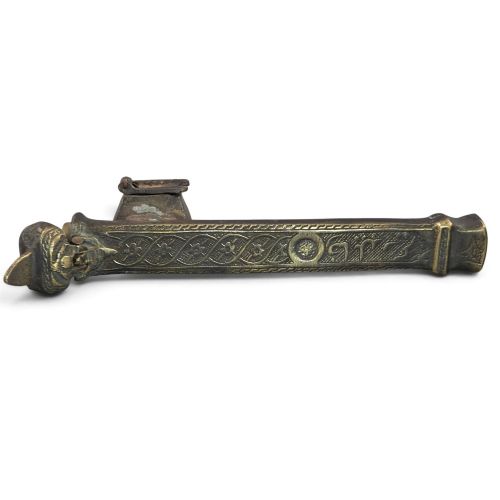
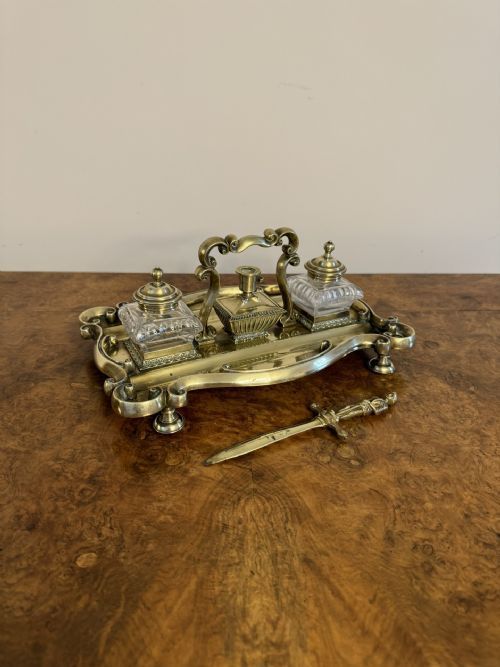

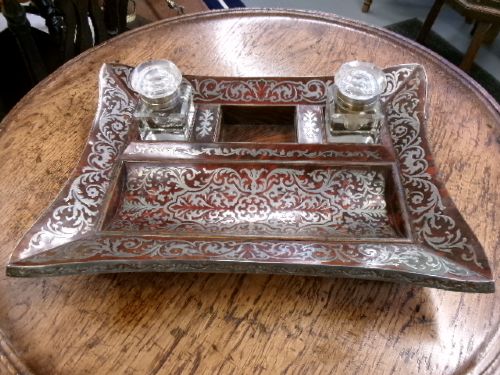

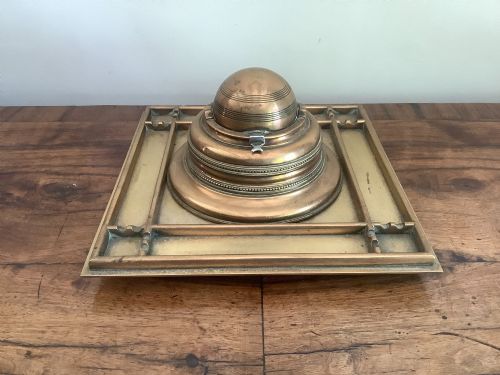


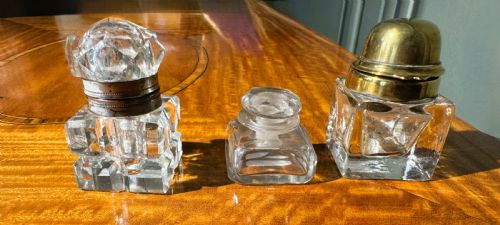


Brass Desk Inkwell
A brass desk inkwell holds the heavy ink of a writing table, sitting in brass, glass, and marble to anchor the daily desk.
Brass Desk Inkwell
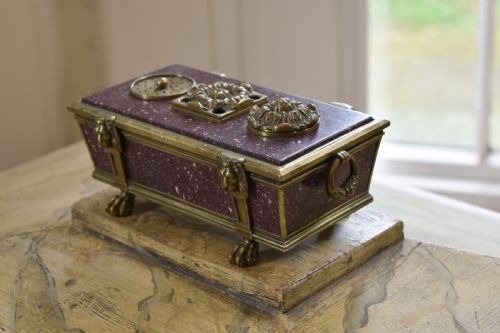
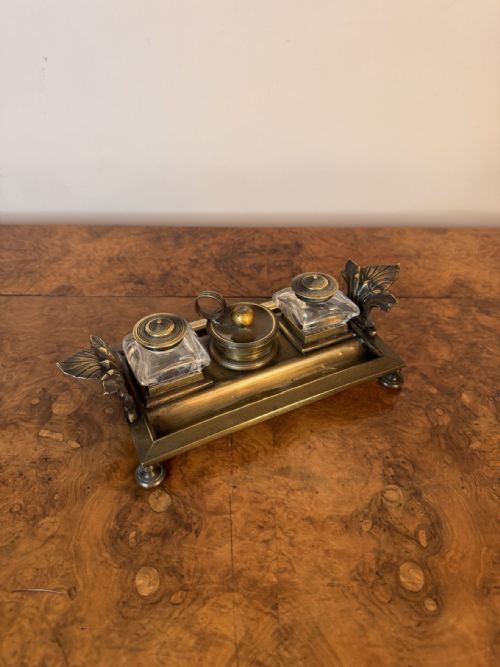
A brass desk inkwell is a functional writing accessory designed to hold ink securely upon a desk, taking the form of single pots, double stands, or fitted inkstands. Buyers searching for a brass desk inkwell encounter Victorian and nineteenth-century examples most frequently on this page, alongside earlier eighteenth-century forms and later Edwardian pieces.
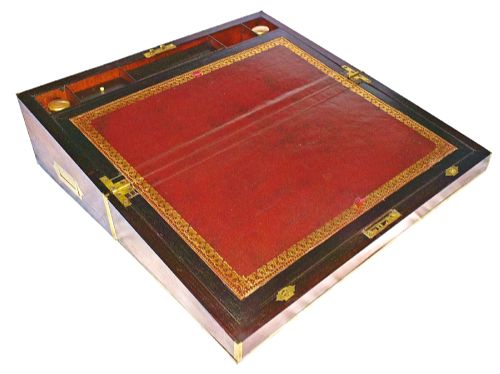
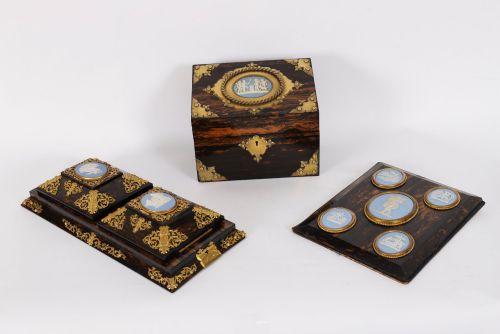
These items serve as the centrepiece of traditional stationery organisation, often paired with pen trays, stamp boxes, and built-in candle holders. The surviving pieces range from simple utilitarian brass containers to elaborate French ormolu, marble, and cut-glass compositions meant for prominent display in a study.
Makers and manufacturers produced these inkwells in varied regional styles, spanning English oak and brass work to French Napoleon III boulle work and Continental Art Nouveau designs. The selection mirrors the changing tastes of domestic and office writing habits across several centuries.
How they were made
Makers combined cast brass, ormolu, and gilt bronze with structural hardwoods such as oak, walnut, coromandel, and mahogany. Many assemblies integrate heavy cut glass or moulded glass inserts designed to hold the liquid ink without corrosion or leaking.
Decorative surfaces frequently incorporate marble bases, mother-of-pearl inlay, tortoiseshell, and intricate brass strapwork or boulle detailing. Metal components are commonly cast and chased, then secured to wooden or stone bases with small threaded brass fittings.
Brass Desk Inkwell Retail Price Guide 2026
Typical asking prices for brass desk inkwell among the pieces listed under this phrase on Sellingantiques today, from the lower quarter to the upper quarter. They describe what is for sale here now, not the wider market.
The object forms span simple desk tidies and stationery cabinets to French ormolu inkstands and bronze animal figures.
What varies in quality
The standard of a brass desk inkwell rests on the crispness of the metal casting, the weight and clarity of the glass inserts, and the structural integrity of the timber base. Superior examples retain their original matching ink bottles, fitted lids, and integrated pen trays without replacement parts.
Artisanal execution separates standard production items from exceptional decorative pieces, seen in the depth of chasing on gilt bronze, the choice of Sienna or green onyx marble, and the precision of inlaid wood or mother-of-pearl detailing.
The Brass Desk Inkwell Glossary
- Standish
- A portable tray or stand that holds inkwells, pen holders, and sanders for a desk. It acts as the primary desk accessory for writing materials.
- Ormolu
- Gilt bronze mounted on decorative objects, created by applying finely ground gold mercury amalgam to cast bronze. It provides a bright golden surface finish on nineteenth-century pieces.
- Boulle work
- An intricate form of marquetry using brass and tortoiseshell inlaid into wood furniture and desk accessories. Named after the French cabinetmaker André-Charles Boulle.
- Coromandel
- A dense, dark timber from Asia featuring striking black and brown grain patterns, frequently used for luxury nineteenth-century writing boxes and inkstands.
- Inkstand
- A complete desk assembly featuring one or more inkwells alongside compartments for pens, stamps, and sealing wax.
Brass Desk Inkwell: Frequently Asked Questions
What is a brass desk inkwell used for?
These pieces served as the primary container for liquid ink on nineteenth-century and earlier writing desks. They kept ink accessible for dip pens while protecting the desktop from spills.
Today, they function as decorative desktop accessories or collections of antique stationery equipment.
How do I date a brass desk inkwell?
Dating relies on stylistic markers such as Victorian ornamentation, Art Nouveau organic curves, or Georgian proportions, combined with material choices like coromandel or ormolu. Construction methods, including hand-cut screws and glass insert thickness, also provide clues to the period.
Matching the metalwork and wood types to known nineteenth-century manufacturing techniques helps narrow the production era.
Are glass inserts usually original?
Finding original glass ink inserts is common but not guaranteed, as fragile glass components were frequently replaced if broken during daily use. Original inserts typically fit the brass collar precisely and match the wear patterns of the surrounding stand.
Replacements are functional, but matching period-correct cut glass preserves the integrity of the piece.
How should I clean antique brass?
Antique brass benefits from gentle dusting and minimal intervention to preserve the natural aged patina accumulated over decades or centuries. Harsh commercial metal polishes strip the surface character and remove historical darkening.
Light cleaning with a soft, dry cloth maintains the surface without damaging inlaid wood or marble components.