




Nineteenth Century Brass Inkwell
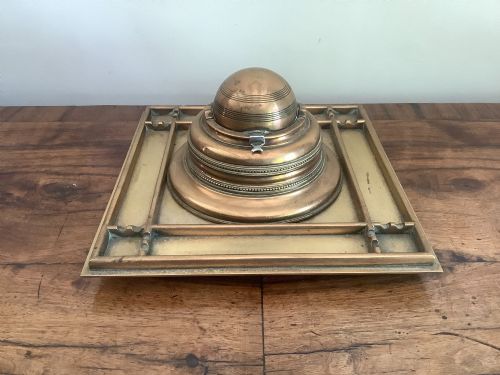
A nineteenth century brass inkwell brings Victorian craftsmanship and charm to any desk, offering a tactile piece of writing history.
Nineteenth Century Brass Inkwell
When searching for a nineteenth century brass inkwell, buyers encounter practical desk accessories ranging from simple stands to elaborate figural pieces. The pieces appearing here span the Victorian era and mid to late nineteenth century, reflecting both English and French manufacture.
Desk sets and stands form a prominent part of the selection, often incorporating fitted compartments for pens alongside the central ink container. Novelty designs representing animals such as owls, bulldogs, horses and parrots also feature heavily among the English examples.
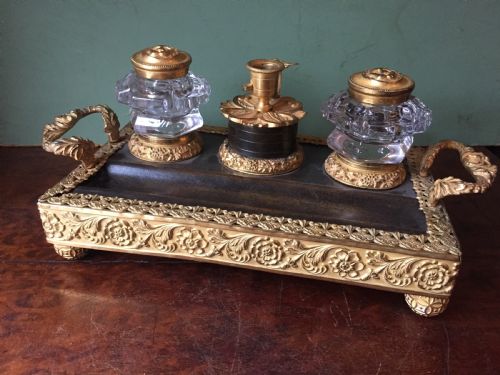
French pieces often showcase classical revival styles, including Empire and Rococo influences, frequently combining cast brass with materials like marble, ormolu and hand-painted porcelain. Simpler brass stands utilise coromandel wood bases or integrated glass reservoirs to create functional workspace furnishings.
Materials and construction methods
Construction relies heavily on cast brass, often finished with ornate detailing or combined with structural mounts of ormolu. Artisans mounted these metal elements onto dense timbers such as coromandel wood or set them alongside polished marble bases.
Interior components frequently incorporate glass to hold the liquid ink safely within the metal housing. Decorative flourishes include inlaid mother-of-pearl, agate accents and glass eyes fitted into figural novelty models.
Assessing quality in nineteenth century inkwells
Quality rests upon the crispness of the casting and the integration of diverse materials within the design. Pieces featuring hand-painted porcelain panels or intricately detailed animal forms demonstrate higher levels of artisanal skill.
The choice of secondary materials dictates the distinction between standard desk equipment and high-end desk sets. Finer items incorporate luxury timbers like coromandel wood, heavy cast brass elements and specialised decorative inserts rather than plain sheet metal.
The Nineteenth Century Brass Inkwell Glossary
- Coromandel wood
- A dense, dark timber imported from Asia and utilised for luxury nineteenth century desk stands and boxes. It provides a striking contrast against polished brass fittings.
- Ormolu
- A technique involving the application of finely ground, high-carat gold to a bronze or brass object. This finish imparts a rich golden sheen frequently seen on French Empire pieces.
- Novelty inkwell
- A functional desk accessory shaped to resemble an animal, figure or familiar object rather than a standard container. Popular Victorian examples depict birds and dogs with hinged heads concealing the ink reservoir.
- Desk set
- A coordinated group of desk accessories, often comprising an inkstand, matching candlesticks or pen trays mounted on a shared base. These larger ensembles typically feature porcelain or marble insets.
Nineteenth Century Brass Inkwell: Frequently Asked Questions
Are these inkwells still usable today?
Most antique inkwells function mechanically, featuring hinged lids and removable glass inserts that still hold liquid safely. However, modern fountain pen inks may react with older glass or metal liners.
Many collectors prefer to display these pieces as decorative desk accessories rather than filling them for daily writing tasks. Checking the integrity of internal glass reservoirs prevents any accidental leaks onto antique furniture.
What is a novelty inkwell?
A novelty inkwell is a desk accessory shaped like an animal, bird or object, designed to amuse Victorian writers. Common English examples depict owls, bulldogs, parrots and horses with hinged mechanisms concealed within the head.
These whimsical pieces combined practicality with playful Victorian interior decoration. They remain highly sought after by collectors focusing on figural metalwork.
How do I distinguish French and English styles?
French nineteenth century pieces frequently draw on Empire, Rococo or classical revival styles using ormolu, marble and painted porcelain. They emphasise architectural symmetry and ornate surface decoration.
English designs often lean towards sturdy wooden stands in coromandel or whimsical figural novelties cast in brass. Both origins reflect the distinct aesthetic priorities of their respective domestic markets during the Victorian period.