
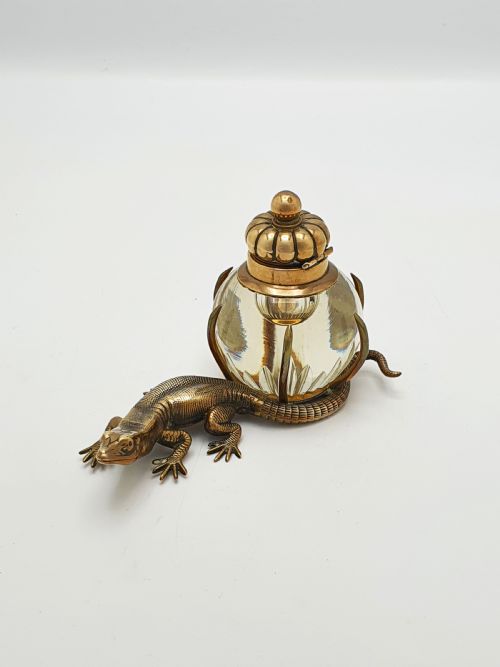


Victorian Novelty Brass Inkstand
A Victorian novelty brass inkstand is a witty desk accessory shaped as an animal or equestrian piece, offering a delightful conversation piece.
Victorian Novelty Brass Inkstand
A victorian novelty brass inkstand brings charm to a desk by taking the form of animals, birds, or equestrian gear. Buyers hunting for these pieces will frequently encounter brass and glass constructions shaped as owls, dogs, horses, lizards, and dolphins.
The objects stem predominantly from the nineteenth century, including the decades around eighteen-eighty and eighteen-ninety. They function both as practical writing equipment and as whimsical decorative figures for the desktop.
Materials and construction methods
Makers utilised cast brass, gilded bronze, and silver plate, often combining metal bodies with inset glass eyes and fitted glass ink inserts. Other iterations incorporate organic elements such as horn alongside wood and animal hoofs.
Artisans modelled figural subjects including cats, ostriches, stags, and parrots with detailed tooling to mimic feathers, fur, and skin. Hinged lids concealed the internal inkwells while maintaining the sculptural silhouette of the creature.
Materials recorded in the archive range from standard brass to organic substances like boar hoof and horn.
Distinguishing quality in novelty inkstands
Quality rests upon the naturalism of the modelling and the expressive detail captured in the metalwork. Pieces featuring original glass eyes and well-integrated hinged lids demonstrate superior workshop execution.
The choice of materials also elevates a piece, particularly where gilded bronze or silver mounts accompany the primary brass casting. The integration of unusual organic elements like horn or hoof alongside the metalwork marks higher ambition.
The Victorian Novelty Brass Inkstand Glossary
- Inkstand
- A desk stand holding one or more inkwells, often with space for pens. These pieces combine utility with decorative figural sculpture.
- Animalier
- A nineteenth-century artistic style focusing on the realistic portrayal of animals. This approach defines the sculptural quality of many desk accessories.
- Gilded bronze
- Bronze coated with a thin layer of gold or gold-coloured alloy. This material gives certain desk sets a richer surface finish than standard brass.
- Desk set
- A coordinated collection of writing accessories for the desktop. These sets frequently include inkwells alongside penholders and matching trays.
Victorian Novelty Brass Inkstand: Frequently Asked Questions
How were these inkstands used?
Owners placed them on writing desks to hold liquid ink for dip pens. The hinged sections lifted to allow access to the glass ink inserts.
They doubled as ornamental desk accessories that displayed the owner's taste for humorous or naturalistic sculpture.
What materials make up these pieces?
The primary structure relies on cast brass or gilded bronze, occasionally paired with silver plate. Many examples incorporate glass eyes and glass ink inserts.
Some designs integrate organic materials such as wood, horn, and horse or boar hoofs into the metal framework.
How can I date a Victorian inkstand?
Dating relies on stylistic markers from the nineteenth century, particularly the Victorian era and the decades around eighteen-eighty and eighteen-ninety. The presence of late Victorian design traits helps narrow the timeframe.
Construction techniques, such as the casting methods used for brass and bronze, also offer clues to the period of manufacture.