



Antique Marble Pen Tray
An antique marble pen tray brings gravitas to a writing desk, pairing cool stone with cast metal mounts.
Antique Marble Pen Tray
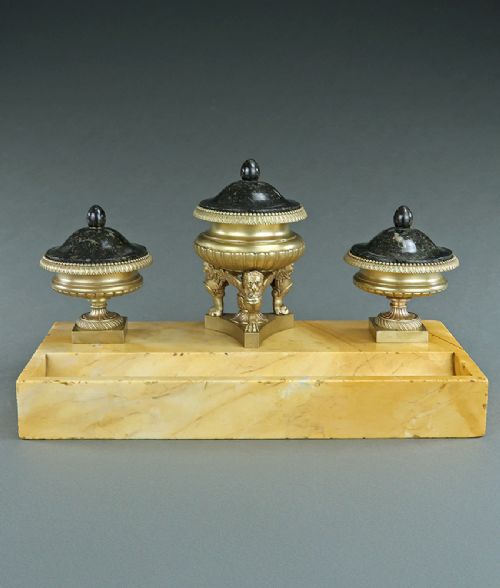
An antique marble pen tray sits on the desktop to hold writing instruments, frequently combined with inkwells and desk tidies. These desk accessories appear in forms ranging from simple channeled stone to elaborate inkstands fitted with patinated bronze figures.
The pieces on this page span the nineteenth century, nineteen-thirty, eighteen-seventy, the Edwardian period, and nineteen-hundred. Neoclassical, Art Deco, French Empire, Art Nouveau, Victorian, and Empire styles dominate the selection.
Buyers encounter materials such as gilt bronze, marble, ormolu, bronze, green marble, Sienna marble, metal, and patinated bronze. Desk accessories and inkstands form the primary object types available for the desk.
How they were made
Makers shaped heavy stones including Sienna marble, green marble, and onyx, often inlaying them with contrasting lapis or forming them into obelisks and trays. Stonework was combined with metalworking, utilising cast bronze, gilt ormolu, and patinated bronze for figures, mounts, and inkwells.
Foundries and workshops applied fire gilding and patination to metal components before mounting them securely to the stone bases. Many examples integrate functional ink receptacles and pen rests directly into the marble chassis.
Antique Marble Pen Tray Retail Price Guide 2026
Typical asking prices for marble pen tray among the pieces listed under this phrase on Sellingantiques today, from the lower quarter to the upper quarter. They describe what is for sale here now, not the wider market.
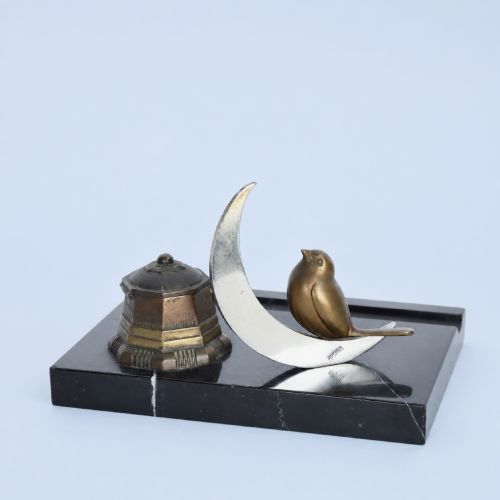
Desk accessories occasionally feature surprising companions, including cast bronze birds perched beside crescent moons and miniature portrait busts of Napoleon.
What varies in quality
Quality rests in the crispness of the bronze casting and the richness of the marble variety chosen, such as figured Sienna or deep green stone. Finer examples display meticulous chasing on metal mounts like birds, busts, and crescent moons.
The integration between the stone base and the metal elements defines the upper tier of pieces, where ormolu and patinated bronze sit flush and secure. Simpler channeled slabs represent the more utilitarian end of the range.
Lefebvre of Belgium·Zimmermann·A. Marionnet
The Antique Marble Pen Tray Glossary
- Ormolu
- Gilded bronze, where a layer of gold amalgam is applied to a bronze base through heat. This technique gives the metal a rich, warm yellow lustre found on nineteenth-century desk stands.
- Encrier
- A French term for an inkstand or inkwell fitted for the desk. These often incorporate pen trays alongside glass or metal ink reservoirs.
- Sienna marble
- A decorative yellow and brown marble quarried in Italy. It appears frequently in Neoclassical desk accessories for its dramatic natural veining.
- Patinated bronze
- Bronze that has been treated chemically to produce a specific surface colour or aged finish. It creates contrast against pale or dark polished marble bases.
Antique Marble Pen Tray: Frequently Asked Questions
What is an antique marble pen tray?
An antique marble pen tray is a desktop accessory designed to hold writing instruments, usually hewn from decorative stone like Sienna or green marble. They frequently incorporate bronze mounts or inkwells.
These pieces served functional roles in nineteenth- and early twentieth-century studies and offices, combining utility with ornamental display.
How do I date an antique desk tray?
Dating relies on stylistic evidence, such as the symmetrical restraint of Neoclassical pieces versus the stylized lines of Art Deco and Art Nouveau examples. Materials like gilt bronze, ormolu, and patinated bronze also offer clues to the period of manufacture.
Nineteenth-century pieces often favor grand architectural or classical motifs, while nineteen-thirty designs embrace streamlined geometric or figurative elements.
Were these trays used alone?
Many of these pieces functioned as part of larger desk sets or inkstands rather than standalone trays. They often accompanied matching inkwells, paperweights, and blotters.
Makers frequently combined the stone tray with cast bronze figures, busts, or animals to create a unified desktop ensemble.
What maintenance do stone and bronze require?
Stone and bronze surfaces need gentle dusting with a dry, soft cloth to prevent dust accumulation in crevices and channels. Liquid cleaners should be avoided to protect patinated bronze and exposed marble.
Polished marble benefits from occasional waxing with a neutral paste, while gilt ormolu requires careful handling to preserve the historic finish.