

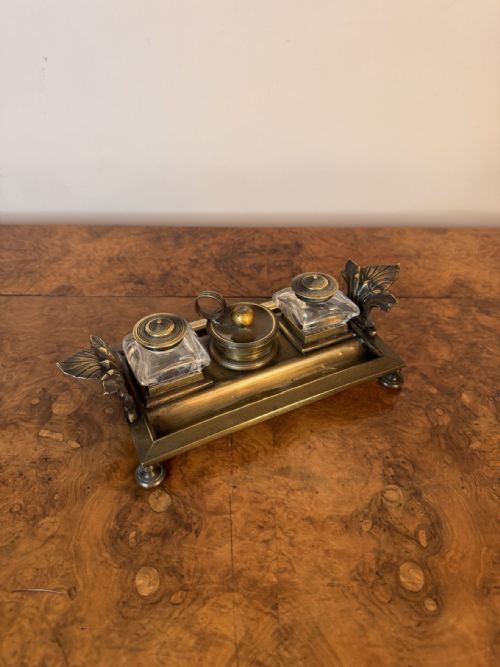

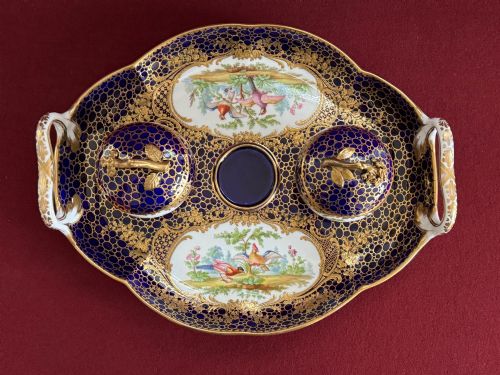
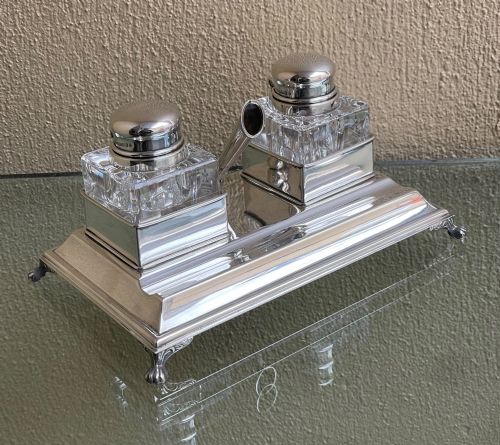
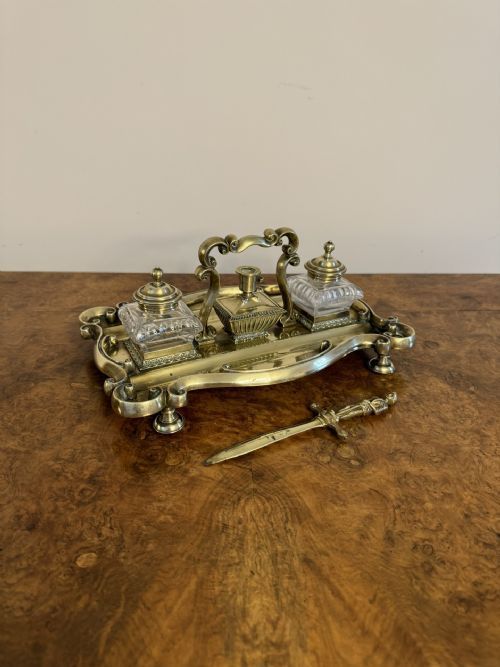





Double Inkwell Desk Set
A double inkwell desk set organises writing materials for correspondence, featuring twin ink reservoirs mounted in brass, silver plate, or wood.
Double Inkwell Desk Set
A double inkwell desk set provides a matching pair of ink pots alongside space for pens and stamps upon a shared base. These accessories anchor nineteenth-century writing desks, keeping black and red ink close to hand for daily correspondence.
Victorian and Edwardian examples dominate the selection, often formed from brass, walnut, or silver plate with glass inserts. Collectors frequently encounter French ormolu, carved Black Forest wood, and marble variations among the pieces.
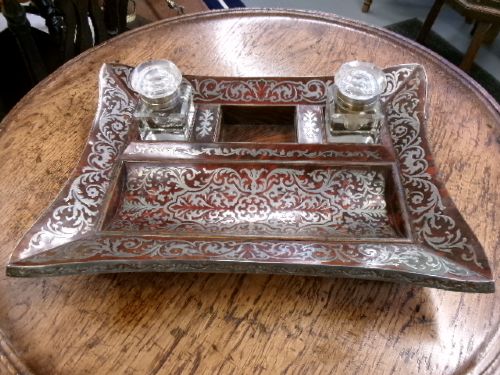
The objects serve both utility and display, ranging from simple oak trays to elaborate Boulle work platforms fitted with drawers. Many include integral candlesticks, chambersticks, or clock movements alongside the twin ink bottles.
Materials and construction
Foundries cast brass, bronze, and ormolu into ornate stands, applying gilding and chasing to surface details. Cabinetmakers shaped mahogany, walnut, oak, and ebony, frequently mounting them with brass handles and galleries.
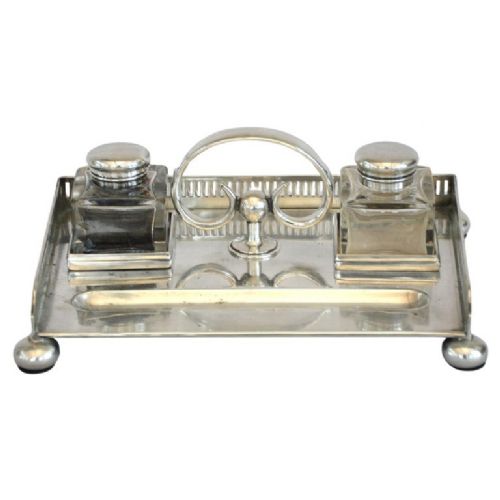
Glassmakers blew and cut heavy crystal inserts to fit the ink receptacles, often pairing them with hinged metal lids. Silversmiths hammered and hallmarked sterling silver trays, while electroplating added silver coats to base metals.
Double Inkwell Desk Set Retail Price Guide 2026
Typical asking prices for double inkwell desk set among the pieces listed under this phrase on Sellingantiques today, from the lower quarter to the upper quarter. They describe what is for sale here now, not the wider market.
Several Black Forest ink stands feature carved wooden bears and birds clutching prey in their wooden beaks.
Quality variations
Execution of decorative detail separates standard items from superior works, particularly in hand-chased bronzes and intricate wood carvings. Heavier gauge metals and genuine tortoiseshell inlay in Boulle work indicate higher workshop standards.
The presence of original matching glass ink bottles with undamaged collars elevates a piece. Superior examples retain fitted drawers, functioning clock movements, and complete silver hallmarks or maker marks.
Walker And Hall·James Cartland And Sons·Daniel Holy·Moser·Jules Dalou
The Double Inkwell Desk Set Glossary
- Standish
- A portable desk stand holding inkwells, pen holders, and sanders for drying ink. This term often describes larger, more formal desk accessories.
- Boulle work
- Marquetry technique using brass and tortoiseshell inlaid into wood furniture and desk accessories. Named after the French cabinetmaker.
- Ormolu
- Gilded bronze mounted onto decorative objects and furniture during the eighteenth and nineteenth centuries. The technique involves applying a gold-mercury amalgam to brass.
- Faience
- Tinned-glazed earthenware produced in various European potteries. It provides colourful painted decoration on ink stands and desk tidies.
- Sheffield plate
- Fused metal created by melting a sheet of sterling silver onto a copper base. This predates modern electroplating methods.
Double Inkwell Desk Set: Frequently Asked Questions
How do I date a desk set?
Dating relies on stylistic clues, materials, and maker marks stamped into the metal or paper labels underneath. Victorian pieces often display ornate brass casting or heavy walnut mounts, while Edwardian versions lean towards cleaner silver or plated designs.
Silver components carry hallmarks that indicate specific assay offices and year letters. Boulle work and French ormolu typically point to mid-nineteenth-century manufacture.
Are the ink bottles original?
Many desk sets retain their original cut glass or crystal ink bottles, often fitted with hinged brass or silver lids. Replacement bottles appear frequently because the original glass elements suffered chips or breakage over decades of use.
Matching glass weight, colour, and collar dimensions helps determine if the bottles belong to the stand. Original bottles often fit snugly into the dedicated apertures without excessive movement.
How do I care for antique metal and wood?
Wood bases require occasional polishing with a quality wax to nourish the grain and protect the finish from drying out. Metal parts benefit from gentle dusting, avoiding harsh commercial cleaners that strip away historic patina and gilding.
Glass inkwells should be washed gently in warm water to remove dried ink residue without scratching the interior surfaces.