




Brass Pen Tray Inkwell
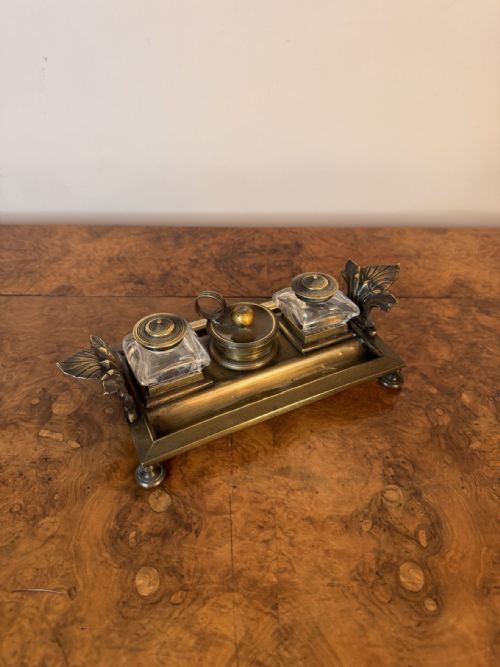
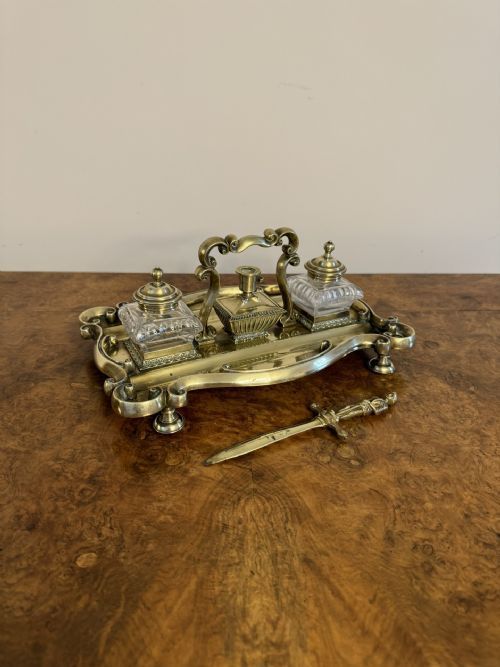
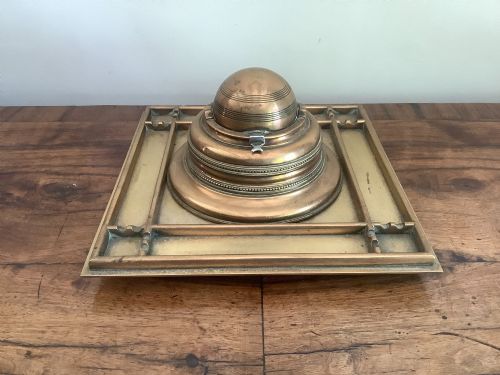
A brass pen tray inkwell brings order to the desk, combining a built-in ink reservoir with a handy channel for resting your writing implements.
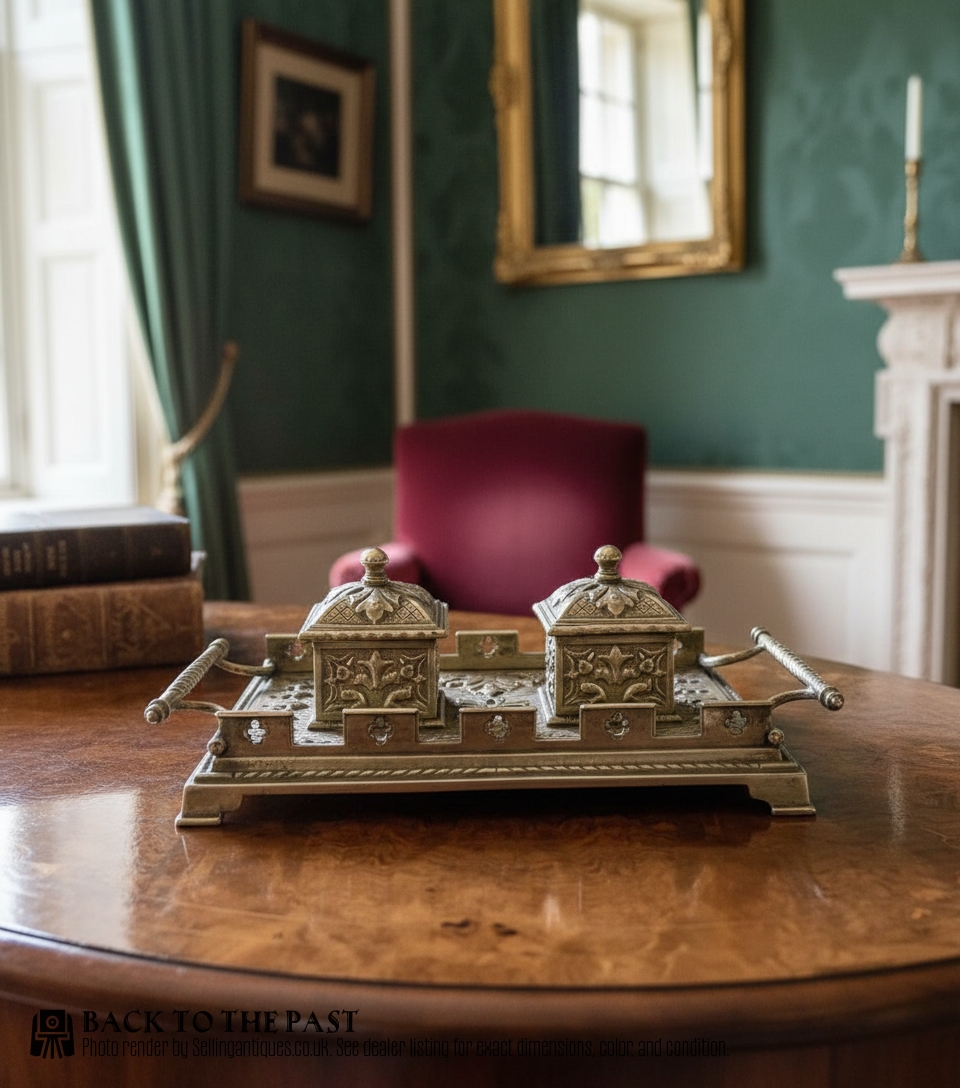
Brass Pen Tray Inkwell
A brass pen tray inkwell combines a functional ink reservoir with an integrated channel to hold a pen, forming a tidy desk accessory. These pieces appear frequently across the Victorian period, alongside earlier Regency designs and later Edwardian iterations.
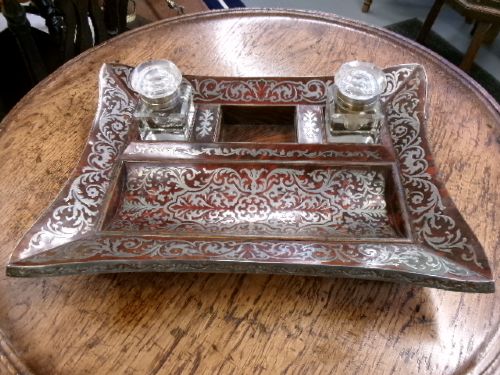
The objects take various forms on the page, from simple cast brass trays to elaborate desk stands fitted with glass inserts and hinged lids. Many examples integrate multiple materials alongside the main brass structure.
Originating largely from British and French workshops, these desk sets reflect the writing habits of the nineteenth century. Buyers encounter both plain utility pieces and heavily ornamented designs suited for a formal study.
What varies in quality
The crispness of the casting marks the difference between standard production pieces and superior examples. High-grade items retain sharp relief in their ornamentation, whereas lesser pieces show smoothed details and hurried finishing.
The choice of secondary materials dictates the tier of the piece. Solid exotic woods, heavy gilt ormolu, and thick hand-cut glass liners separate elaborate salon desk stands from everyday brass utilitarian trays.
Brass Pen Tray Inkwell Retail Price Guide 2026
Typical asking prices for brass pen tray inkwell among the pieces listed under this phrase on Sellingantiques today, from the lower quarter to the upper quarter. They describe what is for sale here now, not the wider market.
Keep an eye out for curious novelty designs, including startled owls with glass eyes and playful kittens frolicking across the bronze inkstand.
James Cartland & Sons
The Brass Pen Tray Inkwell Glossary
- Inkstand
- A complete desk accessory comprising one or more inkwells alongside trays for pens and sealing wax. It forms the central station for correspondence on a period desk.
- Ormolu
- Gilded bronze used extensively in French and English decorative metalwork. The technique gives a rich gold-coloured finish to cast brass or bronze mounts.
- Coromandel
- A dense, dark timber featuring striking light brown grain patterns. Makers utilised this heavy wood as a contrasting base for brass inlay on luxury desk sets.
- Champlevé
- An enamelling technique where troughs are dug into a metal surface and filled with vitreous paste before firing. This colourful decoration often highlights French desk stands.
- Boulle work
- An elaborate form of marquetry using tortoiseshell and brass inlaid in contrasting patterns. It appears on mid-century desk stands influenced by French design.
Brass Pen Tray Inkwell: Frequently Asked Questions
How do I clean a brass pen tray inkwell?
Dust the piece gently with a soft dry cloth to protect the aged surface. Avoid harsh chemical polishes that strip away historical patina from the brass.
Take care around inlaid woods or glass inserts to prevent moisture damage during maintenance. A dry brush helps clear accumulated dust from chased decorative recesses.
Are these inkwells safe for daily use?
Most antique inkwells feature removable glass liners that hold liquid safely away from the outer metal or wood structure. Inspect the glass insert for internal cracks before introducing any moisture or ink.
Modern fountain pen inks may stain antique glass if left to dry completely inside the reservoir. Rinse the glass insert thoroughly after use to preserve the material.
How do I date a brass desk set?
Stylistic cues point toward specific eras, such as organic whiplash curves for Art Nouveau or heavy cast ormolu for French Empire pieces. Secondary materials like coromandel wood and tortoiseshell typically indicate mid-nineteenth-century production.
Maker marks stamped into the brass base offer concrete clues for specific manufacturing dates. Construction methods, such as hand-cut screws versus modern fasteners, also help verify the age.
Why do some inkstands include a bell?
A mounted bell allowed writers to summon domestic staff or household servants without leaving the desk. This practical addition was common on larger Victorian and Edwardian stationery sets.
Desk bells usually share the same cast brass or ormolu finish as the surrounding pen tray. The clapper mechanism should ring clearly when struck gently.