




Brass Pen Tray Inkstand
A brass pen tray inkstand organises a writing desk with integrated holders for ink and pens, offering both metalwork utility and period display.

Brass Pen Tray Inkstand
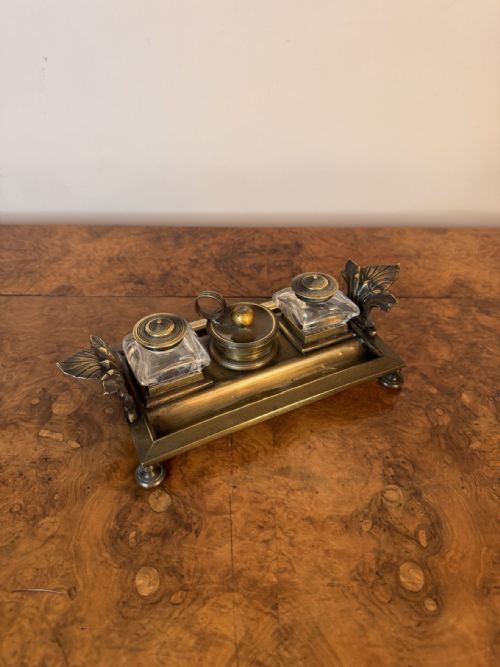
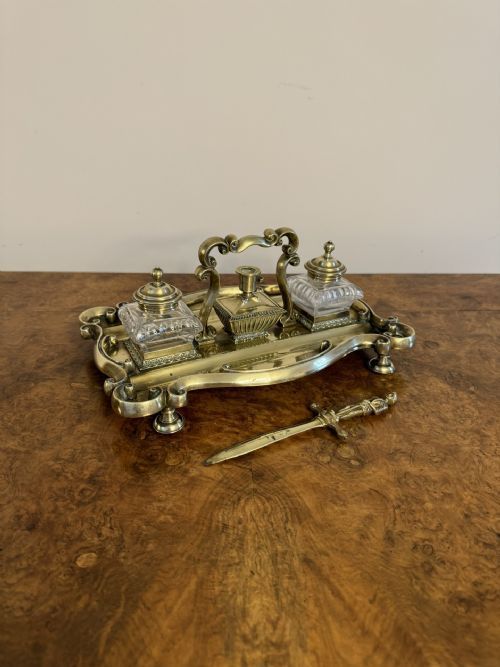
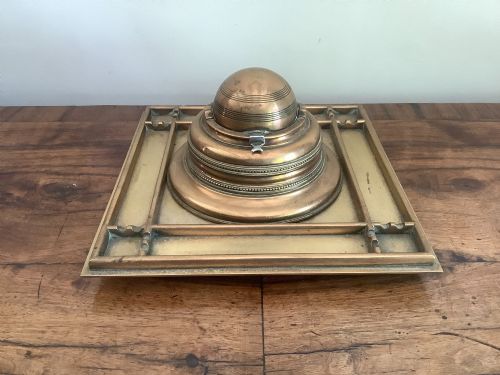
A brass pen tray inkstand brings together a surface for resting writing implements and housing for inkwells, originating primarily across the nineteenth century. These desk accessories appear in British Victorian and Edwardian iterations alongside French Napoleon III, Empire, and Art Nouveau designs.
The most frequent examples combine cast brass frameworks with fitted glass ink inserts, mounted upon wooden bases such as coromandel, walnut, rosewood, or oak. Pieces range from simple utilitarian trays to elaborate stands incorporating marble, tortoiseshell, and enamel.
Makers utilised diverse stylistic influences, producing utilitarian oak stands alongside ornate cast-brass desk sets adorned with animal figures, cabochons, and inlaid metalwork.
Materials and Technique
Foundry work dominates construction, using cast brass, gilt bronze, and ormolu to form the structural trays, pen rests, and inkwell lids. Metal components frequently feature chased or engraved surface details, supplemented by champlevé enamel or applied gilt finishes.
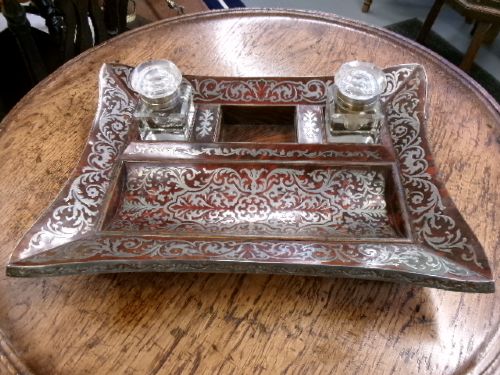
Cabinetmakers combined exotic woods like coromandel and rosewood with contrasting inlays of mother-of-pearl, tortoiseshell, and brass in the Boulle tradition. Glass reservoirs were blown and cut to fit securely within the metal collars and wooden recesses.
Brass Pen Tray Inkstand Retail Price Guide 2026
Typical asking prices for brass pen tray inkstand among the pieces listed under this phrase on Sellingantiques today, from the lower quarter to the upper quarter. They describe what is for sale here now, not the wider market.
Listings feature Victorian, Edwardian, and Regency periods alongside French styles like Napoleon III and Art Nouveau.
Craftsmanship and Material Depth
Quality rests upon the crispness of the metal casting and the depth of surface ornamentation, where hand-chased details surpass plain moulded equivalents. The integration of high-grade materials such as solid coromandel, tortoiseshell, or heavy fire-gilded ormolu elevates a piece above standard brass production.
Cohesion of design defines superior examples, visible in matched glass inserts, robust hinge mechanisms, and harmonious combinations of wood and metal rather than basic assembled components.
James Cartland & Sons
The Brass Pen Tray Inkstand Glossary
- Ormolu
- A gilded bronze technique utilising finely ground gold mercury amalgam applied to cast brass or bronze. This process yields a rich, warm metallic lustre popular on nineteenth-century French desk stands.
- Boulle work
- An elaborate marquetry technique featuring tortoiseshell and brass inlay developed in France. It frequently embellishes nineteenth-century wooden desk stands.
- Champlevé
- An enamelling method where troughs are scooped into a metal surface and filled with vitreous paste before firing. It adds vibrant colour to decorative brass inkstands.
- Coromandel
- A dense, heavily figured tropical hardwood prized for its dark grain and rich colour. Cabinetmakers utilised it as a base for inlaid brass desk accessories.
Brass Pen Tray Inkstand: Frequently Asked Questions
What is a brass pen tray inkstand?
It is a desk accessory designed to hold writing instruments alongside one or more inkwells. The integrated tray keeps pens accessible while protecting the desktop from ink spills.
These pieces served a practical function in nineteenth-century correspondence before the widespread adoption of the fountain pen. Today they function as decorative desktop items that reflect period metalwork and woodworking styles.
How do I date a brass inkstand?
Dating relies upon stylistic markers such as Victorian ornamentation, Edwardian proportions, or organic Art Nouveau curves. Materials like coromandel wood or tortoiseshell inlay also point toward mid-nineteenth-century manufacturing trends.
Maker marks, registration lozenges, and construction techniques further help narrow the decade of production. Examining the fixings and glass inserts provides additional clues regarding age.
Were these stands made only in Britain?
British workshops produced numerous utilitarian and ornate brass and wooden desk sets during the Victorian era. However, continental makers, particularly in France, produced highly decorative ormolu, champlevé, and Boulle work stands.
Imported pieces often display distinct aesthetic preferences, such as Empire or Napoleon III styling, contrasting with simpler English oak or walnut versions.
How should I clean a brass inkstand?
Dusting with a soft, dry cloth removes surface particles without disturbing the metal or wood. Avoid abrasive polishes that strip original patination or damage delicate gilt and enamel surfaces.
Wooden bases benefit from occasional appropriate wax nourishment, while glass ink inserts can be washed separately with mild soap and water.