


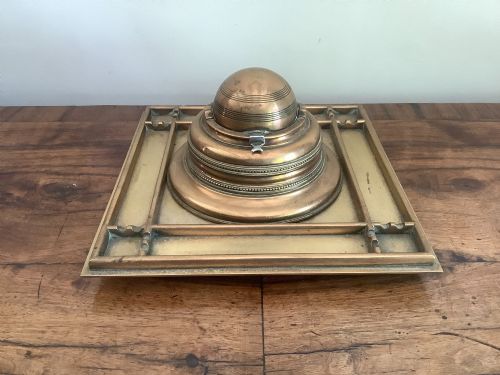


Brass Double Inkwell
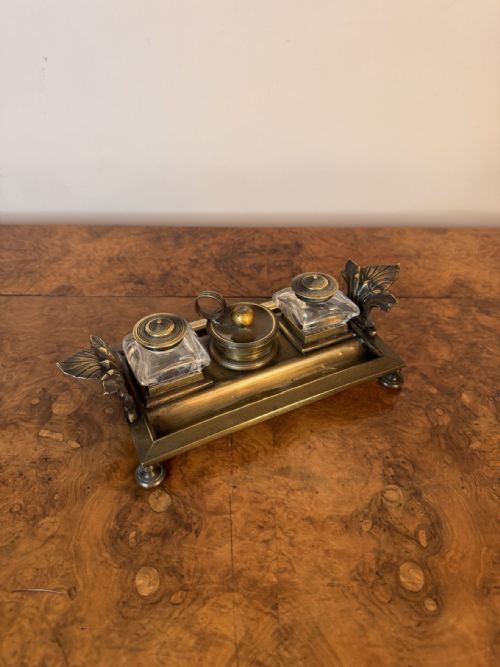
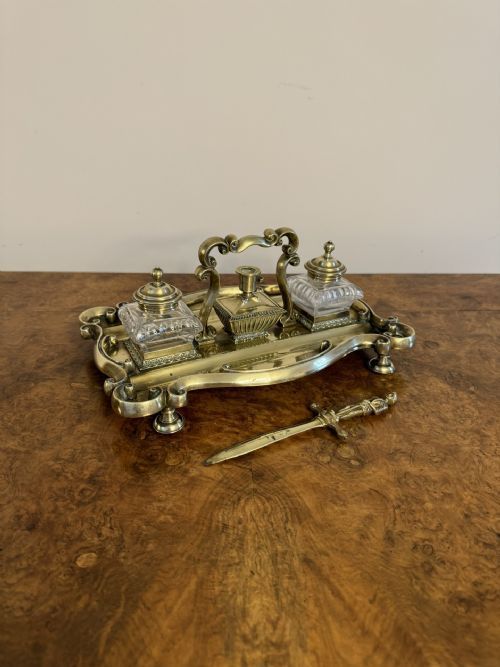
A brass double inkwell is a robust desktop accessory designed for dual-ink writing, pairing heavy cast metal with paired glass wells.

Brass Double Inkwell
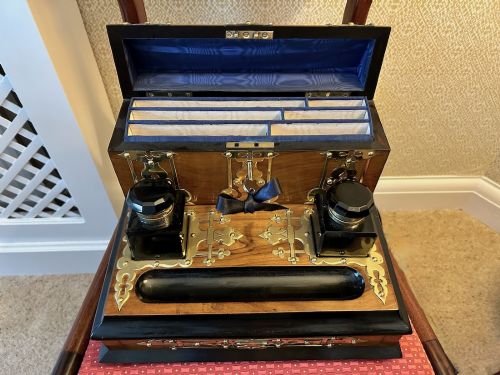
A brass double inkwell serves as a practical desk accessory designed to hold two distinct writing fluids, typically featuring twin glass inserts nestled within a metal or wooden tray. These items range from simple 19th-century domestic desk sets to ornate French ormolu and marble stands intended for formal correspondence.
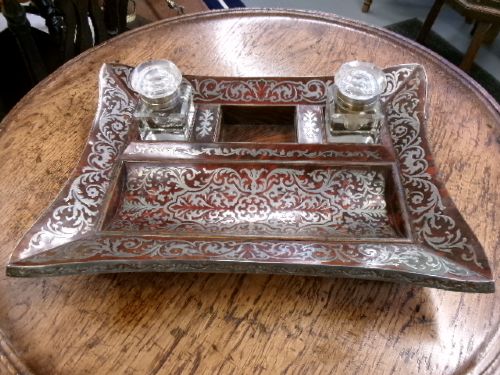
Buyers encountering this selection will frequently find Victorian and Edwardian examples alongside earlier Georgian stands and continental pieces utilising Boulle work or cast brass. The forms vary from compact desk tidies incorporating drawers and stamp boxes to substantial freestanding architectural inkstands.
How they were made
Maker workshops utilised heavy sand-cast brass, ormolu, and gilt bronze to form the structural trays and hinged lids, often combining the metal with turned hardwoods such as walnut, mahogany, and oak. These frames provide the substantial weight required to steady the piece during rigorous daily pen work.
Original glass ink pots and cut-glass inserts sit securely within the metal housings, frequently accompanied by hinged lids designed to limit ink evaporation. Continental pieces incorporate polished marble bases, while Boulle work versions display intricate brass and tortoiseshell inlay set into wooden carcases.
Brass Double Inkwell Retail Price Guide 2026
Typical asking prices for brass double inkwell among the pieces listed under this phrase on Sellingantiques today, from the lower quarter to the upper quarter. They describe what is for sale here now, not the wider market.
Some Victorian brass double inkwells arrived paired with chaff-cutter escapement clocks, proving that 19th-century writers took timekeeping quite seriously.
What varies in quality
The distinction between standard utility items and finer pieces lies in the crispness of the cast brass ornamentation and the presence of original components like matching cut-glass bottles. Heavier gauge metalwork and sophisticated decorative programmes, such as French rococo revival casting or fine marquetry inlay, indicate superior production.
Condition and completeness heavily influence the standing of an item, particularly the survival of matching glass ink inserts without chips to the collars. Retaining original operational elements, such as working drawer actions or intact ceramic liners, separates workshop-standard examples from exceptional specimens.
James Cartland and Sons·Moser
The Brass Double Inkwell Glossary
- Standish
- A portable desk stand or tray fitted with inkwells, pen holders, and sometimes sanders or wafer boxes for writing materials.
- Ormolu
- Gilded bronze or brass mountings applied to decorative objects and furniture, popular in French and English luxury desk sets.
- Boulle work
- A style of marquetry utilising brass and tortoiseshell inlaid into wood, seen on decorative 19th-century French desk stands.
- Desk tidy
- A compartmentalised desktop organiser designed to hold correspondence, pens, and related writing accessories alongside ink bottles.
Brass Double Inkwell: Frequently Asked Questions
What is a brass double inkwell used for?
These accessories held two types or colours of writing fluid, allowing a writer to switch between black and red inks without changing pens. They served as central fixtures on writing desks in offices and homes.
Beyond holding ink, many incorporated trays for dip pens, stamp boxes, and compartments for sealing wax or paper, keeping essential correspondence tools close at hand.
How do I date a brass double inkwell?
Dating relies on stylistic clues, casting techniques, and materials such as oak, walnut, or vert marble. Georgian and early Victorian examples tend to show heavier cast construction and simpler lines, while late 19th-century pieces often display Art Nouveau sinuous motifs.
Patent marks, registration numbers stamped into the metal, and the presence of original glass inserts also help narrow down the period of manufacture, particularly for pieces produced during the Victorian era.
Are the glass inserts usually original?
Finding a piece with its original pair of glass ink bottles is a significant bonus, as these fragile components were frequently broken or replaced over decades of use. Replacements are common and often identifiable by subtle differences in glass tint or collar fit.
When evaluating a piece, check whether the glass sits flush within the brass collars and matches the scale and period of the surrounding standish.
How do I care for a brass double inkwell?
Maintain the metal surfaces with a dry cloth to prevent dust accumulation, avoiding harsh commercial polishes that can strip patination and damage adjacent wood or marble elements. If the brass requires cleaning, a gentle wipe with a damp cloth suffices.
Keep glass inserts clean by washing them gently with warm water to remove dried ink residue, ensuring the interior collars remain free from moisture that could affect antique metal mounts.