







Brass Desk Organiser
A brass desk organiser brings order and substance to a study, combining utilitarian compartments with enduring materials.
Brass Desk Organiser
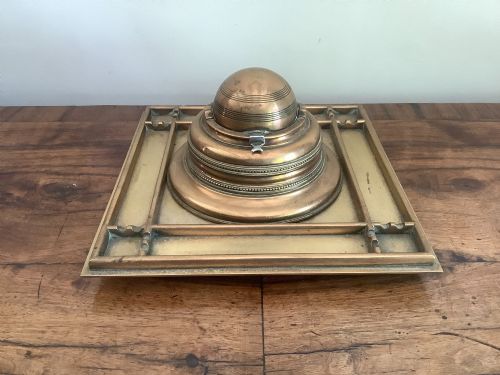
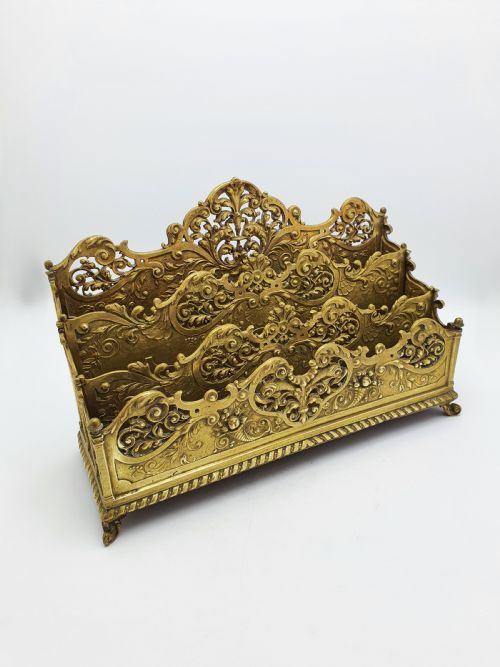
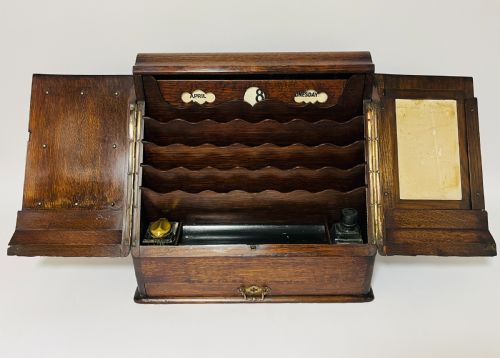
A brass desk organiser encompasses a range of tabletop items designed to keep correspondence and writing materials in order. When searching for a brass desk organiser, buyers encounter stationery boxes, letter racks, inkstands, and desk tidies dating from the nineteenth and early twentieth centuries. These pieces reflect periods from the Victorian and Edwardian eras through to Arts and Crafts and revival styles.
The primary forms on this page include walnut and oak stationery cabinets alongside brass letter racks and inkstands. Many examples combine rich timbers with heavy brass mounts, hinges, and galleries. Pieces range from compact tabletop tidies to substantial country house letter boxes and fitted inkwell stands.
Materials and construction
Cabinetmakers built the structural elements of these organisers using hardwoods such as walnut, oak, mahogany, rosewood, and coromandel. Brass provided the structural corners, hinges, handles, and decorative mounts that reinforced and ornamented the timber bodies. Some pieces incorporate glass inkwells, marble bases, or mother-of-pearl inlay alongside the primary metal and wood.
Joining techniques relied on traditional cabinetmaking methods to house stationery compartments and drawers securely. Brass elements were cast, chased, and fixed with small screws, while inlay work utilised fine brass stringing to accentuate the wood grain. Patent mechanisms occasionally appear, particularly in expanding book slides and locking stationery boxes.
Brass Desk Organiser Retail Price Guide 2026
Typical asking prices for brass desk organiser among the pieces listed under this phrase on Sellingantiques today, from the lower quarter to the upper quarter. They describe what is for sale here now, not the wider market.
Distinctions in quality
Quality rests in the weight of the casting and the selection of the timber. Finer pieces display heavily chased or ormolu-finished brass paired with highly figured walnut, coromandel, or rosewood. Secondary woods and thinner brass sheeting indicate more utilitarian production.
The precision of the joinery and the integration of internal fittings also separate standard items from superior work. Well-made stationery boxes and inkstands feature tightly fitted partitions, original glass inkwells, and robust hinges that support heavy fall-front lids without sagging.
The Brass Desk Organiser Glossary
- Standish
- A portable tray or stand holding inkwells, penholders, and sanders for writing. This traditional desk accessory formed the centrepiece of the nineteenth-century writing table.
- Stationery box
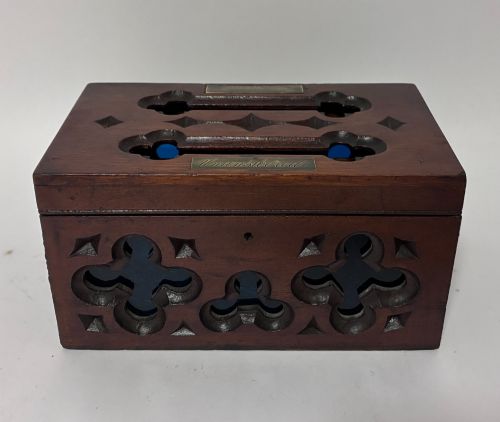
- A tabletop cabinet with a sloping or fall-front lid designed to hold envelopes and writing paper. These boxes often feature tiered internal dividers.
- Ormolu
- Gilded bronze or brass used for decorative mounts and decorative hardware. It provides a bright, golden surface finish on French and English pieces.
- Coromandel
- A dense, heavily figured tropical hardwood with dark brown and black grain patterns. Cabinetmakers used it for luxury nineteenth-century boxes and desk stands.
- Book slide
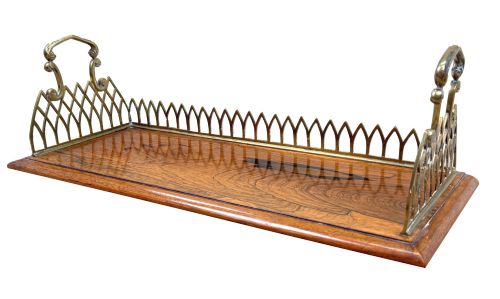
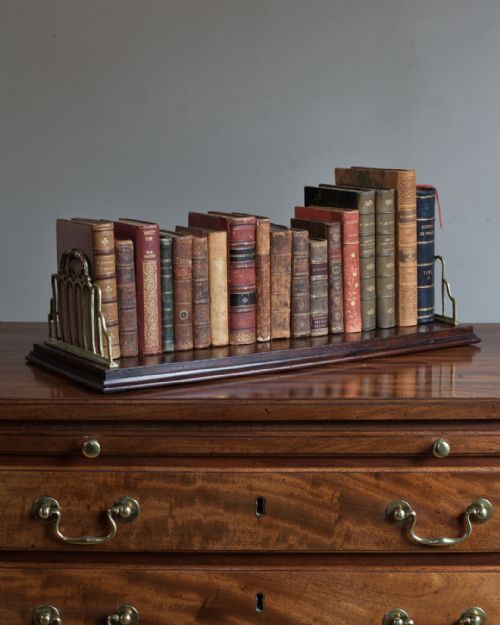
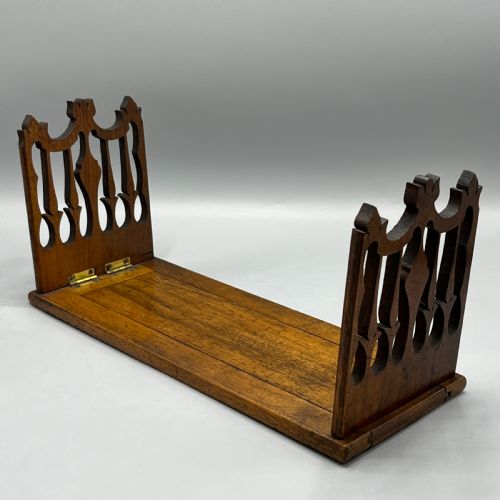
- An expanding tabletop rack with hinged or sliding ends to hold a row of books upright. Brass mounts frequently reinforce the wooden supports.
Brass Desk Organiser: Frequently Asked Questions
What items belong in a desk organiser?
These accessories typically held envelopes, writing paper, inkwells, pens, and blotting pads. Many included specific compartments for stamps and visiting cards.
Larger versions incorporated small drawers or lidded boxes for sealing wax and nibs, keeping the writing surface clear.
How do I date a Victorian piece?
Dating relies on timber choices, brass casting styles, and registration marks stamped into the metal. Gothic and Rococo revival pieces often point to the mid-nineteenth century.
Later Victorian and Edwardian examples tend to feature simpler oak construction or specific patent mechanisms.
Are inkwells usually original?
Many pieces retain their original cut-glass inkwells, sometimes fitted with brass or silver-plated collars. Replacements do occur due to breakage over decades of use.
Matching the glass colour, weight, and collar style helps determine if the inkwells belong to the stand.
How should I clean the brass?
Light dusting with a dry cloth preserves the aged patina that collectors prefer. Aggressive metal polishes remove the historical surface and can damage adjacent wood.
If cleaning is necessary, use a mild, non-abrasive cleaner and protect the surrounding timber from moisture.