






Victorian Desk Inkstand
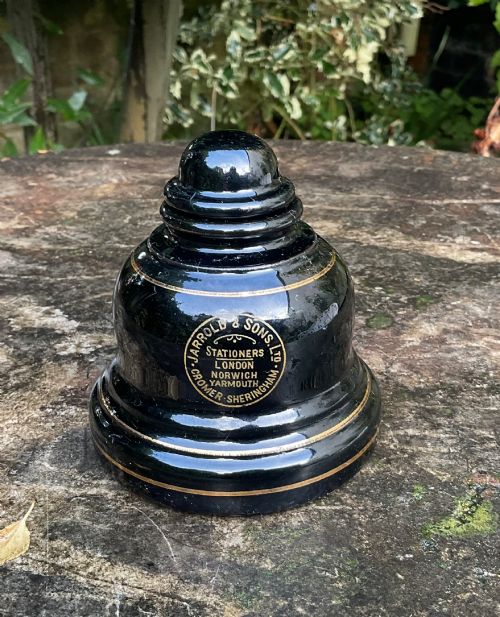
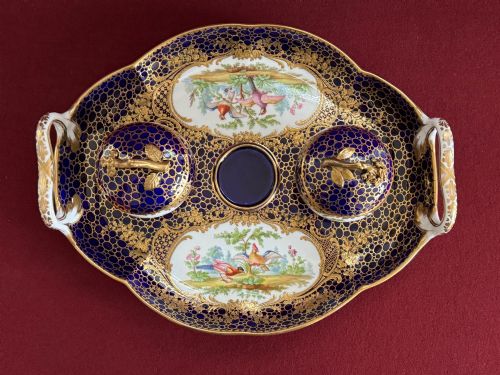
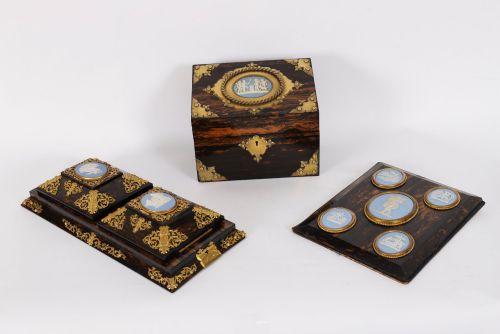
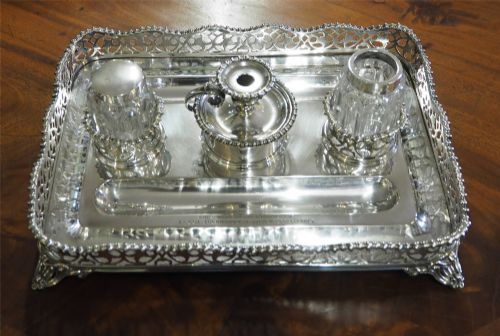
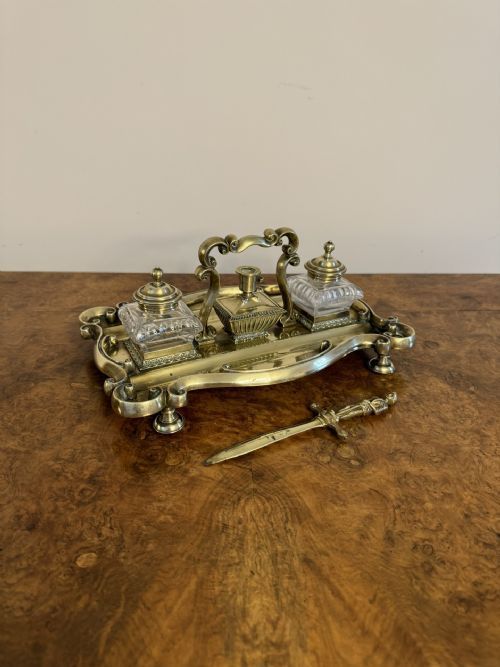
A victorian desk inkstand organises the writing desk with reservoirs for ink and holders for pens.

Victorian Desk Inkstand
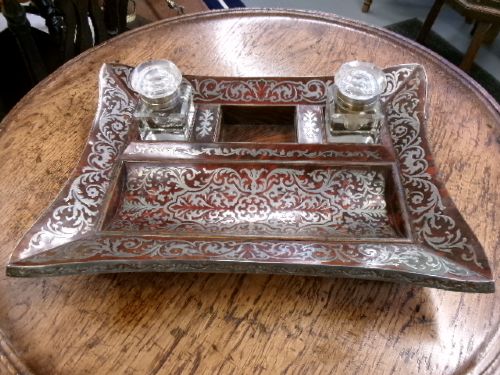
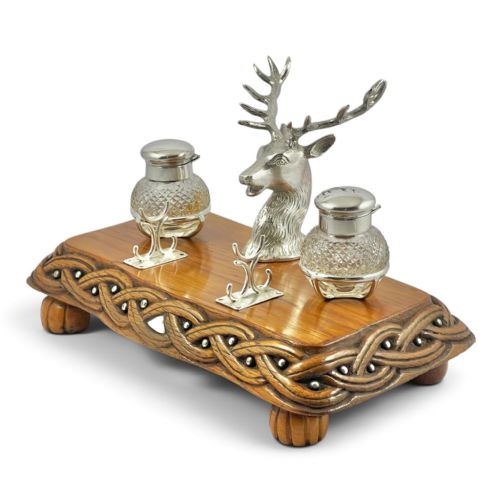
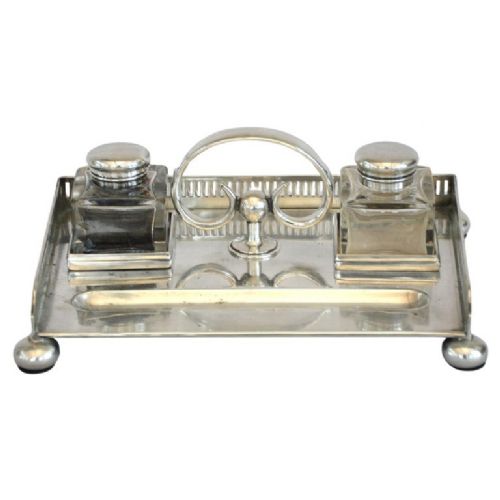
A victorian desk inkstand brings together inkwells, pen trays and sometimes tapersticks or stamp boxes on a fitted base. Most examples met here span the nineteenth century, taking forms from simple wooden trays to elaborate brass and glass set-ups.
Makers utilised diverse materials to suit the study or the drawing room, resulting in objects that served both practical writing needs and decorative display. The selection ranges from portable travel versions to heavy double-inkstands meant to stay in one place.
How they were made
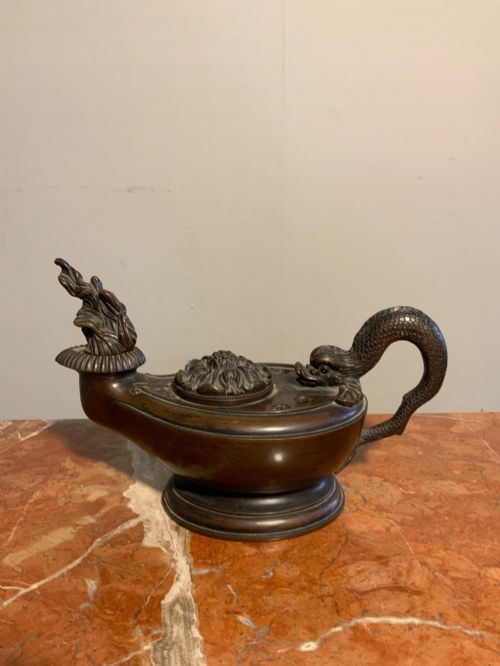
Foundations rely on timber like walnut, oak and coromandel, often mounted with brass strapwork, tortoiseshell or boulle inlay. Metalwork involves cast bronze, ormolu and silver plate, shaped into detailed frames and figural ornaments.
Vessels are formed from heavy cut glass or moulded ceramic, paired with hinged metal lids to keep the ink from drying. Stonework appears through marble and Ashford marble bases, adding substantial weight to the assembly.
Victorian Desk Inkstand Retail Price Guide 2026
Typical asking prices for victorian desk inkstand among the pieces listed under this phrase on Sellingantiques today, from the lower quarter to the upper quarter. They describe what is for sale here now, not the wider market.
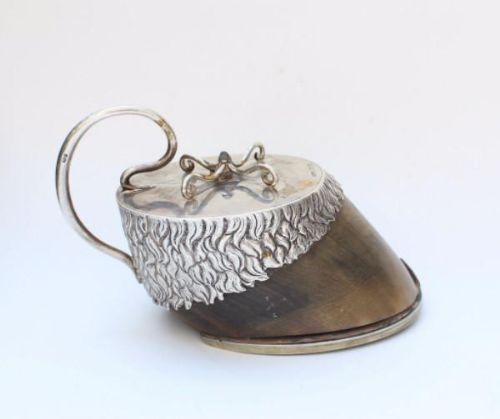
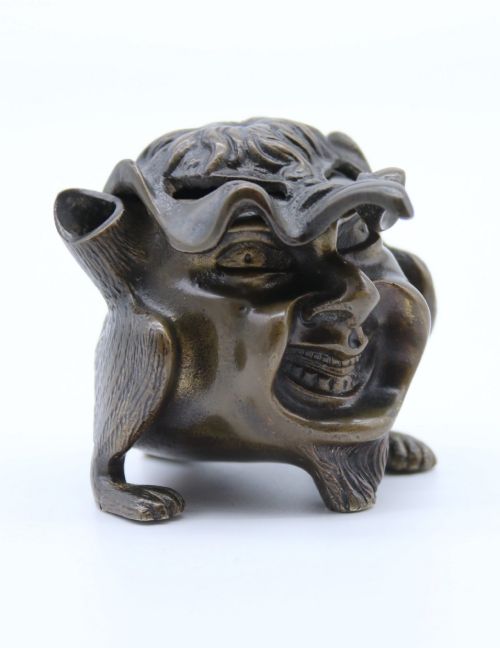
Several pieces take the form of owls, lizards and grotesque creatures guarding the ink.
What varies in quality
The degree of detail in cast bronze or hand-carved wood sets finer pieces apart from standard workshop production. Heavier gauges of silver plate and thicker cut glass indicate better manufacture.
Cohesion of design dictates overall merit, where matching inkwell lids, integrated pen rests and original fitted inserts maintain the integrity of the ensemble.
Edmé Samson·Elkington·Wilkinson And Co·Walker And Hall·Harrods
The Victorian Desk Inkstand Glossary
- Standish
- A portable desk stand or tray holding inkwells, sanders and penholders. This term often describes grander portable writing equipment.
- Chamberstick
- A short candlestick fitted with a saucer base for carrying around a house. These occasionally appear integrated into larger desk sets.
- Boulle work
- Marquetry formed of tortoiseshell and brass inlay developed in France. It creates elaborate patterned surfaces on wooden desk bodies.
- Champlevé
- An enamelling technique where troughs are dug into a metal surface and filled with vitreous colour. It decorates bronze frames and inkwell lids.
- Ormolu
- Gilt bronze mounted on decorative objects, providing a bright gold finish. It forms mounts and decorative feet on nineteenth-century pieces.
Victorian Desk Inkstand: Frequently Asked Questions
What is the difference between an inkstand and an inkwell?
An inkstand is the complete tray or base holding one or more inkwells along with pen rests and accessory compartments.
An inkwell is simply the individual container that holds the liquid ink, which may sit inside an inkstand or stand alone on a desk.
How do I care for a brass and glass inkstand?
Keep brass and bronze components free of dust using a dry microfibre cloth, avoiding harsh chemical polishes that strip original patination.
Wash glass inkwell inserts gently in warm soapy water, ensuring they are completely dry before placing them back into their metal mounts.
Were these pieces used for daily writing?
These desk accessories were standard fixtures in nineteenth-century offices, libraries and drawing rooms for correspondence and record keeping.
Travel versions were designed with secure screw-top glass inserts specifically for writing on the move during journeys.
How can I tell a Victorian inkstand from a later copy?
Examine the construction methods, such as hand-cut dovetails in wooden bases and the weight of cast bronze or silver plate elements.
Materials like original cut glass, genuine tortoiseshell and period brass work point directly to nineteenth-century manufacturing practices.