



Solid Silver Inkwell
A solid silver inkwell brings the weight of a bygone desk into daily life, offering substance and bright metal where a screen sits today.
Solid Silver Inkwell
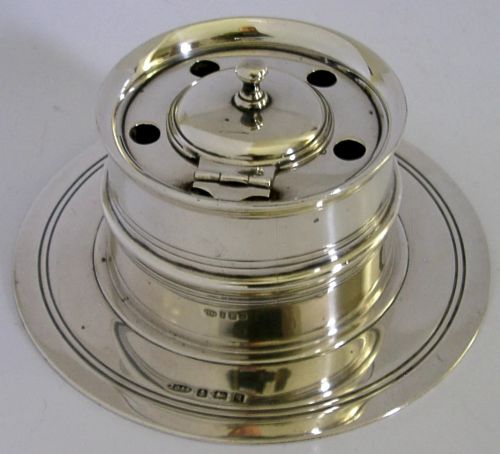
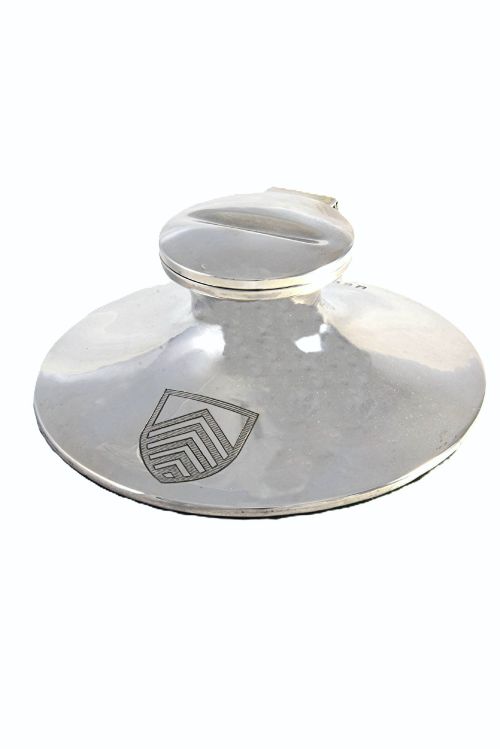
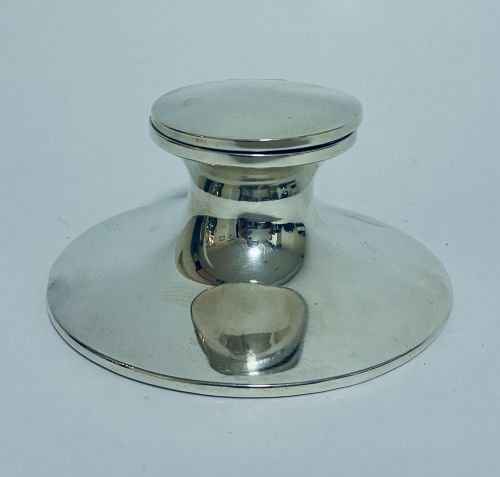
A solid silver inkwell is a desk accessory designed to hold liquid ink for a pen, appearing in various forms across the Victorian, Edwardian, and Art Deco periods. You are most likely to meet the capstan form on this page, alongside drum models, novelty designs, and travelling pieces.
The material seen across these pieces is sterling silver, frequently paired with cut glass in desk stands and heavier inkwells. Styles range from the heavy proportions of Victorian pieces through the lighter Edwardian taste to geometric Art Deco lines.
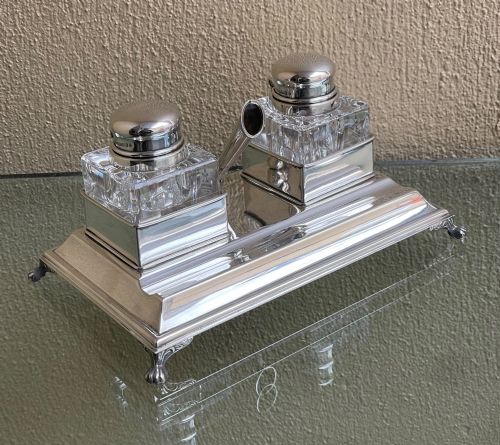
Makers utilised different configurations, from single wells to double inkstands incorporating stamp boxes and trays. Pieces vary from simple domestic desk furnishings to elaborate trophies and novelty taxidermy mounts.
Materials and Techniques
Silversmiths formed these bodies from sterling silver, shaping the metal through spinning, casting, and hand-raising techniques. Capstan and drum models require precise joining of sheet silver to create stable, weighted bases that resist the tip of a heavy pen.
Glasscutters produced thick crystal inserts and heavy cut glass bodies designed to fit snugly within silver collars. Engravers and chasers added crests, reeded borders, and decorative motifs by hand, while hinges allowed close-fitting lids to seal the wells against dust and evaporation.
Solid Silver Inkwell Retail Price Guide 2026
Typical asking prices for solid silver inkwell among the pieces listed under this phrase on Sellingantiques today, from the lower quarter to the upper quarter. They describe what is for sale here now, not the wider market.
Listings show sterling silver inkwells spanning the Victorian, Edwardian, and Art Deco periods, incorporating cut glass and fitted travelling boxes.
Distinctions in Execution and Weight
Substance separates the average desk piece from the finest examples, with heavier gauges of sterling silver providing a reassuring heft in the hand. Master silversmiths maintained crispness in reeded borders and chased details, whereas lesser pieces show softer definition from worn tools or lighter metal.
The integration of materials dictates distinction, visible in the precise fit of hinged silver mounts upon heavy cut glass or the balanced proportions of a large capstan base. Superior works display careful finishing to interior collars and robust mechanisms in travelling lids.
J C Vickery·Asprey and Co.·Comyns·Emile Puiforcat·Martin Hall and Co.·Frederik Haberling·John Grinsell and Sons·Walker and Hall·Henry Matthews
The Solid Silver Inkwell Glossary
- Capstan inkwell
- A desk inkwell shaped like a ship's capstan, featuring a wide weighted base tapering upward to a hinged lid. This form provides exceptional stability on a busy desk.
- Sterling silver
- An alloy containing ninety-two point five percent silver by mass, with the remainder being other metals, usually copper. This standard ensures durability for daily use while maintaining a bright lustre.
- Hallmark
- A series of official marks stamped on items made of precious metals in Britain, indicating the maker, assay office, purity, and year of testing. It serves as an absolute guarantee of metal quality.
- Inkstand
- A tray or stand holding one or more inkwells, often incorporating compartments for pens, stamps, and wafers. These larger desk furnishings formed the centrepiece of a nineteenth-century writing table.
- Novelty inkwell
- An ink piece fashioned into an unexpected shape, such as a horse hoof, animal, or sporting trophy. These items combined practical writing functions with humour or personal commemoration.
Solid Silver Inkwell: Frequently Asked Questions
What is a solid silver inkwell?
A solid silver inkwell is a desk container made from sterling silver, designed to hold liquid writing ink securely beneath a hinged lid.
These pieces range from simple domestic desk accessories to heavy silver-and-glass stands made by prominent makers across the Victorian and Edwardian eras.
How do you use a vintage inkwell?
You place the inkwell on a stable writing surface, lift the hinged silver lid, and dip a nibbed pen into the reservoir.
While many collectors keep them purely as decorative desk ornaments, they function just as they did a century ago for traditional penmanship.
How do I date a silver inkwell?
You date a silver inkwell by reading the hallmarks stamped into the metal, which typically include a date letter indicating the exact year of assay.
Stylistic cues such as heavy Victorian casting, Edwardian grace, or geometric Art Deco lines also point toward the period of manufacture.
Why do some inkwells include glass?
Glass inserts prevent the corrosive properties of acidic writing inks from reacting directly with the silver body.
Heavy cut glass also adds ballast to the base, keeping the inkwell firmly anchored while you dip and write.
Were all inkwells made for desks?
Not all inkwells stayed in one place, as travelling versions featured secure screw-caps or inner seals to prevent leakage on the move.
Other designs doubled as pocket pieces, stamp boxes, or trophies presented for sporting achievements like tennis.