



Sterling Silver Inkstand
These sterling silver inkstand pieces range from Georgian trays to Art Deco capstan designs, offering a practical centrepiece for any desk.
Sterling Silver Inkstand
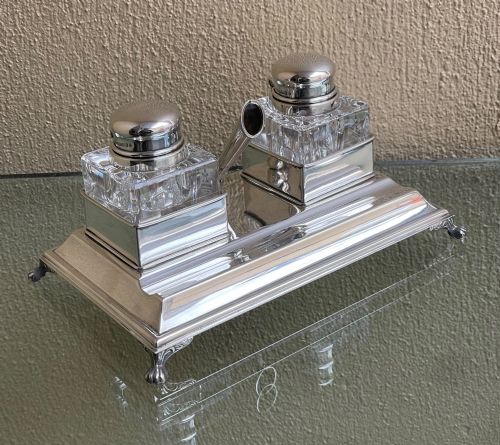
A sterling silver inkstand serves as a desk accessory designed to hold inkwells, pens and related writing implements. When searching for a sterling silver inkstand, buyers encounter diverse formats ranging from simple single inkwells to large double inkstands fitted with chambersticks or cut glass bottles.
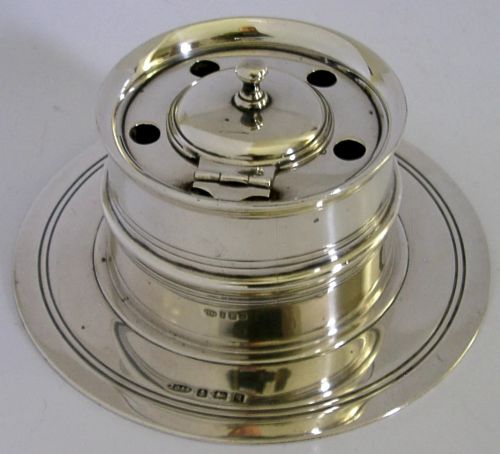
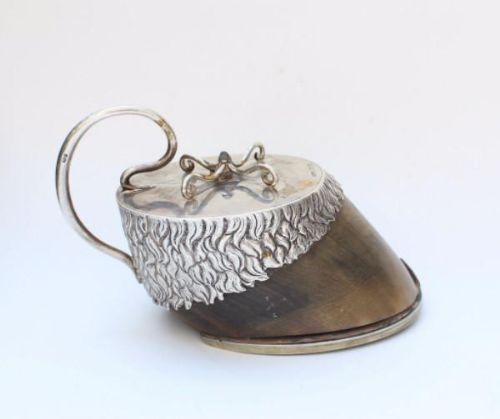
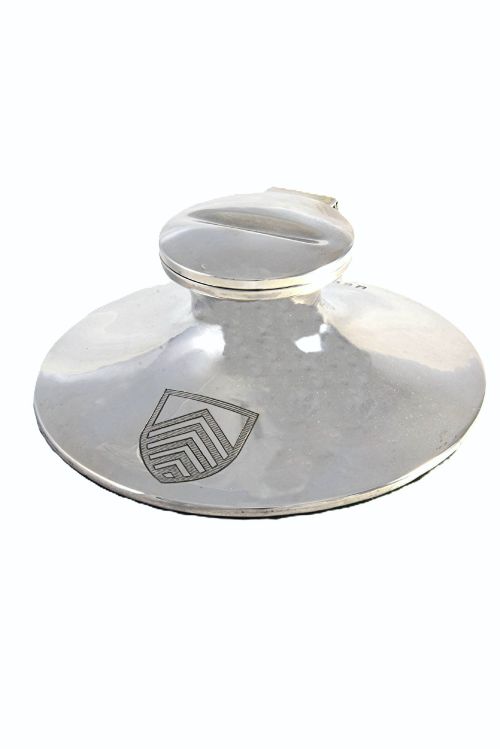
The pieces on this page span several periods, with Victorian and Edwardian examples appearing frequently alongside Georgian, Art Deco and mid-century items. Forms vary from traditional rectangular desk stands to round capstan shapes, novelty bells, horse hooves and heart-shaped trays.
Originating primarily from English assay offices, these desk accessories reflect the changing domestic writing habits across the nineteenth and twentieth centuries. Buyers find both compact portable inkwells and substantial double inkstands equipped with dedicated pen trays.

Materials and construction methods
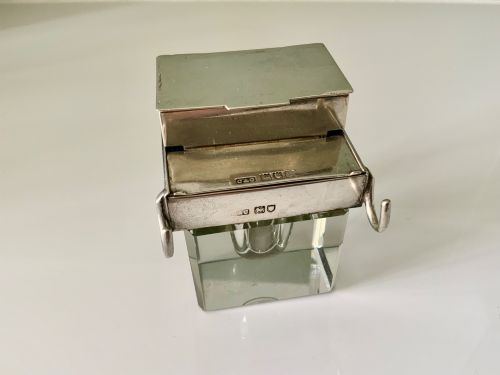
Silversmiths utilised sterling silver alongside materials such as cut glass, crystal, tortoiseshell, horn, hoof, ebony and enamel to construct these desk stands. Metal components were shaped using techniques including casting, piercing and guilloche enamelling, often incorporating fitted glass bottles with sterling silver collars.
Makers integrated functional elements like pocket watches or clocks directly into capstan inkwells and desk stands during the Edwardian and Art Deco periods. Hallmarks stamped into the silver record the assay office, date letter and standard of metal used in each piece.
Sterling Silver Inkstand Retail Price Guide 2026
Typical asking prices for sterling silver inkstand among the pieces listed under this phrase on Sellingantiques today, from the lower quarter to the upper quarter. They describe what is for sale here now, not the wider market.
Listings feature sterling silver inkstands from the Georgian, Victorian, Edwardian, Art Deco and mid-century periods, incorporating cut glass, tortoiseshell and enamel.
Indicators of quality and design
Quality in a sterling silver inkstand rests upon the weight of the metal, the crispness of pierced or cast ornamentation and the inclusion of original matching glass inserts. Substantial gauge silver and intact structural components elevate certain desk stands above standard mass-produced examples.
Unusual novelty forms, such as bell shapes, pen nibs or incorporated timepieces, demonstrate greater manufacturing ambition than basic circular capstan designs. The presence of clear, matching hallmarks across all movable parts and accompanying accessories denotes a superior level of original craftsmanship.
Robert Garrard·Asprey·Peter Henderson Deere·Adie Brothers·William Hutton
The Sterling Silver Inkstand Glossary
- Capstan inkwell
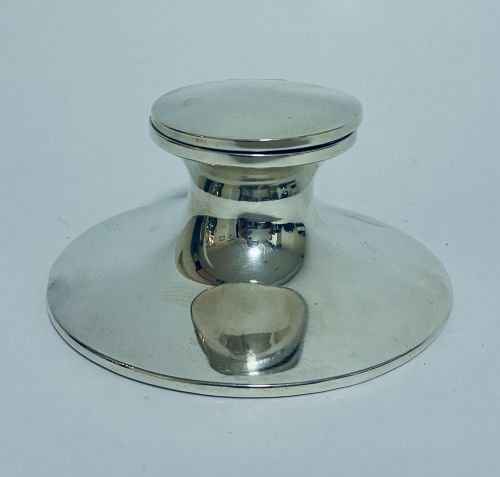
- A desk inkwell shaped like a ship's capstan, featuring a wide circular base tapering upwards towards a hinged lid. This design prevents the inkwell from tipping over easily during use.
- Inkstand
- A comprehensive desk stand incorporating one or more inkwells, pen trays and sometimes a pounce pot or chamberstick. These stands kept all writing requisites organised in one place.
- Pounce pot
- A small shaker container used to sprinkle sand or gum sandarac over freshly written ink to speed up drying and prevent blotting. They are frequently found as part of Georgian and Victorian inkstands.
- Standish
- An alternative historical term for a desk stand or inkstand used to hold writing materials. These pieces often sat centrally on a library or writing table.
- Guilloche enamel
- A decorative technique where intricate geometric patterns are engraved beneath a translucent layer of coloured enamel. This finish appears on select Edwardian and Art Deco inkwell lids.
Sterling Silver Inkstand: Frequently Asked Questions
What is the difference between an inkwell and an inkstand?
An inkwell is a single vessel designed solely to hold ink for writing. A sterling silver inkstand comprises a broader tray or stand that typically accommodates one or more inkwells alongside space for pens and additional accessories.
Inkstands offer a more complete desk setup, often including integrated candle holders or pounce pots, whereas inkwells function as standalone containers.
How do I identify the date of a sterling silver inkstand?
Dating relies upon the hallmarks stamped directly onto the silver components of the stand and its associated inkwell lids. These marks usually include a standard mark, a town mark for the assay office and a date letter.
Comparing the stamped date letter against standard assay office charts reveals the exact year of manufacture.
Why do some inkstands include glass bottles?
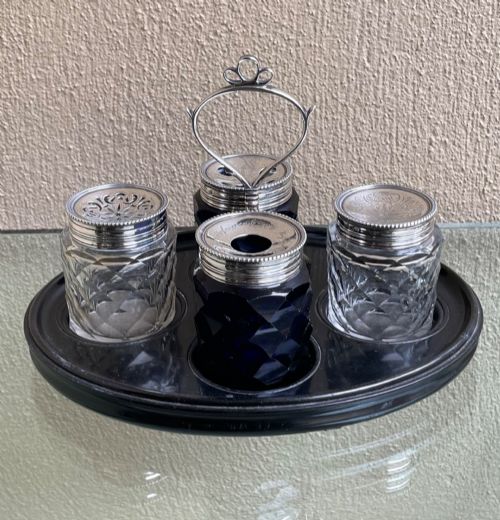
Cut glass or crystal inserts were utilised inside sterling silver collars to hold the liquid ink safely. Glass prevented the corrosive properties of wet ink from coming into direct contact with the silver body.
Original glass inserts often feature star-cut bases and match the exact dimensions of the silver apertures they occupy.
What were novelty inkwells used for?
Novelty inkwells served practical writing functions while doubling as decorative conversation pieces on Victorian and Edwardian desks. Designs shaped like bells, capstans, pen nibs or animals combined utility with ornamental appeal.
Owners placed these items on writing tables where their unusual forms added character to the room alongside their primary ink-holding purpose.