



Silver Capstan Inkwell
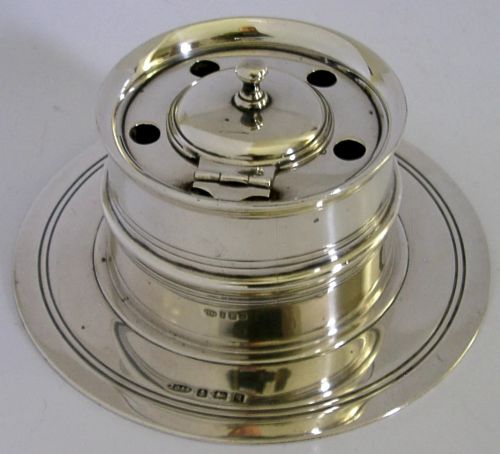
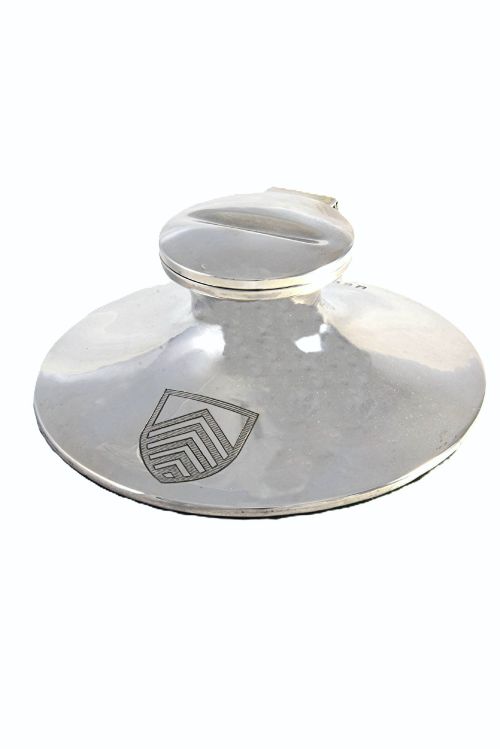
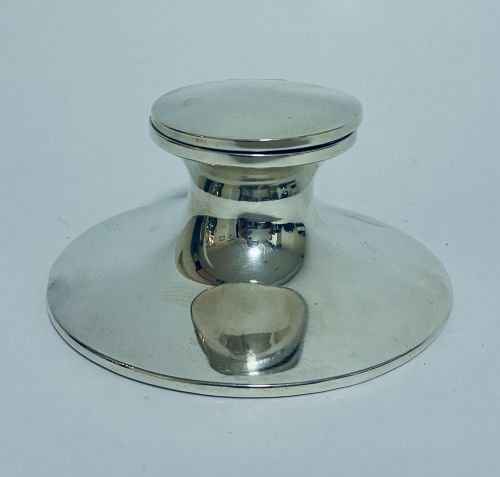
A silver capstan inkwell brings the weight of early twentieth-century writing desks straight into your hands.
Materials and Construction
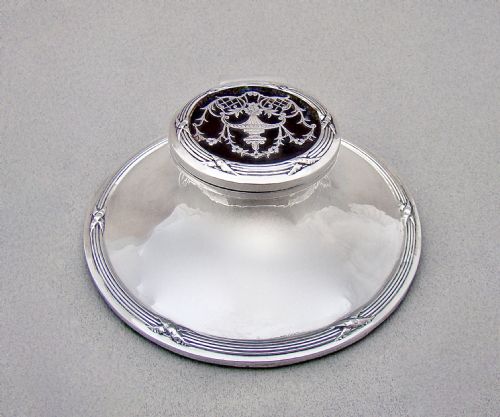
Silversmiths constructed the main body using sterling silver, often pairing the metal with glass inserts to hold the liquid ink safely inside the weighted base. Some models incorporate tortoiseshell panels fitted neatly into the silver top or lid.
Makers added decorative contrast through guilloché enamel in dual colours, sometimes featuring floral medallions or military presentations associated with regiments like the Royal Field Artillery and sports trophies.
Specialist variations combined the standard inkwell form with functional timepieces, inserting pocket watches or clocks directly into the capstan structure for desk use.
Evaluating the Range
The distinction between standard examples and exceptional pieces rests on the presence of decorative arts such as fine guilloché enamel or fitted tortoiseshell rather than plain silver surfaces. Scale also separates items, with larger capstan inkwells demanding more substantial metalwork and heavier glass liners.
Provenance and maker attribution elevate certain pieces, particularly those bearing the marks of established firms like Mappin & Webb, Walker & Hall, or specific silversmiths such as Henry Matthews. Integrated elements like functional clocks or military presentation inscriptions further distinguish particular items from standard desk accessories.
Silver Capstan Inkwell Retail Price Guide 2026
Typical asking prices for silver capstan inkwell among the pieces listed under this phrase on Sellingantiques today, from the lower quarter to the upper quarter. They describe what is for sale here now, not the wider market.
Listings feature Edwardian, George V, and Art Deco periods alongside materials such as sterling silver, glass, enamel, and tortoiseshell.
Henry Matthews·Marston and Jones·William Hutton and Sons·Mappin and Webb·Walker and Hall
The Silver Capstan Inkwell Glossary
- Capstan
- A desk accessory shaped with a wide base tapering upward, modelled after the nautical device used for weighing anchor. This form provides essential stability on a writing table.
- Guilloché enamel
- A decorative technique involving precise engine-turned patterns beneath a translucent coloured enamel coating. It frequently appears on the lids of Edwardian desk pieces.
- Sterling silver
- A silver alloy containing ninety-two point five percent silver by mass, forming the primary structural material for these desk items. Assay office hallmarks confirm its standard.
- Tortoiseshell
- The mottled brown material derived from the shell of certain turtle species, used by silversmiths to panel inkwell lids during the Edwardian period.
Silver Capstan Inkwell: Frequently Asked Questions
What is a capstan inkwell?
A capstan inkwell is a desk accessory designed in the shape of a nautical capstan, featuring a broad base that tapers upwards toward a central ink reservoir. This specific proportion kept the heavy ink container stable on a writing desk.
Most examples seen today date from the Edwardian era through the Art Deco period, constructed primarily from sterling silver with internal glass wells.
How do I date a silver inkwell?
You date these pieces by examining the hallmarks stamped into the silver, which indicate the assay office, standard of silver, and a specific date letter corresponding to the year of manufacture. Birmingham, London, and Chester offices marked most surviving pieces.
Stylistic indicators also help, as Edwardian items tend to feature tortoiseshell and classic contours, while nineteen twenties and thirties pieces often display geometric Art Deco influence or guilloché enamel.
What were the clocks used for?
Some desk accessories integrated timepieces directly into the capstan design alongside the ink reservoir, serving a dual purpose for writers needing to track time while corresponding. These timepieces sat flush within the silver housing.
Such combination pieces reflect the Victorian and Edwardian fondness for multi-functional desk furniture.
How do I clean silver and enamel?
Sterling silver requires gentle cleaning with a specialist silver cloth to preserve the hallmarks and surface definition without causing abrasive wear. Avoid harsh dips that might damage internal components or weighted bases.
Enamel and tortoiseshell elements need particular care, requiring only a soft, dry cloth to remove dust without exposing the decorative panels to excess moisture.