


Silver Desk Inkwell
When you search for a silver desk inkwell, you encounter practical desk accessories that span the Georgian, Victorian, Edwardian, and Art Deco periods.
Silver Desk Inkwell
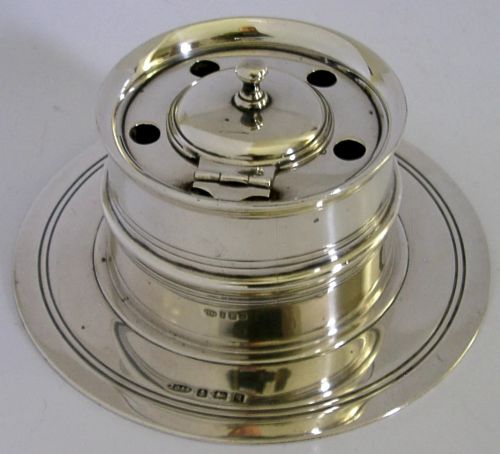
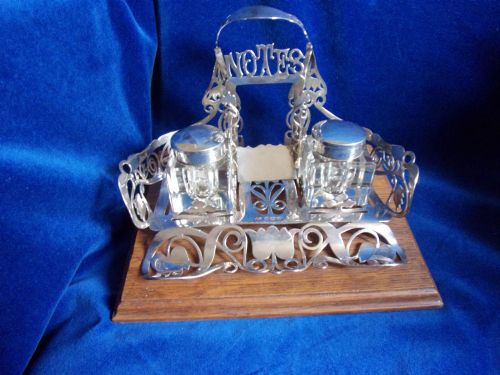
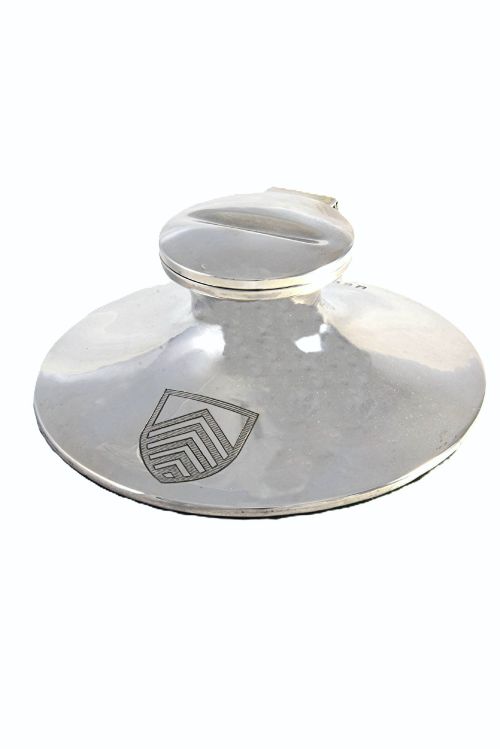
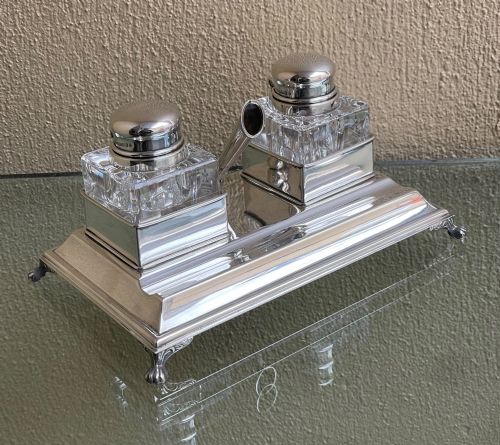
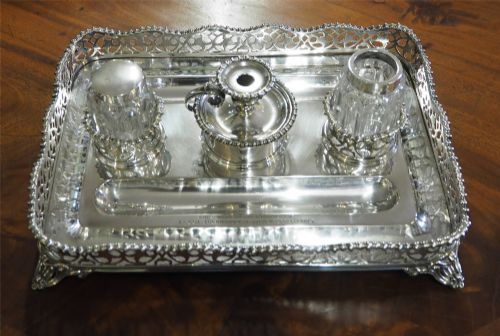
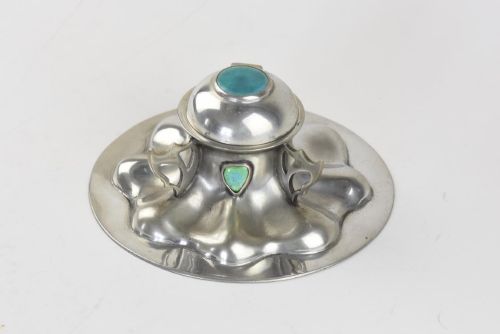
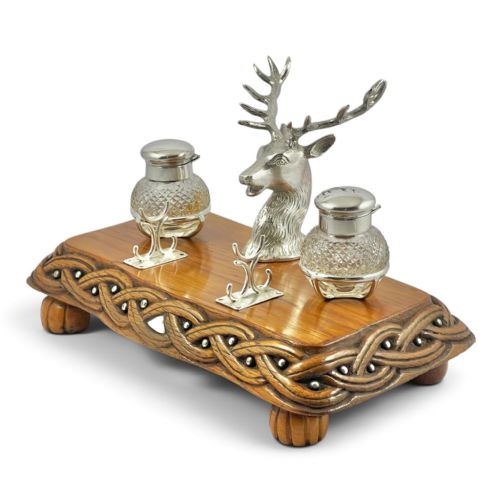
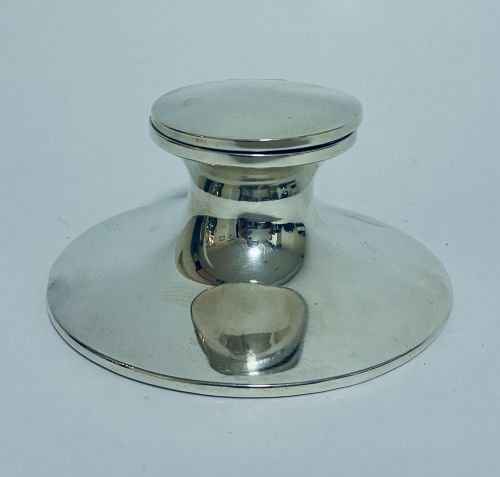
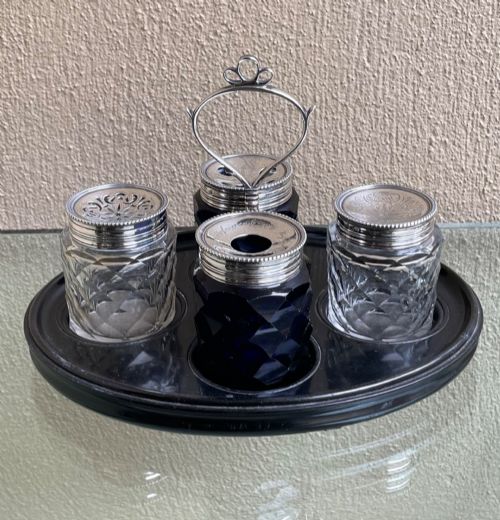
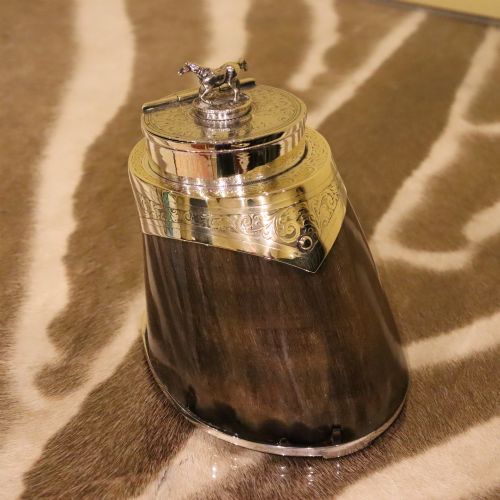
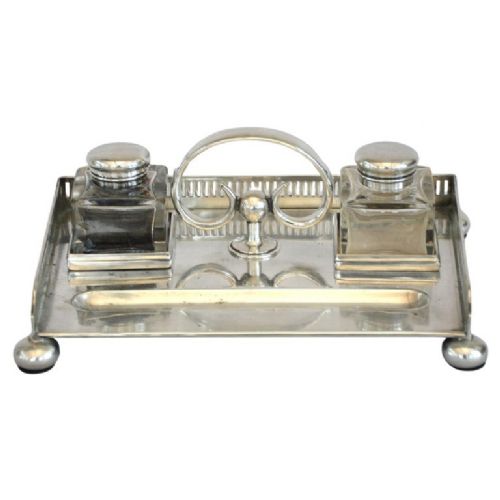
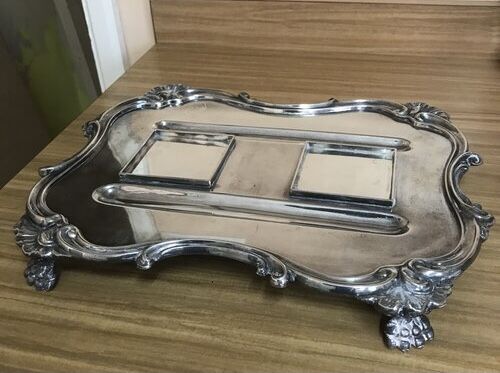
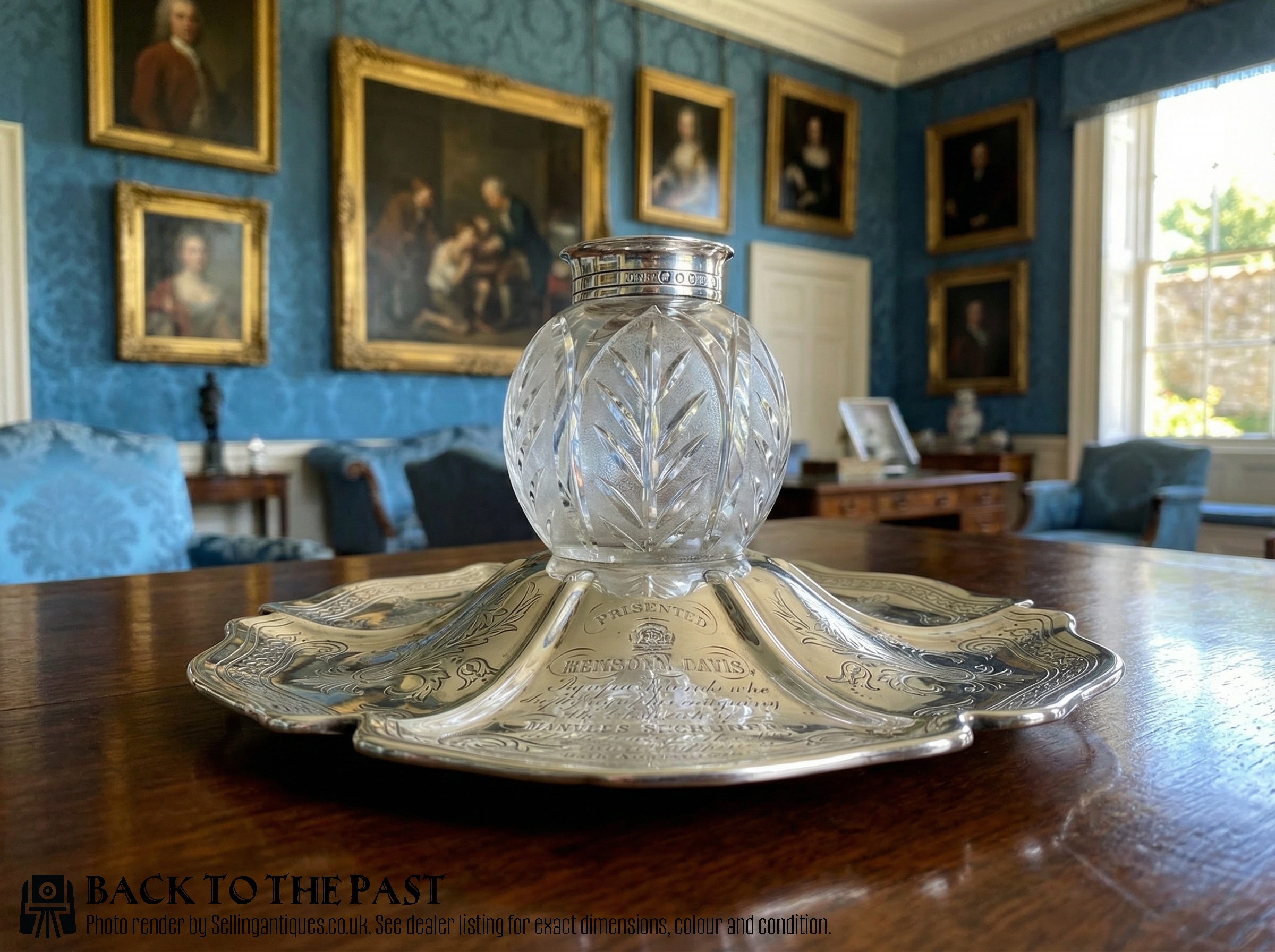
A silver desk inkwell serves as a desk accessory designed to hold wet ink for writing, often found on this page in forms such as simple drum inkwells, capstan shapes, and elaborate desk stands or inkstands holding glass wells.
The pieces listed range from compact travel items and single ink pots to large multi-piece desk sets featuring pen rests, chambersticks, and calendar frames.
Originating predominantly from British workshops across the nineteenth and twentieth centuries, these items combine utilitarian function with decorative craftsmanship.
How they were made
Makers utilised sterling silver and silver plate for the structural bodies, mounts, and hinged lids, often combining the metal with heavy cut glass or crystal for the ink reservoirs themselves.
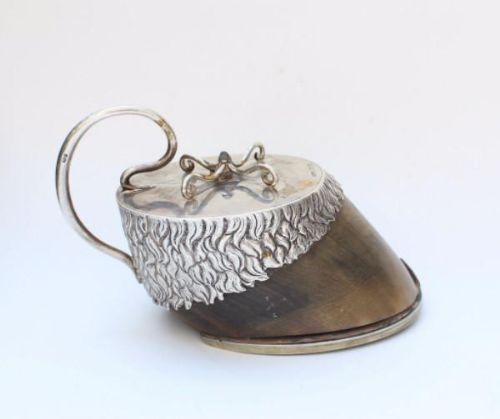
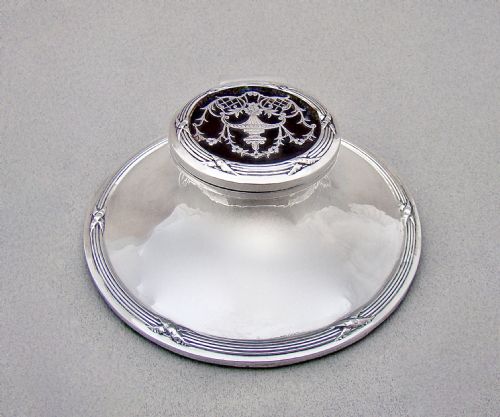
Specialist techniques included guilloche enamel decoration, repousse work, and the integration of organic materials such as tortoiseshell, oak, horn, onyx, and lapis lazuli into the desk stands.
Silversmiths constructed capstan and drum forms to provide a stable, weighted base that prevented tipping during the dipping of a pen.
Silver Desk Inkwell Retail Price Guide 2026
Typical asking prices for silver desk inkwell among the pieces listed under this phrase on Sellingantiques today, from the lower quarter to the upper quarter. They describe what is for sale here now, not the wider market.
Some Victorian desks hid secret compartments beneath the inkwells for storing private correspondence.
What varies in quality
Quality depends upon the weight of the silver used in the body and mounts, alongside the clarity and heft of any associated cut glass inserts.
The execution of decorative elements, such as detailed enamel medallions, inlaid stone work, and the crispness of hallmarks or maker signatures, separates standard production from finer examples.
Completeness alters the standing of a piece, with surviving original matched pen rests, dual ink bottles, and fitted travel cases indicating higher original status.
William Hutton·Henry Matthews·Wilkinson and Co·Walker and Hall·Marson and Jones·Tiffany and Co·Robert Garrard·A and J Zimmerman·Goldsmiths and Silversmiths·Comyns·Frederik Haberling·James Deakin and Sons
The Silver Desk Inkwell Glossary
- Capstan inkwell
- An inkwell shaped like a naval capstan, featuring a wide weighted base tapering upward to a smaller top opening. This form became popular during the Edwardian period for its stability on ship and desk alike.
- Inkstand
- A complete desk stand incorporating one or more ink pots, pen trays, and sometimes matching tapersticks or sanders. These larger pieces formed the centrepiece of a nineteenth-century writing desk.
- Guilloche enamel
- A decorative technique where engine-turned metal is covered with translucent enamel, allowing patterned light to reflect through the colour. It appears on lids and panels of Edwardian pieces.
- Desk tidy
- A multi-functional desk accessory that combines inkwells with compartments for stamps, pens, and paperweights. They organise the writing surface using mixed materials like oak and horn.
Silver Desk Inkwell: Frequently Asked Questions
What is a capstan inkwell?
A capstan inkwell is a desk accessory shaped like the nautical device used for hauling anchors, featuring a broad base that tapers toward the top.
This design ensures the ink pot remains stable on the writing surface and resists tipping during use.
How do I clean a silver inkwell?
Cleaning requires a soft cloth and specialist silver polish applied gently around hallmarks and decorative mounts. Care must be taken to avoid abrasive contact with any glass inserts, enamel panels, or organic materials like tortoiseshell.
Were these inkwells used for travel?
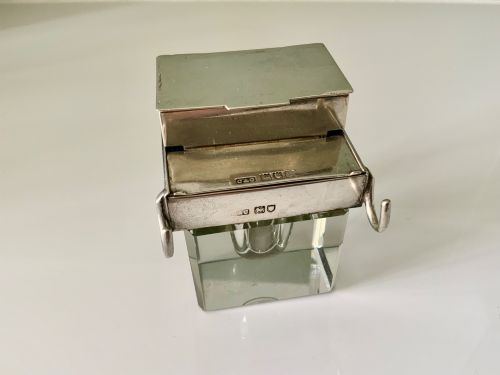
Certain compact examples, such as travelling inkwells and glass bottles with secure screw or locking silver lids, were made specifically for portable use.
Larger desk stands and capstan inkwells remained stationary on household or office desks.
How do I identify the date of a silver inkwell?
Dating relies on the assay office hallmarks stamped into the silver, which include letters corresponding to specific years alongside maker marks.
Stylistic cues such as Art Deco geometric lines or Victorian elaborate embossing also help narrow the period.