



Antique Silver Deskware
Antique silver deskware turns written correspondence into a tactile ritual, offering inkwells, letter openers and stamp boxes forged for the writing table.
Antique Silver Deskware
Antique silver deskware comprises functional items fashioned for the nineteenth and early twentieth-century writing table, spanning the Victorian, Edwardian and Interwar eras. These objects include inkwells, inkstands, letter openers, page turners, pen wipes, stamp boxes and desk clips.
Buyers browsing antique silver deskware most frequently encounter sterling silver and silver-mounted pieces, often combined with glass, horn, onyx, lapis lazuli, tortoiseshell or guilloche enamel. These functional desk accessories range from simple capstan inkwells to elaborate novelty forms shaped as boots or bells.
How they were made
Craftsmen shaped sterling silver through methods such as casting, hammering and mounting, frequently combining the metal with polished pewter, cut glass or organic materials like horn and tortoiseshell. Decorative details often involved applied enamel, lapis lazuli cabochons or ceramic insertions from pottery studios.
Makers utilised specialised techniques to secure mixed media, mounting silver rims onto heavy glass glue pots or encasing horsehair within novel pen wipes. Metal components were assayed and hallmarked in cities including London, Birmingham, Chester and Inverness to certify the silver standard.
Antique Silver Deskware Retail Price Guide 2026
Typical asking prices for silver deskware among the pieces listed under this phrase on Sellingantiques today, from the lower quarter to the upper quarter. They describe what is for sale here now, not the wider market.
Listings feature sterling silver, pewter, glass, horn, and ceramics across Edwardian, Victorian, and Arts and Crafts styles.
What varies in quality
Quality in these desk accessories rests upon the crispness of the casting, the integration of mixed materials like onyx or enamel, and the distinctiveness of novelty forms such as foxes or garden trugs. Pieces bearing recognised maker marks demonstrate superior workshop execution.
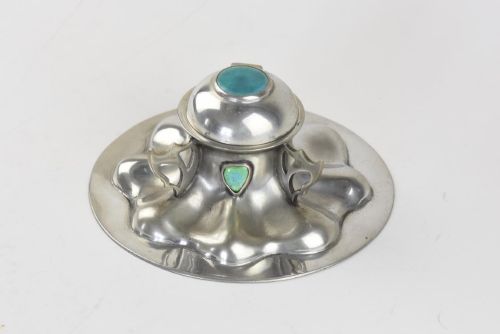
The sophistication of decorative embellishments, from Ruskin cabochons on Arts and Crafts pewter to intricate guilloche work, defines the upper tier of the range. Simpler utilitarian designs represent the standard production of the period.
Sampson Mordan & Co.·William Hutton·Asprey
The Antique Silver Deskware Glossary
- Capstan inkwell
- An inkwell shaped like a ship's capstan, featuring a wide base that tapers upwards to prevent tipping. This heavy silhouette was popular in domestic and maritime settings.
- Guilloche enamel
- A decorative technique where geometric patterns are engine-turned onto metal beneath a translucent layer of enamel. This adds depth and colour to the surface.
- Page turner
- A long implement made of horn, ivory or silver used to separate the uncut pages of newly printed books. It protects the paper edges from tearing during reading.
- Pen wipe
- A small desk accessory containing absorbent materials such as horsehair or cloth, used for cleaning wet ink from nibs. They often took whimsical novelty shapes.
- Assay mark
- A stamped symbol indicating the purity of the precious metal, verified by an official assay office. These marks help determine the origin and year of manufacture.
Antique Silver Deskware: Frequently Asked Questions
How do I clean antique silver deskware?
Use a soft microfiber cloth with a gentle, non-abrasive silver polish to maintain the shine without wearing down engraved details or hallmarks. Avoid getting liquid polish into porous materials like tortoiseshell, leather, or horn mounted on the piece.
Keep the metal dry and store pieces away from direct sunlight and damp environments to protect delicate elements like enamel and glass inserts from long-term damage.
Were these items used daily?
Most of these accessories served practical functions in Victorian and Edwardian households or offices for writing letters, sealing envelopes, and managing daily correspondence. Inkwells held liquid ink for dip pens, while stamp boxes kept postage organised on the desk.
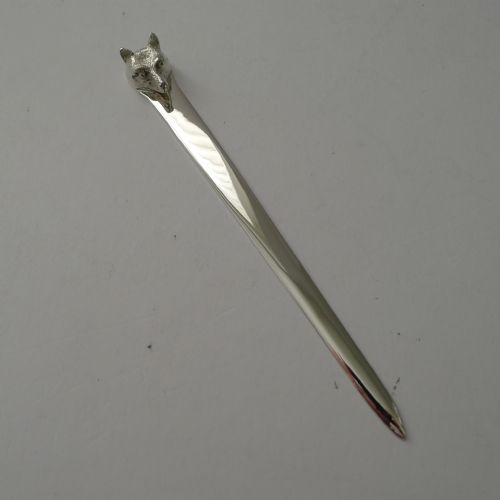
Some novelty pieces, such as silver bell inkwells or animal-shaped letter openers, also acted as decorative conversation pieces for wealthy professionals and middle-class households alike.
How do I date antique silver deskware?
Check the item for official hallmarks, which typically include a maker's mark, a standard mark for sterling silver, a town mark indicating the assay office, and a date letter. These stamped symbols provide the exact year of testing and certification.
Stylistic cues such as Arts and Crafts hammered surfaces, Art Deco geometric lines, or Victorian ornamentation also help narrow down the period of manufacture when hallmarks are worn.
Can I still use antique inkwells?
Many antique inkwells retain their glass inserts and hinged lids, making them structurally capable of holding ink for traditional calligraphy and dip pens. Modern fountain pens should not be used with vintage wells as the openings and depths differ.
If you choose to use an inkwell, clean dried residue carefully with warm water and ensure the inner glass or ceramic liner is intact to prevent leaks onto the silver.