


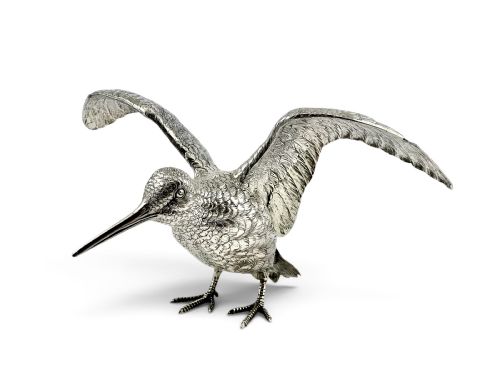


Victorian Silver Figure
These pieces of victorian silver figure range from tabletop animals and novelty salt shakers to inkwells and menu holders, offering collectors remarkable sculptural detail.
Victorian Silver Figure
A victorian silver figure encompasses sculptural works produced during the nineteenth century and associated eras, taking the form of animals, birds, and human subjects. Collectors encounter these primarily as desk accessories, pin cushions, inkwells, table ornaments, and salt and pepper shakers.
The selection ranges from detailed casting depicting birds such as woodcocks, pheasants, and grouse to novelty figures like lions, owls, and shepherds. Pieces extend into decorative items incorporating figures into menu holders, candlesticks, and centrepieces.
Originating largely from British workshops alongside continental European centres including Hanau and Belgium, these items reflect both domestic utility and imaginative novelty design. The forms merge practical function with distinct sculptural presence.
Judging quality and execution
The integration of the figure into its intended object, whether an inkwell lid, a menu holder slot, or a salt shaker body, reveals the maker's architectural skill. Fully marked pieces bearing clear hallmarks add historical definition that elevates the standing of the work.
Victorian Silver Figure Retail Price Guide 2026
Typical asking prices for victorian silver figure among the pieces listed under this phrase on Sellingantiques today, from the lower quarter to the upper quarter. They describe what is for sale here now, not the wider market.
Even a brass oil table lamp manages to sneak into the company of proper silver animals.
Edward John Barnard·Thomas Johnson·Francis Higgins
The Victorian Silver Figure Glossary
- Hallmark
- Official marks stamped onto silver to indicate the standard of purity, the assay office, and the year of manufacture. These stamps provide a reliable guide to origin.
- Novelty silver
- Silver items shaped in amusing, unusual, or unexpected forms rather than traditional tableware shapes. This style gained immense popularity during the Victorian period.
- Cast silver
- Silver poured into a mould to create a solid, three-dimensional sculptural form. This technique allows for intricate detail in animal and human figures.
- Sterling silver
- An alloy consisting of pure silver and other metals, usually copper, standardised for strength and durability. Most British pieces adhere to this metal standard.
- Chasing
- A metalworking technique where the artisan hammers the front surface to sink the metal and create low-relief ornamentation. It adds texture and contour to silver figures.
Victorian Silver Figure: Frequently Asked Questions
What objects count as silver figures?
Silver figures appear as standalone statues, animal ornaments, and functional items incorporating sculptural elements such as menu holders, inkwells, and pepper pots.
They serve as decorative cabinet pieces or functional desk accessories rather than flat tableware.
How do I identify a Victorian piece?
Examine the piece for official hallmarks, which indicate the assay office and exact year of production during the nineteenth century.
Stylistic cues such as naturalistic animal casting and novelty themes also point directly to the Victorian era.
How should I display them at home?
Place smaller figures on desks, mantelpieces, or inside glass cabinets where their detailed casting remains protected and easily visible.
Functional pieces like pin cushions and inkwells look striking integrated into traditional study or library settings.