39,578  PAGES BROWSED TODAY PAGES TODAY 135 ANTIQUES UPLOADED TODAYNEW ARRIVALS
135 ITEMS ADDED TODAY
Sort Order
Items Per Page
Browse Categories
Sort order
Relevant Links
Items per page
ID #SA692298
FOR SALE
£400
Email Buy
Save
Pair of Figures of Assyrian King Sardanapalus and Queen
TJR Trading
for sale €468     $508
£400

TJR Trading

Sellingantiques Verified Since Sep 2014
View Dealers Stock Page
  • About Us
    Specialist in antique silver, but also a seller of glass, ceramics and other similar items
Id #SA692298
PDF SHARE
SAVE

Pair of Figures of Assyrian King Sardanapalus and Queen

1920 - 1940
For Sale by TJR Trading
Description

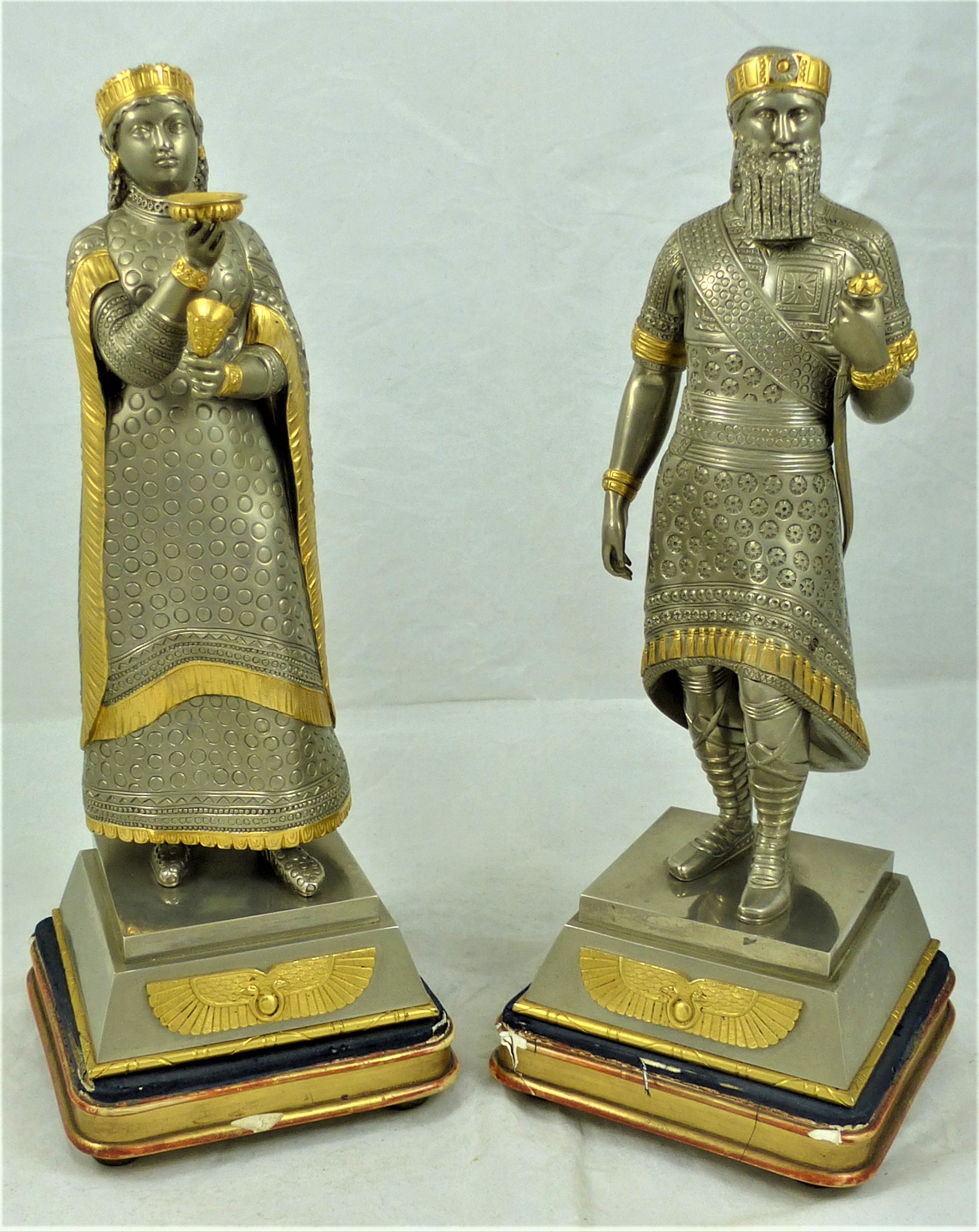
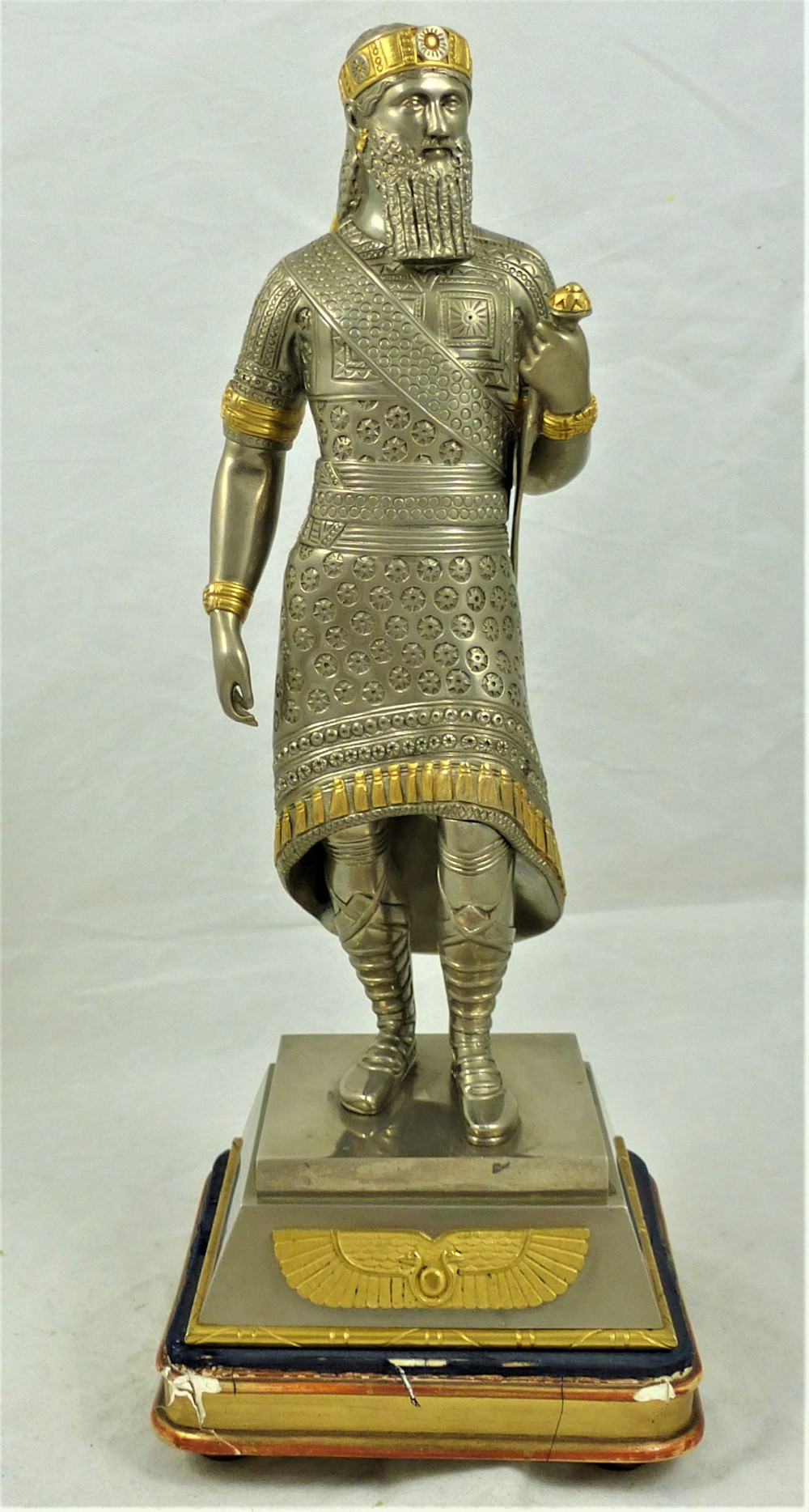
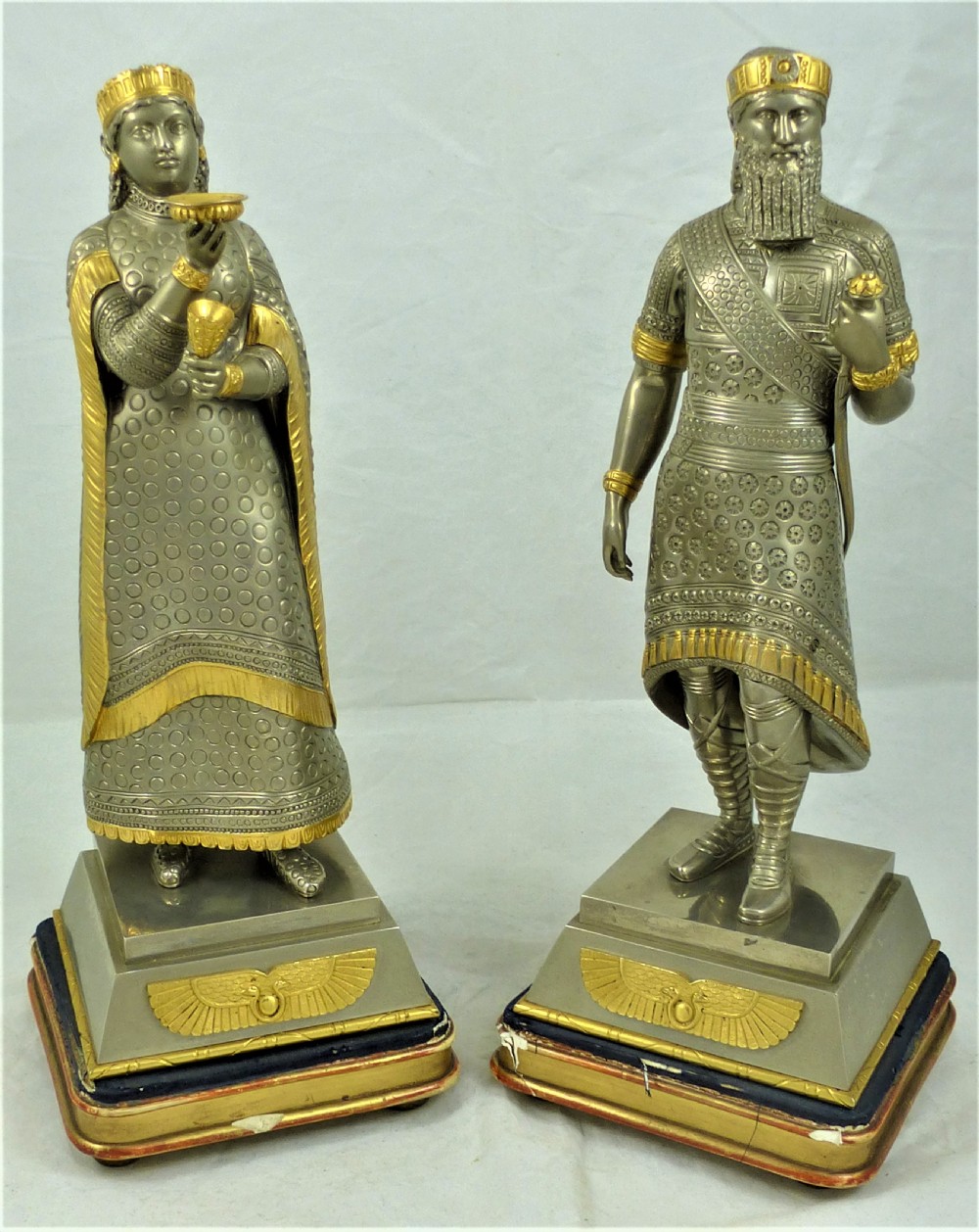
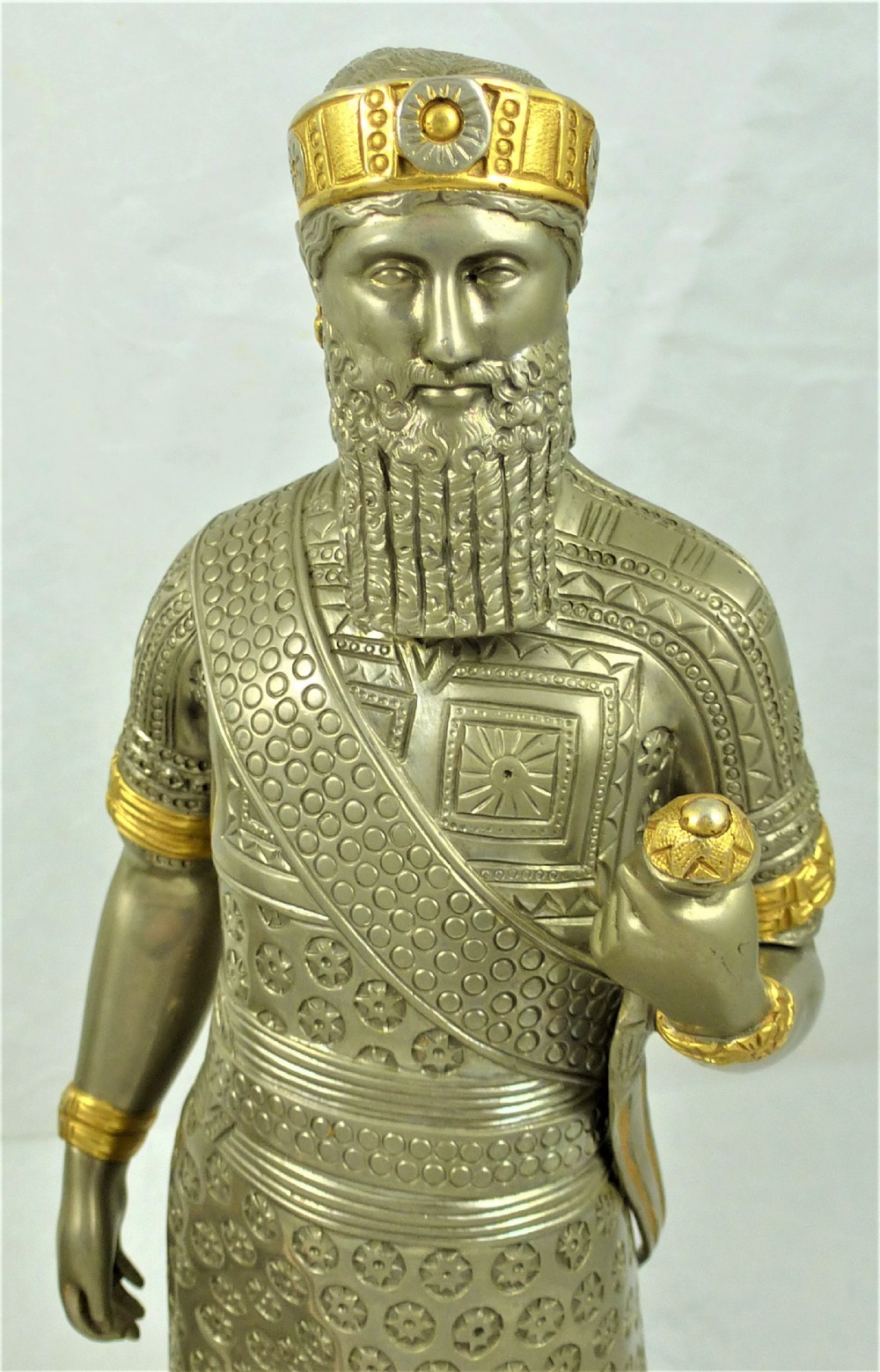
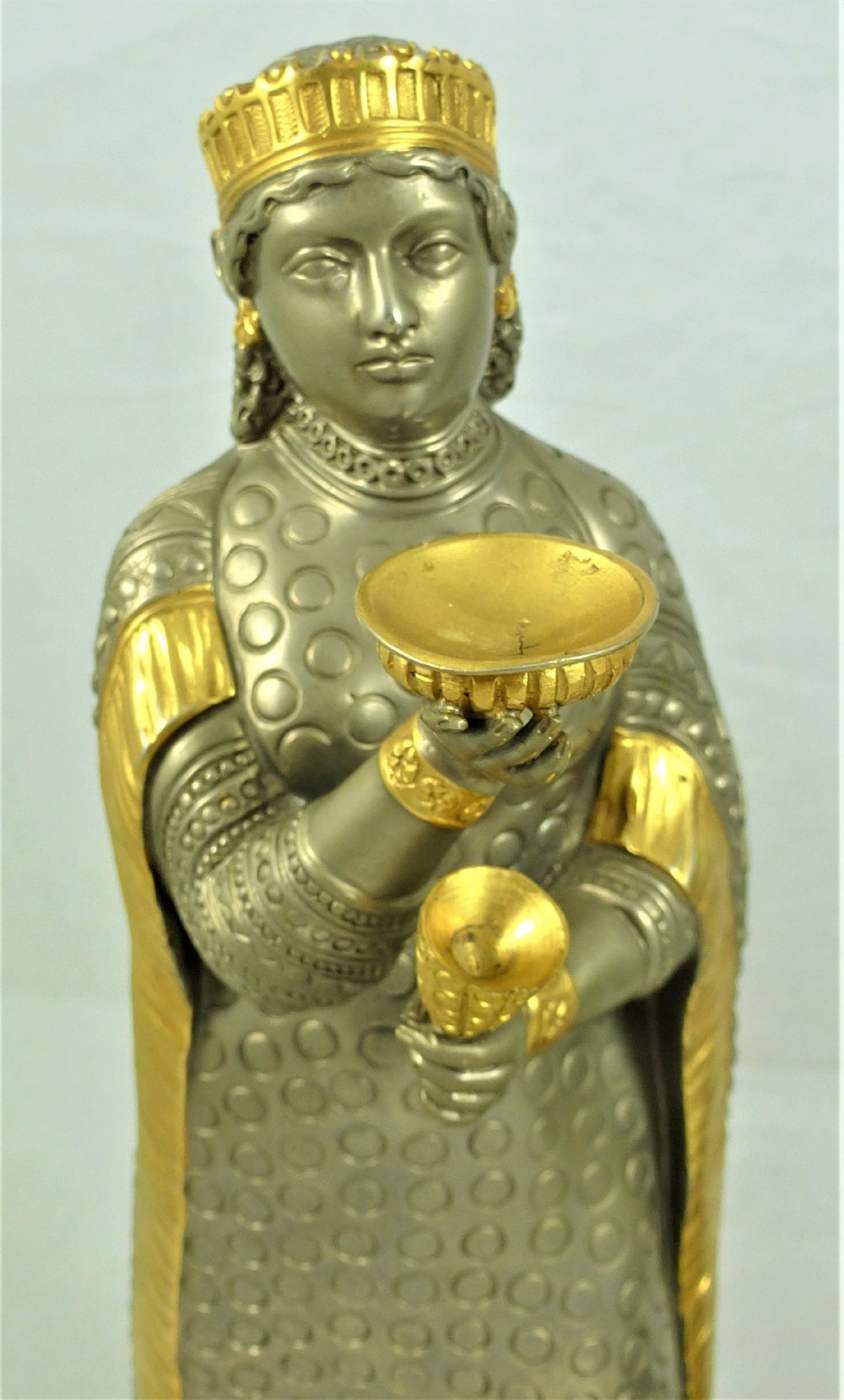
This is a pair of figures of the Ancient Assyrian king Sardanapalus (Ashurbanipal) and his queen.

Similar figures were produced in parian porcelain. They were made by W.T. Copeland & Sons circa 1868-1894. Copeland produced a small series of these figures in response to the public excitement caused by the discoveries in the mid Nineteenth Century of the ancient Assyrian cities of Nimrud, Ninevah and Khorsabad. The Copeland figures were based on bas reliefs found in these ancient cities. They were modelled by Aaron Hays (British, active 1845–76) who was an employee of the British Museum at the time.

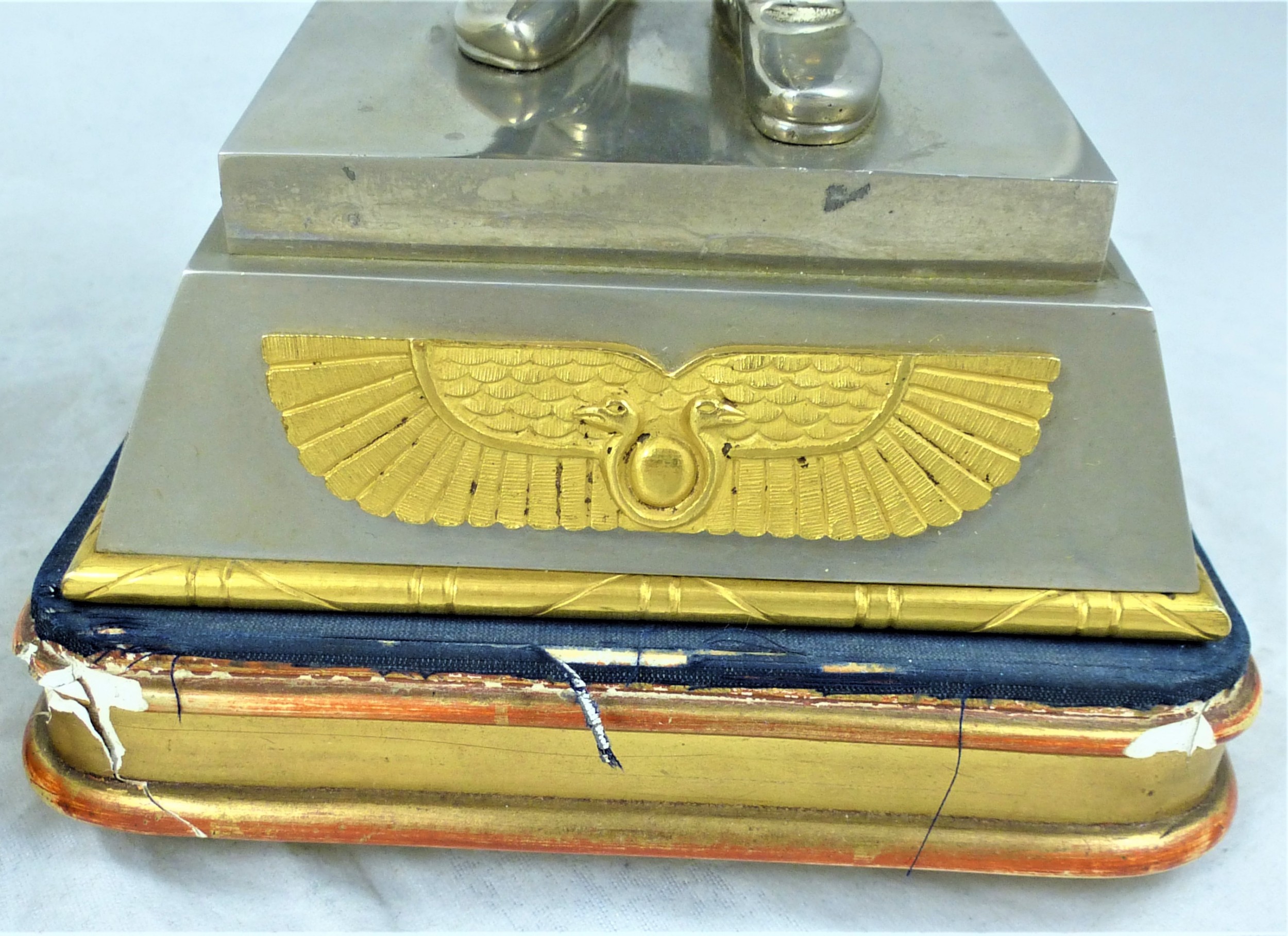
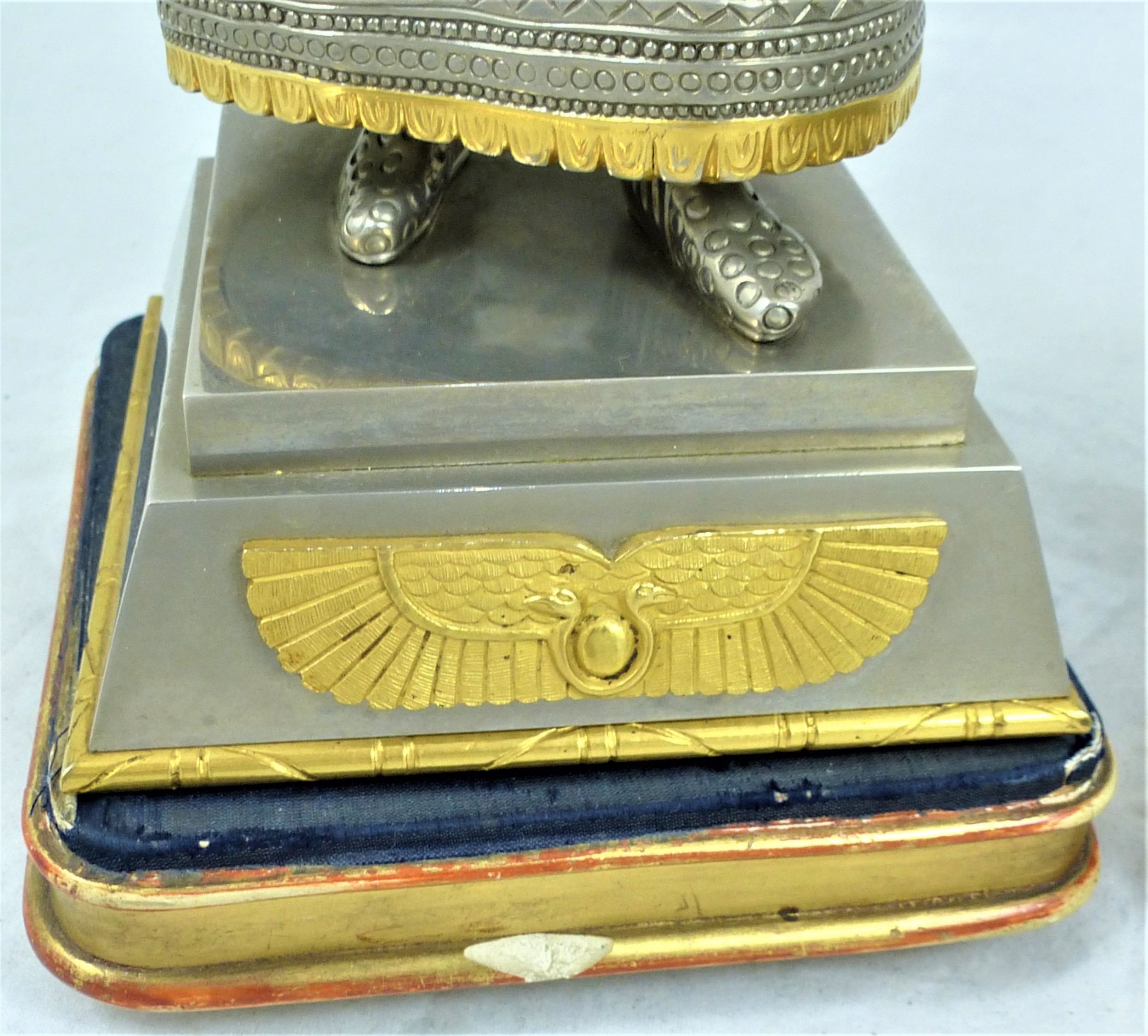
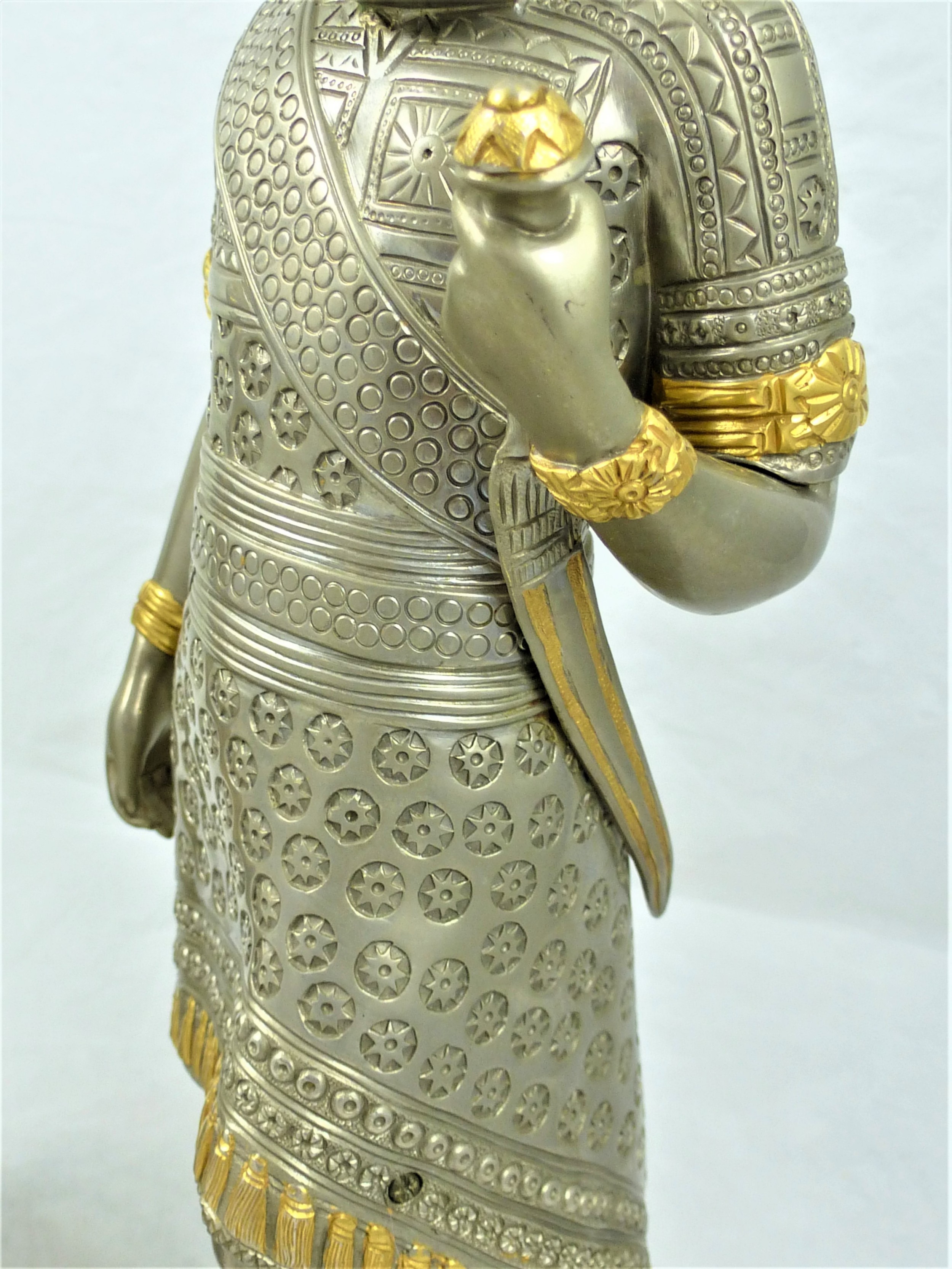
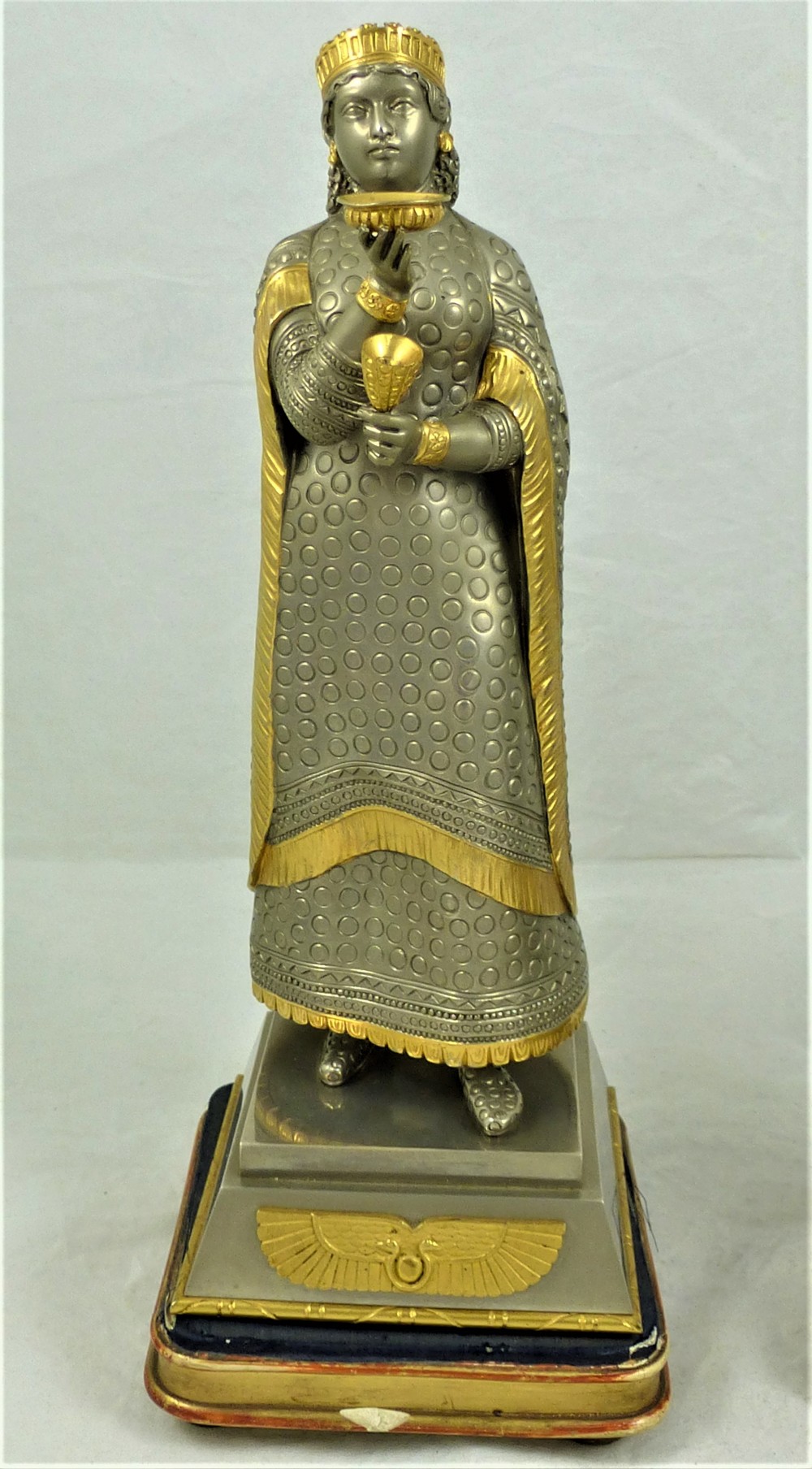
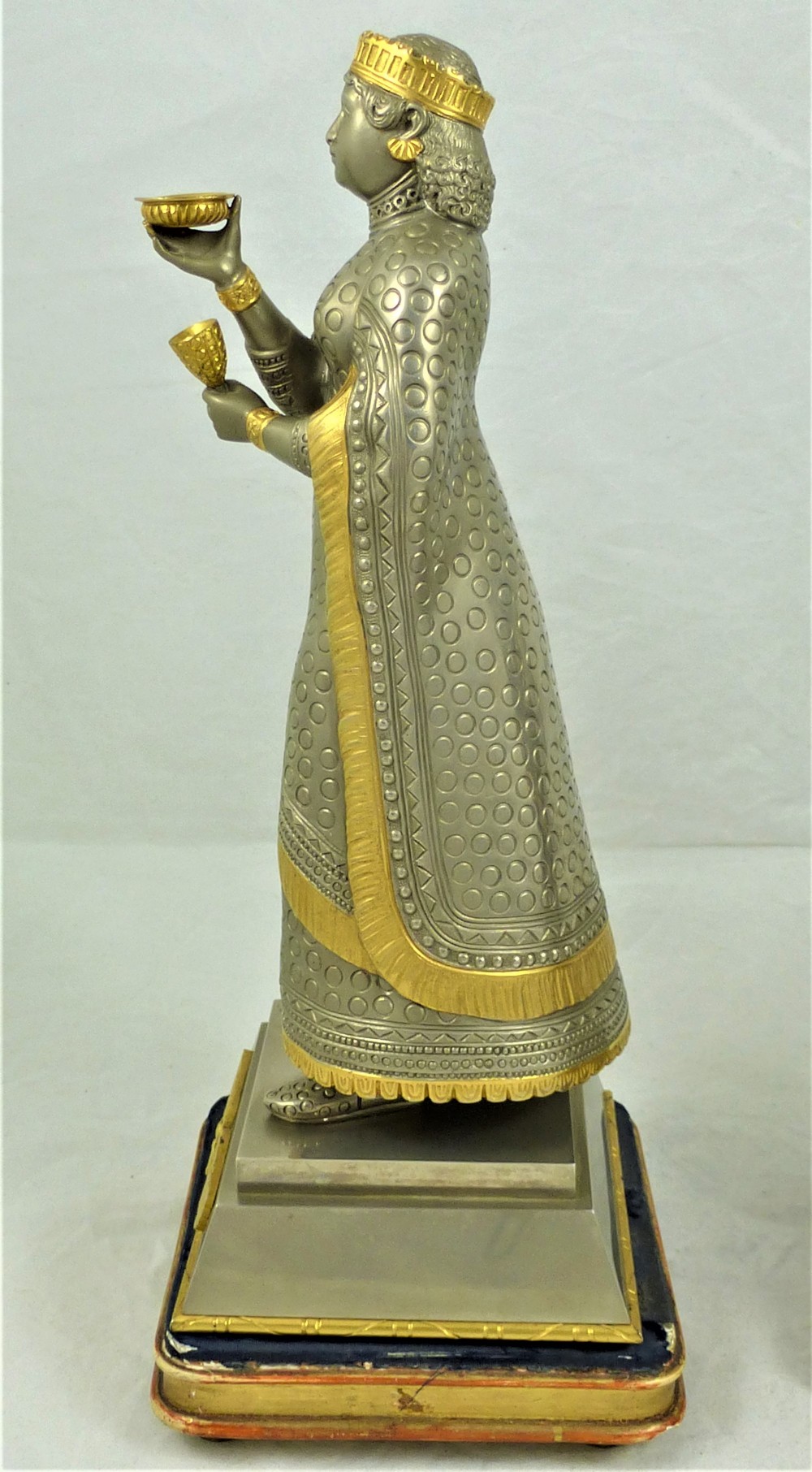
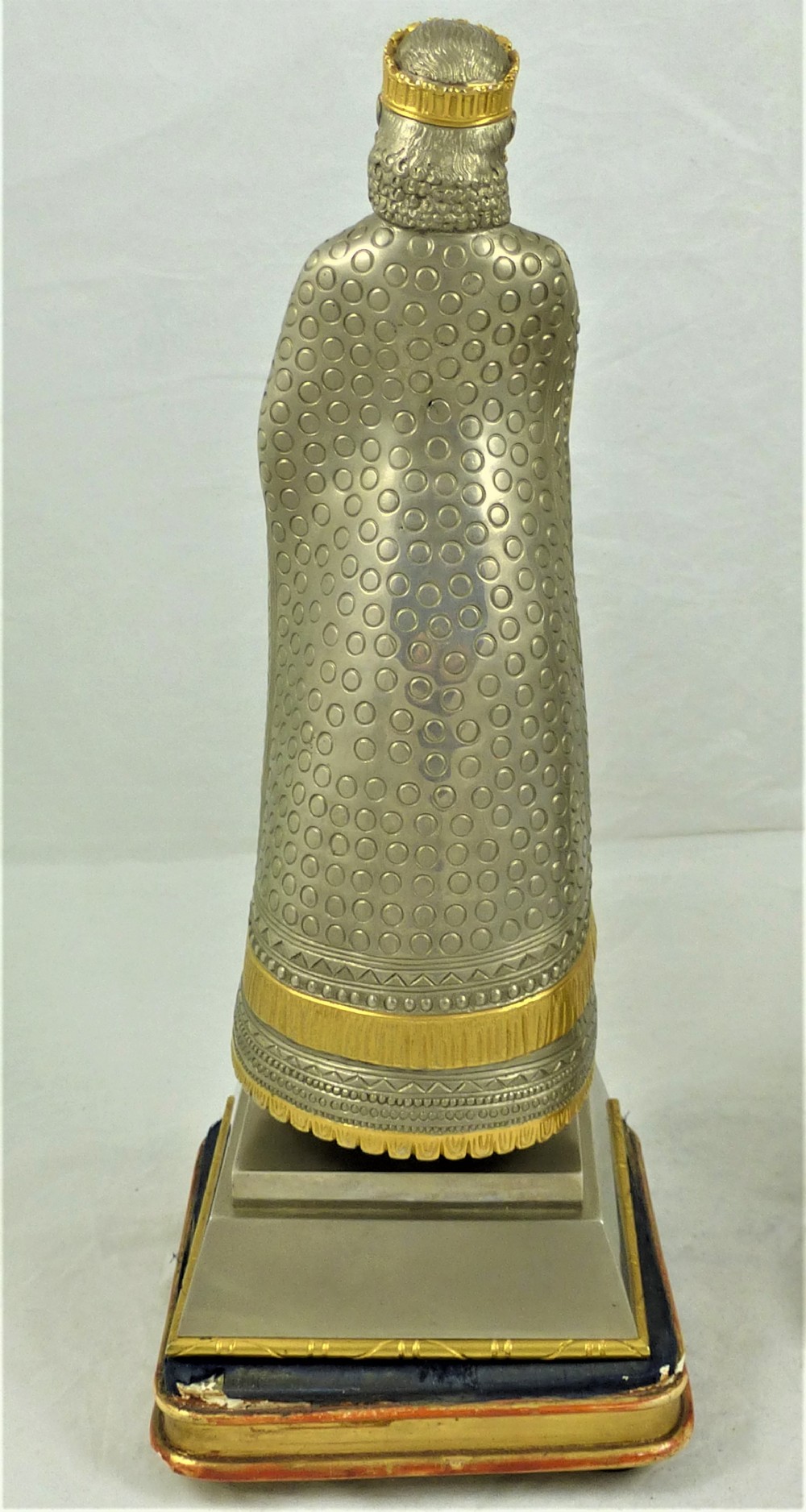
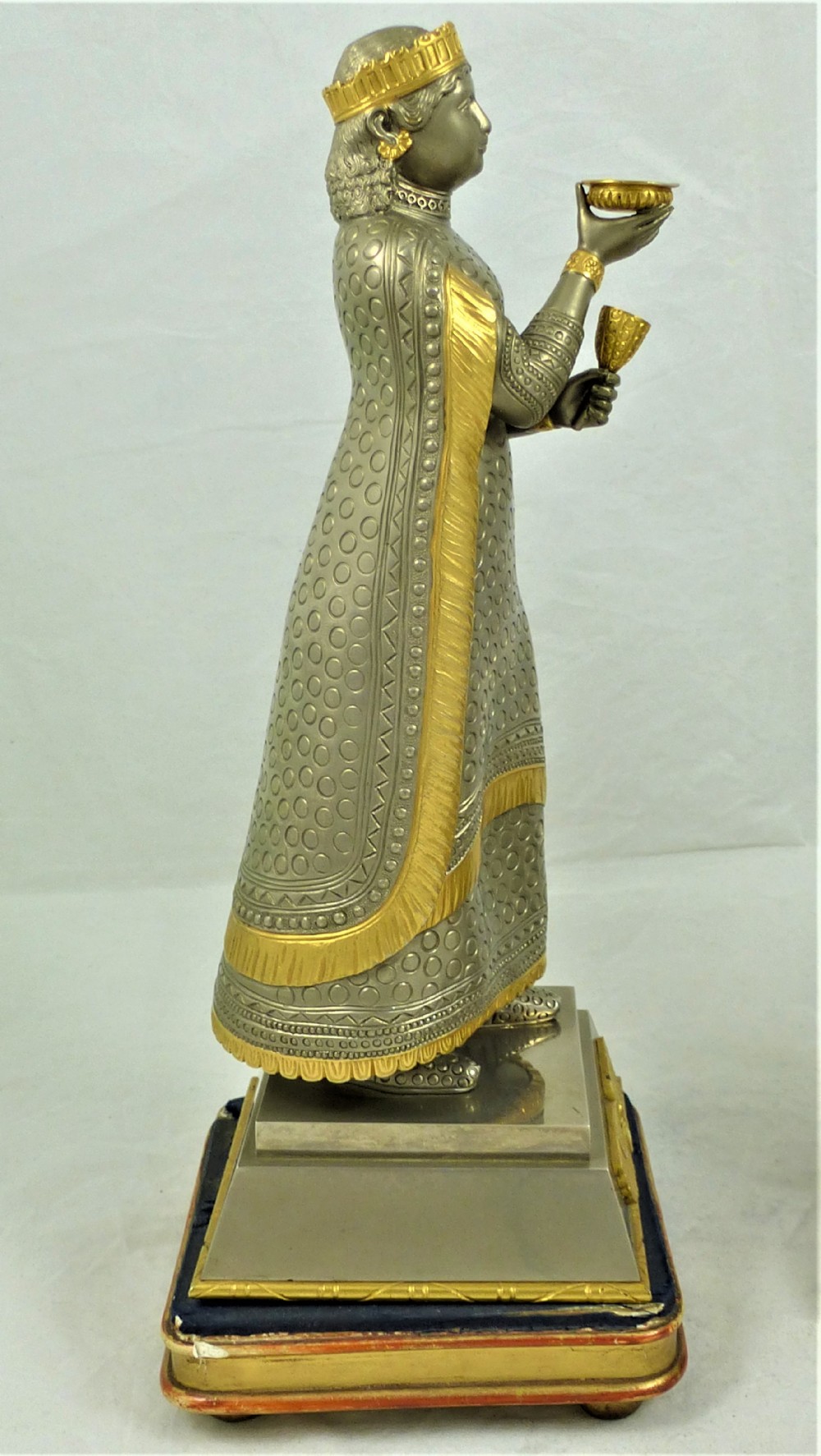
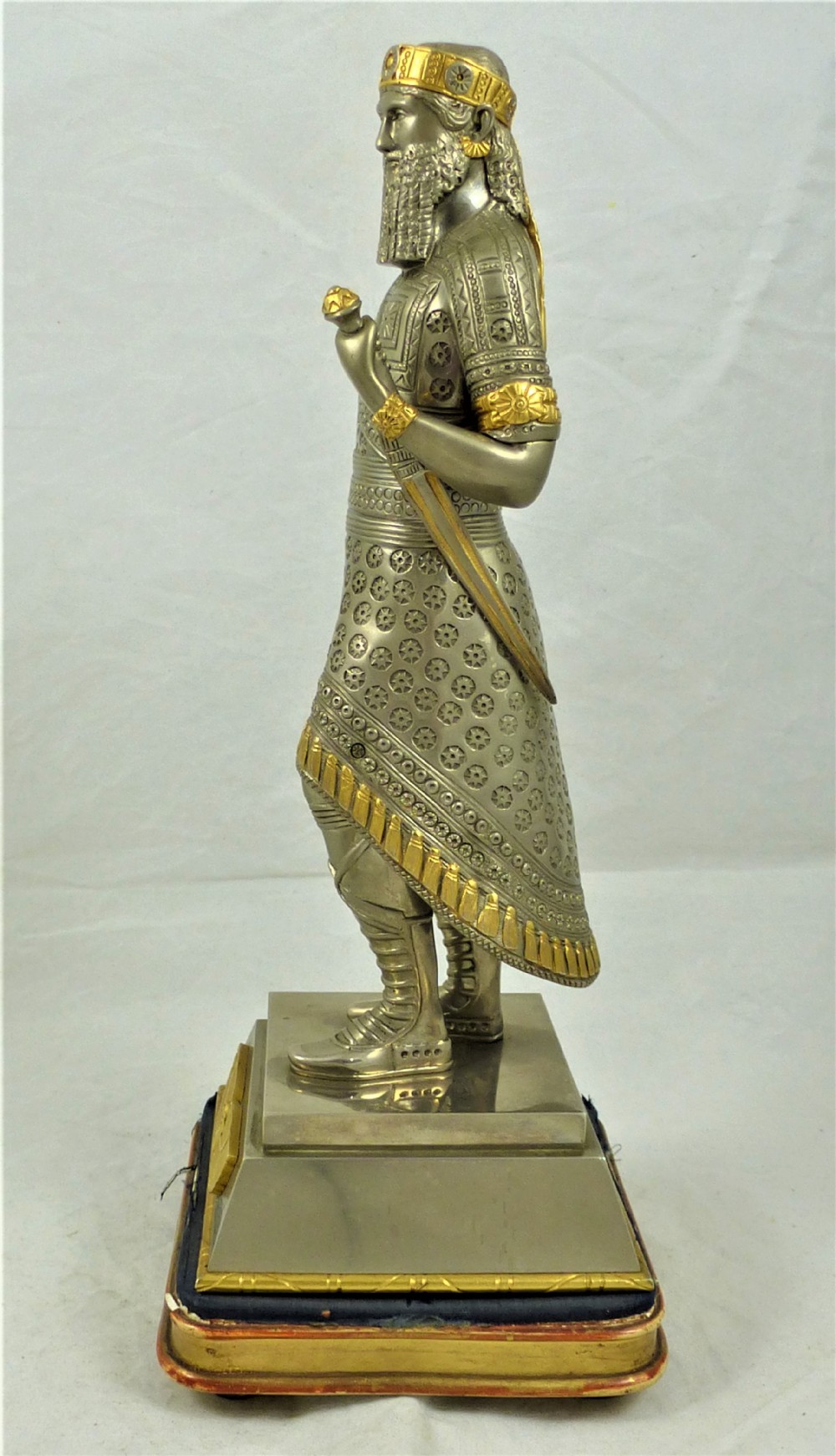
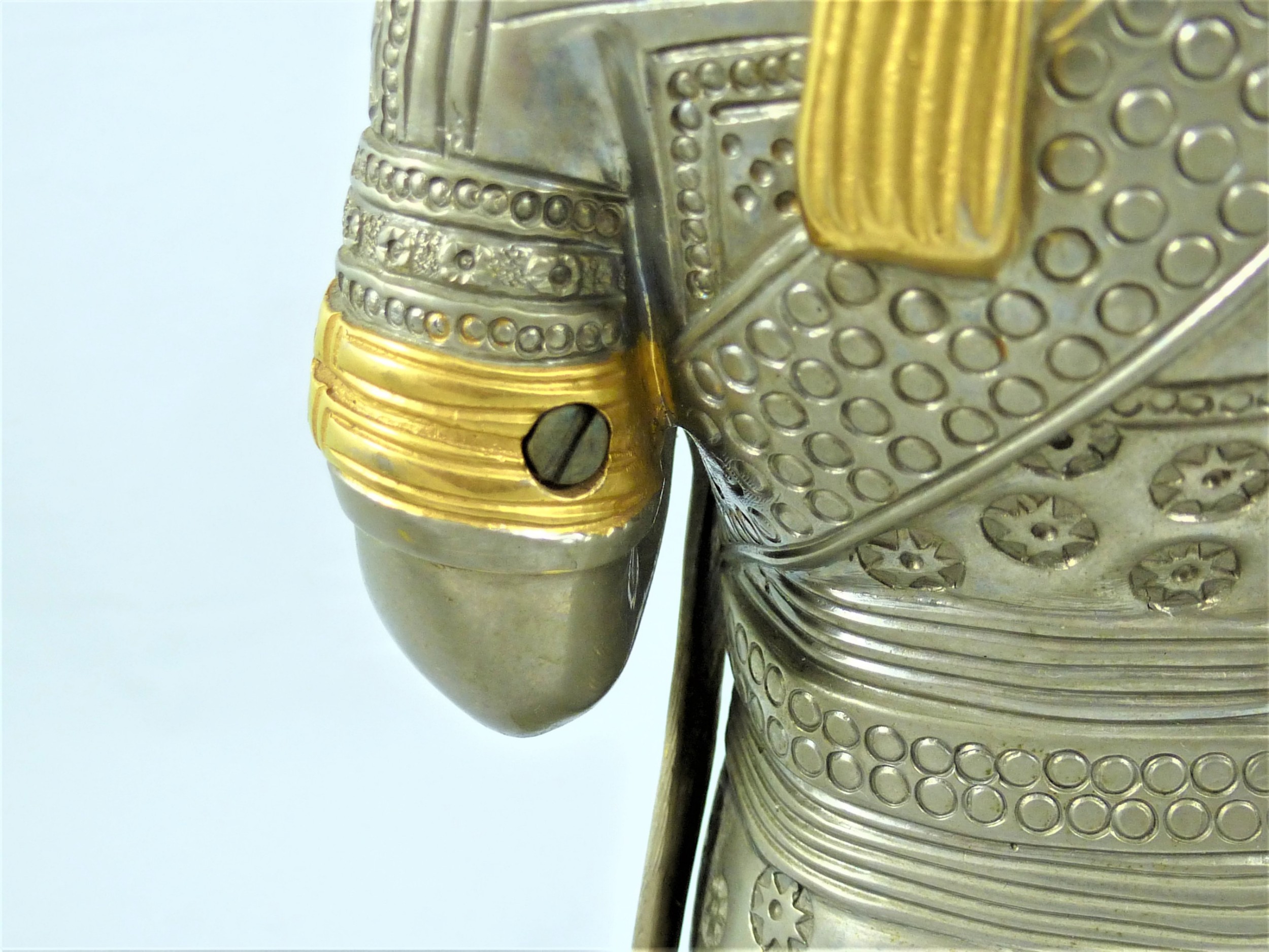
I believe this pair of figures are copies of the Copeland figures. During my research I have also found examples in bronze. The figures in question are cast metal, though not typical materials such as bronze or spelter. Perhaps steel or a similar metal. They are quite heavy. My scales only go up to 1kg but each figure weighs more than that. They are highlighted with parcel gilt detail and raised on square step down bases. The bases have winged sun discs to the front.

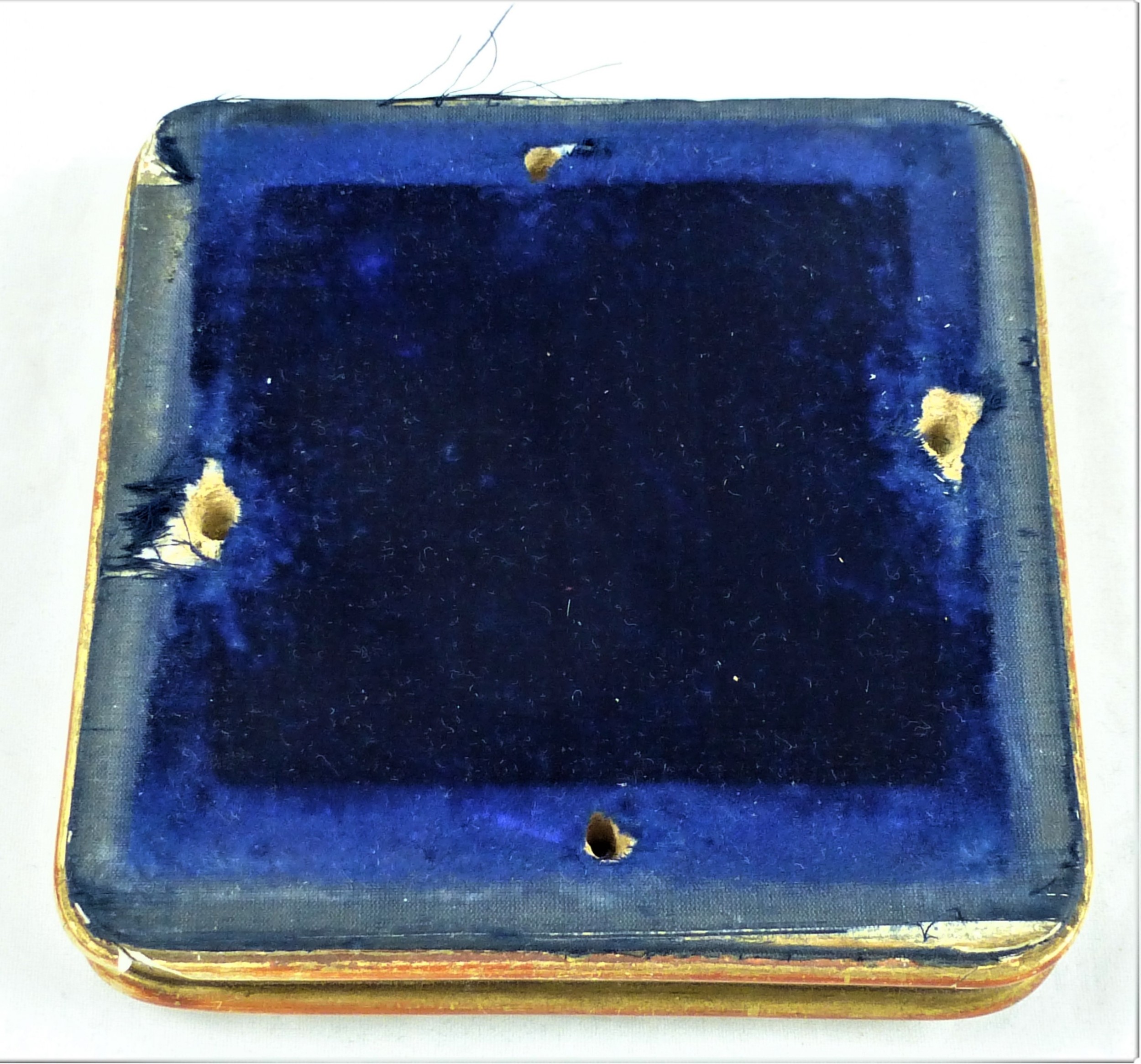
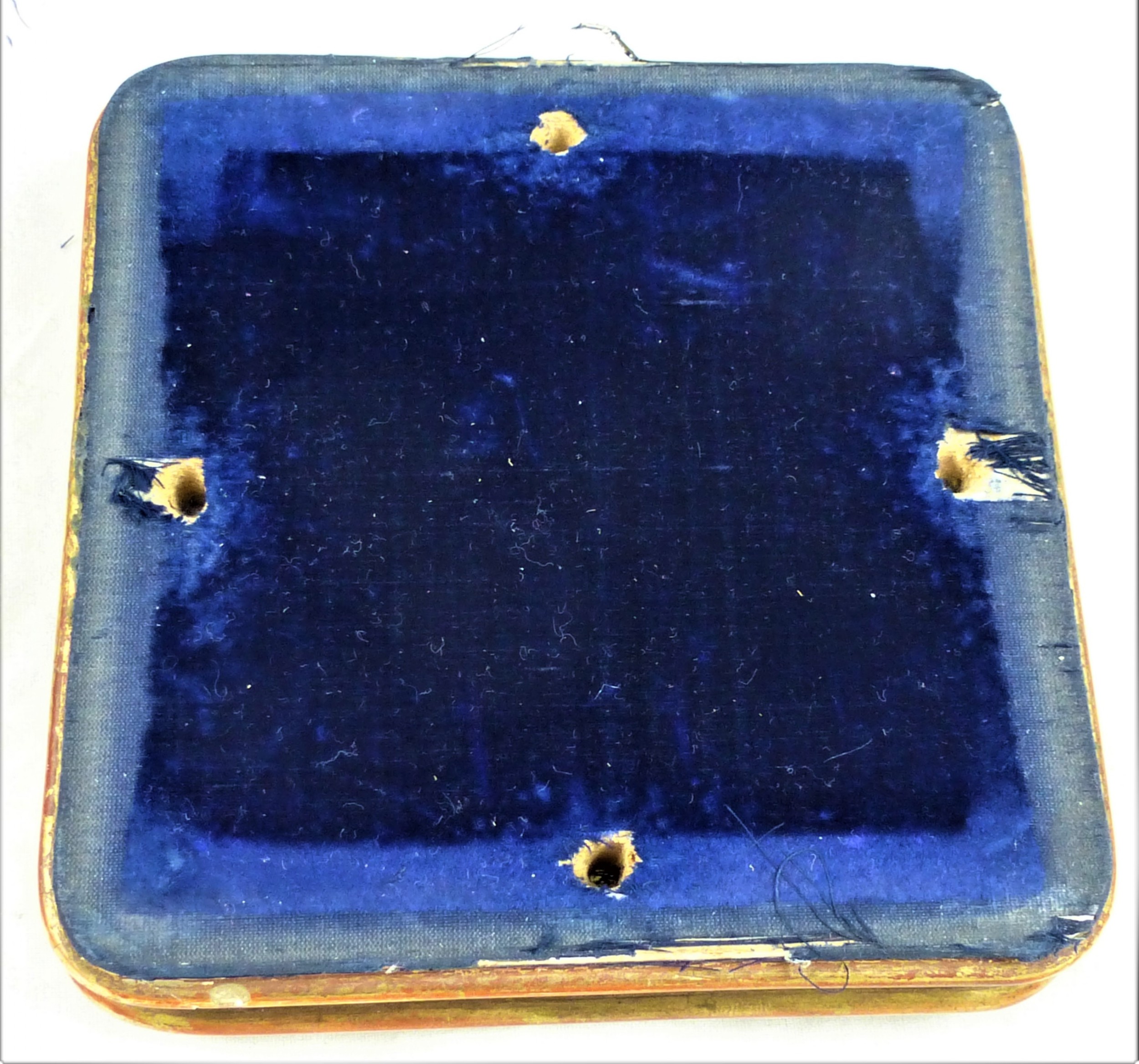
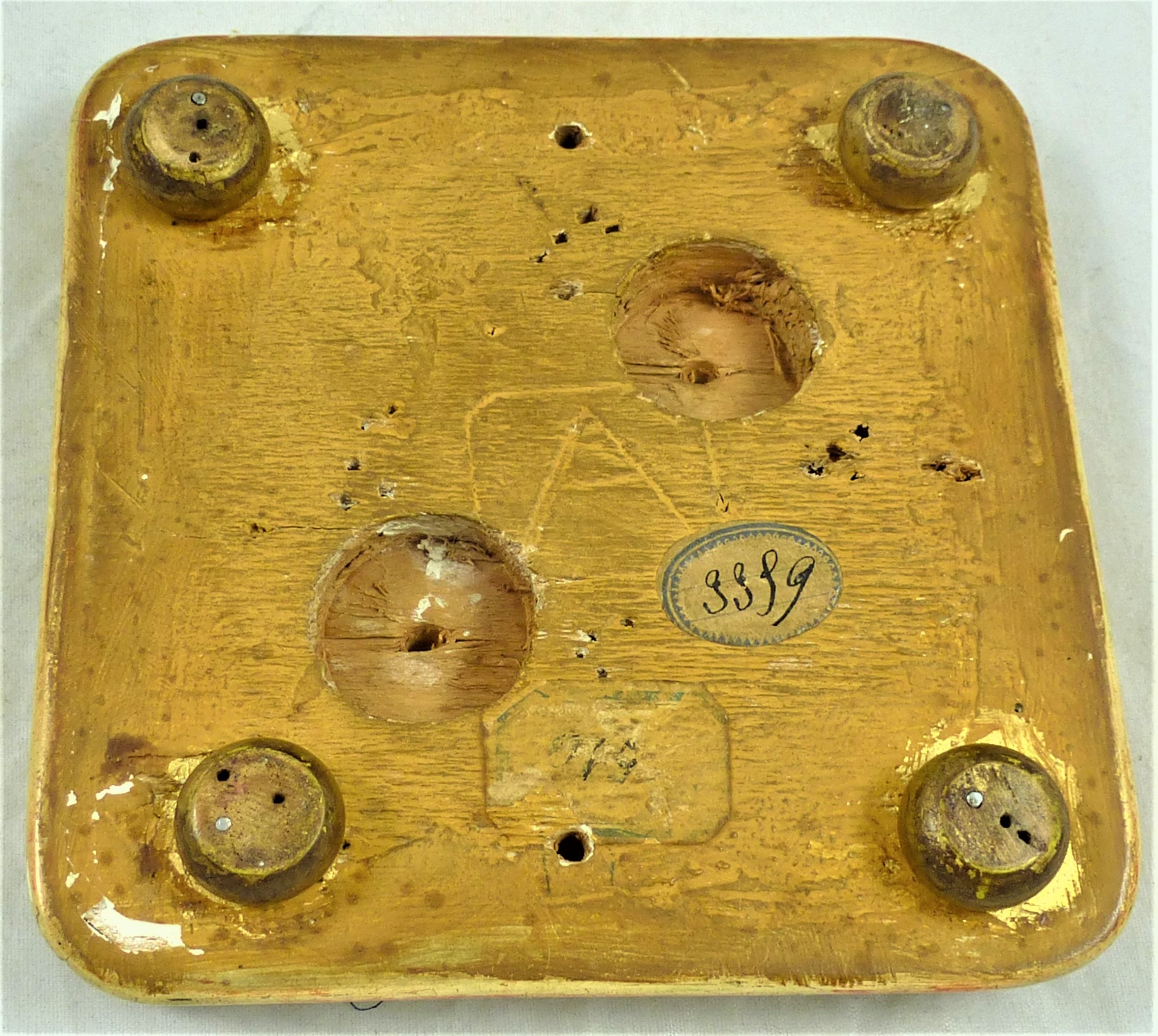
The figures are mounted on French gilt pine and gesso stands with royal blue velour tops.

I expect the figures to date to the Art Deco period as they are presented in a similar manner, and there was a great deal of interest in archaeology, Egyptology and so on around this time.

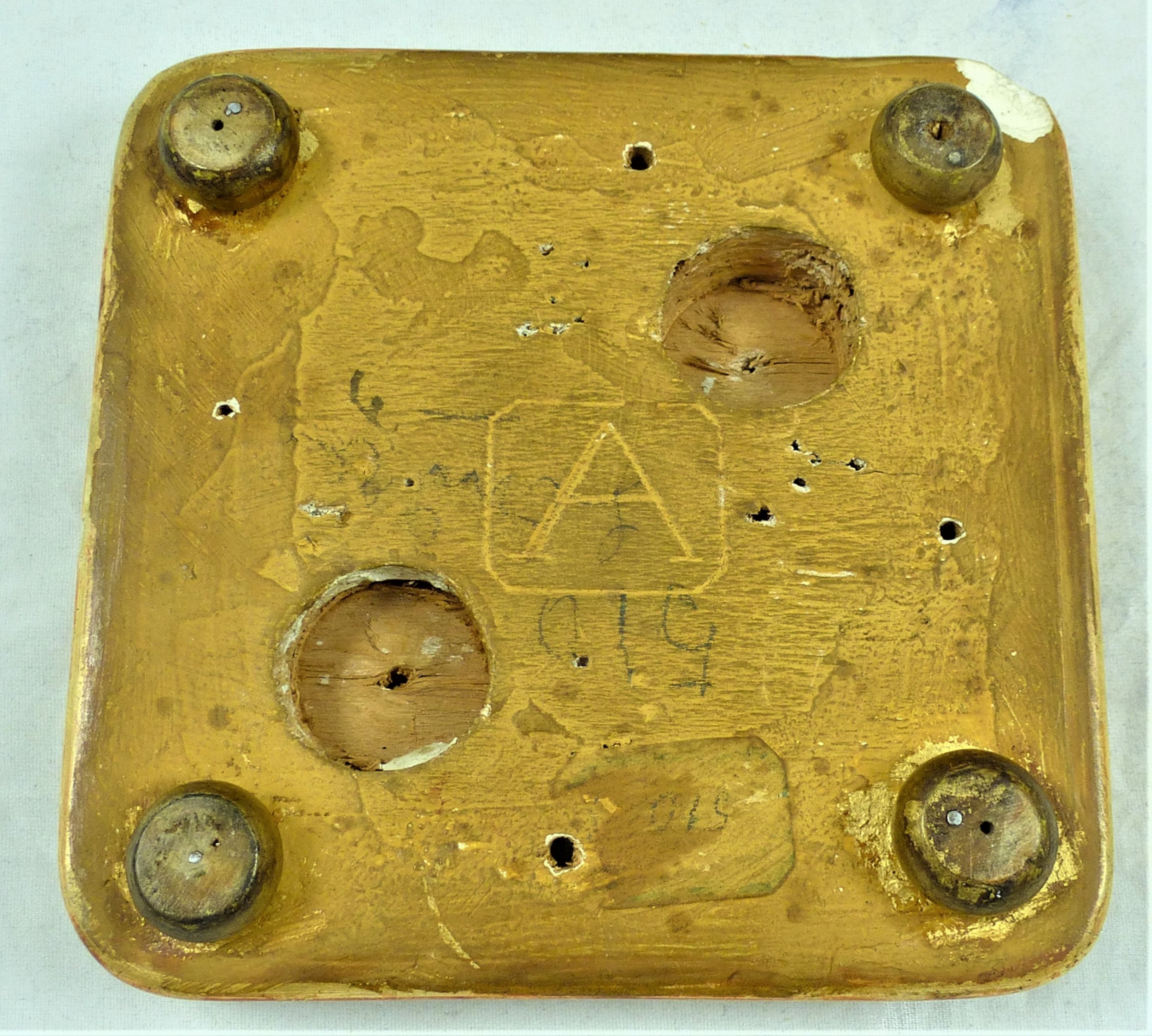
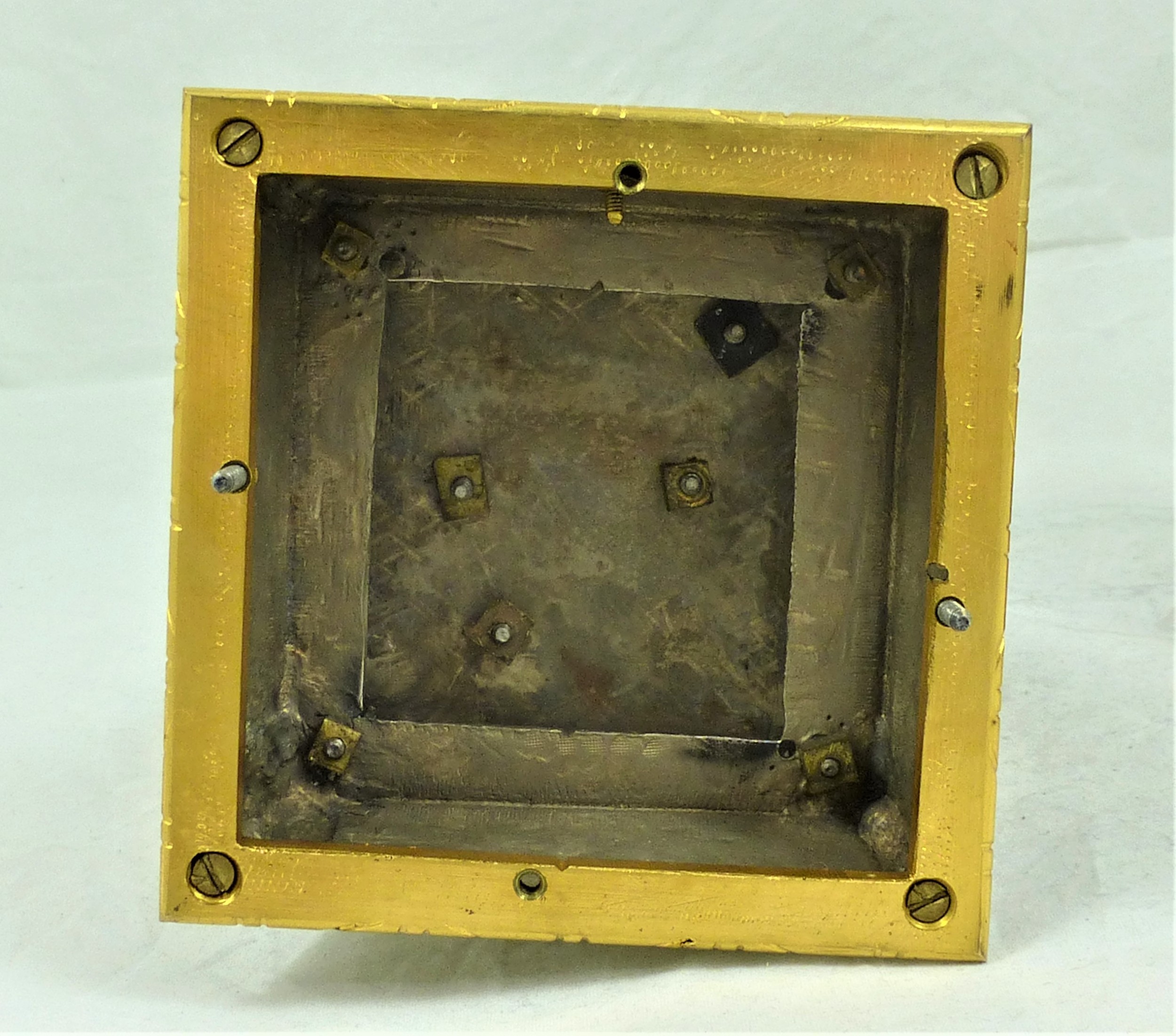
I cannot find any trace of a signature or a foundry mark on either piece.

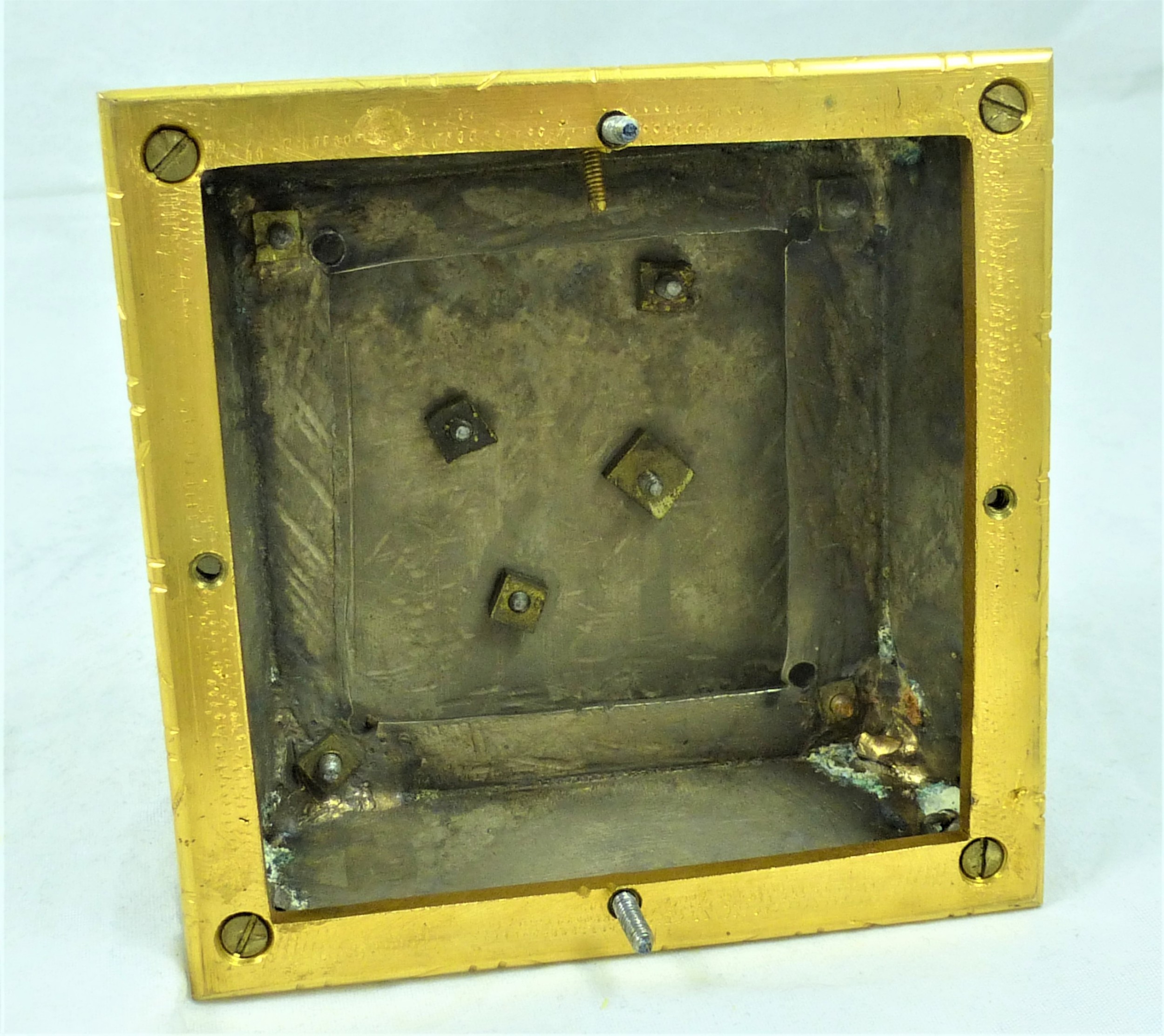
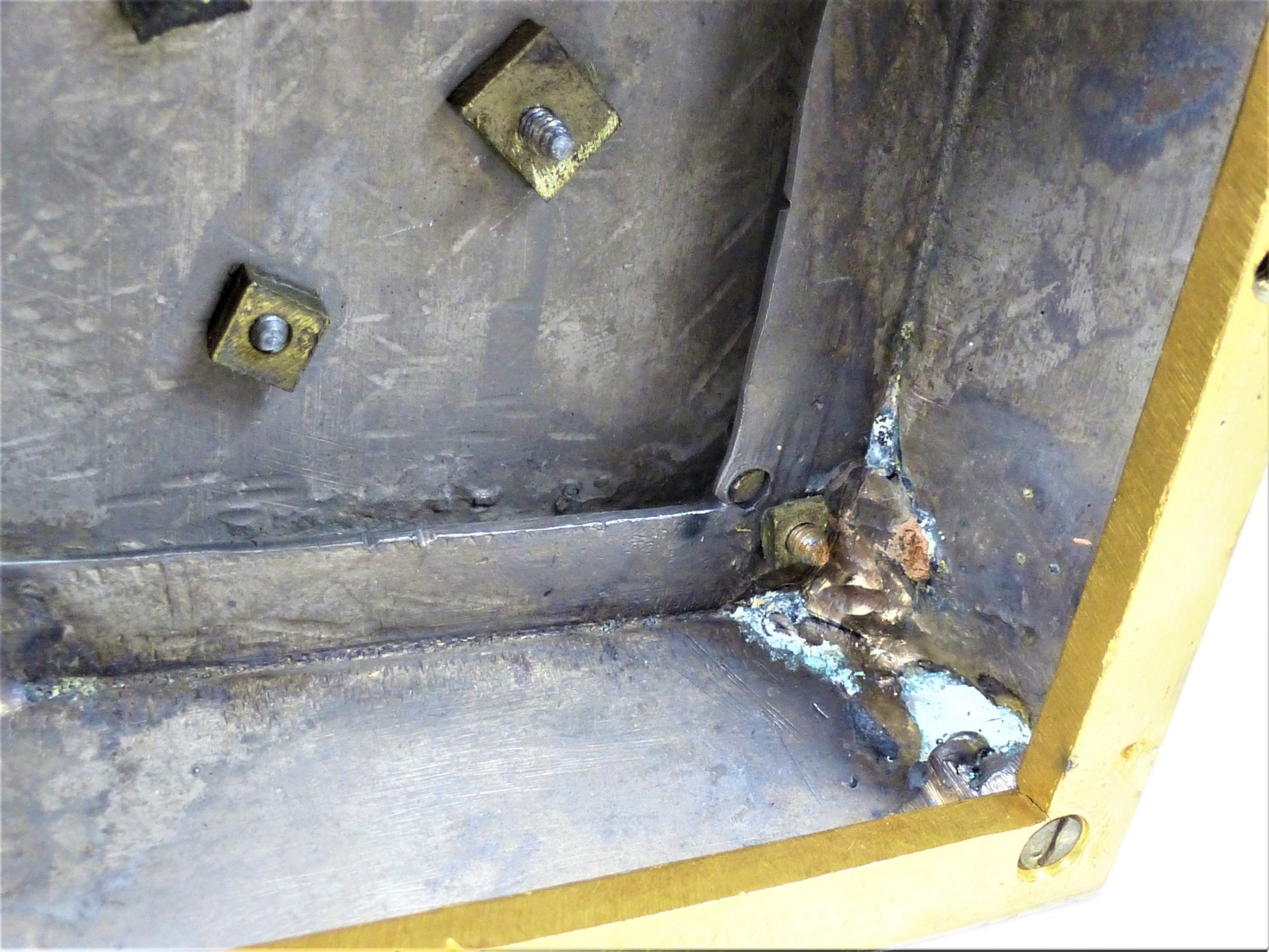
The figures are in good general condition, though there is some slight looseness to the joints of the king, where I assume the screws that join each piece together need some tightening. This is most noticeable at the knees. They are both totally stable when standing. It is only noticeable if you were to tip the figure up. The gilt stands they sit on are quite worn, with chips to the gesso, and so on.

I found the below text on the British Museum's website. It may be of interest to you:

Text from J. Rudoe, 'Decorative Arts 1850-1950. A catalogue of the British Museum collection', 2nd ed. 1994. no. 45.

The Assyrian sculptures discovered by Henry Layard at Nimrud between 1845 and 1851 and subsequently by his successors at Nineveh created a sensation when they were put on display at the British Museum during the late 1840s and 1850s. When the Crystal Palace was moved from Hyde Park to Sydenham in south London, casts of the Nimrud reliefs and the colossal winged bulls and lions were installed in a 'Nineveh Court', so called after Layard's Monuments of Nineveh, vol. 1, published in 1849. Layard initially thought he had discovered Nineveh, and so although this volume describes Nimrud, Nineveh was the name that caught the public imagination.

Hays and Jarvis both worked at the British Museum as attendants, Hays from 1845 to 1876 and Jarvis from 1869 to 1900. Little else is known about them, though when Jarvis retired at sixty his pension was reduced for 'grave misconduct', but the nature of his misdemeanour is not recorded. Hays appears to have been an amateur sculptor; as part of his application for employment in 1845 he submitted a number of sketches, mainly of sculpture, and a letter of recommendation from Richard Westmacott, who had recently designed the pedimental sculpture for the façade of the Museum. Hays exhibited the three standing figures of Sennacherib, Sardanapalus and his queen at the International Exhibition in London of 1871; the statuettes, dated 1868 in the exhibition catalogue, cost £1 10s. each (Official Catalogue, Fine Arts Department, Sculpture, nos 2564-6). Initially the series comprised these three figures only; the Nimrod vase and the winged gateway figures, together with a lion weight and a relief plaque of Ashurbanipal and his queen in a garden scene, were added later.

For a figure of Sennacherib marked 'A Hays Pub. March 1868. Regd. Feb 25th 868' see Atterbury, P. ed. 'The Parian Phenomenon', Shipton Beauchamp 1989, 174, pl. 568. A notice in The

Physical Dimensions
Height
31.7cm (12.48")
Width
12cm (4.72")
Depth
12cm (4.72")
Declaration

TJR Trading has dated these Assyrian Revival Metal Figures to the 1930s.

Reference Numbers
Sellingantiques Reference
SA692298
Dealers Internal Reference
C491
Dealers Notes

All items come with free shipping throughout the UK. They will be sent using a recorded or signed for service such as Royal Mail's Special Delivery.

For other international buyers I have added postage costs to the listings.

Please contact me using my email tjrtrading@hotmail.co.uk or through the contact details section on my listings as I am often out sourcing stock and am unable to answer my telephone. I can answer any questions much better by email.

Description
This is a pair of figures of the Ancient Assyrian king Sardanapalus (Ashurbanipal) and his queen.

Similar figures were produced in parian porcelain. They were made by W.T. Copeland & Sons circa 1868-1894. Copeland produced a small series of these figures in response to the public excitement caused by the discoveries in the mid Nineteenth Century of the ancient Assyrian cities of Nimrud, Ninevah and Khorsabad. The Copeland figures were based on bas reliefs found in these ancient cities.
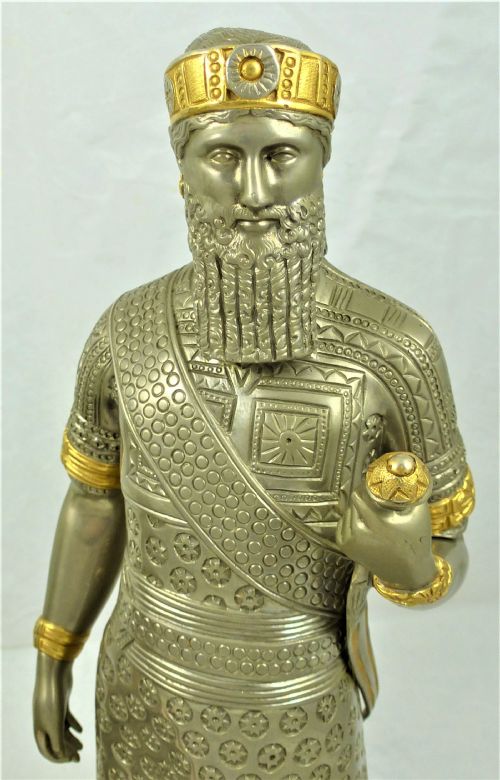
They were modelled by Aaron Hays (British, active 1845–76) who was an employee of the British Museum at the time.
TJR Trading
fig 1. A pair of silvered and gilt metal statuettes depicting an ancient Assyrian king and queen standing on stepped plinths adorned with winged sun motifs.
fig 1. Pair of Figures of Assyrian King Sardanapalus and Queen

I believe this pair of figures are copies of the Copeland figures. During my research I have also found examples in bronze. The figures in question are cast metal, though not typical materials such as bronze or spelter. Perhaps steel or a similar metal. They are quite heavy. My scales only go up to 1kg but each figure weighs more than that. They are highlighted with parcel gilt detail and raised on square step down bases. The bases have winged sun discs to the front.
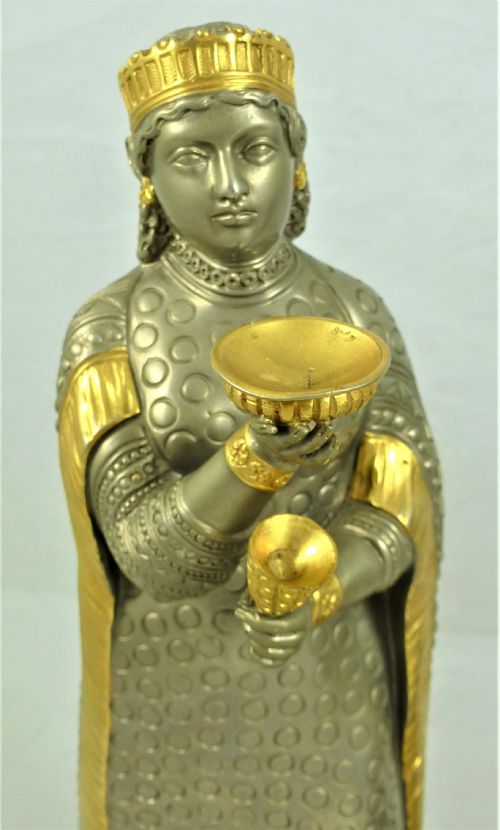
fig 2. A pair of silvered and gilt metal statuettes depicting an ancient Assyrian king and queen standing on stepped plinths adorned with winged sun motifs.
fig 2. Pair of Figures of Assyrian King Sardanapalus and Queen

The figures are mounted on French gilt pine and gesso stands with royal blue velour tops.

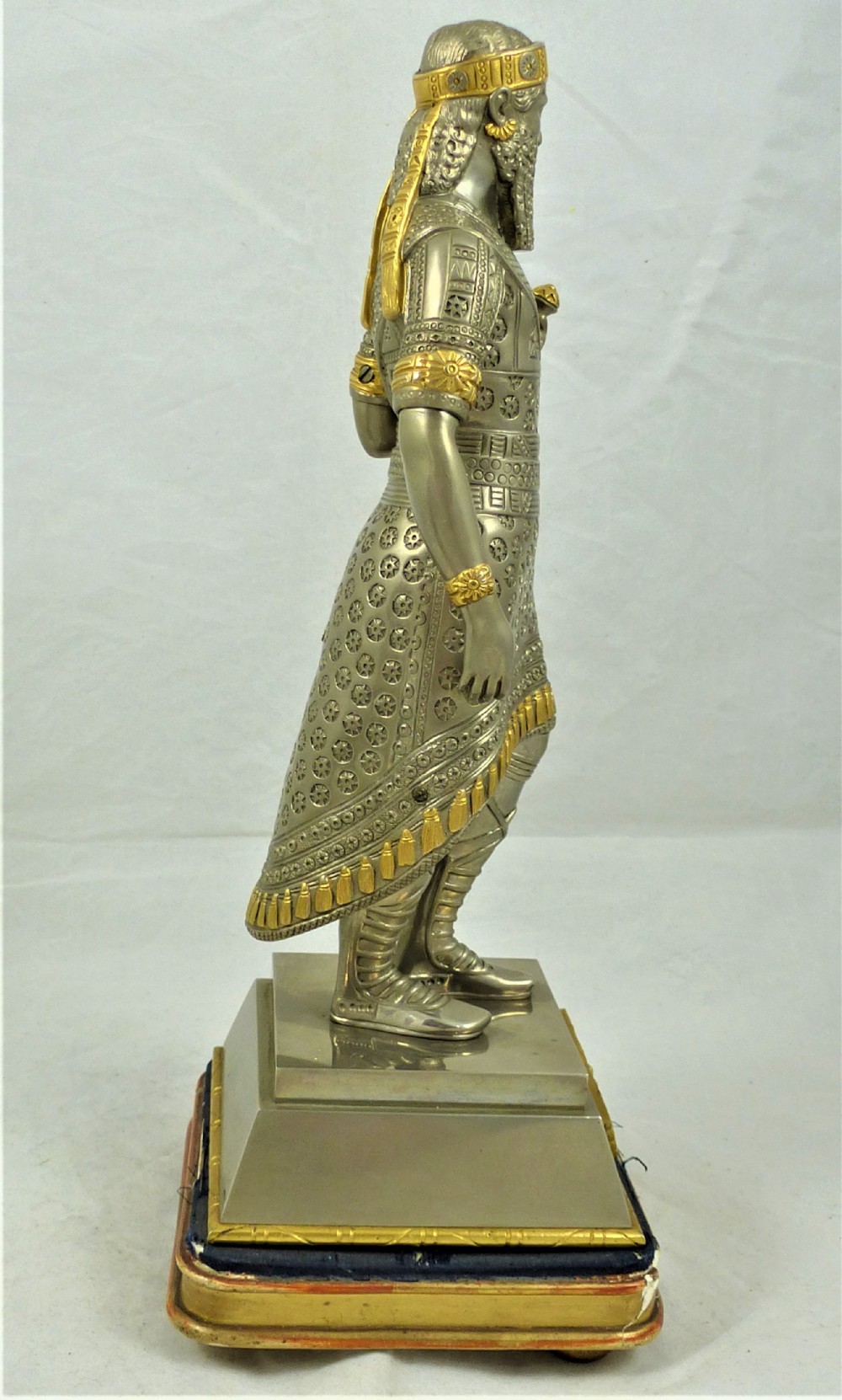
I expect the figures to date to the Art Deco period as they are presented in a similar manner, and there was a great deal of interest in archaeology, Egyptology and so on around this time.
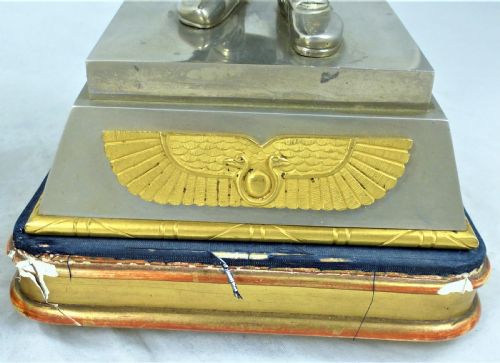
fig 3. A pair of silvered and gilt metal statuettes depicting an ancient Assyrian king and queen standing on stepped plinths adorned with winged sun motifs.
fig 3. Pair of Figures of Assyrian King Sardanapalus and Queen

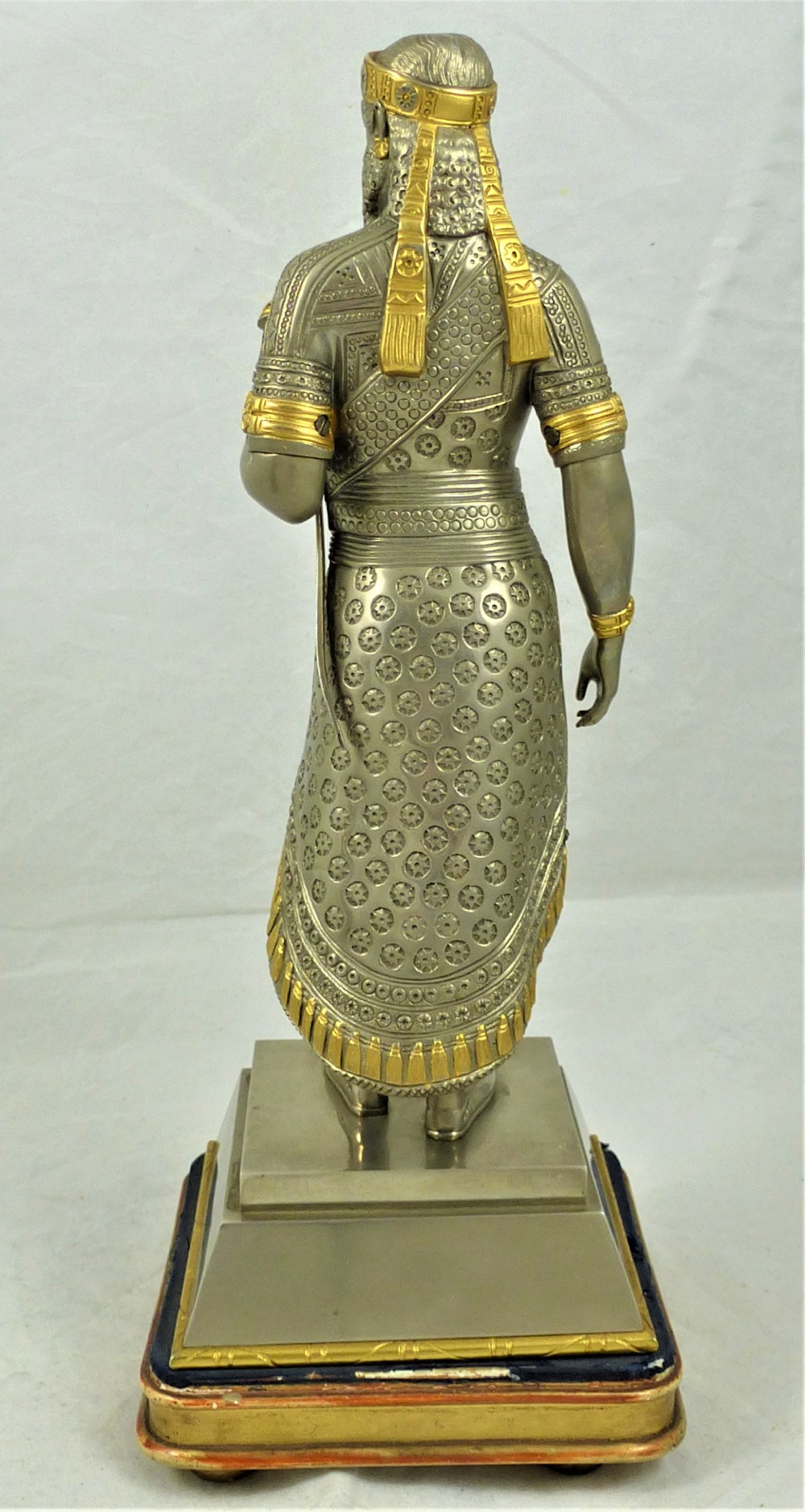
I cannot find any trace of a signature or a foundry mark on either piece.

The figures are in good general condition, though there is some slight looseness to the joints of the king, where I assume the screws that join each piece together need some tightening. This is most noticeable at the knees. They are both totally stable when standing. It is only noticeable if you were to tip the figure up. The gilt stands they sit on are quite worn, with chips to the gesso, and so on.
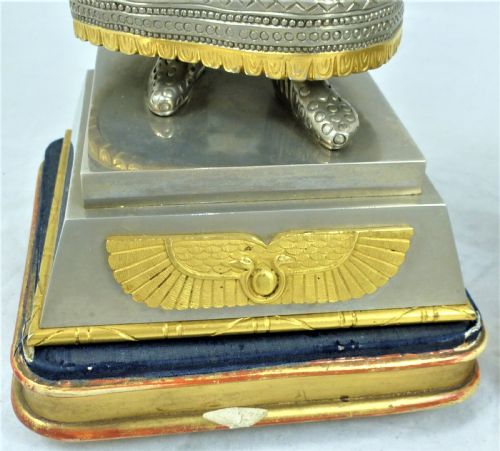
fig 4. A pair of silvered and gilt metal statuettes depicting an ancient Assyrian king and queen standing on stepped plinths adorned with winged sun motifs.
fig 4. Pair of Figures of Assyrian King Sardanapalus and Queen

I found the below text on the British Museum's website. It may be of interest to you:

Text from J. Rudoe, 'Decorative Arts 1850-1950. A catalogue of the British Museum collection', 2nd ed. 1994. no. 45.
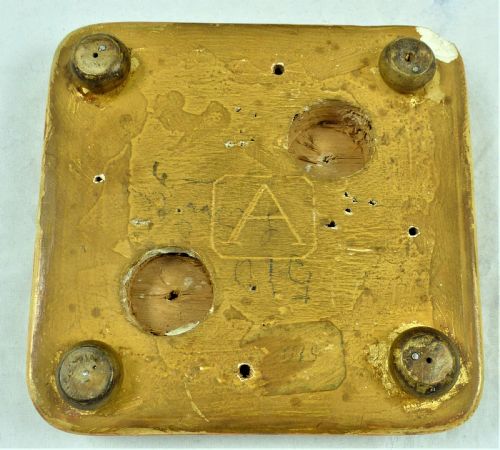
fig 5. A pair of silvered and gilt metal statuettes depicting an ancient Assyrian king and queen standing on stepped plinths adorned with winged sun motifs.
fig 5. Pair of Figures of Assyrian King Sardanapalus and Queen

The Assyrian sculptures discovered by Henry Layard at Nimrud between 1845 and 1851 and subsequently by his successors at Nineveh created a sensation when they were put on display at the British Museum during the late 1840s and 1850s. When the Crystal Palace was moved from Hyde Park to Sydenham in south London, casts of the Nimrud reliefs and the colossal winged bulls and lions were installed in a 'Nineveh Court', so called after Layard's Monuments of Nineveh, vol. 1, published in 1849. Layard initially thought he had discovered Nineveh, and so although this volume describes Nimrud, Nineveh was the name that caught the public imagination.
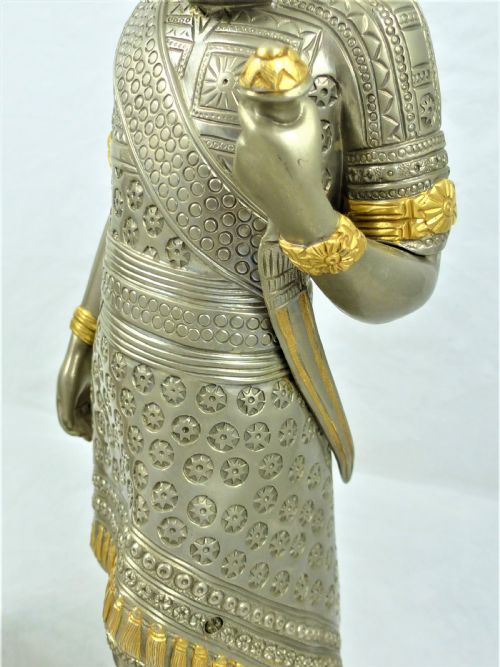
fig 6. A pair of silvered and gilt metal statuettes depicting an ancient Assyrian king and queen standing on stepped plinths adorned with winged sun motifs.
fig 6. Pair of Figures of Assyrian King Sardanapalus and Queen

Hays and Jarvis both worked at the British Museum as attendants, Hays from 1845 to 1876 and Jarvis from 1869 to 1900. Little else is known about them, though when Jarvis retired at sixty his pension was reduced for 'grave misconduct', but the nature of his misdemeanour is not recorded. Hays appears to have been an amateur sculptor; as part of his application for employment in 1845 he submitted a number of sketches, mainly of sculpture, and a letter of recommendation from Richard Westmacott, who had recently designed the pedimental sculpture for the façade of the Museum. Hays exhibited the three standing figures of Sennacherib, Sardanapalus and his queen at the International Exhibition in London of 1871; the statuettes, dated 1868 in the exhibition catalogue, cost £1 10s. each (Official Catalogue, Fine Arts Department, Sculpture, nos 2564-6). Initially the series comprised these three figures only; the Nimrod vase and the winged gateway figures, together with a lion weight and a relief plaque of Ashurbanipal and his queen in a garden scene, were added later.

For a figure of Sennacherib marked 'A Hays Pub. March 1868. Regd. Feb 25th 868' see Atterbury, P. ed. 'The Parian Phenomenon', Shipton Beauchamp 1989, 174, pl. 568. A notice in The

Height
31.7cm (12.48")
Width
12cm (4.72")
Depth
12cm (4.72")
Date of Manufacture

TJR Trading has dated these Assyrian Revival Metal Figures to the 1930s.

Reference Numbers
Sellingantiques Ref
SA692298
Dealers Internal Ref
C491
TJR Trading
Sellingantiques verified Since Sep 2014

Specialist in antique silver, but also a seller of glass, ceramics and other similar items

Dealer Profile

You can view the stock and full dealer information on the TJR Trading Profile Page
PDF SHARE
SAVE
A pair of silvered and gilt metal statuettes depicting an ancient Assyrian king and queen standing on stepped plinths adorned with winged sun motifs.
1 / 23
Archive I A pair of silvered and gilt metal statuettes depicting an ancient Assyrian king and queen standing on stepped plinths adorned with winged sun motifs.

Pair of Figures of Assyrian King Sardanapalus and Queen
Archive II A pair of silvered and gilt metal statuettes depicting an ancient Assyrian king and queen standing on stepped plinths adorned with winged sun motifs. View II
Archive III A pair of silvered and gilt metal statuettes depicting an ancient Assyrian king and queen standing on stepped plinths adorned with winged sun motifs. View III
Archive IV Scale Reference for A pair of silvered and gilt metal statuettes depicting an ancient Assyrian king and queen standing on stepped plinths adorned with winged sun motifs.
Archive V A pair of silvered and gilt metal statuettes depicting an ancient Assyrian king and queen standing on stepped plinths adorned with winged sun motifs. View V
Archive VI A pair of silvered and gilt metal statuettes depicting an ancient Assyrian king and queen standing on stepped plinths adorned with winged sun motifs. View VI
Archive VII A pair of silvered and gilt metal statuettes depicting an ancient Assyrian king and queen standing on stepped plinths adorned with winged sun motifs. View VII
Archive VIII A pair of silvered and gilt metal statuettes depicting an ancient Assyrian king and queen standing on stepped plinths adorned with winged sun motifs. View VIII
Archive IX A pair of silvered and gilt metal statuettes depicting an ancient Assyrian king and queen standing on stepped plinths adorned with winged sun motifs. View IX
Archive X A pair of silvered and gilt metal statuettes depicting an ancient Assyrian king and queen standing on stepped plinths adorned with winged sun motifs. View X
Archive XI A pair of silvered and gilt metal statuettes depicting an ancient Assyrian king and queen standing on stepped plinths adorned with winged sun motifs. View XI
Archive XII A pair of silvered and gilt metal statuettes depicting an ancient Assyrian king and queen standing on stepped plinths adorned with winged sun motifs. View XII
Archive XIII A pair of silvered and gilt metal statuettes depicting an ancient Assyrian king and queen standing on stepped plinths adorned with winged sun motifs. View XIII
Archive XIV A pair of silvered and gilt metal statuettes depicting an ancient Assyrian king and queen standing on stepped plinths adorned with winged sun motifs. View XIV
Archive XV A pair of silvered and gilt metal statuettes depicting an ancient Assyrian king and queen standing on stepped plinths adorned with winged sun motifs. View XV
Archive XVI A pair of silvered and gilt metal statuettes depicting an ancient Assyrian king and queen standing on stepped plinths adorned with winged sun motifs. View XVI
Archive XVII A pair of silvered and gilt metal statuettes depicting an ancient Assyrian king and queen standing on stepped plinths adorned with winged sun motifs. View XVII
Archive XVIII A pair of silvered and gilt metal statuettes depicting an ancient Assyrian king and queen standing on stepped plinths adorned with winged sun motifs. View XVIII
Archive XIX A pair of silvered and gilt metal statuettes depicting an ancient Assyrian king and queen standing on stepped plinths adorned with winged sun motifs. View XIX
Archive XX A pair of silvered and gilt metal statuettes depicting an ancient Assyrian king and queen standing on stepped plinths adorned with winged sun motifs. View XX
Archive XXI A pair of silvered and gilt metal statuettes depicting an ancient Assyrian king and queen standing on stepped plinths adorned with winged sun motifs. View XXI
Archive XXII A pair of silvered and gilt metal statuettes depicting an ancient Assyrian king and queen standing on stepped plinths adorned with winged sun motifs. View XXII
Archive XXIII A pair of silvered and gilt metal statuettes depicting an ancient Assyrian king and queen standing on stepped plinths adorned with winged sun motifs. View XXIII
Enlarged Archival View
Telephone 07716 081 462
Location
London
United Kingdom
Dealer Profile Page sellingantiques.co.uk/tjr
Verified Since Sep 2014
Items For Sale 47
Items Sold 185
TJR Trading
Verified Since Sep 2014
View Dealer Info
Location: London, United Kingdom
Verified
Sep 2014
For Sale
47
Sold
185
A pair of silvered and gilt metal statuettes depicting an ancient Assyrian king and queen standing on stepped plinths adorned with winged sun motifs.
Pair of Figures of Assyrian King Sardanapalus and Queen
Ref: SA692298
A pair of silvered and gilt metal statuettes depicting an ancient Assyrian king and queen standing on stepped plinths adorned with winged sun motifs.
Detail View 1
Detail View 2
Detail View 3
Detail View 4
Detail View 5
Detail View 6
Detail View 7
Detail View 8
Detail View 9
Detail View 10
Detail View 11
Detail View 12
Detail View 13
Detail View 14
Detail View 15
Detail View 16
Detail View 17
Detail View 18
Detail View 19
Detail View 20
Detail View 21
Scale Reference
Archival Detail
Every single antique dealer on our platform is individually approved by our internal team. We verify their professional trade history, ethical standards, and photographic quality to ensure a secure, high-standard buying environment. Upon joining, every dealer agrees to a strict 9-point code of conduct. While issues can occasionally arise, our dealers typically resolve them swiftly and directly with the buyer. In fact, since our founding in 2002, Sellingantiques has only had to step in to help resolve an issue on roughly five occasions—a true testament to the quality of our dealers and their dedication to your happiness.
Our dealers are highly experienced in packing and shipping fragile, high-value antiques. Because you are in direct contact with the dealer, you will be able to easily go through all available shipping and insurance options together to ensure your item arrives safely.
Antiques are the ultimate green purchase. By choosing historical pieces over newly manufactured goods, you completely eliminate the carbon footprint of modern mass production while preserving exceptional, timeless craftsmanship.

Assyrian Revival decorative arts emerged during the mid-nineteenth century, inspired by archaeological discoveries at ancient sites such as Nineveh and Nimrud. Objects from this genre feature motifs copied from ancient stone reliefs, including winged solar discs, patterned ceremonial tunics, and stylized hair and beards.

Victorian revival figures were frequently cast in spelter or bronze and finished with electroplated silver, gold gilt, or chemical patinas. These figures were usually mounted on tiered metal, marble, or wooden plinths to enhance their prominence.

Authentic nineteenth-century examples display fine casting details, including geometric border patterns, sharp relief work on figures, and historic electroplated surface finishes showing natural age-related wear or light tarnish near join lines.

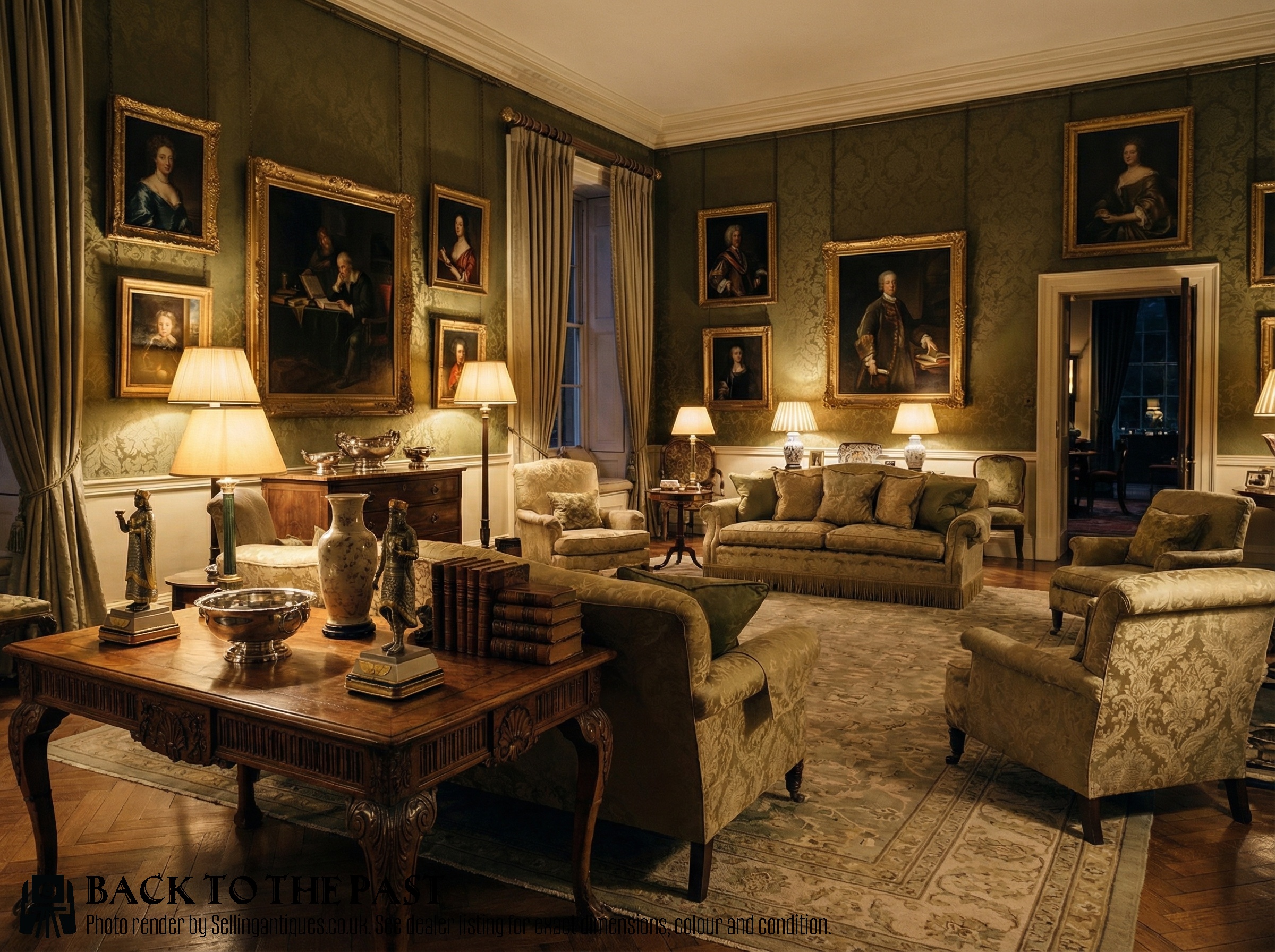
These sculptural figures function as focal accents when displayed as a symmetry-focused pair on a mantelpiece, sideboard top, or within structured bookshelf alcoves alongside leather-bound volumes.

Dust regularly with a dry, soft microfibre cloth or soft bristle brush. Avoid abrasive polishes or liquid cleaners, as these can strip away original gold leaf, silver gilding, or historical patination.
items
Add keywords to the filter
Price
£100
£250000
Era
Movements
Material
Origin
Stock Location
Freshness
Online Payments
Categories