


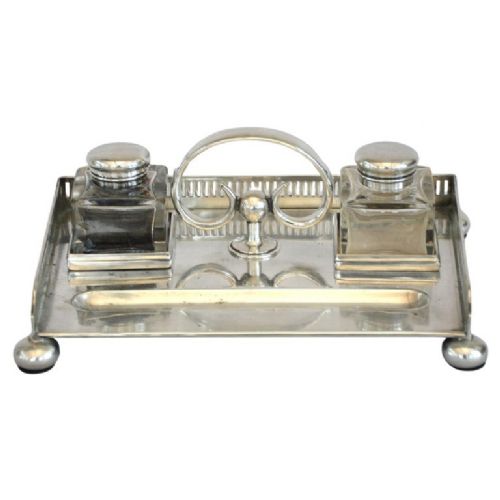


Antique Silver Inkpot
An antique silver inkpot is a tangible piece of a handwritten era, combining functional heft with the decorative arts of the Georgian, Victorian, and Edwardian periods.
Antique Silver Inkpot
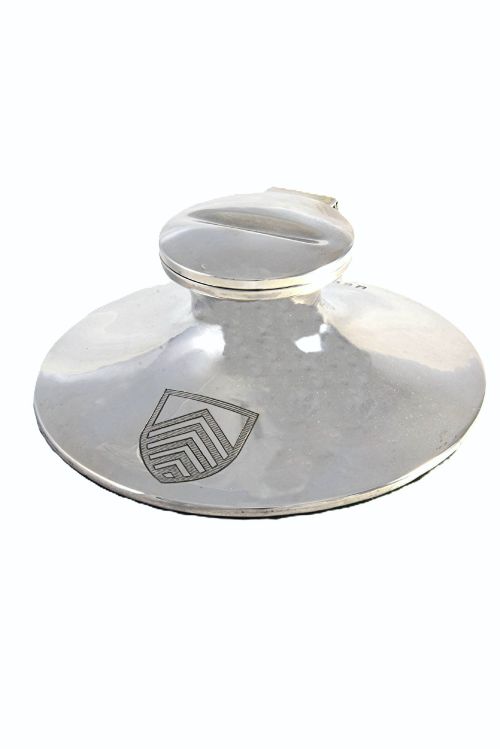
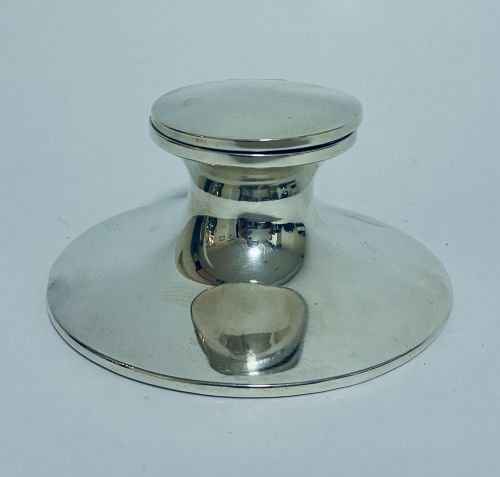
When you search for an antique silver inkpot, you encounter desk accessories that range from simple glass vessels with silver lids to elaborate capstan forms and novelty pieces shaped as owls, bells, or horns of plenty. The pieces on this page span the Georgian, Victorian, and Edwardian eras through to Art Deco and Arts and Crafts designs.
The capstan shape appears frequently alongside cut glass bodies mounted in sterling silver or silver plate. Alongside single inkwells, the selection includes double inkstands and desk sets designed to sit permanently upon a library table or travel with the owner in a fitted case.
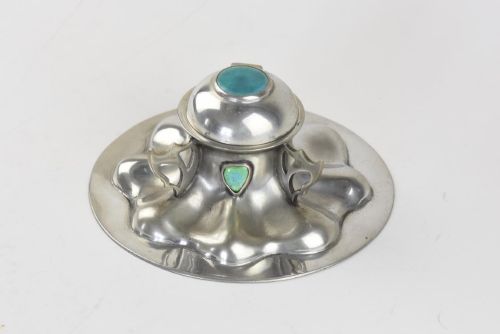
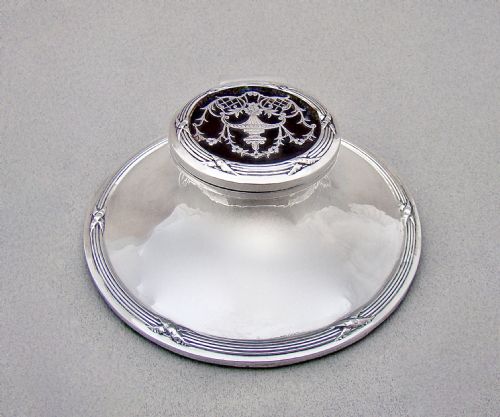
Makers utilised materials such as polished pewter, tortoiseshell, guilloche enamel, and ceramic to embellish the basic metalwork. Whether you examine a George IV silver gilt travelling ink well or a large Victorian novelty, each object reflects the specific writing habits and social standing of its period.
Materials and construction
Silversmiths constructed the metal components of these inkpots using sterling silver or silver plate, often forming heavy capstan shapes or hinged lids to seal the ink chamber. Cut glass and facet cut crystal served as robust bodies for desktop vessels, allowing the user to monitor ink levels.
Decorative techniques varied according to the prevailing style, incorporating guilloche enamel floral medallions, Ruskin cabochons on polished pewter, and tortoiseshell panels set into silver mounts. Internal glass liners protected the precious metal from corrosive ink while ensuring a secure seal.
Antique Silver Inkpot Retail Price Guide 2026
Typical asking prices for silver inkpot among the pieces listed under this phrase on Sellingantiques today, from the lower quarter to the upper quarter. They describe what is for sale here now, not the wider market.
An owl inkwell watches your paperwork with vacant glass eyes, turning a mundane writing chore into a Victorian wildlife encounter.
Distinctions in quality
The distinction between standard desk accessories and finer pieces lies in the crispness of the chasing, the weight of the silver mount, and the complexity of the form. Novelty models shaped as owls or bells demand higher technical skill from the silversmith than simple circular capstans.
The integration of secondary materials such as tortoiseshell, guilloche enamel, or matched cut glass liners elevates a piece. Hallmarks that remain clear and legible alongside well-preserved internal components preserve the integrity and origin of the object.
Henry Matthews·Walker And Hall·Tiffany And Co·Daniel Holy Of Sheffield
The Antique Silver Inkpot Glossary
- Capstan inkwell
- An inkwell shaped like a ship's capstan, featuring a broad base that tapers upwards to a flat top with a hinged lid. This weighted profile prevented the vessel from tipping over on a rolling ship or busy desk.
- Guilloche enamel
- A decorative technique where geometric patterns are engine-turned into metal beneath a translucent layer of coloured enamel. It appears frequently on early twentieth-century desk accessories.
- Silver gilt
- Silver that has been coated with a thin layer of gold on its surface. This treatment protected the interior of travelling ink wells from the corrosive properties of acidic writing ink.
- Novelty inkwell
- An inkwell fashioned into a playful or literal representation of an animal, object, or figure, such as an owl with glass eyes or a church bell. These pieces combined utility with Victorian whimsy.
Antique Silver Inkpot: Frequently Asked Questions
How do I clean an antique silver inkpot?
Remove any glass liners and clean the sterling silver or silver plate gently with a soft cloth and a reputable silver polish, avoiding abrasive pads that might damage hallmarks or delicate chasing.
Keep moisture away from fitted panels such as tortoiseshell or guilloche enamel to prevent warping or lifting around the edges of the metal mount.
Were these inkpots meant for travel?
While most large capstan models and desk stands remained stationary on library tables, specific pieces like the silver gilt travelling ink well were designed for use on the move.
Travellers required secure screw lids and internal stoppers to prevent ink from spilling into luggage during transit.
How do I identify the date of an inkpot?
Examine the hallmarks stamped on the silver components, which indicate the assay office, the date letter corresponding to a specific year, and the maker's mark.
Stylistic indicators such as Arts and Crafts pewter work or Art Deco geometric lines also help assign a piece to the Edwardian era or the 1920s.
What are glass liners used for?
Glass liners sit inside the silver or pewter body of the inkwell to hold the liquid ink safely away from the metal.
Acidic inks corroded silver over time, making removable glass inserts essential for the longevity of fine desk accessories.