


Edwardian Capstan Inkwell
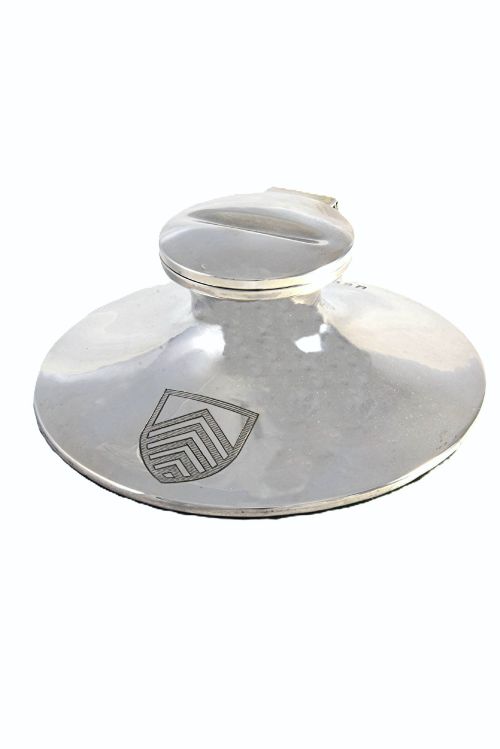
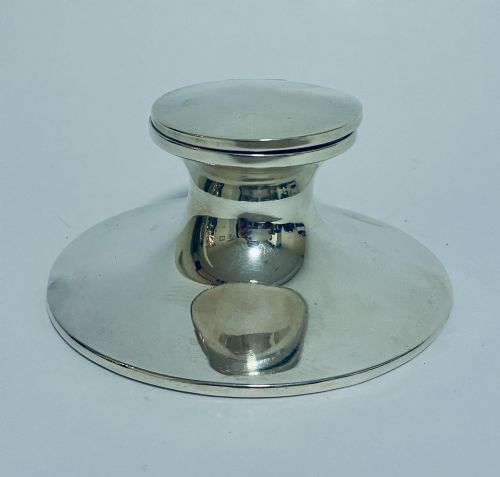
These edwardian capstan inkwell pieces bring distinctive nautical silhouette and gleaming metal to the desk, offering a practical centrepiece for any traditional writing setup.
Edwardian Capstan Inkwell
An edwardian capstan inkwell takes its unmistakable tapering shape from the nautical deck fittings used to haul heavy lines on ships. You will frequently encounter circular designs fashioned from sterling silver, sometimes accompanied by integrated timepieces such as pocket watches or small clocks.
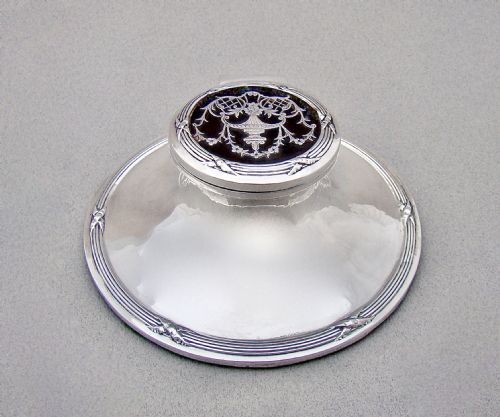
The selections span the Edwardian era and the early twentieth century, with dates reaching from nineteen hundred through to the nineteen twenties. Alongside standard silver bodies, variants emerge incorporating rich tortoiseshell or guilloche enamel floral medallions.
Most examples originate from major English assay centres including Birmingham, Chester, London, and Manchester. Certain pieces present square or bell-shaped variations upon the classic capstan silhouette while retaining the signature wide base.
How They Were Made
Silversmiths constructed these items using sterling silver sheet and cast components, shaping the metal into the characteristic broad-based drum form. Glass inserts were utilised internally to hold the liquid ink safely without corroding the surrounding precious metal.
Selected pieces feature decorative embellishments such as inlaid tortoiseshell panels or detailed guilloche enamel medallions applied to the hinged lids. Makers stamped hallmarks directly onto the silver elements to denote the assay office, city, and year of production.
Materials documented across these listings include sterling silver, glass, enamel, and tortoiseshell.
What Varies In Quality
Proportion and weight define the distinction between standard production and superior examples, particularly with larger scaled items that demand heavier gauge silver. The crispness of the turning and the precise fit of the hinged lid reveal the skill of the original workshop.
The inclusion of auxiliary elements like working pocket watches, clocks, or contrasting materials such as tortoiseshell and enamel elevates the complexity of a piece. Hallmarks that remain sharp and legible after decades of polishing also contribute to desirability.
Henry Matthews
The Edwardian Capstan Inkwell Glossary
- Capstan
- A tapering nautical device with a wide base that inspired the distinctive sloping shape of these desk accessories. This form provides exceptional stability on a writing surface.
- Guilloche
- A decorative engineering technique producing intricate geometric patterns beneath a translucent layer of enamel. On these items, it frequently highlights floral medallions upon the lid.
- Sterling silver
- An alloy consisting of pure silver and other metals added for durability, standard for British plate of this era. Hallmarks on the base confirm its official standard.
- Tortoiseshell
- The mottled brown material derived from the shell of certain turtle species and used for decorative panels. It provides a rich contrast against polished silver surfaces.
Edwardian Capstan Inkwell: Frequently Asked Questions
What is an edwardian capstan inkwell?
An edwardian capstan inkwell is a desk accessory modelled on the shipboard capstan, featuring a wide weighted base and a sloping body designed to prevent tipping.
These pieces typically date from the early twentieth century and house a glass well inside a sterling silver housing.
How do I clean silver inkwells?
Cleaning requires a soft microfibre cloth and a reputable silver polish, applied gently to avoid wearing down the stamped hallmarks or delicate enamel work.
Care must be taken to prevent polish from entering the internal glass ink reservoir or mechanical clock components.
Why do some have pocket watches?
Desk accessories from this period occasionally integrated timepieces to combine utility for the writer at work.
These combination pieces feature a fitted pocket watch or small clock embedded directly into the top of the silver capstan body.