
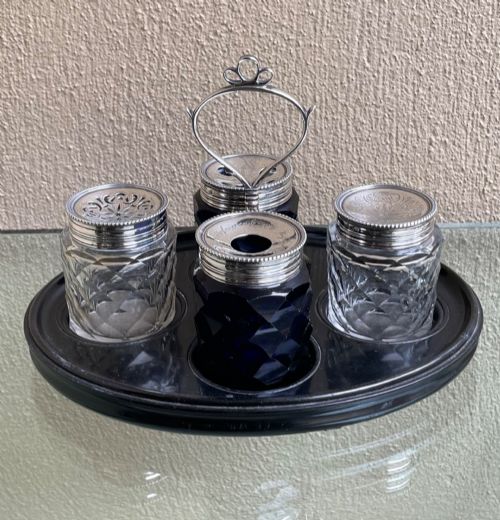


Silver Topped Inkstand
These silver topped inkstand pieces combine practical desk accessories with precious metal work, offering a touch of period elegance for your writing desk.
Silver Topped Inkstand
A silver topped inkstand brings together heavy glass, crystal or wooden bodies with fitted sterling silver lids, mounts and collars. When you search for a silver topped inkstand, you encounter items ranging from compact single inkwells to substantial desk stands complete with pen rests.
The pieces on this page span the Georgian, Victorian and Edwardian eras, alongside later Art Deco designs. You are most likely to meet cut glass or crystal bottles finished with hinged silver tops, or wooden desk stands accented with silver mounts.
Origins include London and Birmingham workshops, with forms varying from simple capstan inkwells to Scottish oak and horn desk stands. Each object served as a functional desk accessory for writing correspondence with dip pens and liquid ink.
How they were made
Maker's workshops combined blown or facet-cut glass and crystal with sterling silver, shaping heavy glass reservoirs to prevent tipping during use. Lids and collars were fashioned from silver, frequently featuring hallmarks that record the assay office and year of production.
Desk stands incorporate materials such as Scottish oak, ebony, papier mache and antler alongside fitted silver mounts and cut glass bottles. Some pieces display guilloche enamel floral medallions set into the silver capstan lids, demonstrating fine decorative metalwork techniques.
Scottish horn and oak found a second life holding ink and nibs on Victorian writing desks.
What varies in quality
Quality rests in the weight and clarity of the glass body, alongside the gauge of the sterling silver used for the lid and mounts. Thicker crystal with crisp facet cutting distinguishes the finer examples from simpler moulded glass vessels.
The integration of materials determines the character of the piece, from plain ebony and oak bases to elaborate Scottish Baronial horn mounts and silver gilt travelling ink wells. Crispness in hallmarks and the smooth action of hinged silver lids indicate careful construction by period silversmiths.
The Silver Topped Inkstand Glossary
- Capstan inkwell
- An inkwell shaped like a ship's capstan, featuring a wide base that tapers upward to a silver lid. This squat form provided stability on a moving ship or a busy desk.
- Standish
- A desk stand holding one or more inkwells, sanders and pen holders. These larger desk accessories formed the centrepiece of a gentleman's writing table.
- Guilloche enamel
- A decorative technique where engine-turned metal is covered with translucent enamel. It frequently appears on early twentieth-century silver inkwell lids.
- Silver gilt
- Silver that has been coated with a thin layer of gold on its surface. This finish protects the metal from tarnishing and adds a rich internal warmth.
- Hallmark
- A set of official marks stamped on precious metals indicating the standard of purity, the assay office and the year of assay. These marks date the silver mount precisely.
Silver Topped Inkstand: Frequently Asked Questions
How do I clean a silver topped inkstand?
Use a soft cloth to polish the silver components, taking care to keep silver polish away from glass and enamel surfaces. For glass ink reservoirs, rinse with warm water and dry thoroughly.
Avoid submerging wooden or papier mache desk bases in water. Gentle dusting preserves organic materials like horn and ebony.
Were these used for travel?
Some compact examples, such as travelling ink wells, were designed with secure screw-down silver lids to prevent leaks in luggage. Pocket and travelling versions allowed writers to transport ink safely.
Larger desk stands and heavy crystal inkwells remained stationary on library tables. They were built for stability rather than mobility.
What is cut glass?
Cut glass involves carving geometric patterns into the surface of the glass using abrasive wheels. This technique scatters light and provides a heavy, stable base for the inkwell.
Facet-cut crystal represents a refined version of this process, offering exceptional clarity. It adds brilliance to desktop accessories from the Victorian and Edwardian periods.
How do I date an inkstand?
Silver components carry hallmarks that indicate the assay office and the exact year of manufacture. Examining these stamps provides a reliable date for the metal mounts.
Styles also shift across periods, from Georgian simplicity to ornate Victorian silver work and geometric Art Deco lines. The choice of base materials, such as papier mache or oak, further anchors the piece in its era.