


Vintage Silver Inkstand
A vintage silver inkstand organises the desk with heavy glass, turned metal and fitted pen trays for the handwritten page.
Vintage Silver Inkstand
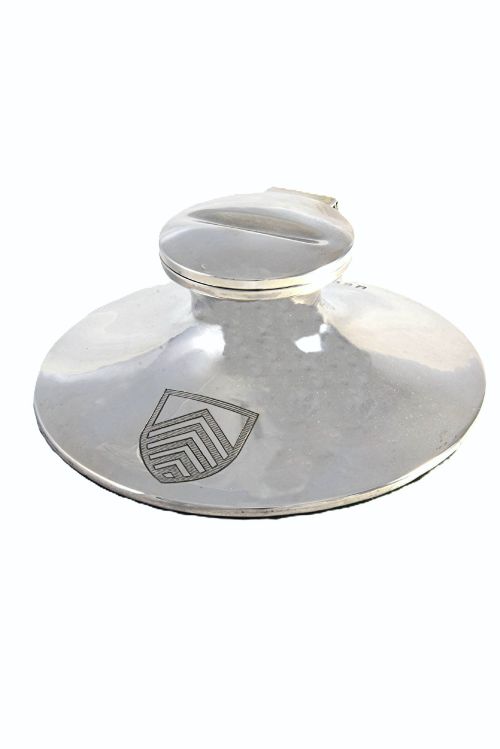
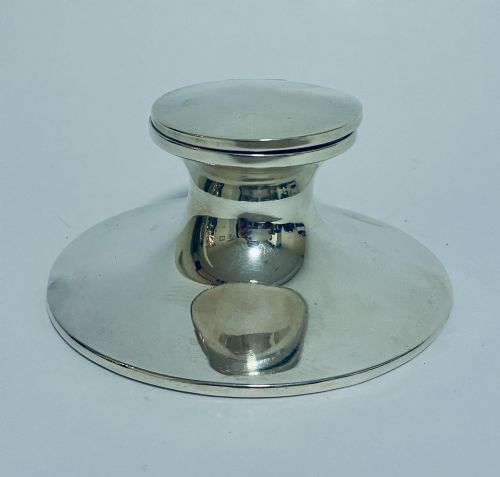
A vintage silver inkstand brings together inkwells, pen rests and desk tidies into a single desktop arrangement from the nineteenth and twentieth centuries. These pieces encompass everything from simple capstan inkwells to elaborate multi-piece sets with integrated pocket watches, bell mechanisms and stationery boxes.
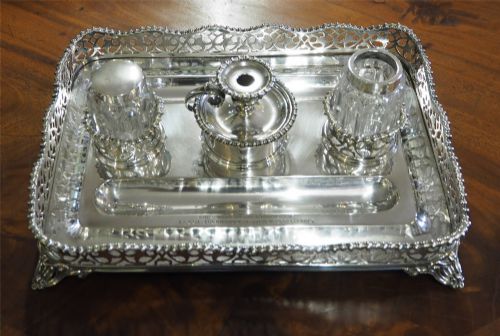
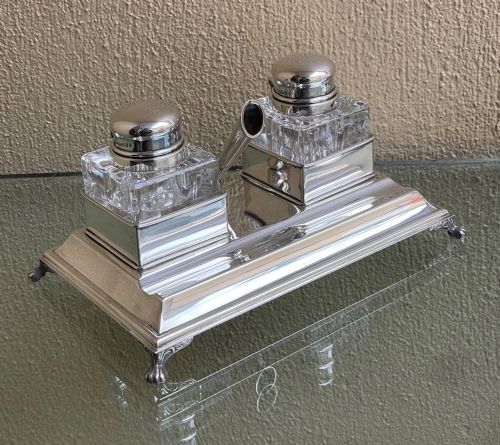
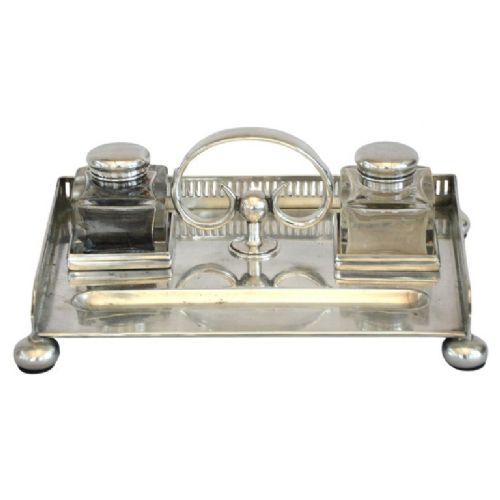
Edwardian and Victorian examples dominate the available selection, often taking the form of heavy silver-plated trays or solid sterling silver vessels. Buyers frequently encounter dual glass inkwells fitted with hinged silver lids alongside single pedestal designs made for daily correspondence.
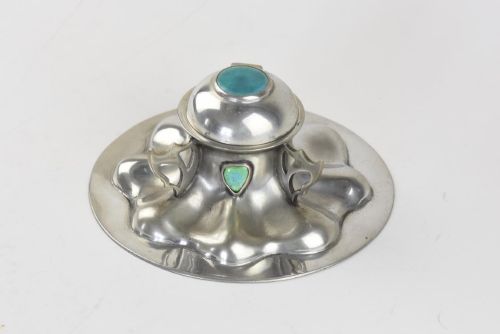
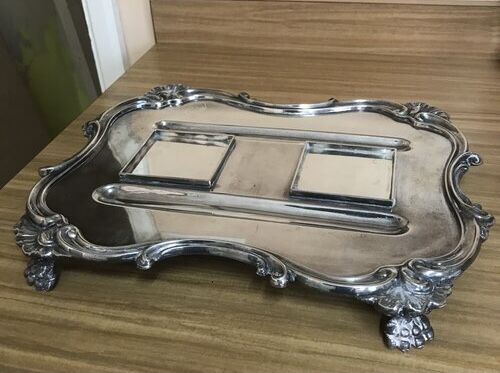
Stylistic influences range from the flowing botanical curves of Art Nouveau and the geometric lines of Art Deco to formal Rococo Revival motifs. Makers utilised diverse materials such as polished pewter, cut glass and inlaid onyx alongside traditional sterling silver and silver plate.
Materials and construction methods
Silversmiths shaped sterling silver and silver plate through spinning, casting and hammering, frequently mounting heavy cut glass or crystal bodies with hinged silver collars. Pewter and bronze components received hand-finished patination, while decorative accents incorporated semi-precious stones like lapis lazuli and ceramic cabochons.
Desk stands combined metal bases with fitted glass reservoirs, often using weighted interiors like wood or lead to provide stability for dipping pens. Hallmarks stamped into the metal surface record the assay office, date letter and maker's mark for pieces produced across British workshops.
Listings feature items spanning the nineteenth century through the Edwardian period, George V era and Elizabeth II era, constructed from sterling silver, glass and pewter.
Factors of distinction
Quality rests in the weight of the metal, the clarity of the cut glass inserts and the precision of the hinge mechanisms on the inkwell lids. Superior pieces retain matching glass liners and robust pen rests that show minimal wear from heavy use.
The integration of secondary functions, such as built-in pocket watches, bell mechanisms or inlaid stone panels, elevates an inkstand from a utilitarian office accessory to a decorative desk centrepiece.
Elkington·William Hutton·Walker And Hall·Harrods·WMF·Marson And Jones·Tiffany And Co·Zimmermann·Maurice Dufrene·Martin Hall
The Vintage Silver Inkstand Glossary
- Capstan inkwell
- A low, wide inkwell shaped like the nautical drum used for hauling ropes. This tapered form provides a stable base that prevents tipping on a busy desk.
- Pounce pot
- A small shaker container used to sprinkle fine sand or cuttlefish powder over wet ink to absorb excess moisture and speed drying. These pots match the metalwork of the main inkstand.
- Silver plate
- A layer of sterling silver fused to a base metal, typically copper, nickel or Britannia metal. This technique offered the visual weight of solid silver at a lower cost.
- Cut glass
- Glass decorated by grinding facets or geometric patterns into the surface using a rotating wheel. This treatment adds weight and refracts light around the ink reservoir.
- Pen rest
- A shaped channel or raised bridge integrated into the tray to hold dipping pens above the desk surface. This prevents ink transfer onto paper or leather desk pads.
Vintage Silver Inkstand: Frequently Asked Questions
How do I clean a silver inkstand?
Remove glass inserts and wash them separately in warm soapy water to clear dried ink residue from the corners.
Use a soft cloth and a gentle silver polish on the metal surfaces, avoiding abrasive pads that damage hallmarks and plating.
What is the difference between an inkstand and an inkwell?
An inkwell is a single vessel designed specifically to hold writing fluid, often featuring a hinged lid and a glass or ceramic liner.
An inkstand is a broader desk accessory comprising one or more inkwells mounted on a tray that includes space for pens and stamps.
Are these inkstands suitable for daily use?
Many vintage inkstands remain fully functional for modern fountain pen users who enjoy writing with bottled ink.
Check that the glass liners are free from cracks and that the hinged lids seal properly to prevent the ink from evaporating too quickly.
How do I read silver hallmarks?
British hallmarks typically include a maker's mark, a standard mark indicating the purity of the silver, an assay office symbol and a date letter.
Reference charts help match the date letter and city mark to determine the exact year and location of manufacture.