
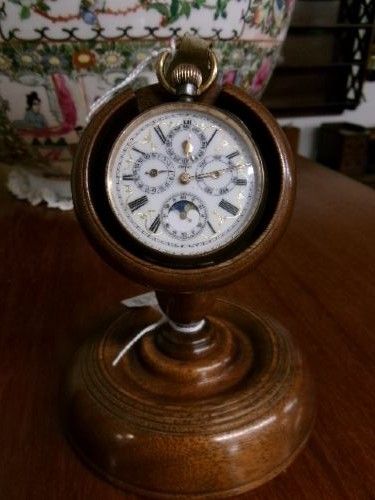
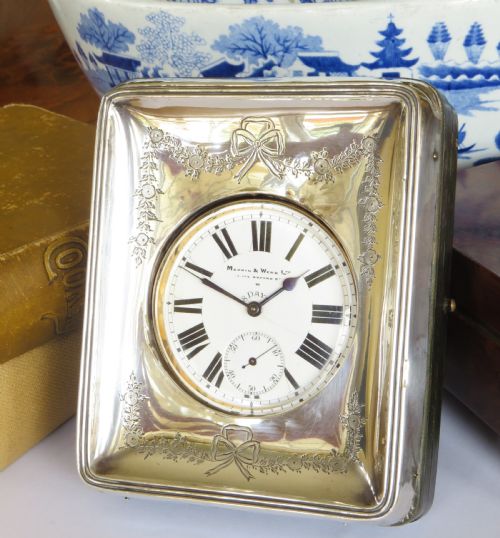


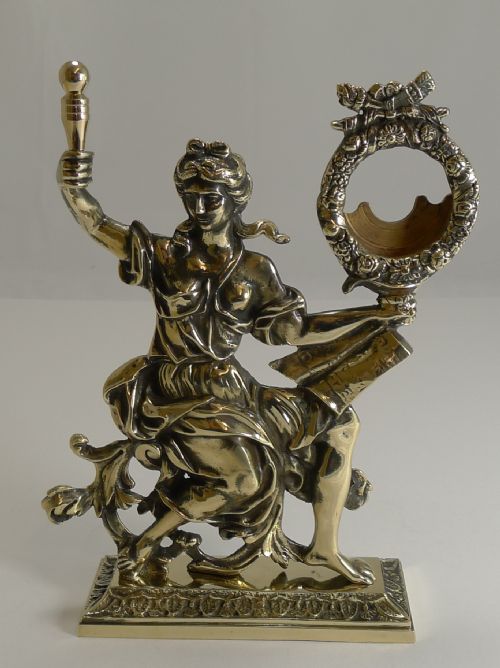
Pocket Watch Desk Stand
A pocket watch desk stand holds a timepiece securely on a desk, offering a practical display of horological craftsmanship.
Pocket Watch Desk Stand
A pocket watch desk stand serves to display portable timepieces on a writing surface, combining desk accessories with horology. These items function as miniature clocks when paired with a pocket watch or travel clock.
The pieces on this page span the nineteenth century, the Edwardian era, and the 1920s and 1930s. Forms include capstan inkwells with integrated timepieces, folding silver travel cases, figural holders, and miniature grandfather clocks.
Origin and design vary widely, ranging from English sterling silver and cast brass to gilt bronze with champlevé enamel and guilloché enamel. Collectors encounter both standalone stands and fitted cases designed to protect a watch during travel.
How pocket watch desk stands were made
Metalworking techniques dictate the construction of many pieces, utilising cast brass, gilt bronze, gunmetal, and sterling silver. Silversmiths shaped hallmarked silver into capstan forms and folding travel cases, often adding weighted bases for stability.
Decorative surface work defines the finer examples, incorporating guilloché enamel and champlevé enamel to add colour and pattern. Glass and specimen marble also appear in the material record, particularly in pyramid form desk-top pieces.
Listings feature materials spanning sterling silver, gunmetal, brass, glass, wood, and enamel across the nineteenth century, Edwardian era, and the 1920s and 1930s.
What varies in quality
The sophistication of the materials and the complexity of the decoration determine the standing of an individual piece. Sterling silver housings and intricate enamel work represent a higher level of execution than standard cast brass or simpler wooden variants.
The integration between the timepiece and its mount influences desirability. Fitted cases by known makers and multifunctional objects, such as inkwells combined with watch stands, demonstrate superior craftsmanship.
Mappin and Webb·Barwise London
The Pocket Watch Desk Stand Glossary
- Capstan
- A desk accessory shaped like a ship capstan, widening towards the base for stability. This form is frequently utilised for silver inkwells and watch holders.
- Guilloche enamel
- A decorative technique where a precise, repetitive pattern is engraved beneath a translucent layer of enamel. It provides depth and colour to metal surfaces.
- Champleve enamel
- A method where troughs or cells are carved into a metal surface and filled with enamel powder before firing. This technique creates vibrant decorative motifs.
- Gunmetal
- A type of bronze composed of copper, tin, and zinc, often utilised for dark, durable watch cases. It offers a robust finish distinct from bright silver or brass.
Pocket Watch Desk Stand: Frequently Asked Questions
What is a pocket watch desk stand?
A pocket watch desk stand is a decorative or functional mount designed to hold a pocket watch upright on a flat surface. It transforms a portable timepiece into a stationary desk clock.
These objects range from simple cast brass holders to elaborate silver and enamel travel cases that protect the watch while displaying the dial.
How were travel clock cases used?
Travel clock cases housed pocket watches or small timepieces to protect them from damage while moving. Owners placed them on bedside tables or desks upon reaching their destination.
Many examples feature folding mechanisms or hinged doors that shielded the glass crystal when closed and opened for viewing.
What materials are common in these stands?
Materials include sterling silver, cast brass, gunmetal, and gilt bronze. Decorative elements frequently incorporate guilloché enamel, champlevé enamel, and glass.
Some nineteenth-century examples utilise specimen marble or wood such as mahogany to provide a heavy, stable base for the timepiece.
How do I date an antique stand?
Dating relies on hallmarks, material composition, and stylistic markers associated with periods like the Edwardian era or the 1920s and 1930s. Silver stands often bear assay office marks and date letters.
Stylistic shifts, such as the transition from ornate Victorian and Edwardian metalwork to geometric Art Deco designs, help narrow the period of manufacture.