





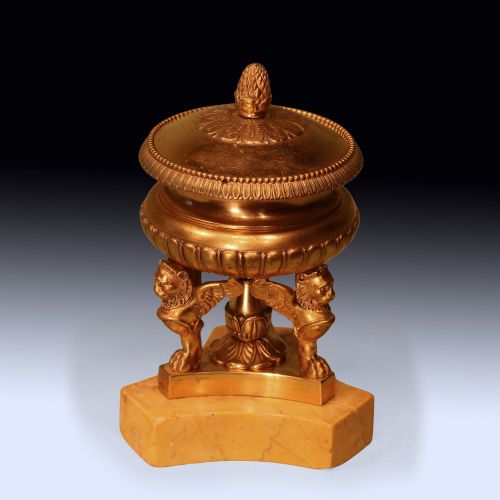


Brass Writing Desk Set
These brass writing desk sets bring disciplined inkwells, pen rests and trays together to organise a desktop with period weight and polish.

Brass Writing Desk Set
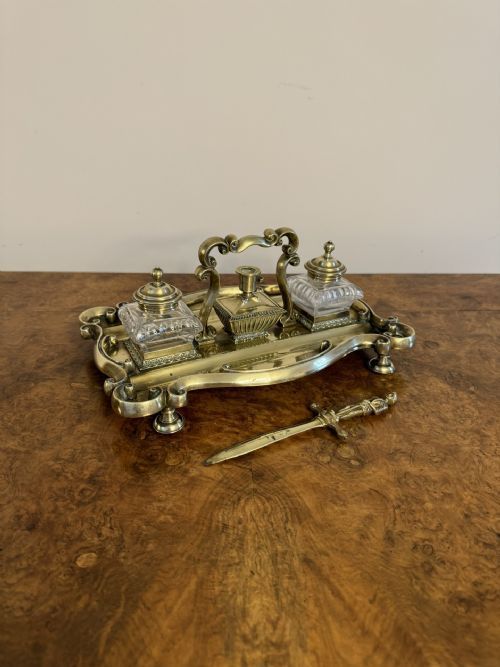
A brass writing desk set brings together inkwells, pen trays and blotters to organise correspondence and paperwork on a library table or bureau. You will most frequently encounter Victorian and 19th-century examples paired with wood bases, glass bottles or marble mounts.
The objects span simpler utilitarian inkstands and elaborate French Napoleon III or Art Nouveau pieces designed for display. Desk accessories include inkstands, double-sided desk sets, blotters and desk clocks made for daily use in studies and offices.
How they were made
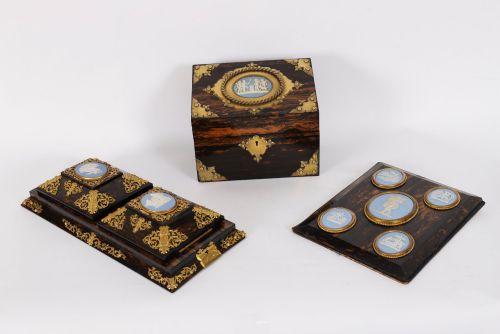
Maker's workshops cast brass, ormolu and gilt bronze into ornate frames, integrating them with solid timber foundations like walnut, coromandel, oak and mahogany. Many assemblies incorporate cut glass ink bottles, marble bases or inlaid tortoiseshell and mother of pearl.
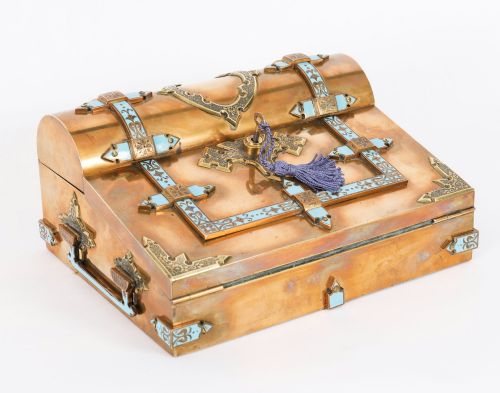
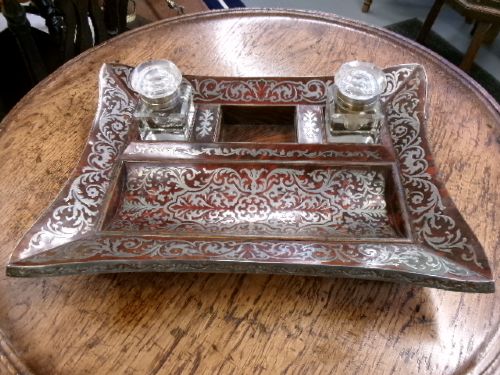
Fine decorative pieces utilise techniques such as Boulle work marquetry, champlevé enamel and cabochon stone mounting. Metal components are cast and chased, then secured to wooden chassis designed to hold inkwells and pens securely.
Brass Writing Desk Set Retail Price Guide 2026
Typical asking prices for brass writing desk set among the pieces listed under this phrase on Sellingantiques today, from the lower quarter to the upper quarter. They describe what is for sale here now, not the wider market.
Materials paired with brass across these desk stands include coromandel wood, green onyx, tortoiseshell, marble and cut glass.
What varies in quality
The refinement of the casting and chasing work separates standard utility stands from exceptional examples. Crisp detailing in cast brass, ormolu or bronze floral and animal motifs marks superior production.
The choice of foundation materials dictates standing quality, moving from simple oak to luxurious coromandel wood, tortoiseshell or Sienna marble. Complete sets retaining their original matching cut glass ink bottles and blotters hold higher integrity.
James Cartland and Sons·Moser
The Brass Writing Desk Set Glossary
- Standish
- A portable tray or stand holding inkwells, pen holders and sanders for writing materials. These desk accessories served as the central writing station on a library table.
- Ormolu
- Gilded bronze applied to mounts, feet and frames in decorative metalwork. This technique provided a bright gold-coloured finish popular in French-influenced design.
- Boulle work
- Marquetry of tortoiseshell and brass inlaid into wooden furniture and desk stands. This decorative method originated in France and defines grand 19th-century pieces.
- Champlevé
- Enamelling technique where troughs are dug into a metal surface and filled with coloured glass paste before firing. It appears on ornate 19th-century French desk stands.
Brass Writing Desk Set: Frequently Asked Questions
What is a brass writing desk set?
A brass writing desk set is a matched collection of desktop accessories designed to hold ink, pens and blotting paper. They served as functional stationery organisers on writing tables throughout the nineteenth and early twentieth centuries.
These sets combine metalwork frames with fitted glass inkwells and often rest on wooden or marble bases. They range from simple brass stands to elaborate decorative pieces incorporating champlevé enamel or carved animal figures.
How were inkstands used historically?
Inkstands provided a secure central station for dipping pens and applying wet ink to paper before the invention of the ballpoint pen. Writers used the accompanying sanders or blotters to dry the freshly written text.
In period studies and libraries, these sets remained stationary on desks for daily correspondence. The inclusion of hinged lids on the inkwells helped prevent the liquid ink from drying out too quickly.
How do I tell Victorian pieces apart from Edwardian ones?
Victorian desk sets often feature heavier Gothic Revival, heavy brass, or ornate coromandel and walnut foundations from the mid to late nineteenth century. They tend towards darker, denser woods and robust metal castings.
Edwardian pieces generally lean towards lighter constructions, sometimes incorporating simpler brass frames with wood or subtle Art Nouveau styling. Makers in the early twentieth century favoured flowing organic lines rather than the formal symmetry of earlier decades.
What woods were used for desk bases?
Cabinet makers used dense hardwoods like walnut, mahogany, oak and exotic coromandel wood to form the heavy foundations of desk stands. These timbers provided stability to anchor the heavy brass frames and glass ink bottles.
More decorative examples featured inlays of tortoiseshell, mother of pearl or brass stringing. Oak and walnut were common in larger library stands, while coromandel and rosewood appeared on finer lady's desk accessories.