

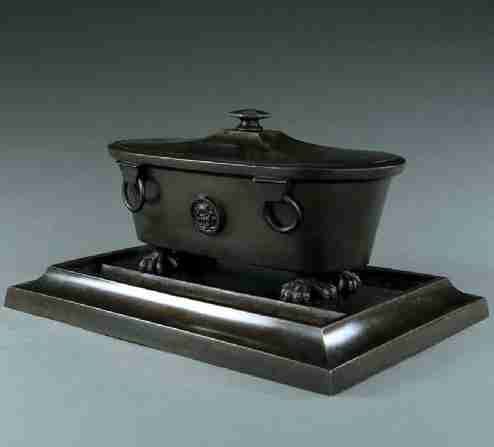
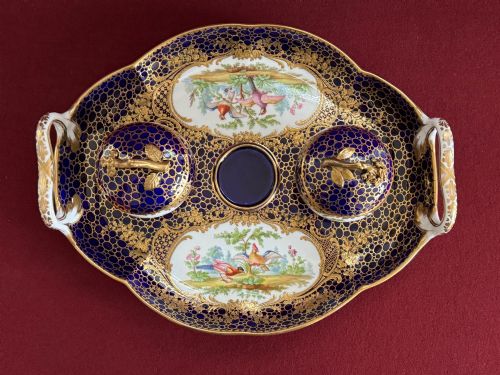
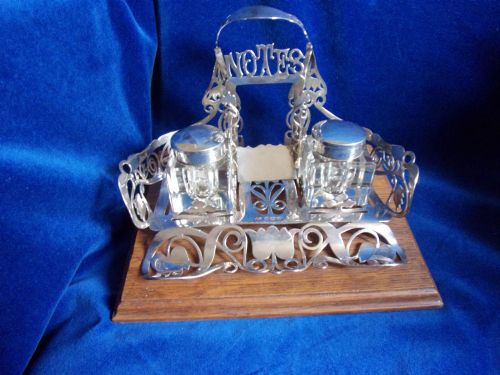
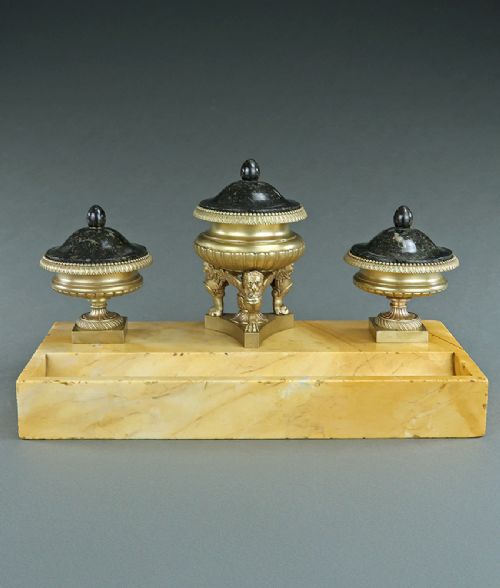




Antique Inkwell Tray
An antique inkwell tray holds the daily implements of writing, gathering inkwells and pen rests upon a polished desktop.
Antique Inkwell Tray
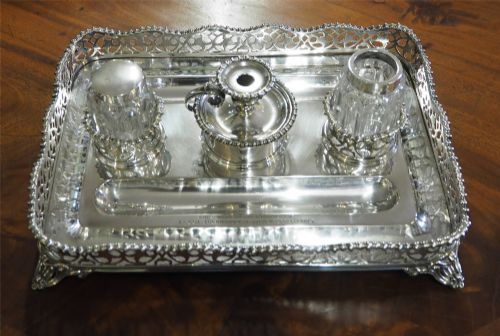
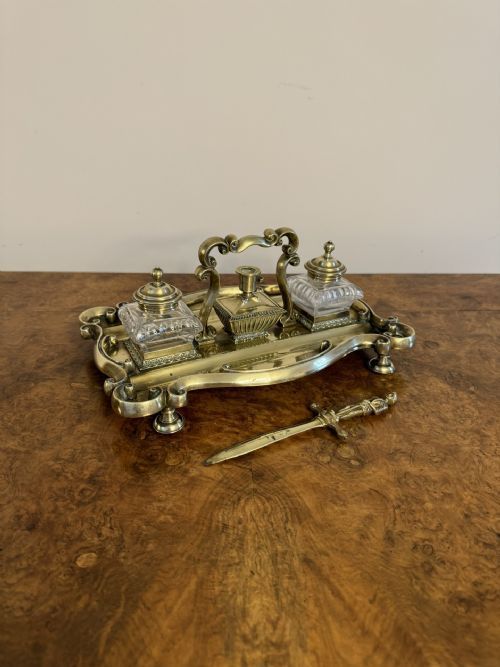
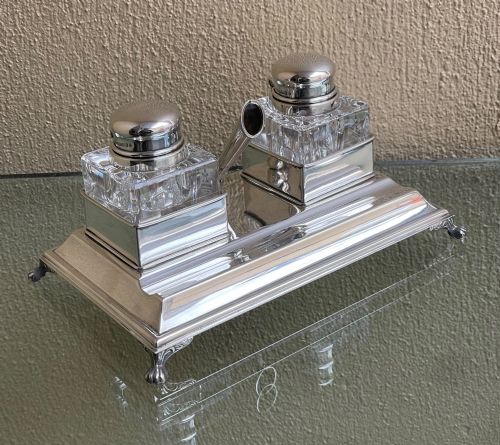
An antique inkwell tray, also known as a desk stand or inkstand, provides a dedicated base for writing materials upon a desk or table. These pieces gather glass or ceramic inkwells, pen rests and sometimes chambersticks or stamp boxes into a single coordinated arrangement.
The versions most commonly met on this page date from the Victorian and Edwardian periods, constructed in brass, silver plate, or exotic woods like coromandel and walnut. They reflect the heavy correspondence of the nineteenth and early twentieth centuries when personal and business letters required wet ink.
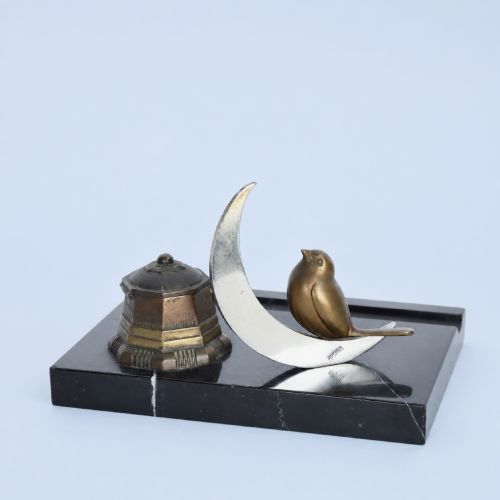
Makers utilised diverse materials ranging from cast bronze and marble to tortoiseshell and mother of pearl inlay. Whether configured as a simple tray with a single well or a grand double stand, each piece served as a permanent fixture in the study or library.
How they were made
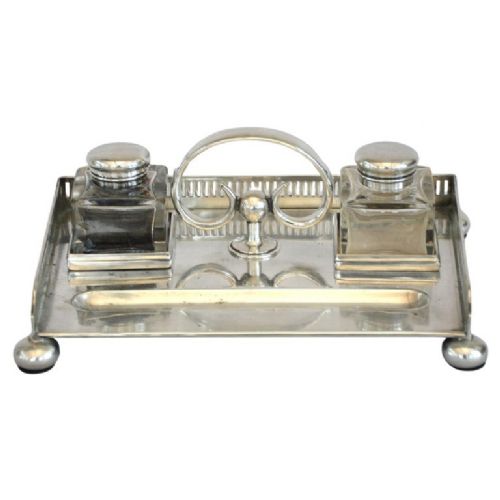
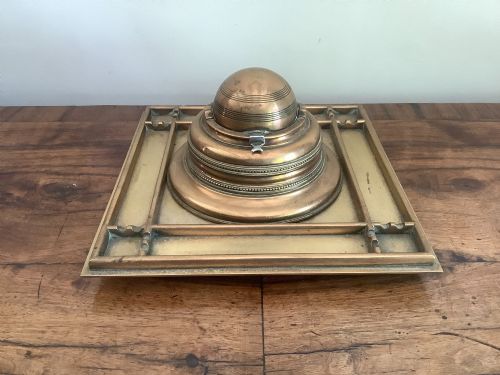
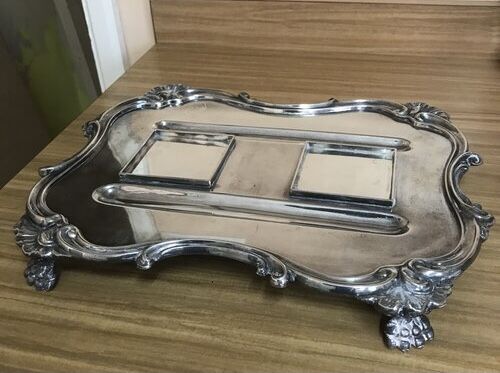
Metals such as brass, bronze and silver plate were cast, chased or mounted onto wooden bases, providing durable weight for daily pen dips. Silversmiths and brass founders employed techniques like ormolu gilding and patination to enrich the metal surfaces.
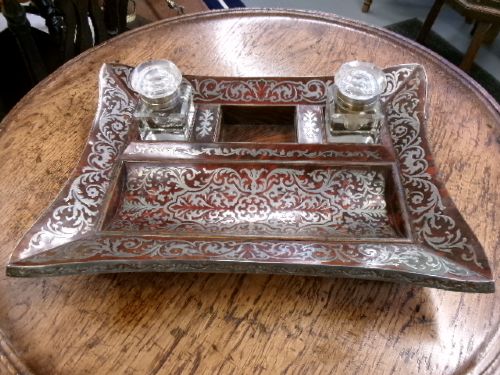
Cabinetmakers utilised dense hardwoods including walnut, rosewood and coromandel, often incorporating Boulle work, brass stringing, and mother of pearl inlay. Glass and porcelain vessels were shaped to fit snugly into dedicated recesses within the wooden or metal trays.
Antique Inkwell Tray Retail Price Guide 2026
Typical asking prices for inkwell tray among the pieces listed under this phrase on Sellingantiques today, from the lower quarter to the upper quarter. They describe what is for sale here now, not the wider market.
Listings feature desk stands spanning from the eighteenth century to the mid-twentieth century, constructed in brass, silver plate, bronze, and exotic hardwoods.
What varies in quality
The distinction between standard desk accessories and superior pieces rests upon the crispness of casting in the brass or bronze mounts and the precision of the woodwork. Heavier metal gauge and intricate detailing on handles, feet and pen rests indicate finer workshop production.
Complete sets featuring matching original glass inkwells with silver or brass collars demonstrate higher preservation. The integration of luxury materials like tortoiseshell, lapis lazuli or finely painted porcelain panels separates decorative items from utilitarian office wares.
Elkington·Walker And Hall·Harrods·Robert Garrard·James Cartland And Sons
The Antique Inkwell Tray Glossary
- Inkstand
- A complete desk accessory comprising a tray base fitted with one or more inkwells and a space for pens. These pieces often included compartments for wafers or sanders.
- Standish
- An alternative term for a portable writing stand or inkstand, frequently equipped with handles for moving across a desk or between rooms.
- Boulle work
- An elaborate form of marquetry utilising tortoiseshell and brass inlay, developed in France and popular on nineteenth century desk stands.
- Ormolu
- Gilded bronze mounts applied to furniture and desk accessories, providing bright metallic highlights against dark wood or marble.
- Faience
- Tin-glazed earthenware, seen in Dutch Delft inkstands decorated with traditional blue and white motifs.
Antique Inkwell Tray: Frequently Asked Questions
What is the difference between an inkstand and an inkwell tray?
An inkstand is a complete desk assembly that typically incorporates fitted inkwells, pen rests and sometimes candleholders into a single tray base. The terms are often used interchangeably on the market.
Simpler trays might just hold a single ink vessel, whereas larger stands served as central fixtures for formal correspondence.
How were these trays used on a desk?
They sat permanently on writing desks to keep ink, dip pens and sand or blotting materials within arm reach. The raised tray edges protected the desktop from accidental ink spills.
Many included specialised slots to hold feather quills or steel nib pens when not in use.
How do I date a brass and wood desk set?
Dating relies on the prevailing design styles, such as the heavy ornamentation of Victorian brass work or the clean lines of Art Deco marble. The choice of secondary materials like coromandel or papier-mâché also points to specific decades in the nineteenth century.
Maker marks and silver hallmarks, when present, provide exact manufacturing years and registry dates.
Are the glass inkwells usually original to the tray?
Many pieces retain their original heavy cut glass or plain glass inkwells, often fitted with matching brass or silver collars. Replacements do occur frequently because glass vessels were prone to chipping and breaking over generations of use.
Matching the shape and tint of the glass to the fitted recess helps determine if an insert belongs to the stand.