

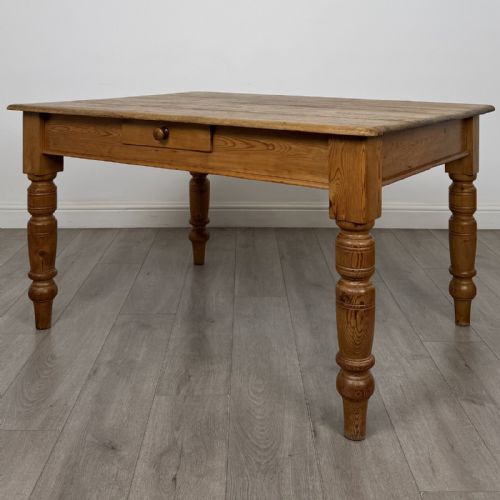
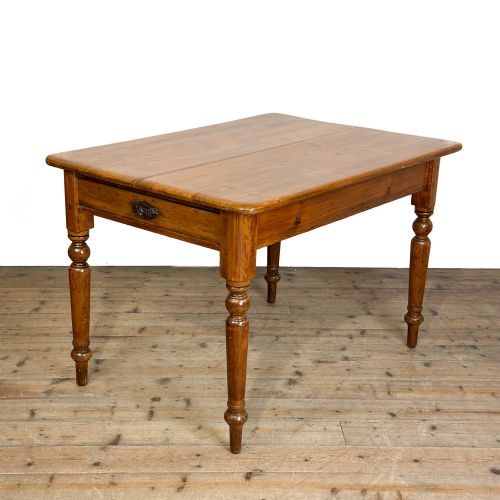
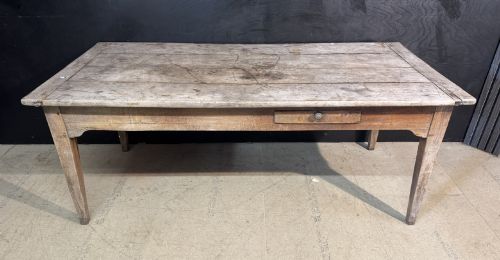
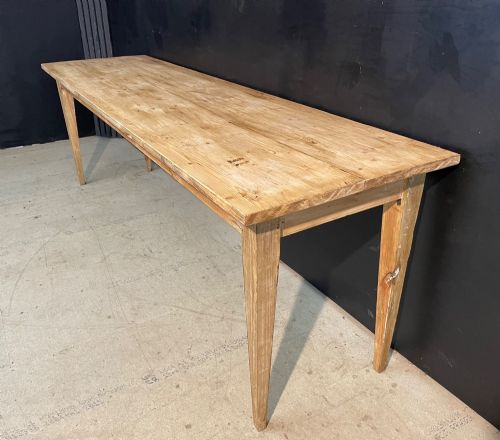
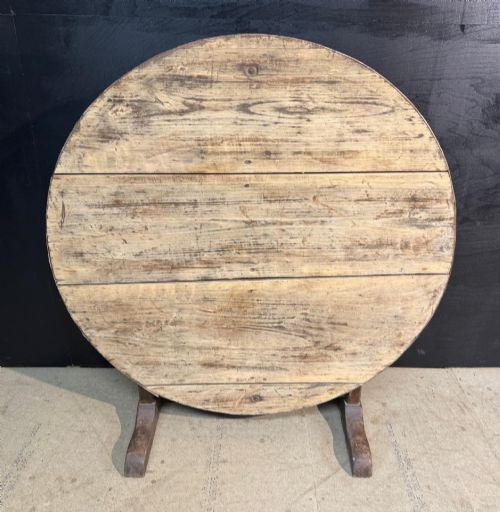
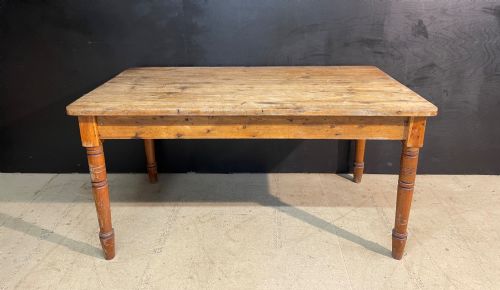
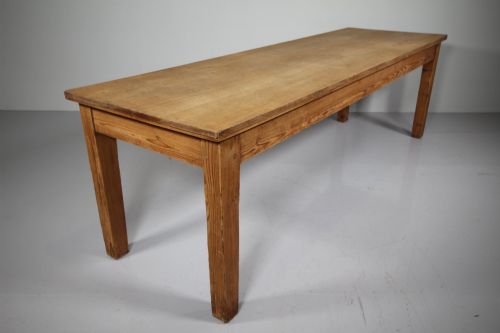
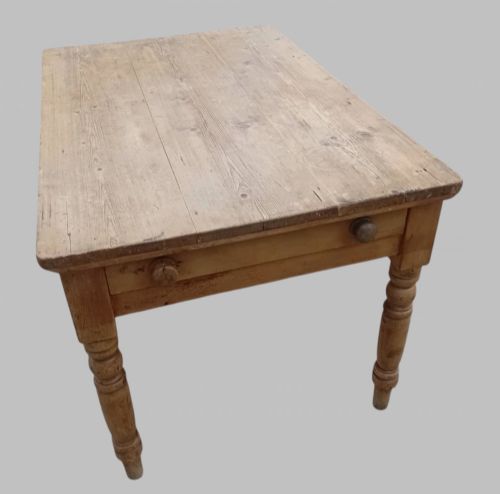
Scrubbed Pine Dining Table
A scrubbed pine dining table brings the honest weight of nineteenth-century domestic labour into a modern room.
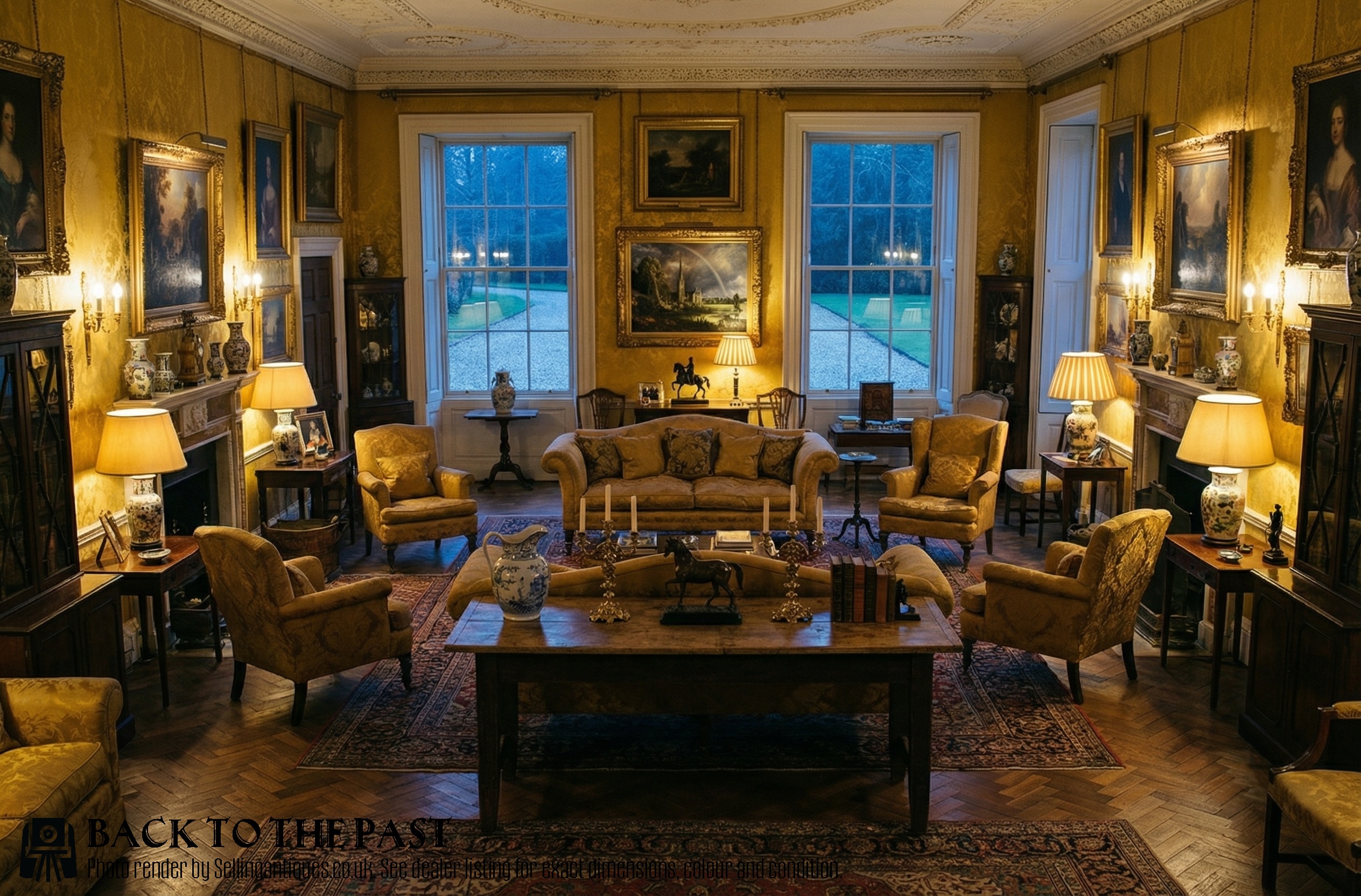
Scrubbed Pine Dining Table
A scrubbed pine dining table is a domestic workhorse designed for daily preparation and communal meals in kitchens, farmhouses and taverns. Buyers seek these pieces for their generous proportions and the tactile honesty of weathered timber that has undergone generations of hard cleaning.
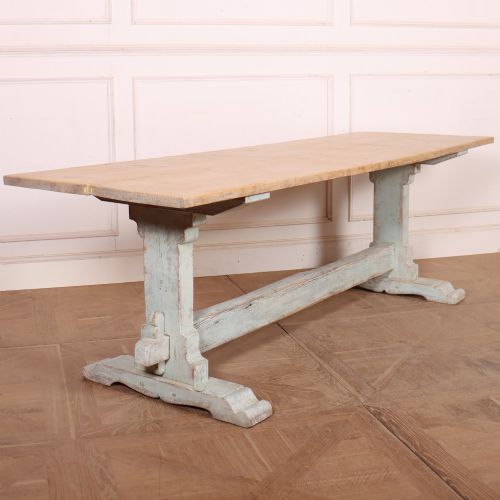
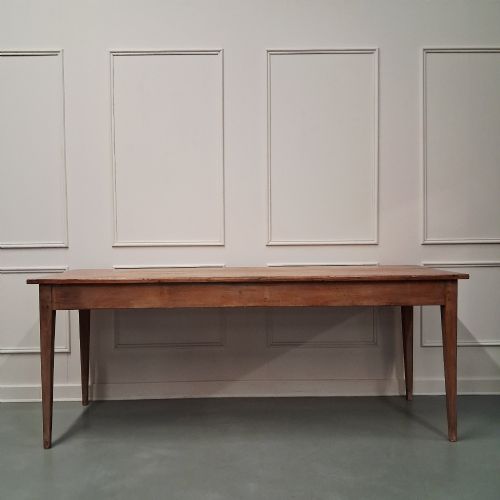
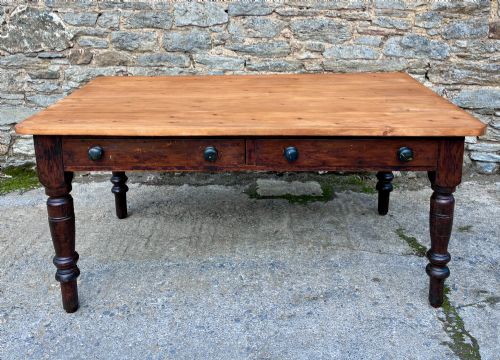
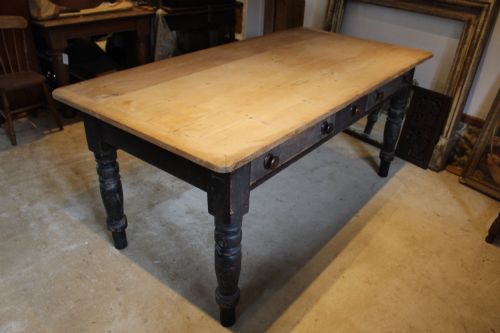
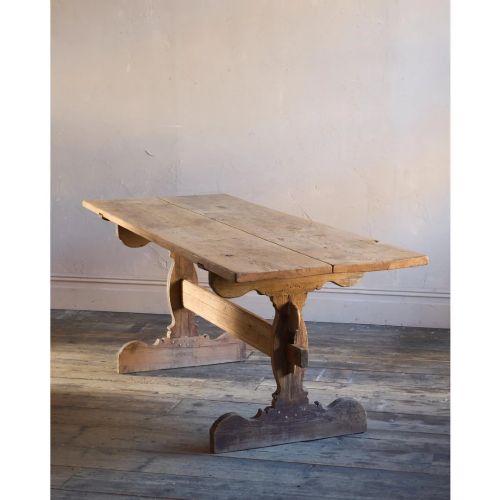
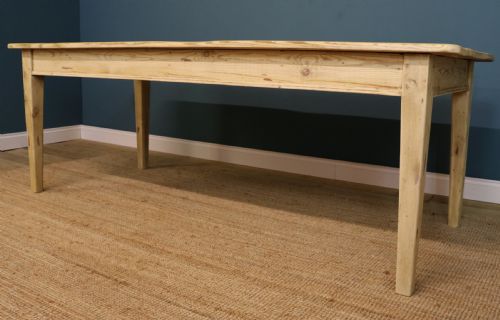
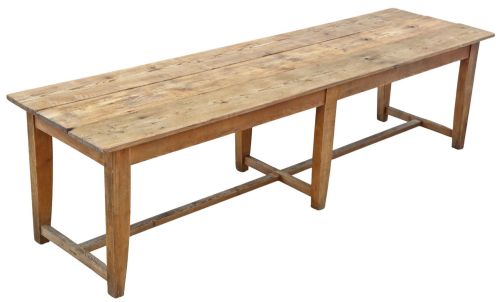
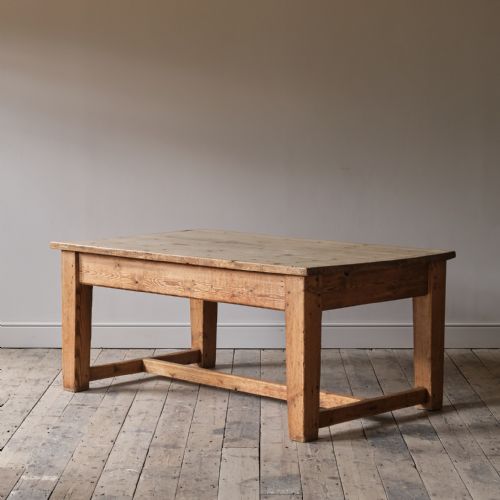
The examples gathered here span the nineteenth and early twentieth centuries, drawing on British, French, Swedish and Irish vernacular traditions. Most pieces take the form of traditional farmhouse or kitchen tables, frequently accompanied by functional drawers or robust trestle supports.
Construction and Materials
Makers relied primarily on native pine and joined secondary timbers such as oak, fruitwood or sycamore to build heavy, stable frames capable of enduring vigorous daily use. Surfaces were scrubbed repeatedly with water and stone or sand to maintain hygiene, which bleached the softwood top to a pale, matte finish.
Structural joints typically utilise mortise and tenon construction, while bases occasionally retain traces of original paint finishes, including red pigment and Swedish Falu paint. Iron or brass hardware appears sparingly, restricted mostly to drawer pulls or structural bracing.
Scrubbed Pine Dining Table Retail Price Guide 2026
Typical asking prices for scrubbed pine dining table among the pieces listed under this phrase on Sellingantiques today, from the lower quarter to the upper quarter. They describe what is for sale here now, not the wider market.
The listings feature dining tables spanning the nineteenth and early twentieth centuries, constructed from pine, oak, sycamore and fruitwood.
Judging Quality and Character
Quality in these tables rests on the integrity of the timber and the depth of patina accumulated through decades of domestic service. Superior examples display a thick, scrubbed top with deep grain texture, supported by a rigid frame that has retained its original height and joinery without excessive timber replacement.
The relationship between the scrubbed softwood top and the painted or hardwood base dictates the visual balance of the piece. Tables that retain honest signs of daily utility, such as old tool marks or historical paint layers on the legs, hold greater character than those stripped down to a sterile uniformity.
The Scrubbed Pine Dining Table Glossary
- Scrub-top
- A wooden tabletop cleaned repeatedly with water and abrasive materials to remove grease and stains. This process leaves the softwood grain raised and pale.
- Trestle table
- A table comprising two or more supports connected by a horizontal beam. This form provides stable seating without corner legs obstructing diners.
- Refectory table
- A long, narrow dining table historically used in communal dining halls. These pieces are built for scale and large gatherings.
- Falu paint
- A traditional deep red paint originating in Sweden, composed of copper mine residue, linseed oil and flour. It preserves softwood exposed to harsh climates.
Scrubbed Pine Dining Table: Frequently Asked Questions
How do I clean a scrubbed pine dining table?
Wipe the surface with a damp cloth and mild soap, avoiding harsh chemical cleaners that strip the dry finish. Allow spills to dry naturally to prevent water rings from settling deep into the porous softwood grain.
Apply a neutral beeswax sparingly if the timber feels excessively dry, rubbing it in thoroughly to maintain the matte texture without creating an artificial gloss.
How do I identify a tavern table?
Tavern tables are generally narrower and sturdier than domestic dining tables, designed originally for commercial hospitality and heavy public use. They frequently feature deep stretchers near the floor to steady the base against uneven flagstone tavern floors.
Many examples include drawers positioned at the ends rather than the sides, allowing staff to store cutlery and tallies close at hand.
Why do some tables have painted bases?
Makers often painted the legs and aprons of pine tables using oil-based pigments to protect the softwood from damp flagstone floors. Paint also disguised cheaper secondary timbers used in the structural framing while creating a contrast with the scrubbed top.
Original paint layers add significant historical value and visual depth, documenting the changing decorative choices of successive generations.