

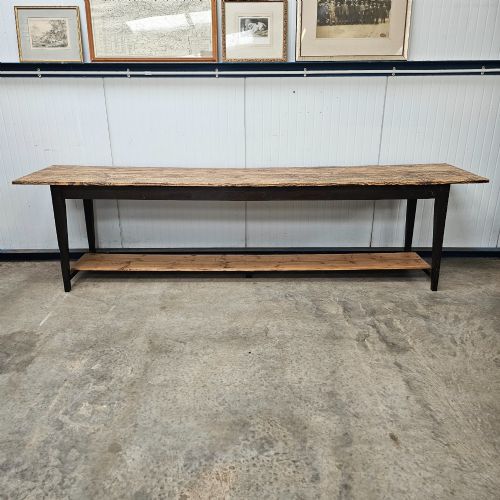


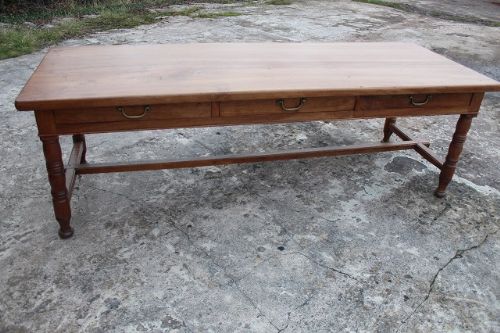
Pine Harvest Table
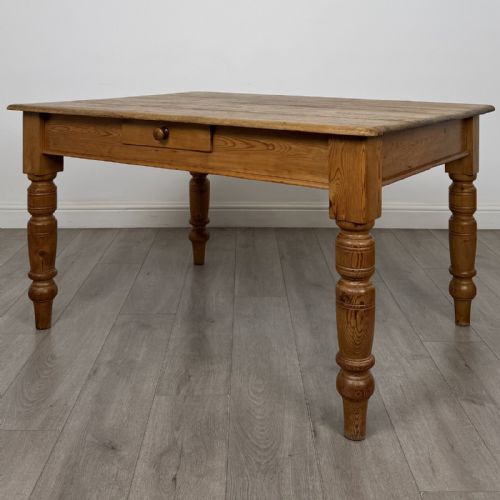
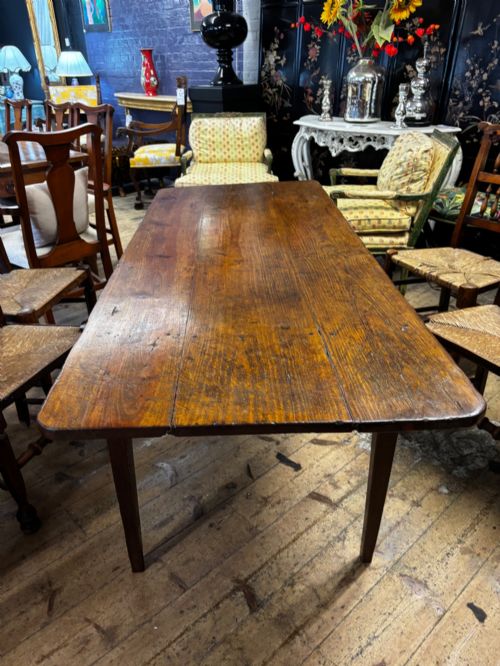
These pine harvest table pieces offer generous proportions and robust vernacular utility for communal dining spaces.
Pine Harvest Table
A pine harvest table brings substantial length and utilitarian vernacular design to dining spaces. Buyers searching for a pine harvest table encounter large communal formats suited to group gatherings.
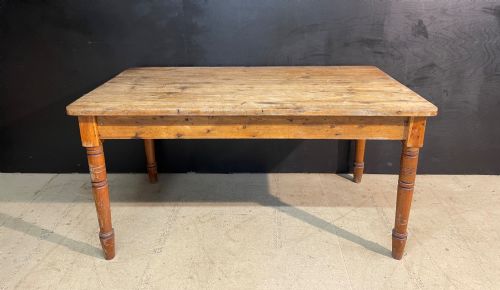
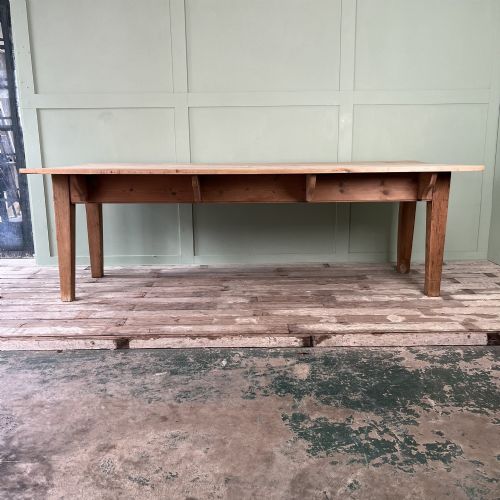
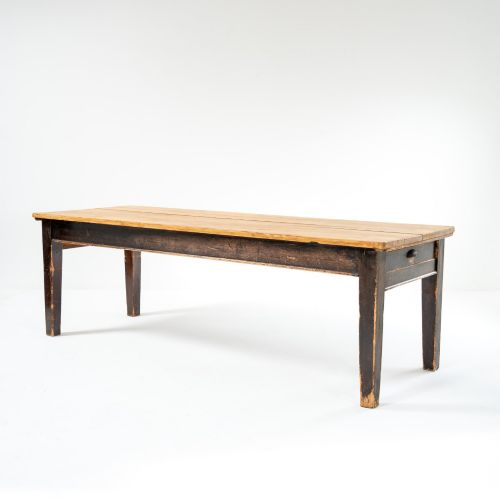
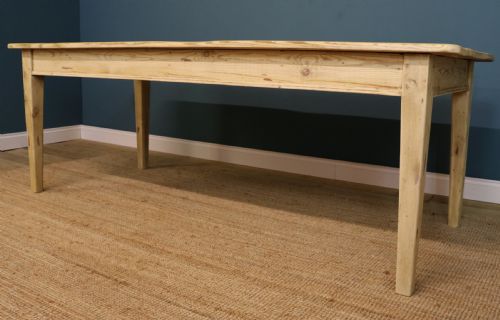
The pieces on this page span Victorian examples, mid nineteenth century items, and early twentieth century furniture. Forms range from scrubbed kitchen surfaces to tavern tables with original paint bases and long refectory formats.
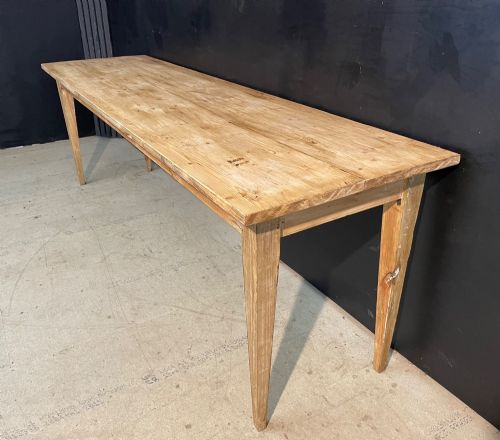
Origins include Welsh workshops and French regional makers, alongside general country farmhouse iterations. Dimensions reach up to twelve and a half feet for community dining contexts.
How they were made
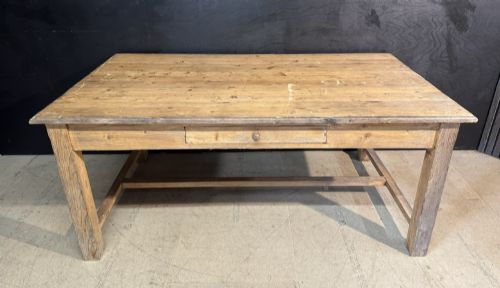
Construction relies primarily on pine and pitch pine timber, frequently paired with oak planks on larger multi wood examples. Square section supports and X frame trestle bases provide structural stability for extended lengths.
Surfaces often feature scrubbed finishes from heavy use or retain traces of original red paint on the structural supports. Plank construction forms the table tops, joining multiple boards to achieve generous widths.
Pine Harvest Table Retail Price Guide 2026
Typical asking prices for pine harvest table among the pieces listed under this phrase on Sellingantiques today, from the lower quarter to the upper quarter. They describe what is for sale here now, not the wider market.
Listings span Victorian, nineteenth century, and nineteen thirty periods, utilising pine, pitch pine, paint, and stained wood.
What varies in quality
Quality diverges between utilitarian work surfaces and refined vernacular statements through timber selection and base complexity. Multi plank tops joined with oak elements command attention over standard softwood configurations.
Original paint retention on structural bases elevates an example above stripped or later painted surfaces. Scale also dictates standing, with exceptional lengths exceeding nine or twelve feet marking out substantial communal origins.
The Pine Harvest Table Glossary
- Scrubbed pine
- Timber surfaces washed repeatedly with water and abrasive brushes to remove grease and debris, leaving a pale, clean grain. This treatment is typical of domestic kitchen tables.
- Pitch pine
- A resinous North American pine species prized for its durability and prominent grain patterns. It appears frequently in nineteenth century vernacular furniture.
- X frame
- A structural base formed from intersecting diagonal timbers that provide lateral support. This configuration appears on tavern tables.
- Refectory table
- A long dining table traditionally used in communal dining halls. The term describes extended proportions suited to large gatherings.
Pine Harvest Table: Frequently Asked Questions
How long are these tables?
Lengths vary substantially, with large formats extending from nine and a half feet up to twelve and a half feet for community dining.
Shorter kitchen iterations also appear among the Victorian and early twentieth century listings.
What woods are used?
Construction primarily utilises pine and pitch pine across the tops and structural supports.
Certain examples combine pine with oak planks for added durability on extended surfaces.
Are original painted finishes found?
Certain nineteenth century tavern tables retain original red paint on their base supports.
Other examples feature scrubbed timber surfaces resulting from historical cleaning practices.
What periods do they date from?
The pieces span the Victorian era, mid nineteenth century examples from around eighteen sixty, and early twentieth century items.
Vernacular country styles dominate across these periods.