
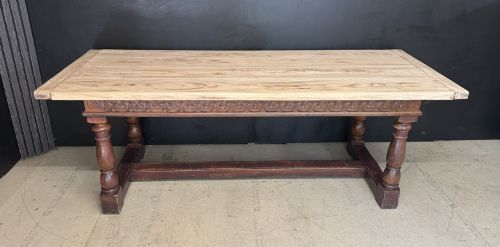
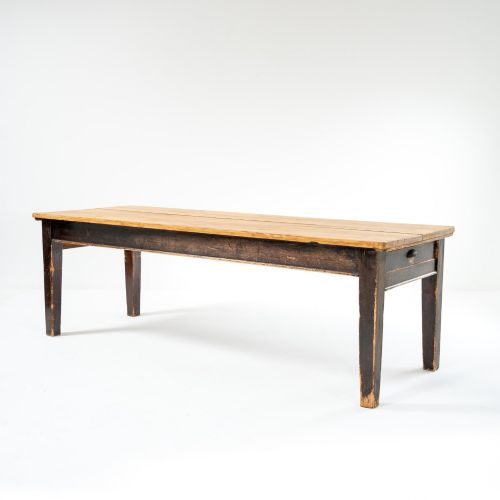
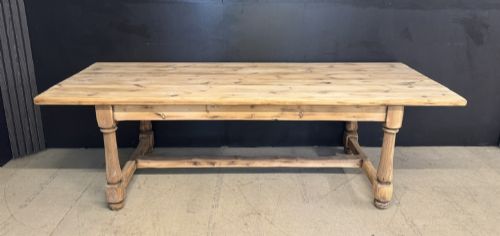
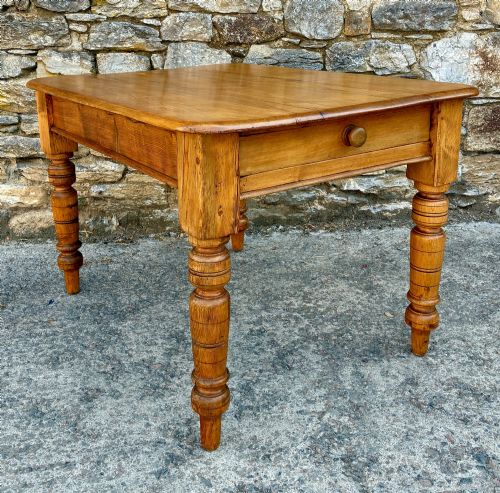
Vintage Pine Kitchen Table
A vintage pine kitchen table anchors the room with utilitarian warmth, offering sturdy timber surfaces shaped by generations of domestic service.
Vintage Pine Kitchen Table
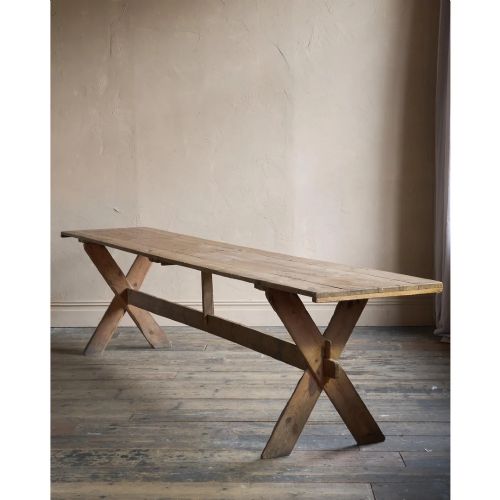
A vintage pine kitchen table encompasses heavy timber dining boards, work surfaces, and preparation tables originating from the nineteenth and early twentieth centuries. Buyers search for these pieces to bring practical utility and honest country character into modern dining spaces.
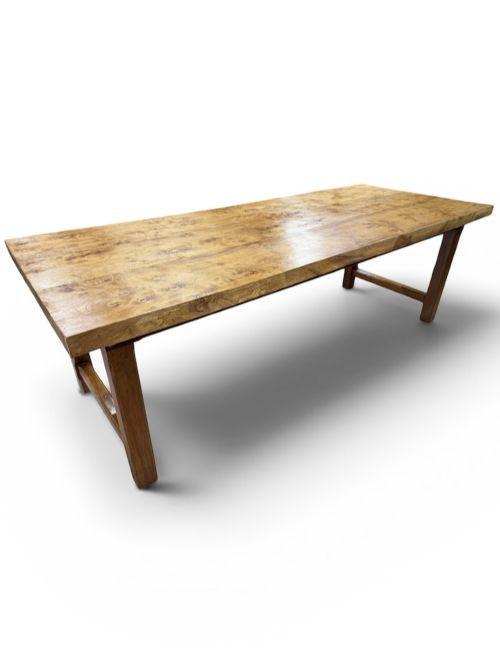
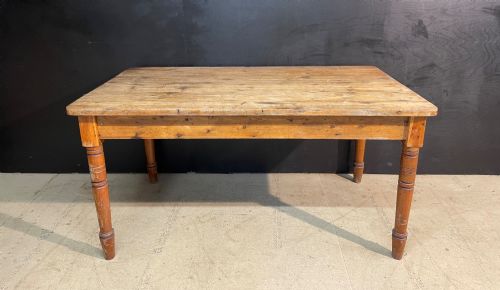
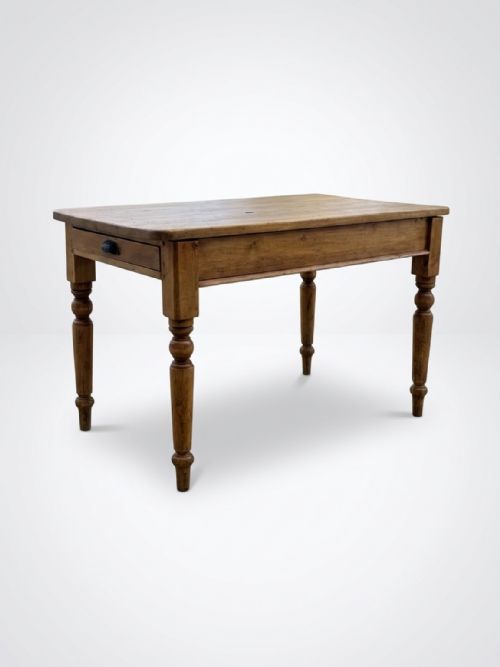
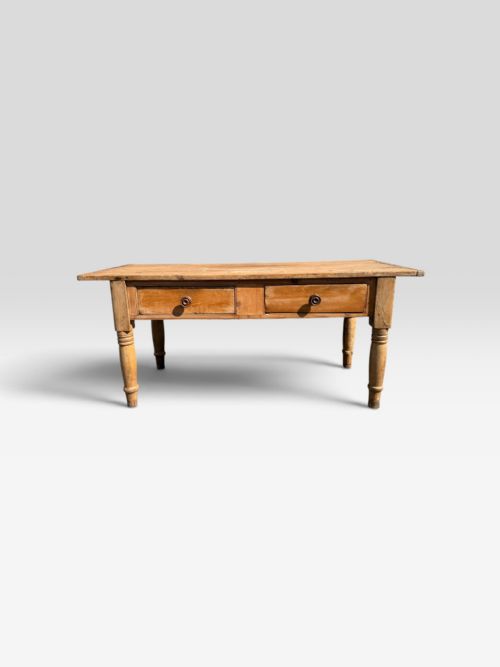
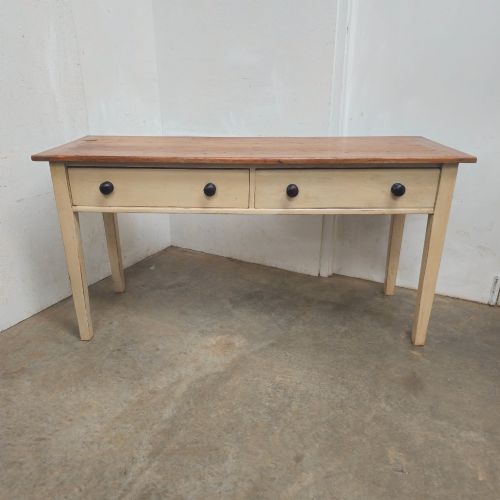
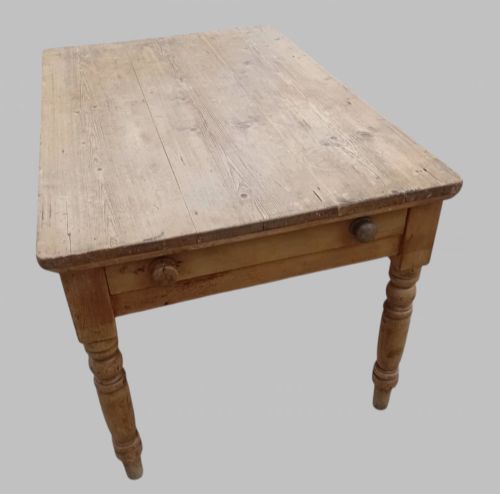
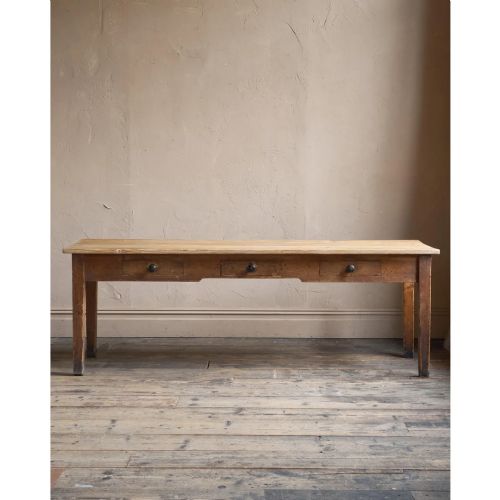
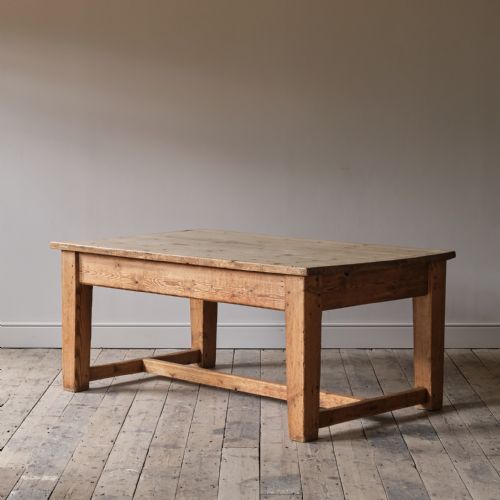
The version most commonly met on this page is the farmhouse table, often built with robust four-leg frames, scrubbed tops, and occasional drawers for storage. Examples span Victorian periods up to the nineteen-forties, frequently displaying regional English, French, and Scandinavian vernacular styles.
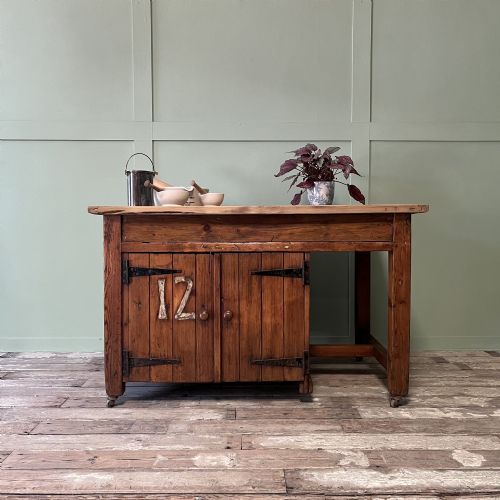
Beyond standard dining forms, related kitchen pieces include harvest tables, bakers prep tables, scullery counters, and dairy tables. These variations reflect specific historical domestic tasks, from rolling pastry to sorting produce.
What varies in quality
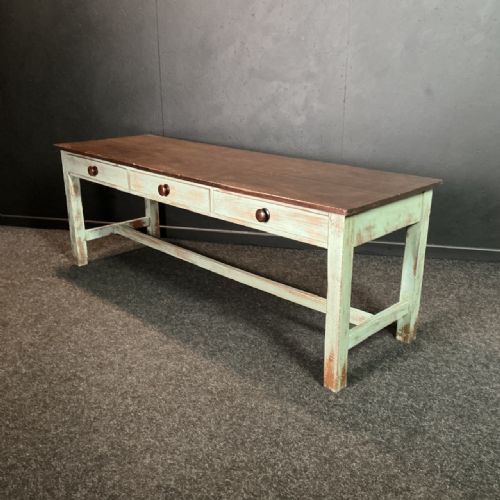
Quality rests in the integrity of the original timber framing and the depth of natural patina acquired through active daily use. Tables retaining original painted legs or untouched scrubbed tops command greater interest than heavily altered examples.
Proportions and scale determine utility, with longer harvest tables and deep prep counters showing superior architectural presence. Joinery execution, timber thickness, and integrated storage drawers further distinguish standard domestic furniture from exceptional workshop pieces.
Vintage Pine Kitchen Table Retail Price Guide 2026
Typical asking prices for vintage pine kitchen table among the pieces listed under this phrase on Sellingantiques today, from the lower quarter to the upper quarter. They describe what is for sale here now, not the wider market.
Period origins span the nineteenth century through the nineteen-forties, covering English, French, and Scandinavian vernacular styles.
The Vintage Pine Kitchen Table Glossary
- Scrub top
- A bare timber tabletop designed to be vigorously scrubbed clean after food preparation. This treatment leaves the grain raised and pale.
- Harvest table
- An elongated dining table historically used to feed large agricultural workforces during seasonal gathering. These examples measure considerably longer than standard domestic tables.
- Prep table
- A utilitarian work table utilised by bakers, butchers, or dairy workers. They often feature sturdy timber tops designed to withstand heavy daily handling.
- Drop leaf
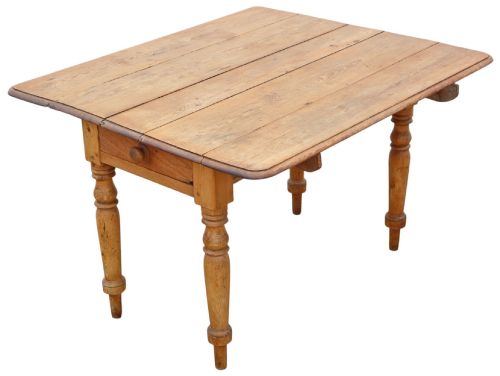
- A hinged table section that folds down to save space when not in use. Folding mechanisms allow the footprint to adapt to smaller rooms.
- Potboard
- An open slatted lower shelf fitted between the legs of a dresser base or table. This tier provides storage space for heavy pots and kitchen utensils.
Vintage Pine Kitchen Table: Frequently Asked Questions
How do I clean a scrub top table?
Maintain bare timber surfaces by scrubbing along the grain with warm water and a stiff bristle brush. Avoid harsh chemical detergents that strip the natural grey-brown patina.
Allow the wood to dry thoroughly in a well-ventilated room to prevent warping. Periodically nourish dry pine boards with natural beeswax where appropriate.
Were these tables used for baking?
Many surviving prep and dairy tables served specifically for rolling dough, kneading bread, and preparing daily meals. Unsealed softwood boards provided a cool, practical surface for pastry work.
Heavy timber construction absorbed the downward pressure of daily culinary tasks. Tool marks and flour stains left in the grain record this active domestic history.
How do I date a pine table?
Examine the construction methods, tool marks left by saws, and the type of fasteners used in the frame. Hand-cut joints and pegged tenons typically indicate nineteenth-century or earlier origins.
Surface wear patterns and timber shrinkage offer further clues to age. Traces of original paint finishes help place pieces within specific Victorian or early twentieth-century decades.
Will a vintage table fit modern chairs?
Check the ground clearance beneath the apron and side rails before pairing tables with contemporary seating. Older work tables were frequently built lower or higher than standard modern dining heights.
Leg placement also dictates how many chairs fit comfortably along the length. Measuring the clearance between inside legs prevents surprises when arranging seating.