
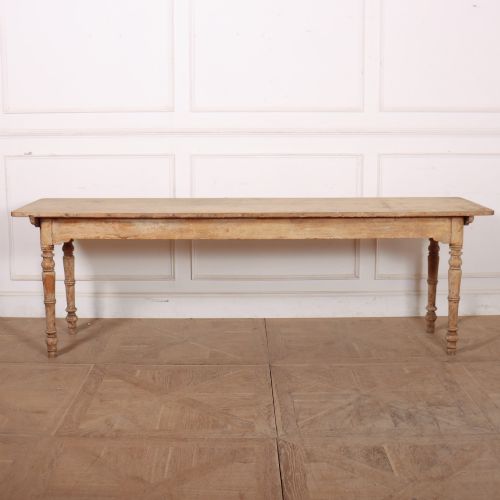
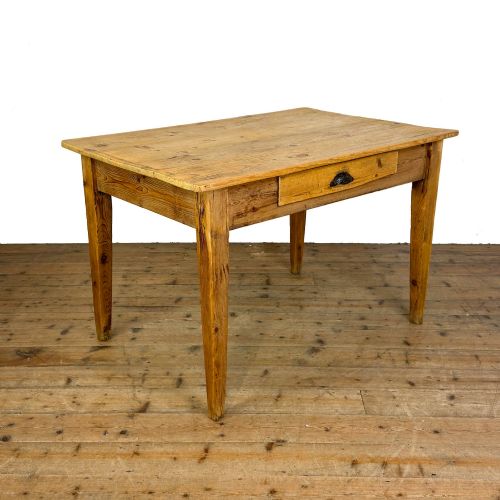
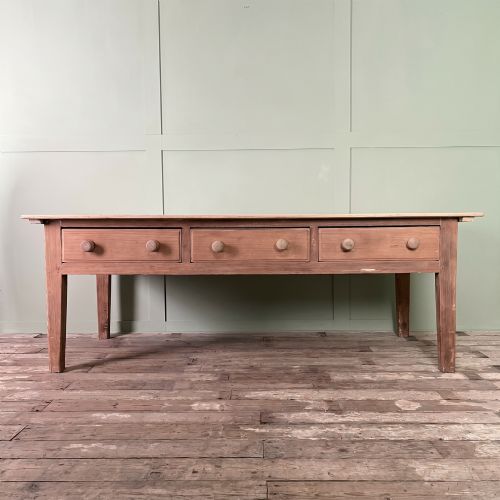
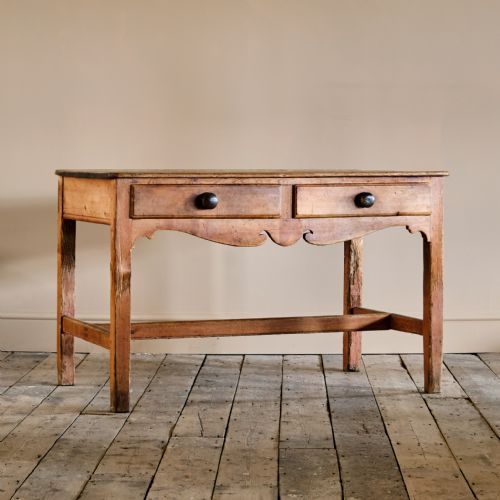
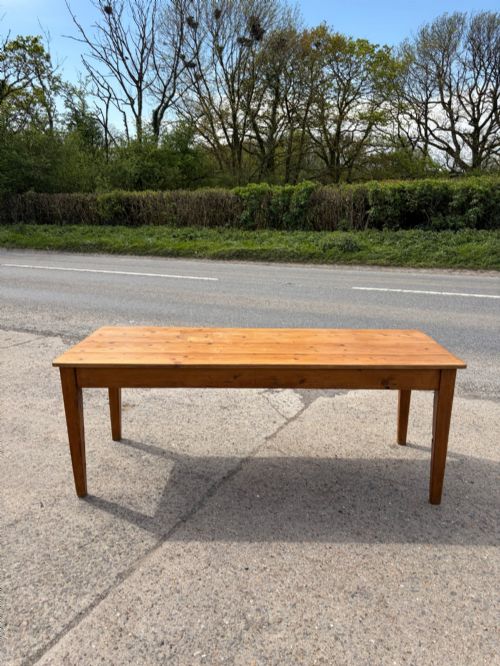
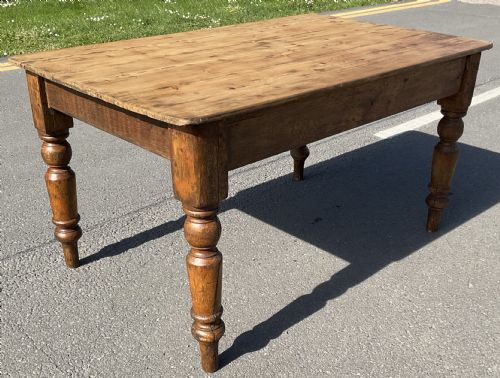


Rustic Pine Farm Table
A rustic pine farm table anchors a room with generations of practical utility, offering robust timber surfaces built for daily communal dining.
Rustic Pine Farm Table
A rustic pine farm table represents the heart of domestic life, spanning dining, kitchen, and preparation tasks across centuries of practical use. These pieces emerge predominantly from nineteenth-century English, French, and Scandinavian workshops, shaped by local agricultural and culinary needs.
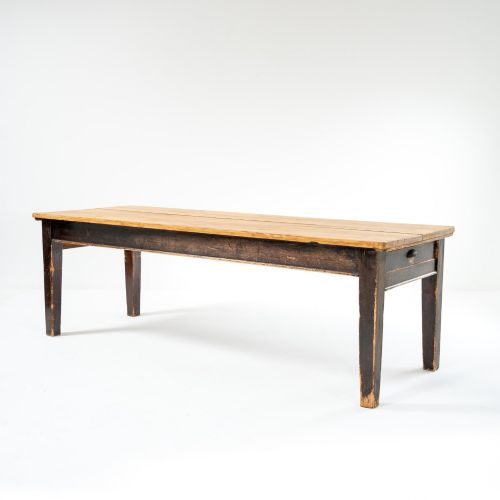
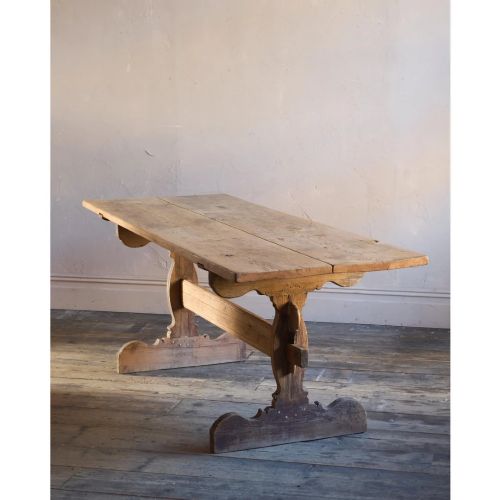
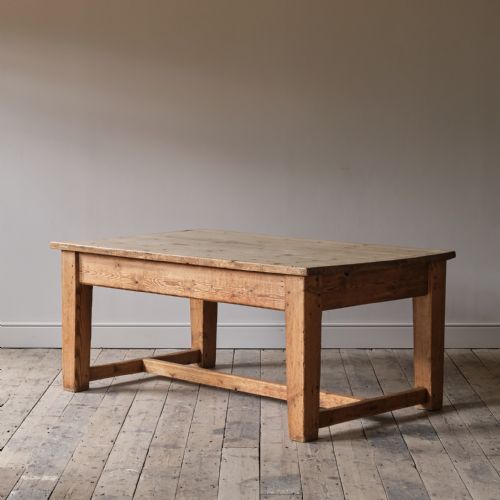
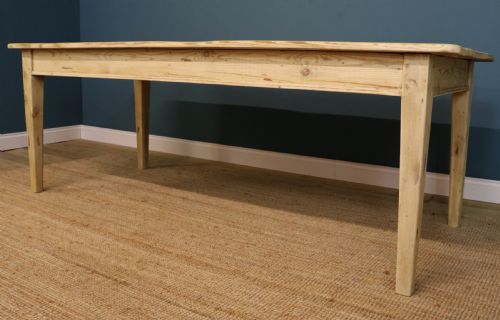
Most examples encountered here are large kitchen or harvest tables featuring plank tops in pine, often supported by fruitwood, elm, oak, or sycamore frames. Forms range from simple four-legged dining variants to sturdy trestle tables and preparation boards equipped with single drawers.
The aesthetic embraces regional styles such as French Country, Swedish Country, and Victorian Country, where honest utility dictates the construction. Buyers find everything from compact six-seater tables to expansive community boards measuring over twelve feet in length.
Construction and Materials
Makers relied on durable softwood pine for expansive plank tops, paired frequently with harder timbers like oak, fruitwood, elm, and sycamore for structural legs and frames. Joinery prioritised strength and longevity, utilising pegged mortise and tenon joints to withstand heavy daily domestic labour.
Surfaces were either left as scrubbed timber or finished with traditional treatments, including layers of old paint, Falu red paint, or staining. Drawer construction on front friezes utilised straightforward dovetail techniques, while folding mechanisms appeared on specific space-saving kitchen variants.
Periods represented on the site span the eighteenth century, the Victorian era, and into the early twentieth century.
Judging Quality
Quality rests in the integrity of the timber and the depth of surface patination accumulated through decades or centuries of honest domestic service. Original paint layers, untouched scrubbed finishes, and period timber shrinkage separate superior examples from later alterations.
Structural proportion and stability dictate merit, with well-balanced trestle forms and substantial plank thickness commanding greater appreciation. The preservation of original components, from frieze drawers to secondary woods like elm and fruitwood, defines the standing of each piece.
The Rustic Pine Farm Table Glossary
- Frieze
- The horizontal band running directly beneath the table top, often housing functional cutlery or utility drawers. This architectural element provides structural rigidity to the apron.
- Trestle table
- A form where the top rests upon two or more vertical supports connected by a horizontal stretcher bar. This design maximises legroom along the length of the board.
- Scrubbed finish
- A timber surface washed and scoured repeatedly over generations to remove dirt, revealing the pale grain underneath. It reflects a clean, utilitarian country aesthetic.
- Pig stratch
- A specific agricultural work surface utilised in rural preparation spaces. The evidence records this uncommon form alongside standard dairy prep tables.
- Patina
- The surface sheen and colour variation developed by wood and paint through age, light exposure, and frequent human contact. It serves as a primary indicator of historical authenticity.
Rustic Pine Farm Table: Frequently Asked Questions
How are these tables cleaned?
Maintenance requires simple damp wiping with mild soap to preserve the aged timber grain without stripping historical patination.
Harsh chemical strippers or modern varnishes ruin the dry, authentic finish developed over centuries of domestic use.
Can these tables seat many?
Community harvest formats and long trestle designs easily accommodate large gatherings for everyday meals and communal dining.
Lengths stretch from standard six-seater proportions up to massive boards measuring past twelve feet.
What wood was used?
Pine forms the primary material for the broad plank tops across nearly all surviving examples found here.
Frames frequently incorporate harder regional timbers including oak, fruitwood, sycamore, and elm to ensure structural load-bearing capacity.
How to spot painted finishes?
Original painted surfaces display multiple accumulated layers, alligatoring, and natural wear consistent with nineteenth-century rural use.
Regional variations include Swedish Falu paint and French painted treatments that retain historical pigment depth beneath clear wax.