
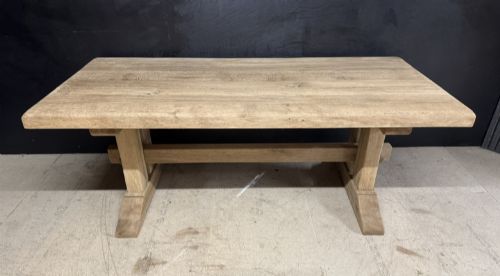
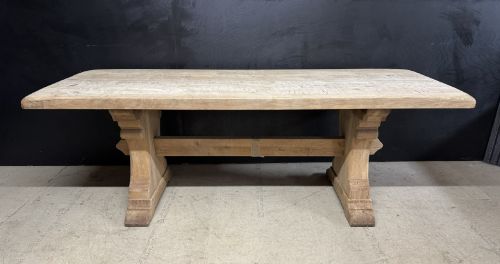


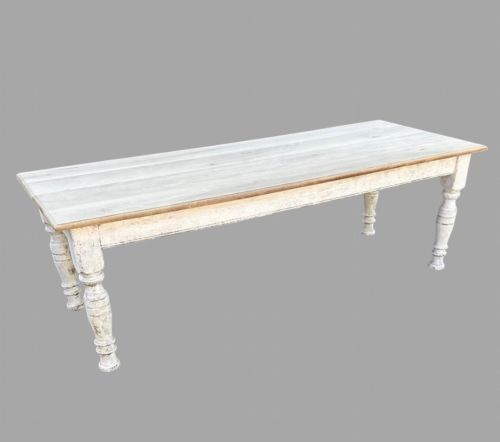


Pale Oak Refectory Table
A pale oak refectory table brings rustic warmth and solid timber construction to a dining space, offering generous surface area for daily meals.
Pale Oak Refectory Table
A pale oak refectory table is a long dining surface designed for communal meals, drawing on vernacular forms from various European traditions. When searching for a pale oak refectory table, buyers encounter examples originating from the nineteenth and early twentieth centuries, including Edwardian pieces.
The selection ranges across French country, Italian country, Dutch country, and English country house styles, alongside pieces built in the seventeenth century style or associated with the Arts and Crafts movement. Trestle tables and farmhouse dining tables form the primary variations available on this page.
Makers utilised solid timber alongside secondary woods like pine, beech, and poplar, finishing surfaces to highlight the pale grain. These dining tables serve as the central gathering point in kitchens and dining rooms alike.
How they were made
Construction relies primarily on solid oak, bleached oak, and pale oak, sometimes paired with structural supports in beech, pine, or poplar. Carpenters utilised traditional jointing methods to ensure stability across long spans of timber.
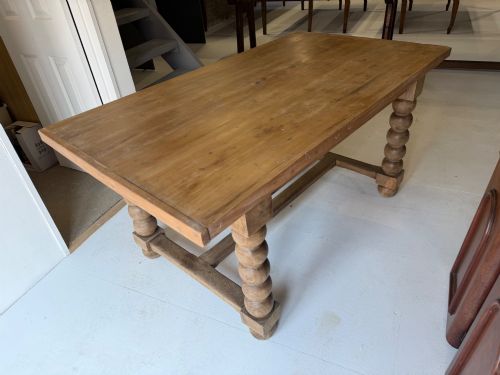
Surface treatments range from natural pale finishes to intentional bleaching, occasionally incorporating paint to highlight decorative elements like bobbin legs. The integration of drawer leaves in certain models demonstrates practical adaptability in historical dining furniture.
Some nineteenth century dining tables come equipped with bobbin legs that look remarkably like stacked wooden beads.
What varies in quality
The standard of a table depends on the selection of timber and the integrity of the structural joinery supporting the top. Heavier planks and robust trestle bases indicate a higher grade of construction designed for heavy daily use.
Proportion and the subtlety of the bleaching process separate exceptional pieces from simpler utilitarian versions. Tables retaining original secondary woods and uncompromised surface patination command greater interest among collectors.
The Pale Oak Refectory Table Glossary
- Refectory table
- A long dining table traditionally used in communal dining halls and monastic refectories. These pieces now serve domestic kitchens and dining rooms.
- Trestle table
- A table featuring a horizontal beam supported by two vertical uprights or feet at each end. This design provides sturdy legroom clearance along the length of the top.
- Bleached oak
- Oak timber treated to lighten its natural warm tone, producing a pale, neutral finish. This treatment aligns with Scandinavian, French, and English country house aesthetics.
- Drawer leaf
- An extension mechanism where auxiliary leaves slide out from beneath the main surface. This feature allows the table length to expand when accommodating additional guests.
- Bobbin legs
- Turned furniture legs shaped with a series of rounded, spherical swellings resembling spools of thread. This decorative turning appears on nineteenth century seating and support structures.
Pale Oak Refectory Table: Frequently Asked Questions
How do I style a pale oak refectory table?
Pair the natural timber tones with simple benches or mismatched wooden chairs to maintain a relaxed country interior. Keep centrepieces low and unpretentious to showcase the grain of the wood.
Allow the natural surface patination to remain visible by avoiding heavy tablecloths during daily use. Lighting should complement the pale finish without casting harsh shadows across the long boards.
Where were these tables made?
The pieces originate from workshops across England, France, Italy, Sweden, and the Netherlands. Each region adapted vernacular dining forms to suit local domestic habits.
European country house and farmhouse traditions heavily influenced the structural design and timber selection. Makers utilised locally available secondary woods alongside primary oak.
How do I care for bleached oak?
Clean surfaces regularly using a slightly damp cloth followed by a dry cloth to prevent moisture absorption. Avoid harsh chemical cleaners that strip the pale finish.
Apply natural beeswax occasionally to nourish the timber without darkening the grain significantly. Protect the surface from hot dishes and excessive direct sunlight.
What periods do these tables span?
The selection covers items from the nineteenth century, the Edwardian era, and the early twentieth century up to the 1930s. Certain pieces replicate earlier seventeenth century designs.
Arts and Crafts examples from around nineteen-ten reflect a return to simpler, honest construction methods. The variety includes items produced across several decades of country furniture making.