

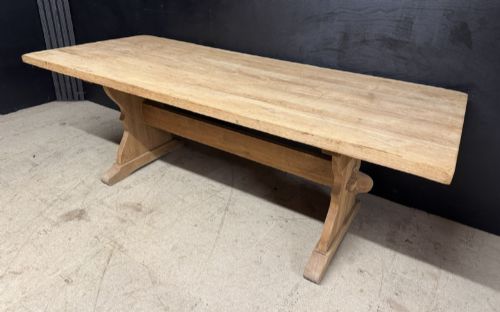
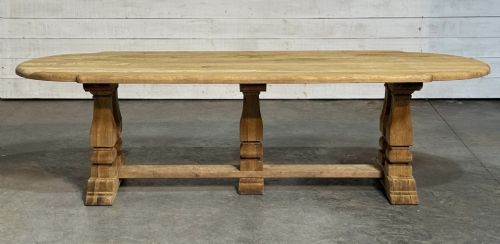
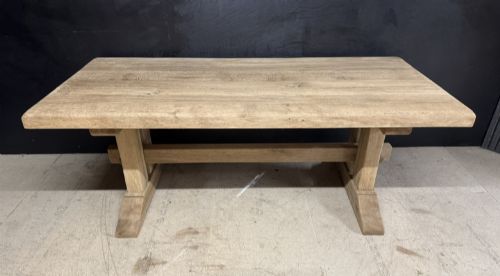
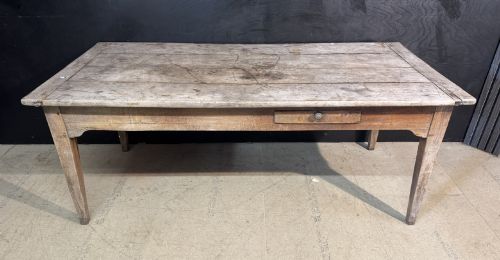
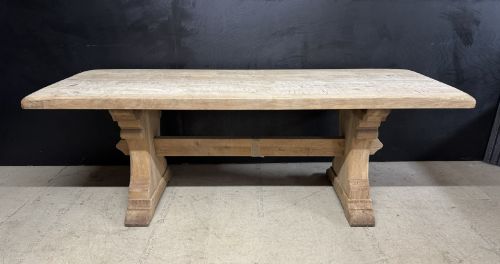
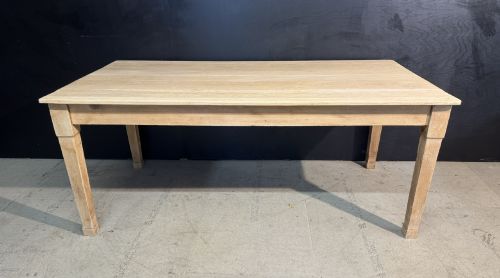
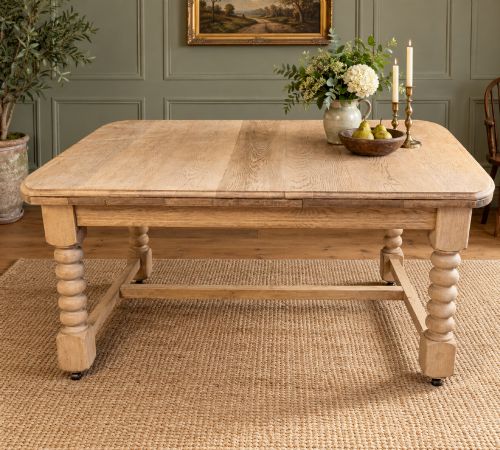
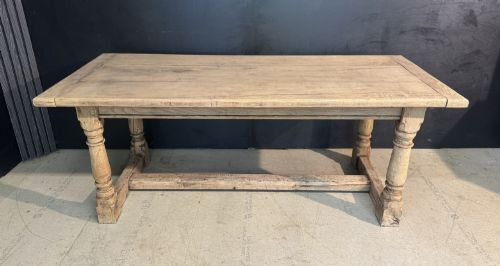
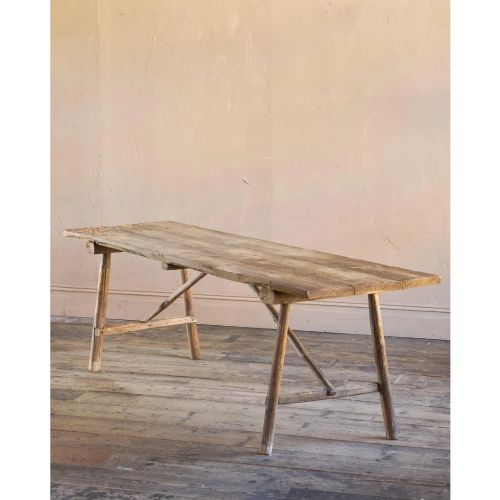
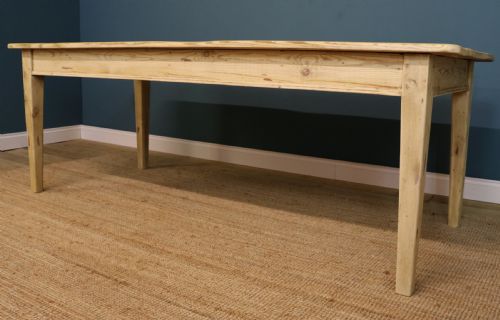


Bleached Wood Kitchen Table
A bleached wood kitchen table brings a bright, softened timber surface to daily dining spaces.
Bleached Wood Kitchen Table
A bleached wood kitchen table is a functional domestic surface rendered in a pale, scrubbed finish suited to both rustic interiors and modern homes. These tables span several decades and centuries, ranging from nineteenth century examples to items produced around nineteen twenty.
Most pieces seen here take the form of farmhouse dining tables, trestle tables, or drapers tables originating from England, France, Italy, and the Netherlands. Regional variations include primitive Welsh dairy or butcher tables and refectory forms designed for communal dining.
The dominant material on this page is bleached oak, accompanied by pine, elm, ash, and painted surfaces that show the grain clearly. Buyers encounter substantial timbers shaped into sturdy rectangular dining boards supported by robust legs or trestle bases.
Materials and construction methods
Construction relies heavily on solid hardwoods like oak, elm, and ash alongside softwood pine, selected for their durability in domestic and working environments. Timbers are joined using traditional methods to support heavy daily use in kitchens and dining rooms.
The characteristic pale tone is achieved through historical scrubbing or chemical lightening processes that strip the original dark finish while retaining the natural texture of the wood grain.
Bleached Wood Kitchen Table Retail Price Guide 2026
Typical asking prices for bleached wood kitchen table among the pieces listed under this phrase on Sellingantiques today, from the lower quarter to the upper quarter. They describe what is for sale here now, not the wider market.
The listings span from nineteen-hundred to the nineteenth century, featuring oak, pine, elm, ash, and painted timber.
Assessing quality and character
Quality rests in the integrity of the timber joints, the stability of the base, and the depth of the grain texture left visible after bleaching. Tables with thicker tops and honest historical wear command greater attention from buyers seeking authenticity.
The proportion of the legs to the top and the harmony of regional joinery details distinguish standard utility pieces from finer country workshop examples.
The Bleached Wood Kitchen Table Glossary
- Bleached oak
- Oak timber treated to lighten its natural colour, resulting in a pale, weathered appearance that exposes the grain. This finish is common on nineteenth century and early twentieth century country furniture.
- Drapers table
- A long, narrow table traditionally used in textile shops for measuring cloth, often featuring drawers beneath the top. Their generous length makes them suitable for contemporary kitchens.
- Refectory table
- A long dining table traditionally used in monastic refectories and large halls, characterised by sturdy legs connected by a low stretcher. They provide substantial seating capacity.
- Trestle table
- A table consisting of two or more support frames connected by a horizontal beam over which the top rests. This design maximises legroom along the length of the table.
- Primitive country
- A descriptor for utilitarian furniture made by local joiners with minimal ornamentation, prioritising function over refined style. These pieces often utilise local regional timbers such as ash or elm.
Bleached Wood Kitchen Table: Frequently Asked Questions
How do I clean a bleached wood kitchen table?
Wipe the surface with a damp cloth and mild soap, avoiding harsh chemicals that might strip the treated timber.
Dry the wood thoroughly afterwards to prevent moisture rings and preserve the pale finish.
Are these tables suitable for daily family use?
Solid oak and pine construction ensures these tables withstand regular meals and kitchen preparation tasks.
The historical nature of the timber means existing marks blend into the weathered character over time.
How do I identify a nineteenth century table?
Examine the joinery beneath the top and the hand-planed irregularities visible across the boards.
Nineteenth century examples often display deep patination beneath the bleached surface and traditional peg joinery.
What is the difference between a farmhouse and a drapers table?
Farmhouse tables are generally broader and designed specifically for seated dining and kitchen work.
Drapers tables are narrower and typically include multiple small drawers beneath the surface for storage.