
Rustic Farmhouse Dining Table
A rustic farmhouse dining table anchors the kitchen with centuries of utilitarian strength and simple wooden character.
What these pieces are
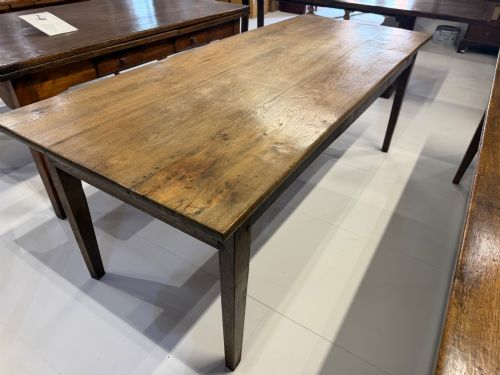
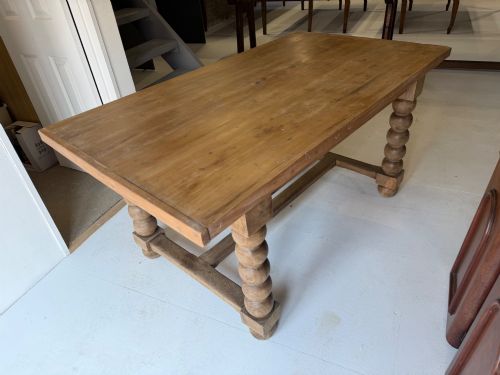
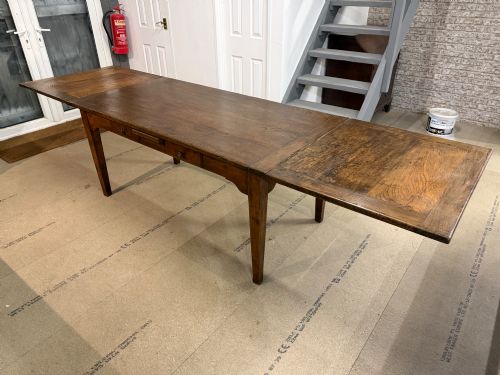
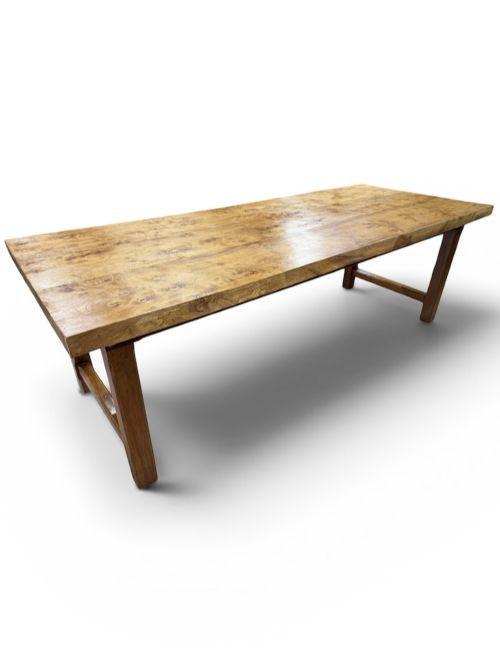
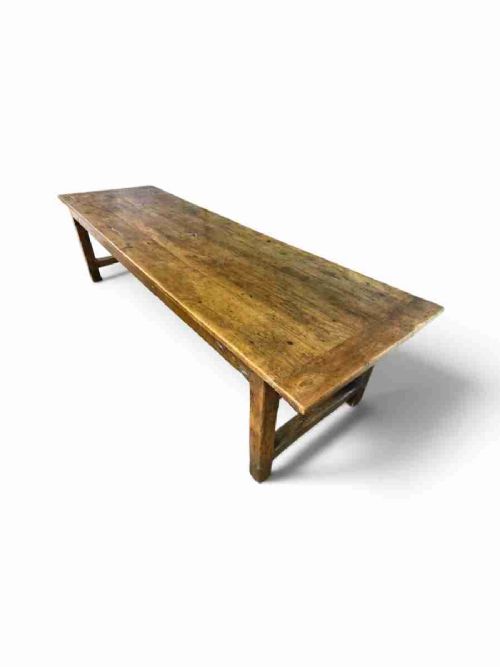
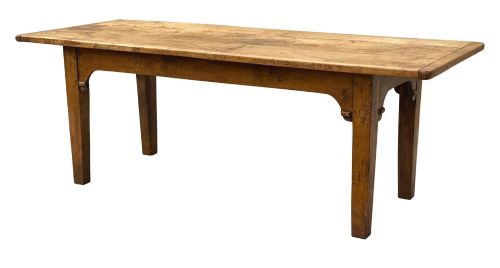
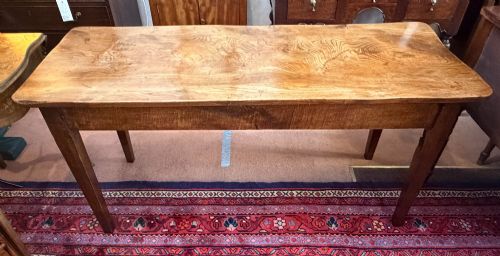
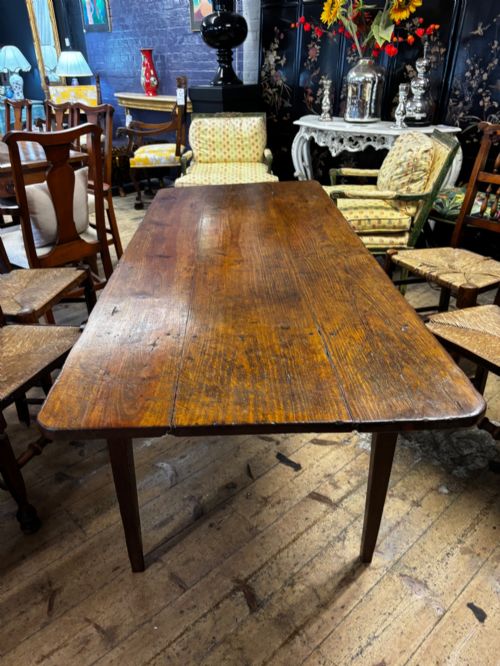
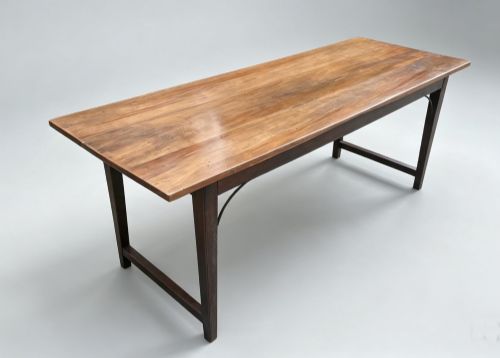
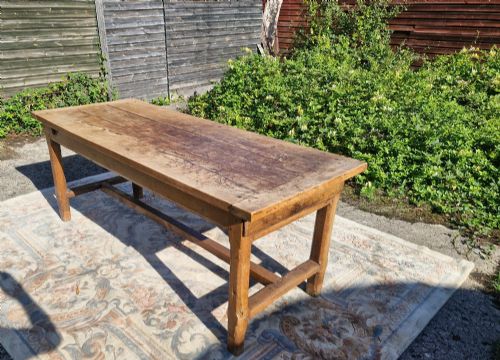
A rustic farmhouse dining table is a heavy dining surface designed for communal meals, typically taking the form of a long rectangular board supported by sturdy legs. When searching this phrase, buyers encounter substantial pieces built for daily domestic or tavern use rather than delicate parlour display.
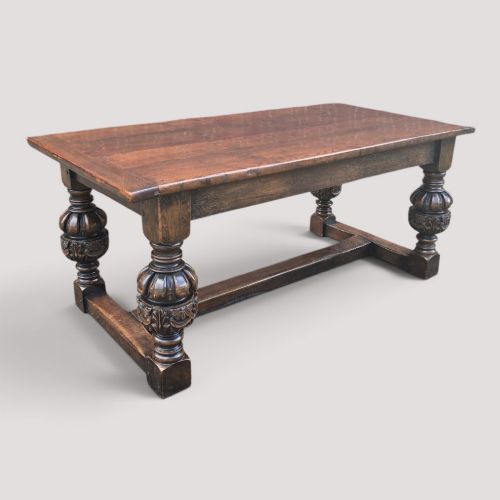
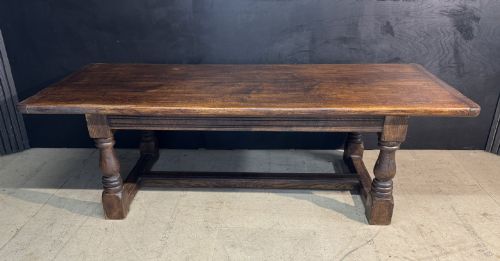
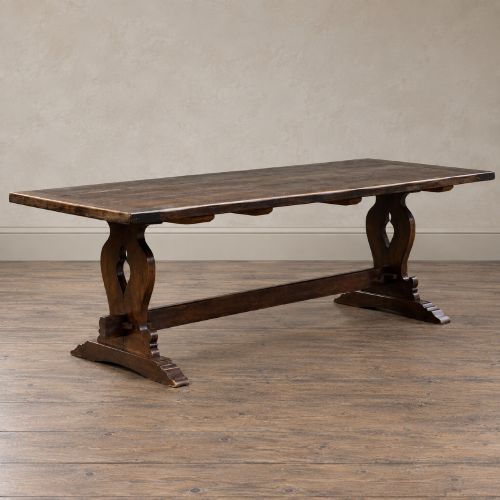
The examples found here and in past archives span the nineteenth century up to nineteen twenty, taking forms such as refectory boards and tavern tables. English and French origins dominate the record, bringing generous proportions suited to seating larger gatherings.
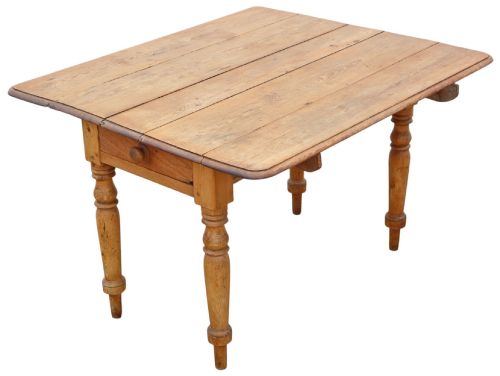
Most pieces met on this page showcase a straightforward layout with thick tops and unpretentious frames. They reflect generations of practical service in kitchens and dining rooms across the countryside.
How they were made
Carpenters built these tables using solid hardwoods selected for durability, relying predominantly on oak and elm, alongside birch, pine, fruitwood, and pear wood. Planks were joined to create thick tabletops capable of withstanding heavy daily use.
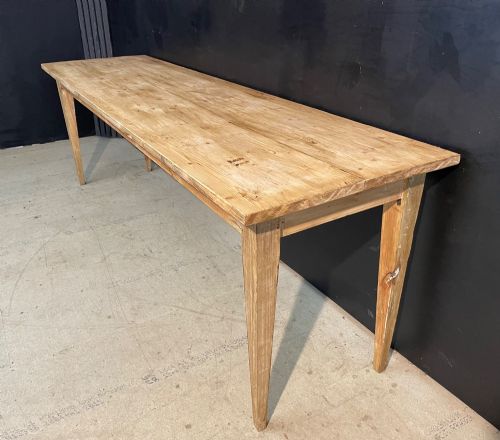
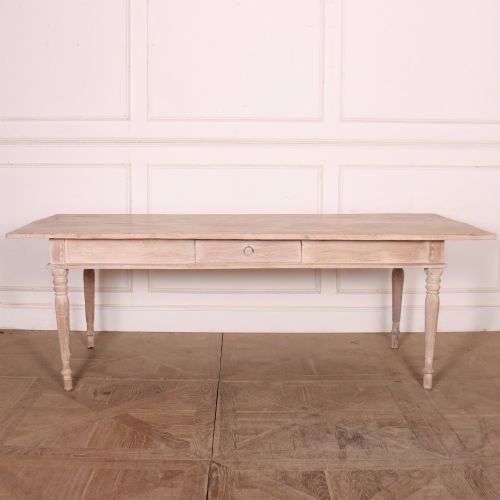
Construction methods prioritised stability through straightforward refectory frames and heavy undercarriages. Surfaces were often left with natural grain and texture, while some later examples exhibit intentional bleaching of the timber.
Retail Price Guide 2026
Typical UK retail prices for rustic farmhouse dining table, calculated from the Sellingantiques database of over a million retail prices indexed since 2003. This retail price guide relies exclusively on Sellingantiques data; no external sources or auction records are used, so the figures do not describe the wider market.
Some tabletops are so long and heavy they require an entire regiment of diners just to move them an inch.
What varies in quality
Quality rests in the substance of the timber and the integrity of the original construction rather than decorative carving. Tables fashioned from thick oak or elm slabs possess a structural weight and visual depth absent in lighter pine versions.
Proportion and scale dictate the upper end of the range, particularly extra-long refectory formats or examples retaining an authentic bleached finish from years of kitchen use. The best pieces combine honest utility with timber that has aged gracefully.
The Rustic Farmhouse Dining Table Glossary
- Refectory table
- A long narrow dining table originally designed for monastic dining halls. This form provides long uninterrupted seating spans along each side.
- Tavern table
- A heavy-topped wooden table traditionally used in public houses and inns. These pieces feature robust construction designed for heavy communal traffic.
- Bleached oak
- Oak timber lightened through weathering, sun exposure, or washing treatments. This finish highlights the natural grain while softening the overall colour of the wood.
- Fruitwood
- Timber harvested from fruit-bearing trees such as pear or apple. Cabinet makers valued these woods for their fine grain and distinct warmth.
Frequently Asked Questions
How do I choose the right size?
Consider the length of the room and the number of people you need to seat regularly. Long refectory formats require adequate clearance around all sides to maintain functional walkways in a kitchen.
Keep in mind that historical dimensions often exceed standard modern lengths, particularly tables designed to seat eight or ten guests comfortably.
Are these tables suitable for daily use?
These tables were originally built for heavy domestic labour and communal dining, making them exceptionally durable for modern households. Solid hardwood construction ensures they handle everyday family life with ease.
Their robust timber surfaces already carry the marks of past use, meaning normal living adds to their historic character rather than detracting from it.
How do I care for an antique wood surface?
Maintain the timber by dusting regularly with a dry cloth and avoiding harsh chemical cleaning agents. Use placemats and coasters to protect the antique finish from excessive moisture and heat.
Occasional application of natural beeswax helps nourish older oak and elm without creating an artificial gloss that obscures the grain.
How can I tell the period?
Dating relies on examining the construction marks, timber selection, and overall joinery style underneath the tabletop. Nineteenth-century examples often display hand-sawn board variations and pegged joints.
Comparing the proportions to documented regional styles helps place the piece within the wider timeline of nineteenth and early twentieth-century country furniture.