

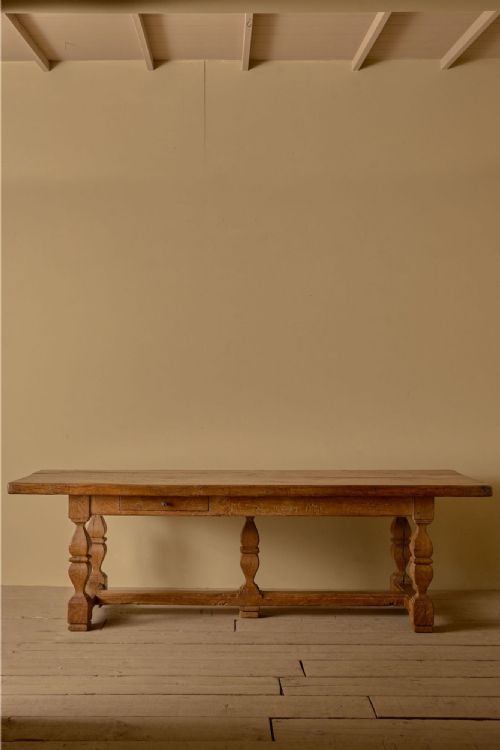
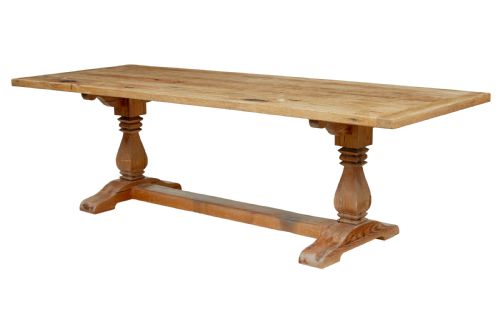
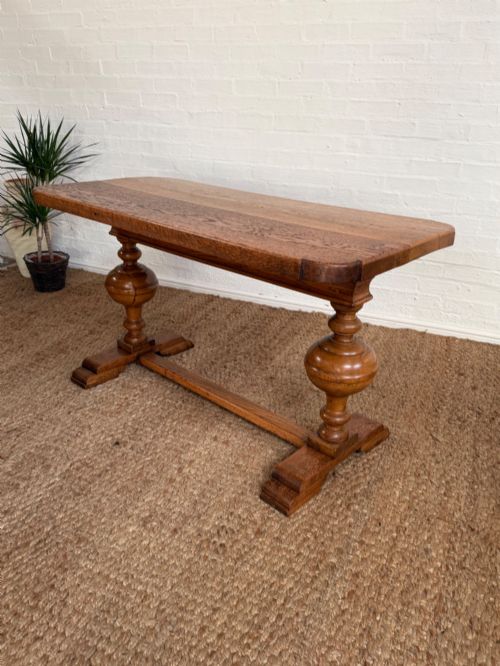
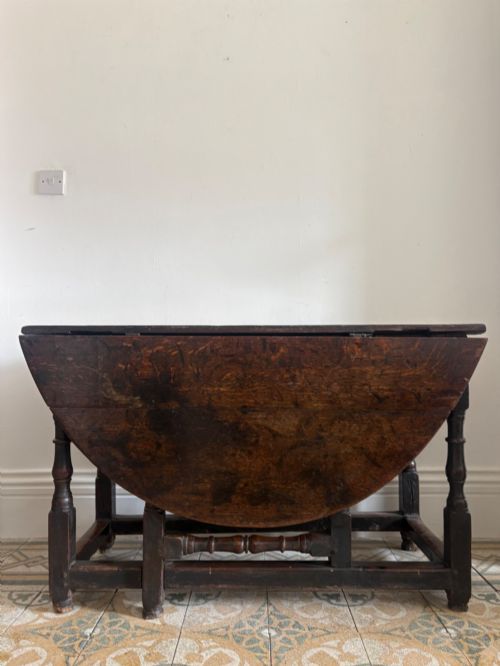
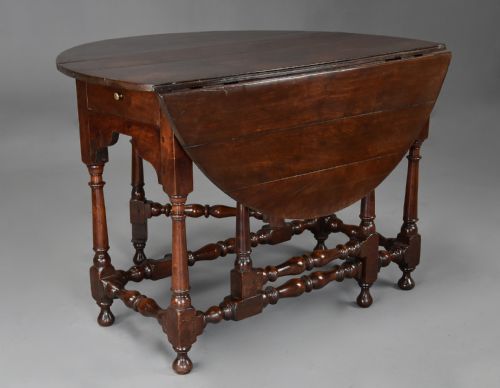
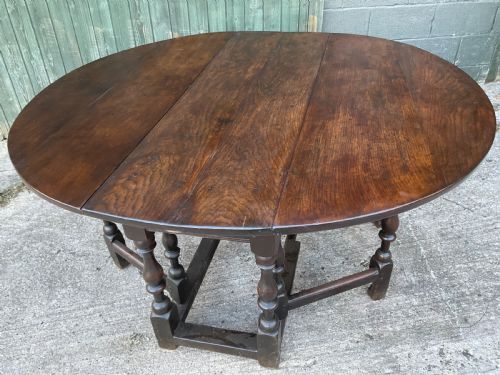

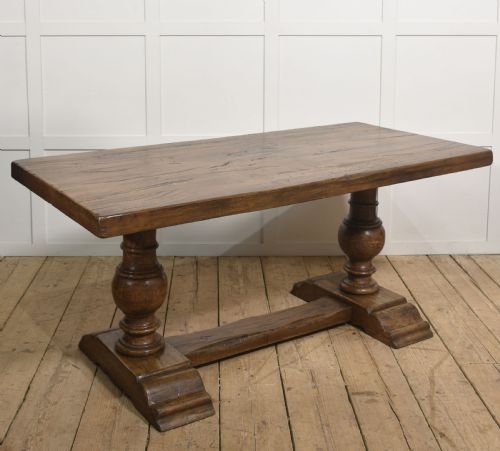


Baluster Leg Dining Table
These baluster leg dining table pieces bring grounded weight to a room, offering substantial timber surfaces built for daily gathering.
Baluster Leg Dining Table
A baluster leg dining table brings together heavy wooden surfaces and distinctive turned supports, drawing on traditional forms. When exploring this selection, buyers encounter sturdy pieces originating from the nineteenth century, the Edwardian era, and the nineteen-twenties and nineteen-thirties.
The assortment spans English country house styles, rustic farmhouse designs, and Jacobean revival interpretations. Alongside these, French provincial and monastery models appear, showcasing broad timber planks and robust proportions suited to larger interior spaces.
How they were made
Construction relies primarily on solid oak, scrubbed oak, bleached oak, and pine, occasionally finished with paint. Master joiners utilised traditional framing techniques to secure heavy tops onto substantial turned pedestals and trestle bases.
Carved details often appear along the structural wooden elements, reflecting revivalist aesthetics and traditional cabinet-making methods. Surfaces range from naturally grained timber to scrubbed and bleached treatments that reveal the underlying grain.
Baluster Leg Dining Table Retail Price Guide 2026
Typical asking prices for baluster leg dining table among the pieces listed under this phrase on Sellingantiques today, from the lower quarter to the upper quarter. They describe what is for sale here now, not the wider market.
The listings here span the nineteenth century through the nineteen-thirties, featuring oak, pine, and painted wood in farmhouse and revival styles.
What varies in quality
Quality rests in the choice of timber and the integrity of the joinery connecting the heavy top to the baluster supports. Pieces featuring dense solid oak and finely executed turning sit at the upper end of the spectrum compared to simpler pine iterations.
Proportion and scale also dictate distinction, with larger refectory and monastery formats requiring exceptional structural balance to support extended timber spans. The execution of carved ornamentation further distinguishes standard workshop output from finer revival examples.
The Baluster Leg Dining Table Glossary
- Baluster leg
- A vertical architectural support characterised by a bulging, turned profile reminiscent of a small pillar or baluster. This sturdy form underpins the structural weight of large dining surfaces.
- Refectory table
- A long, narrow dining table traditionally used in communal dining halls. These pieces are typically characterised by solid timber construction and stretcher bases.
- Bleached oak
- Oak timber treated to lighten its natural colour, producing a softer, pale surface tone. This finish is frequently observed on French farmhouse and English country house pieces.
- Trestle table
- A table comprising two or more supports connected by a horizontal beam or stretcher. This design maximises legroom along the length of the furniture.
Baluster Leg Dining Table: Frequently Asked Questions
How do I choose the right size?
Consider the available floor space in your dining room, keeping in mind that these substantial forms require adequate clearance around all sides for seating. Larger examples, such as monastery and refectory formats, naturally dominate a room and function best in expansive spaces.
Measure your primary dining requirements and allow sufficient room for guests to move comfortably. The sturdy proportions of these tables mean they serve as the central anchor of a room.
What is a refectory table?
A refectory table is a long, narrow dining table historically designed for communal dining in monasteries or large halls. These pieces prioritise length and sturdy construction above all else.
In domestic settings, they provide generous surface area for everyday meals and large gatherings. Their substantial framing ensures long-term stability across heavy timber tops.
How do I care for a wooden top?
Maintain timber surfaces by dusting regularly with a soft, dry cloth and avoiding excessive moisture. Scrubbed and bleached oak finishes benefit from gentle cleaning methods that preserve the natural texture of the grain.
Protect the wood from direct heat sources and harsh chemical cleaners to maintain the integrity of the finish. Periodic gentle waxing can help nourish older timber surfaces over time.
What distinguishes Edwardian examples?
Edwardian dining tables often reflect historical revival styles, drawing heavily on earlier Jacobean and vernacular forms. These pieces combine period craftsmanship with proportions suited to the domestic interiors of the early twentieth century.
Makers utilised solid oak and traditional turning techniques to recreate historic silhouettes. This era bridges nineteenth-century heaviness with more refined domestic scaling.