




Rustic Oak Farm Table
These heavy dining boards answer to rustic oak farm table, offering centuries of honest grain and solid proportion for everyday gathering.
Identifying rustic oak farm tables
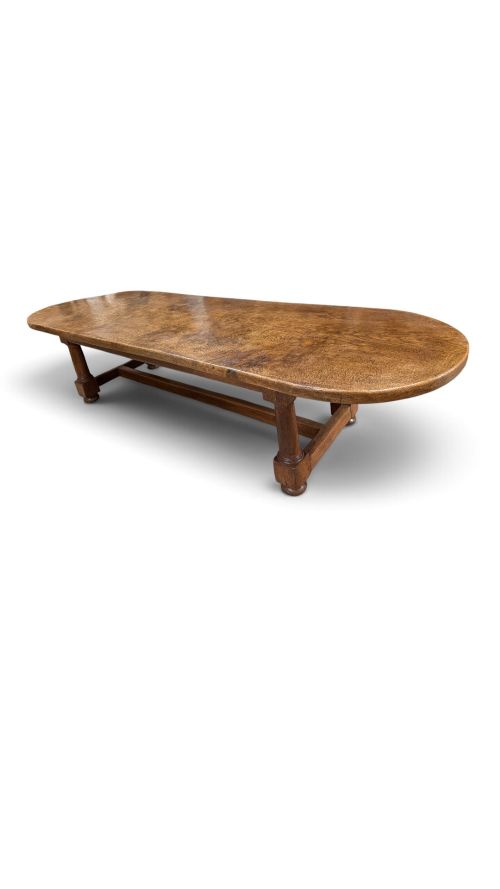
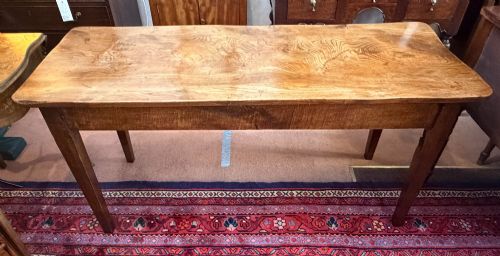
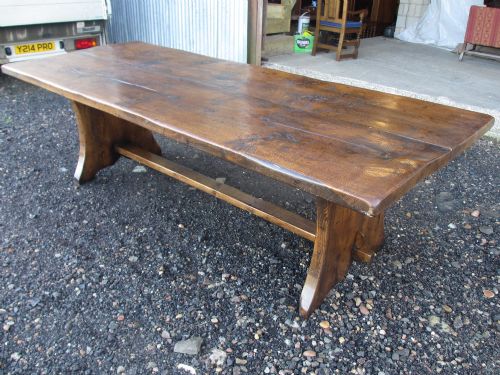
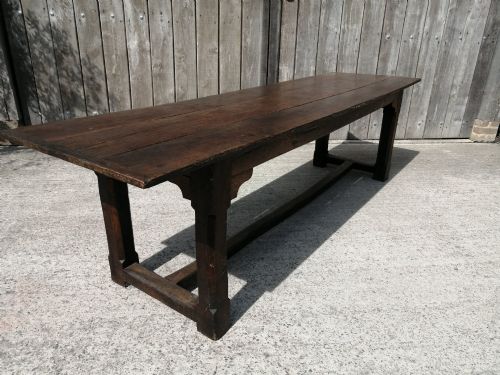
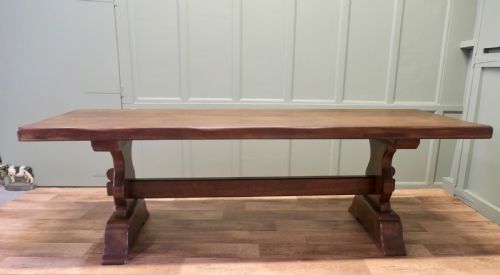
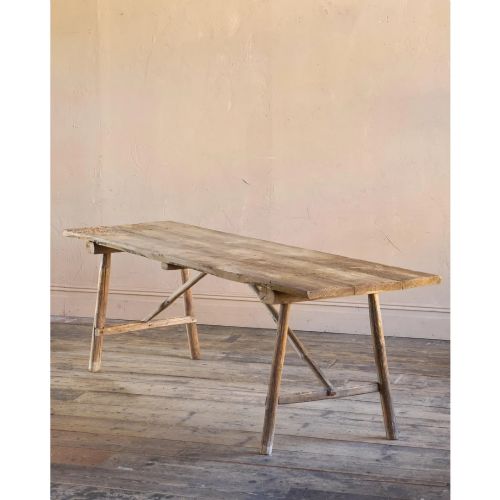
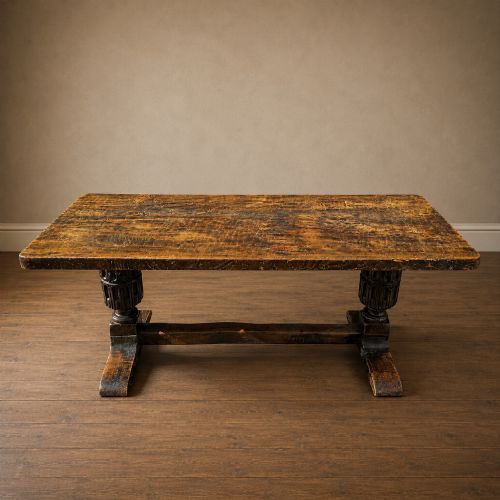
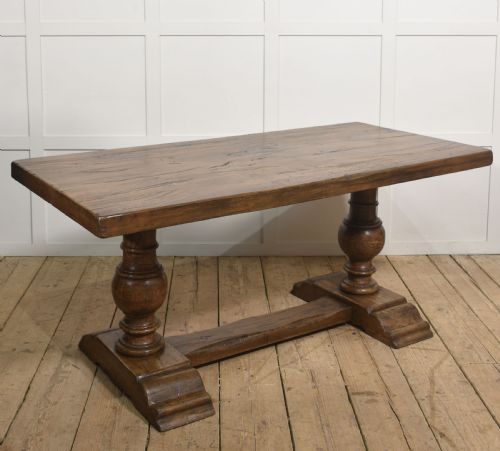
A rustic oak farm table brings sturdy timber and generous length to the dining room, built for daily domestic labour and communal meals. When searching for a rustic oak farm table, buyers encounter heavy refectory forms, kitchen boards, and substantial dining surfaces shaped by generations of use.
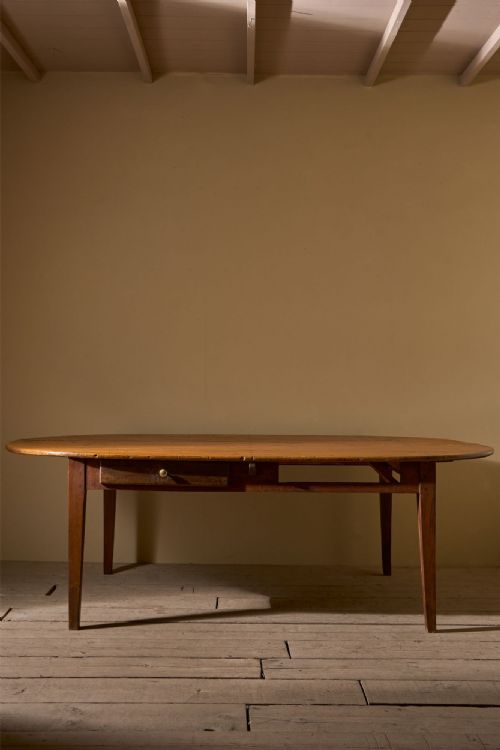
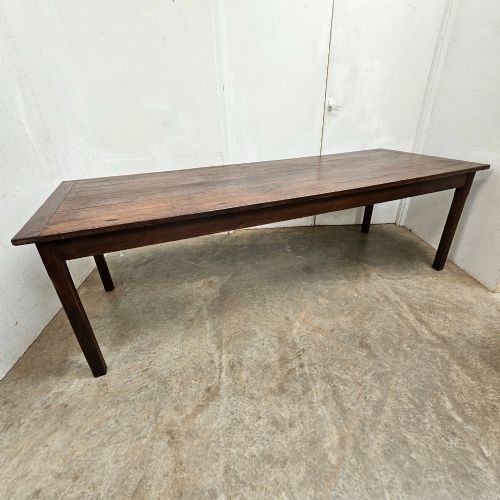
The pieces appearing in these records span the eighteenth century, nineteenth century, and early twentieth century, taking in both English workshops and French provincial kitchens. Most examples measure several feet in length, often constructed with thick plank tops and robust structural underframes.
Makers designed these boards for utility, resulting in broad surfaces suited to large gatherings and active households. Survivors from the George I period sit alongside Victorian interpretations and early twentieth-century refectory designs, maintaining a continuous tradition of heavy timber construction.
Assessing quality and character
Quality rests in the integrity of the timber and the honesty of the construction, where thick top planks display deep figuring and natural age-related movement. Superior examples retain their original underframes and structural stretchers without excessive modern intervention.
The distinction between ordinary and exceptional boards lies in the proportion of the timber and the depth of the patina accumulated over hundreds of years. Tables featuring well-balanced dimensions and untouched surface wear demonstrate the durability inherent in traditional heavyweight furniture.
Retail Price Guide 2026
Typical UK retail prices for rustic oak farm table, calculated from the Sellingantiques database of over a million retail prices indexed since 2003. This retail price guide relies exclusively on Sellingantiques data; no external sources or auction records are used, so the figures do not describe the wider market.
Recorded pieces span the eighteenth, nineteenth, and early twentieth centuries, featuring solid oak alongside elm, ash, pine, and birch.
The Rustic Oak Farm Table Glossary
- Refectory table
- A long dining table traditionally used in monastic refectories and later adopted for large domestic kitchens and dining halls. These forms provide substantial length and steady legroom.
- Plank top
- A surface constructed from several wide boards of solid timber joined edge to edge. This method accommodates the natural expansion and contraction of heavy wood.
- Patina
- The lustrous surface sheen and mellow colour developed on timber through age, light exposure, and decades of regular cleaning and human touch.
- Stretcher
- A horizontal wooden rail connecting the legs of a table to provide structural rigidity and prevent the frame from wobbling under heavy loads.
Frequently Asked Questions
How do I clean a rustic oak farm table?
Wipe the surface with a slightly damp cloth to remove daily dust and crumbs, avoiding harsh chemical cleaners that strip the aged finish.
Apply natural beeswax occasionally to nourish the dry timber and maintain the soft sheen built up over generations of use.
Can I use these tables for daily dining?
These boards were originally built for hard kitchen and dining work, making them exceptionally well-suited to modern family life and frequent meals.
Use placemats and coasters to protect the historic surface from extreme heat and moisture while letting the sturdy construction handle daily activity.
How do I date an antique oak table?
Examine the underside and joints for hand-cut tool marks, pegged wooden fixings, and the natural oxidation patterns found in older timber.
Compare the framing style and proportion against documented examples from periods like George I or the Victorian era to narrow down the decade.
Why do some oak tables look bleached?
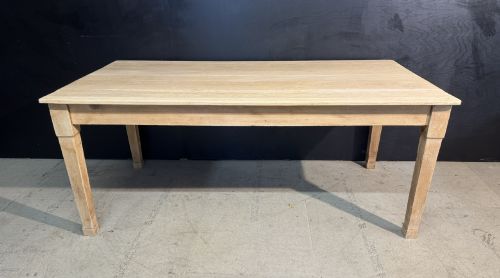
Certain examples feature a lighter appearance due to historical washing techniques, deliberate bleaching, or the natural fading of oak exposed to light.
This lighter finish appears frequently in French provincial pieces, offering a softer visual weight while retaining the robust structure of solid hardwood.