





Bleached Timber Dining Table
A bleached timber dining table brings an enduring, pale warmth to a room through stripped surfaces and honest grain.
Bleached Timber Dining Table
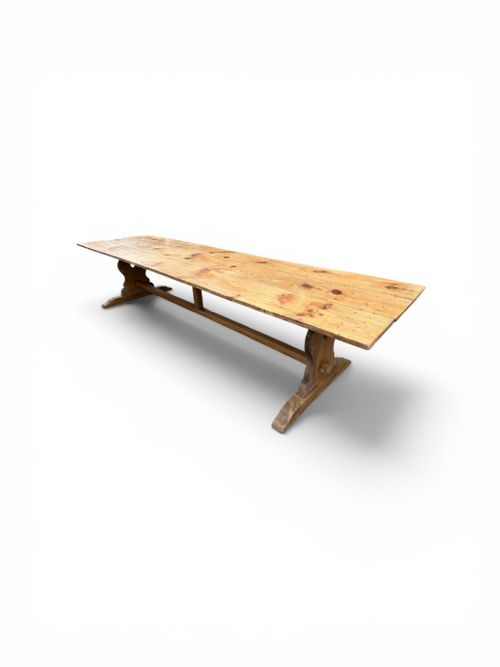
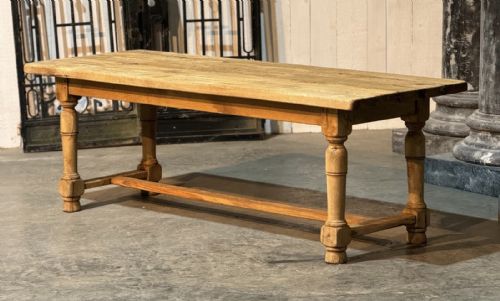
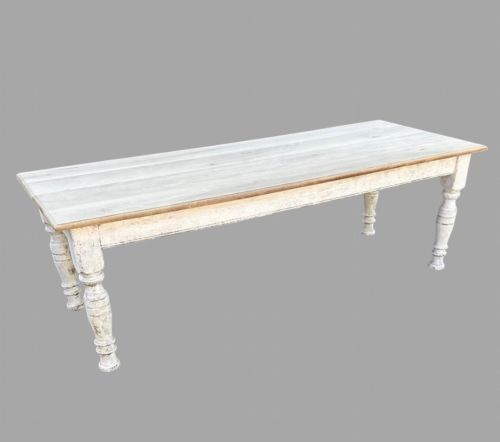
A bleached timber dining table is typically a substantial piece designed for communal gatherings, drawing on rustic farmhouse, primitive country, and French provincial traditions. When you search for this phrase, you find heavy working surfaces intended to anchor a kitchen or dining room with unpretentious charm. The examples meeting you on this page lean heavily towards nineteenth-century origins and early twentieth-century interpretations.
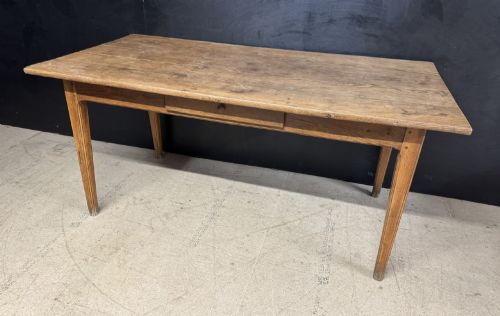
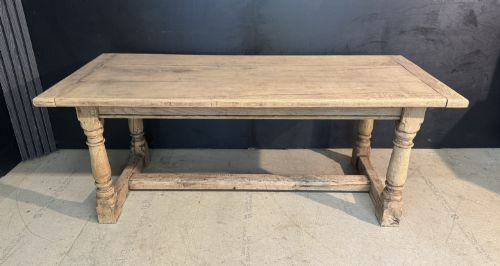
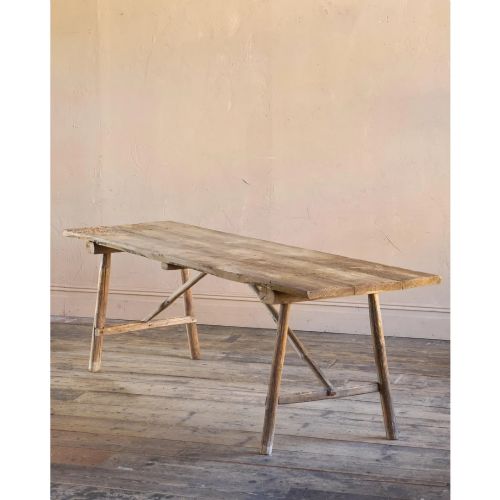
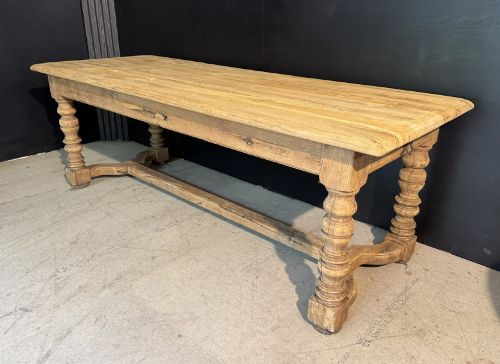
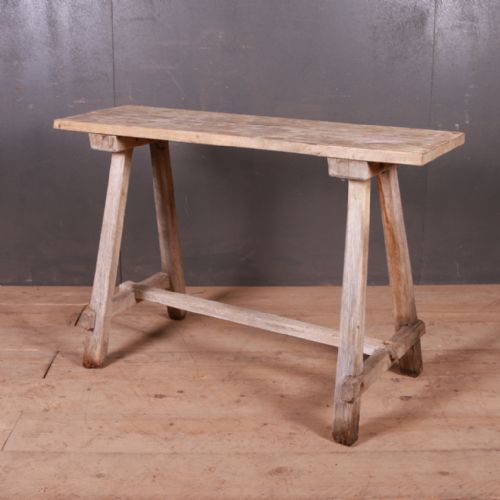
The dominant forms you encounter here are farmhouse tables, refectory tables, and trestle tables, alongside occasional console formats and tables featuring practical drawers. Oak and softwood feature prominently among the materials, often bearing the marks of intensive washing, scrubbing, or stripping to achieve a pale, light-reflecting finish. English country house and French country aesthetics shape the structural lines, ranging from sturdy four-legged frames to cross-braced trestle supports.
How they were made
Makers constructed these pieces using solid timber such as oak, pine, and softwood, relying on sturdy pegged joints and heavy planks for daily domestic labour. The distinct pale appearance on many of these surfaces comes from rigorous scrubbing and bleaching processes applied over decades of use or through intentional historic stripping.
Structural elements frequently incorporate iron for bracing or hardware, particularly on trestle formats and tables with drawers. The joinery prioritises practical utility over delicate ornamentation, resulting in robust frames that tolerate heavy weight and constant daily handling.
Several tables include hidden drawers, ready to catch the stray breadcrumbs and cutlery of past centuries.
What varies in quality
Quality rests upon the integrity of the original timber frame and the balance of proportions between the top boards and the supporting legs or trestles. Tables that retain deep character in the grain without compromising the stability of the main surface demonstrate superior domestic longevity.
The uniformity and depth of the bleached finish also distinguish finer examples, where the scrubbing has lightened the oak or softwood evenly while preserving the historic texture of the wood. Better pieces show thoughtful integration of drawers and structural ironwork that complements rather than overpowers the vernacular design.
The Bleached Timber Dining Table Glossary
- Refectory table
- A long, narrow dining table traditionally built for communal dining halls. These pieces often feature stretcher rails connecting the legs for added stability.
- Trestle table
- A table comprising two or more support frames connected by a horizontal beam or stretcher. This design maximises legroom along the length of the top.
- Scrubbed timber
- Wood that has been intensively washed and scoured with abrasive agents to remove dark finishes. This process exposes the natural, pale grain beneath.
- Primitive country
- A style characterised by simple, utilitarian construction without decorative flourishes. Maker techniques focus entirely on functional domestic service.
Bleached Timber Dining Table: Frequently Asked Questions
How do I clean a bleached timber dining table?
Maintenance requires gentle wiping with a damp cloth to protect the pale, stripped surface from staining.
Avoid harsh chemical cleaners that might strip the remaining natural oils from the historic oak or softwood planks.
Are these tables suitable for daily family use?
These pieces were originally built for heavy daily labour in farmhouses and country kitchens. Their robust timber construction handles everyday meals and gatherings with ease.
What is the difference between a farmhouse table and a trestle table?
Farmhouse tables typically stand on four corner legs, sometimes including drawers integrated into the apron. Trestle tables rely on end supports joined by a central beam.
Both styles appear frequently in bleached oak and softwood formats across nineteenth-century examples.
How can I tell the period of a timber dining table?
Dating relies on examining the construction methods, tool marks, and fastener types hidden beneath the surface. Nineteenth-century examples often display hand-sawn board variations and pegged joinery.