
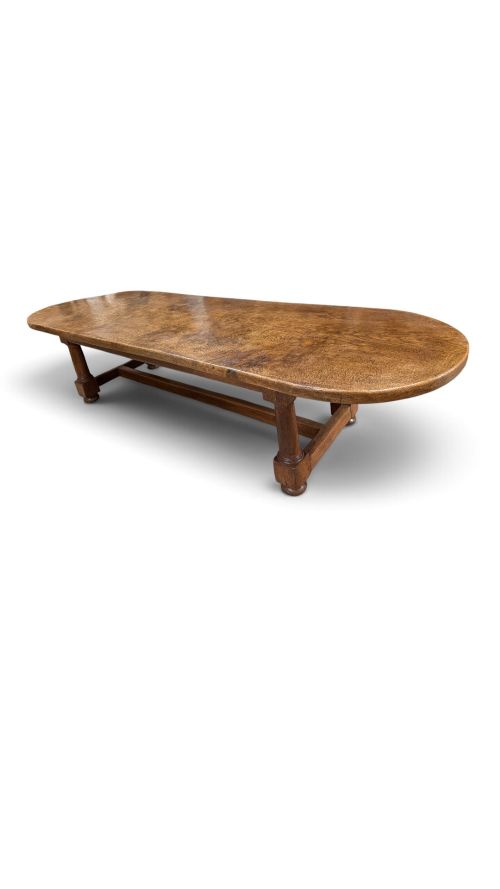
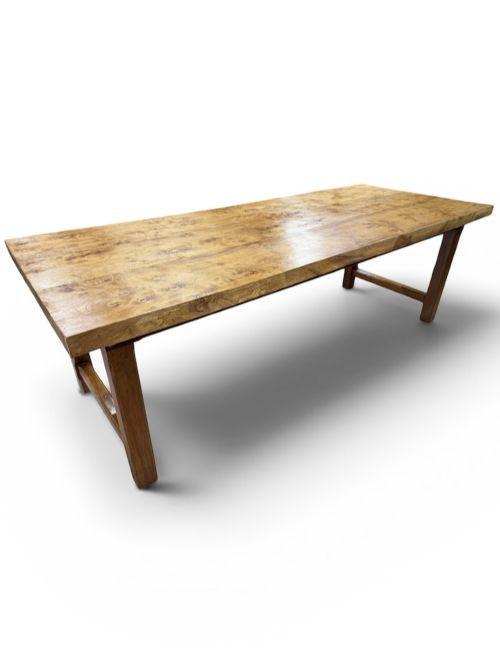
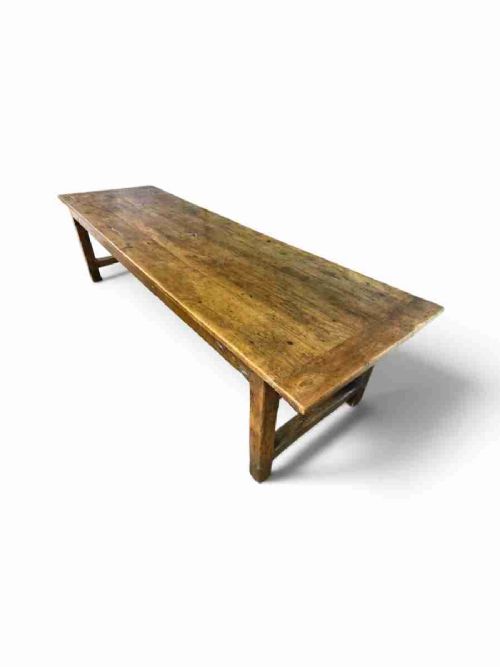
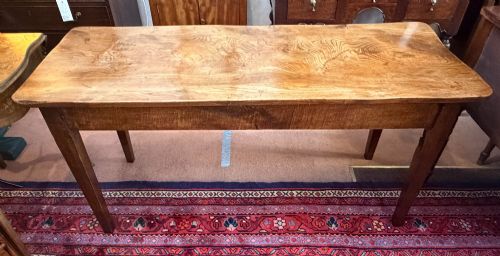
Rustic Oak Plank Table
A rustic oak plank table brings weight and texture to a room, offering a solid timber surface shaped by decades of domestic life.
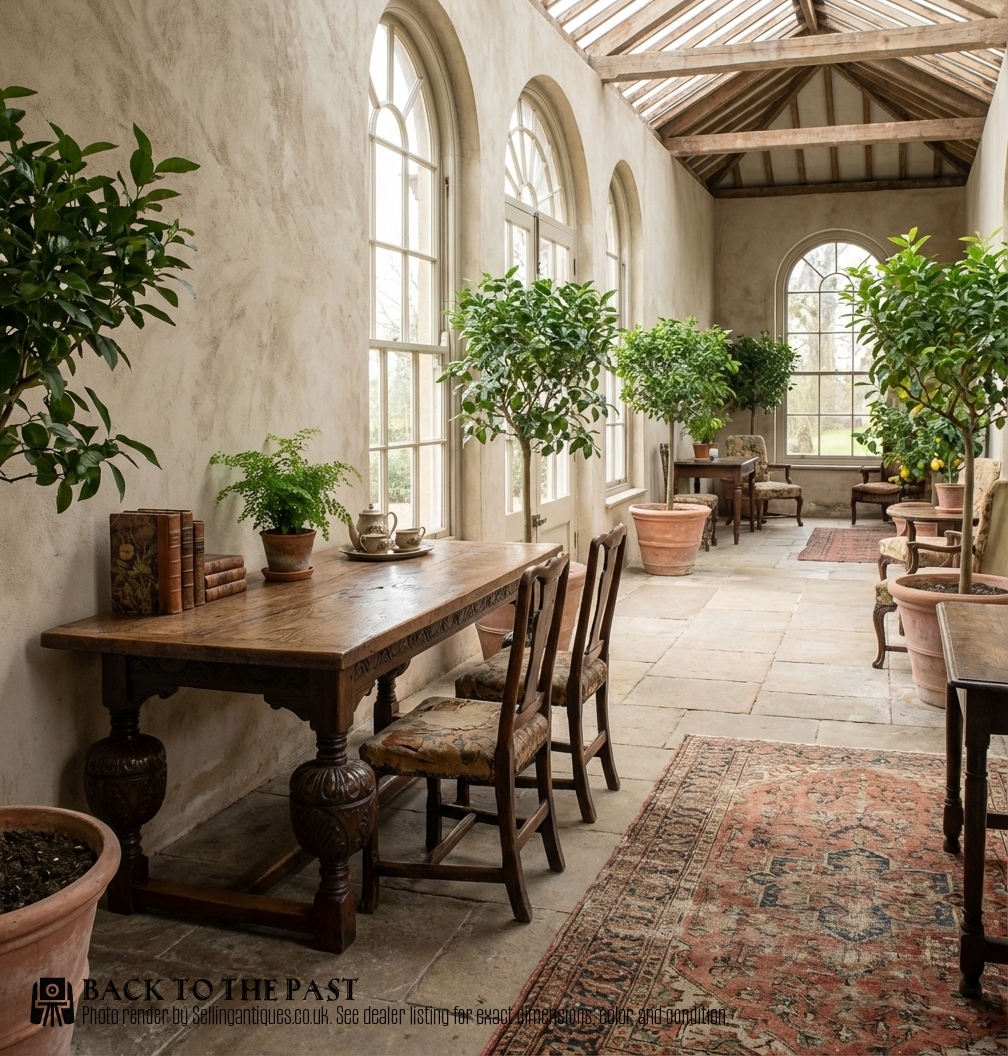
Rustic Oak Plank Table
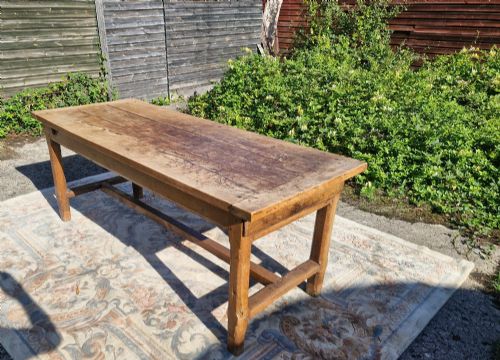
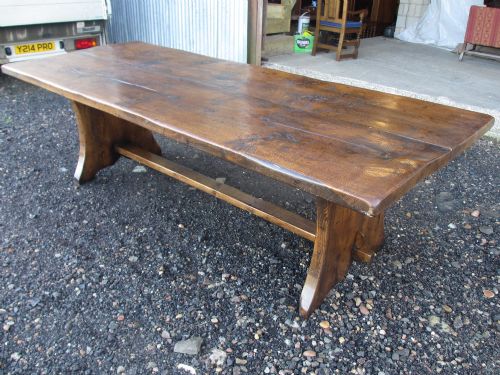
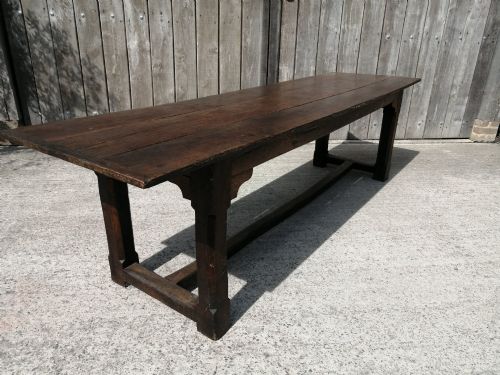
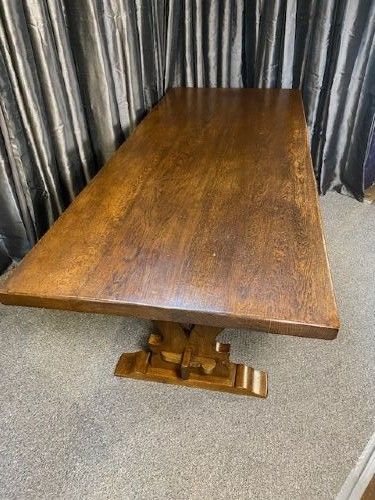
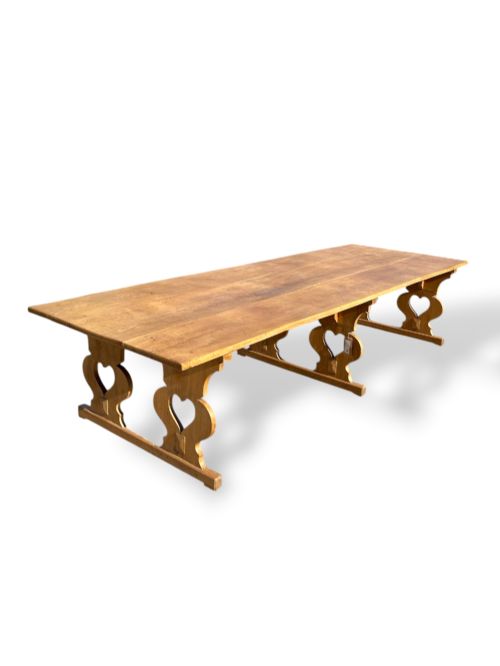
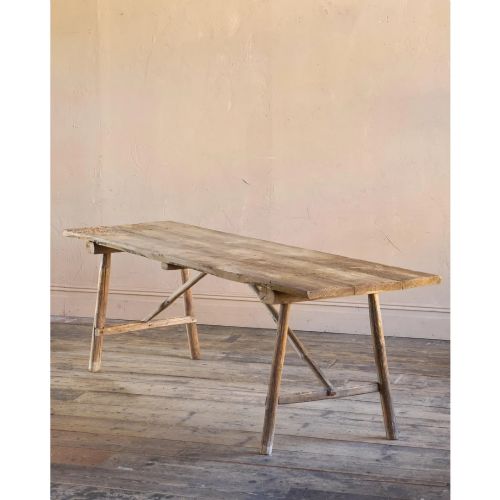
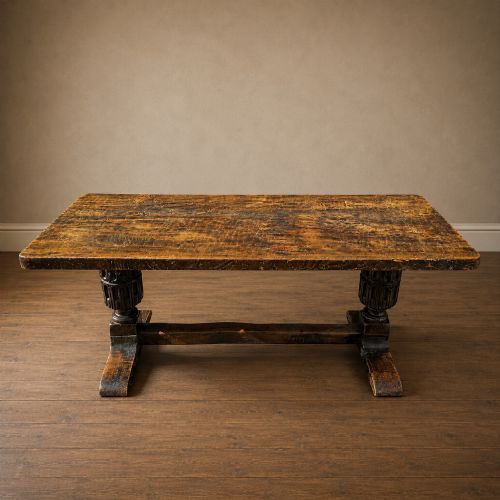
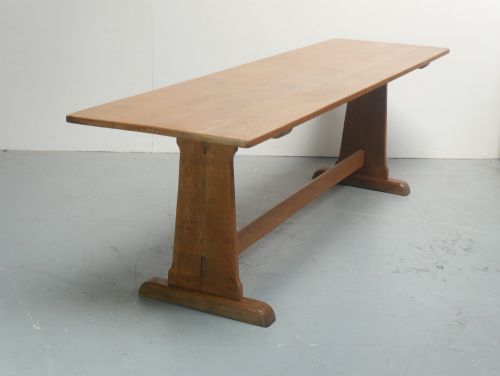
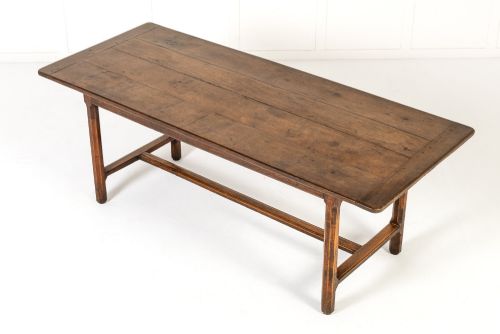
A rustic oak plank table represents the core of domestic utility from past centuries, spanning periods from the seventeenth century through to the Edwardian era. These pieces frequently appear in forms such as farmhouse dining tables, refectory tables, and occasional coffee tables.
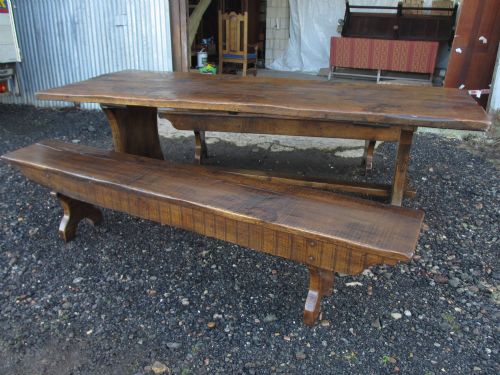
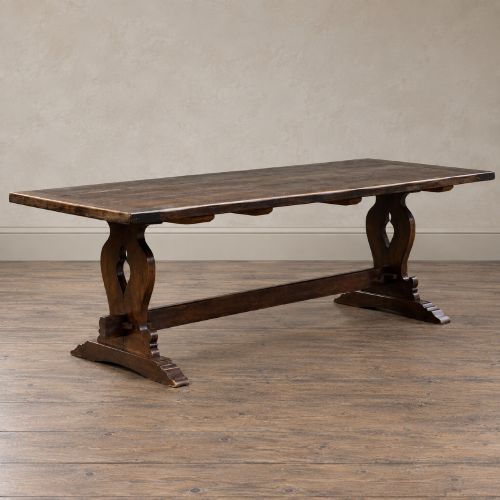
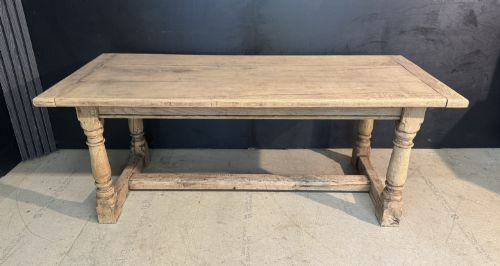
The construction often relies on heavy single or double plank tops supported by trestle ends, turned baluster legs, or substantial timber bases. Buyers frequently encounter examples finished with bread slides, barrel legs, or matching bench forms.
Origins stretch across English country workshops and French provincial kitchens, delivering substantial seating capacities suited for daily gatherings. The surviving forms reflect straightforward carpentry intended for heavy daily service.
Materials and Construction
Makers utilised primary structural timbers of oak, supplemented by elm, pine, beech, and fruitwood for secondary components or specific top sections. Iron fixings and hardware appear where structural reinforcement was necessary.
Joinery methods prioritized durability, utilising thick wooden planks joined to sturdy frames without excessive ornamentation. Surfaces display the natural grain of the wood, sometimes shaped through simple bleaching or left with centuries of earned patina.
Rustic Oak Plank Table Retail Price Guide 2026
Typical asking prices for rustic oak plank table among the pieces listed under this phrase on Sellingantiques today, from the lower quarter to the upper quarter. They describe what is for sale here now, not the wider market.
Listings span seventeenth-century origins through to nineteen-twenties revivals, utilising oak, elm, pine, beech, and fruitwood across refectory and farmhouse formats.
Distinctions in Quality
The standard of a piece rests upon the thickness and integrity of the timber planks forming the top, alongside the rigidity of the underframe. Tables constructed with single or double wide oak planks demonstrate superior material selection compared to multi-board tops.
Proportion and the retention of original timber elements dictate desirability among surviving examples. Pieces retaining their period bases without extensive modern timber replacement hold greater integrity.
The Rustic Oak Plank Table Glossary
- Refectory table
- A long dining table traditionally used in monastic refectories, later adopted for domestic dining with sturdy linear framing.
- Bread slide
- A pull-out wooden board integrated beneath the table top, historically used for cooling bread or extending surface area.
- Gateleg table
- A table with hinged leaves supported by swing-out legs, allowing the surface to fold down when not in use.
- Trestle ends
- Support structures consisting of horizontal feet connected to vertical uprights, holding heavy top planks.
- Baluster legs
- Vertical supports turned on a lathe to feature a swelled profile, common in seventeenth and eighteenth century joinery.
Rustic Oak Plank Table: Frequently Asked Questions
How do I clean a rustic oak plank table?
Wipe surfaces using a damp cloth without harsh chemical detergents. Regular dusting keeps the timber grain clear.
Apply natural beeswax periodically to nourish the dry oak and maintain the historical patina.
Can I seat eight people comfortably?
Many refectory and farmhouse tables accommodate eight to ten diners due to their generous length. Leg placement determines whether chairs tuck underneath properly.
Measure the clearance between trestle ends or table legs before purchasing matching seating.
What causes gaps between the planks?
Solid wood expands and contracts with changes in room humidity and central heating. Seasonal movement is entirely natural for timber tables.
These minor gaps reflect the authentic behaviour of unveneered oak over many decades.
How do I identify an eighteenth century table?
Examine the underside for traditional hand-cut joinery marks and pegged joints. Eighteenth century examples show genuine wear patterns along the edges.
Tool marks and timber shrinkage offer reliable clues to the age of the oak boards.