
Vintage Extendable Dining Table
A vintage extendable dining table offers flexible seating for gatherings, moving fluidly between daily meals and larger occasions.
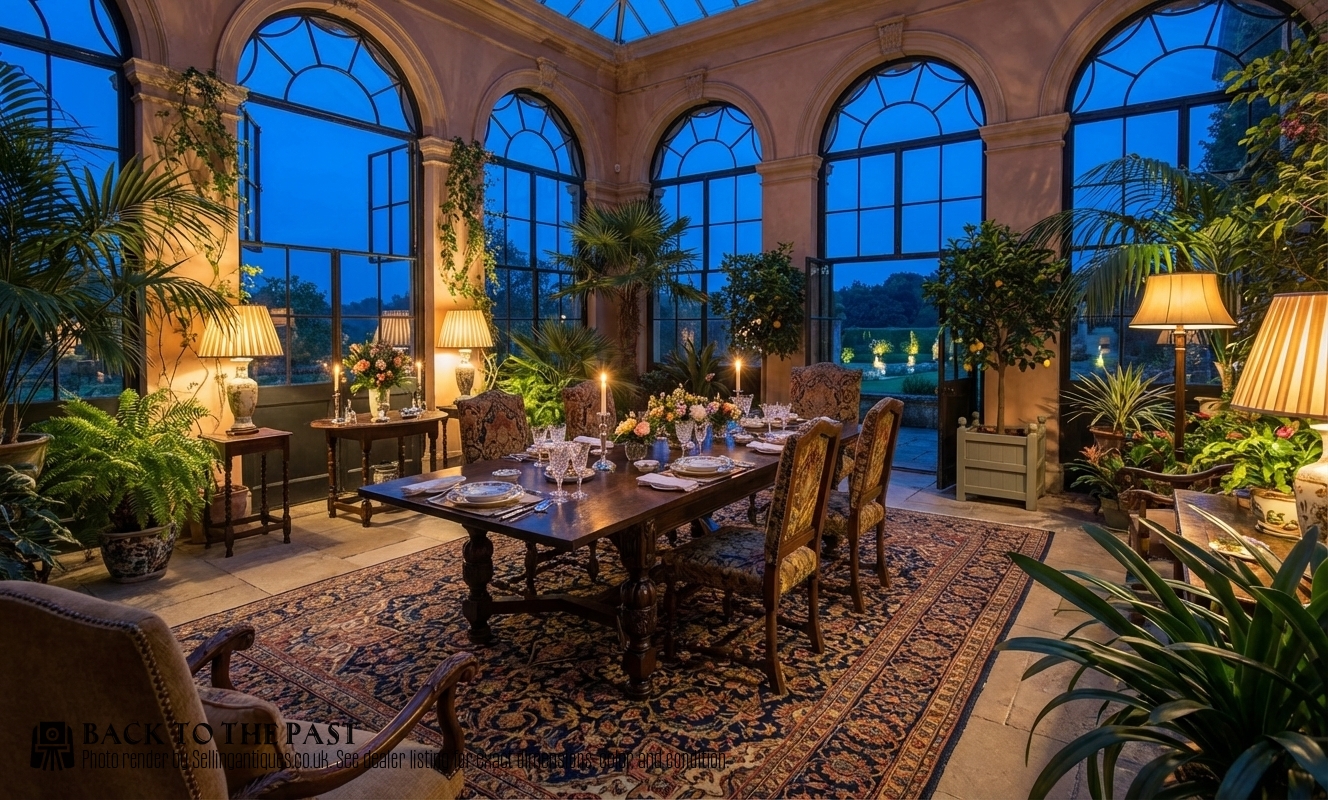
Vintage Extendable Dining Table
A vintage extendable dining table bridges historical craftsmanship and practical daily dining. When searching this phrase, buyers encounter various configurations designed to expand when hosting guests.
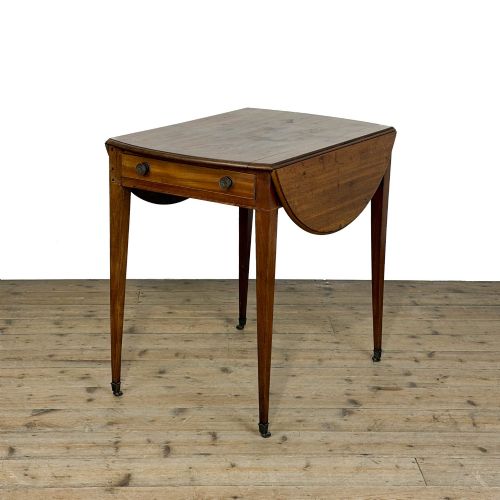
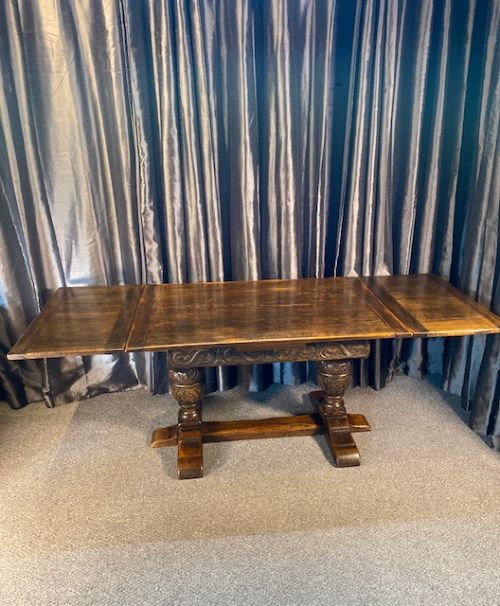
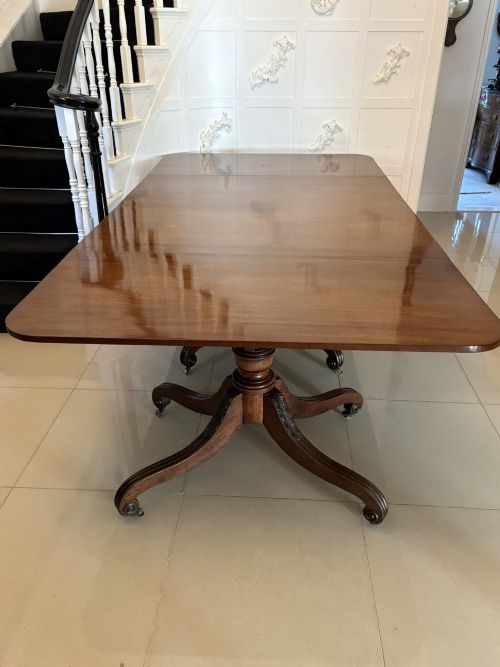
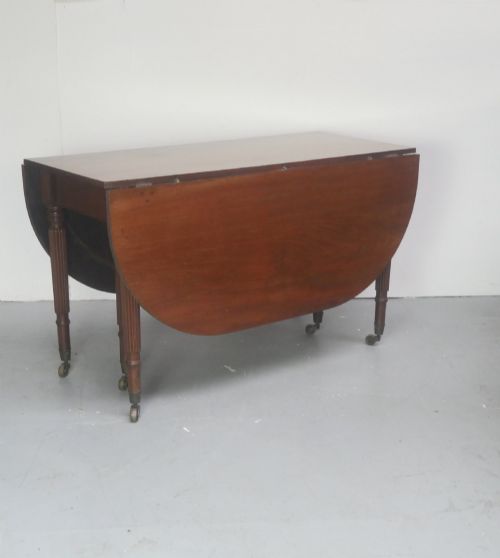
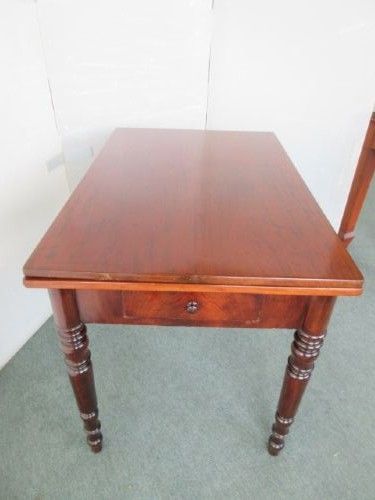
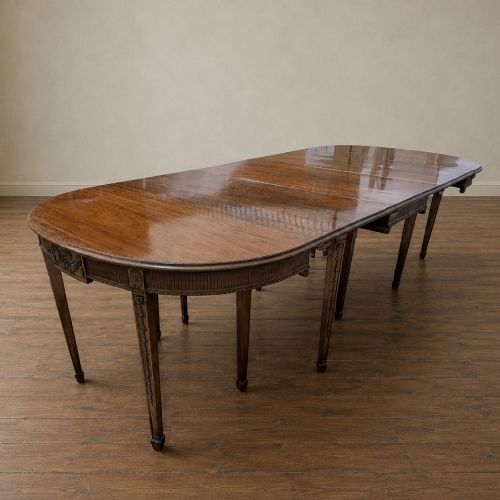
The selections span the nineteenth and twentieth centuries, featuring periods such as the Victorian and Edwardian eras alongside the Regency style and the 1920s. Common forms include multi-pillar tables, draw-leaf designs, and drop-leaf formats.
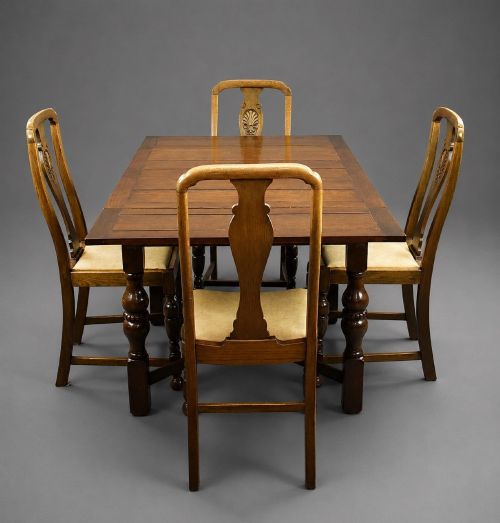
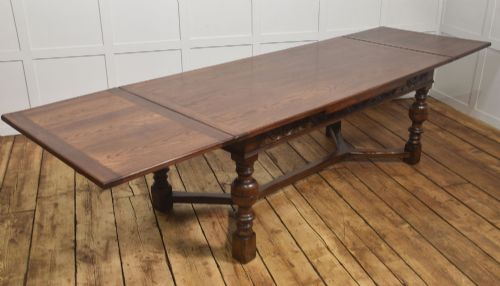
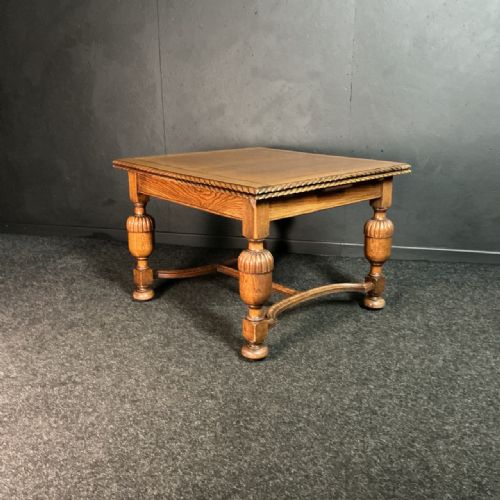
Mahogany and oak dominate the offerings, appearing in forms ranging from wind-out mechanisms to refectory styles. Buyers often meet solid wood construction paired with clever mechanical leaves for effortless daily expansion.
Materials and methods
Cabinetmakers utilised dense timbers like mahogany, oak, and walnut, frequently selecting figured or burr veneers for prominent table surfaces. These woods provided the structural integrity required to support extending mechanisms and heavy daily use.
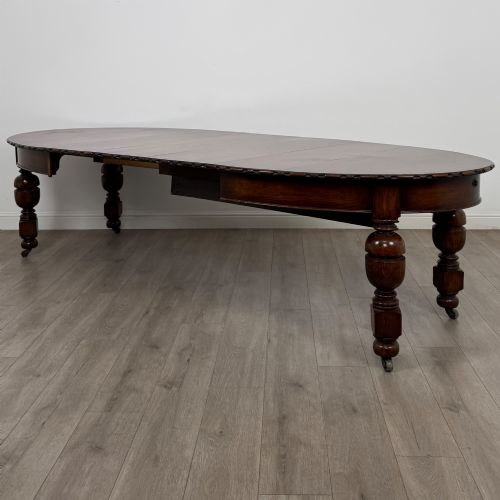
Joinery techniques included draw leaves, drop-leaf hinges, and wind-out screw mechanisms operated by brass handles. These systems allowed heavy dining surfaces to expand smoothly without losing stability or balance.
Vintage Extendable Dining Table Retail Price Guide 2026
Typical asking prices for vintage extendable dining table among the pieces listed under this phrase on Sellingantiques today, from the lower quarter to the upper quarter. They describe what is for sale here now, not the wider market.
Listings feature woods spanning mahogany, oak, walnut, burr walnut, fruitwood, and cherry alongside ceramic and upholstered elements.
Distinctions in craftsmanship
The standard of a vintage extendable dining table rests upon the precision of its extending mechanism and the selection of its timber. Superior examples feature well-fitted leaves that align flush with the main surface when expanded.
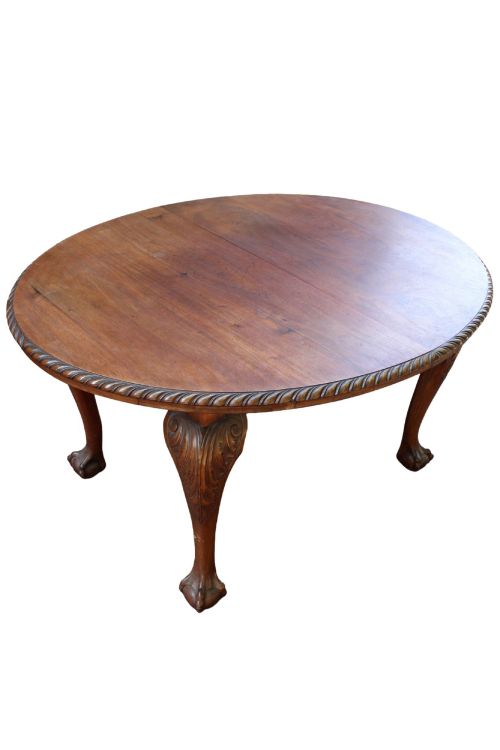
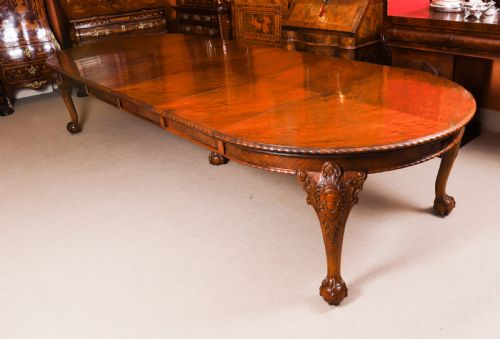
Carved details, such as claw and ball feet or subtle edge inlay, separate standard production pieces from higher-tier workshop output. Timber choice also dictates quality, with figured mahogany and burr walnut commanding greater attention than plain utility woods.
Maple & Co·Whytock & Reid·Hille
The Vintage Extendable Dining Table Glossary
- Draw-leaf
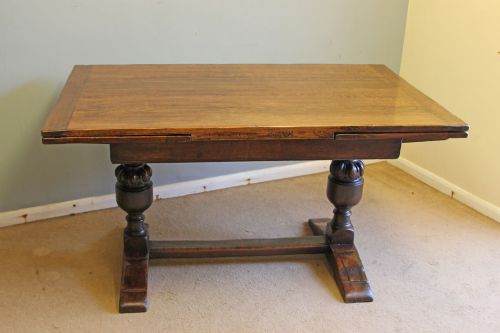
- A table style featuring self-stored leaves hidden beneath the main top that pull out from each end to extend the surface. This mechanism allows quick expansion without removing separate leaf boards.
- Wind-out
- An extending dining system operated by a crank handle that turns an internal wooden or metal screw thread to part the table halves. It allows extra leaves to be inserted into the centre.
- Triple pillar
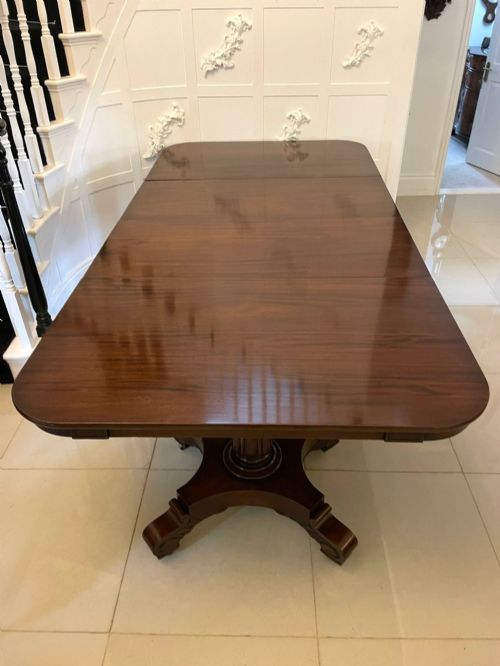
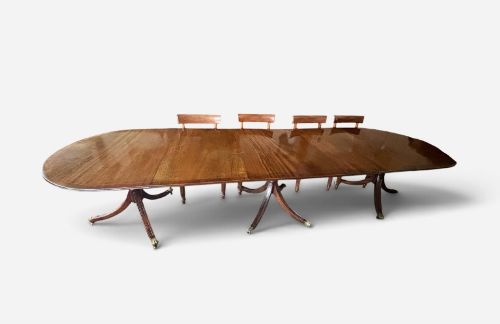
- A table base configuration consisting of three separate pedestals, typically with tripod or multi-legged brass-castor bases supporting a long top. This design accommodates ten to twelve diners.
- Refectory
- A long, narrow dining table style originating in monasteries and great halls, often adapted in the early twentieth century with draw-leaf capabilities. These sturdy pieces usually feature substantial oak legs and stretchers.
Vintage Extendable Dining Table: Frequently Asked Questions
How do wind out tables work?
Wind out tables utilise an internal metal screw mechanism operated by a detachable metal crank handle. Turning the handle separates the table halves evenly to create a gap for insertion leaves.
Once the leaves are dropped into place, the crank is turned in reverse to lock the top securely together. This keeps the surface stable and prevents gaps between the joins.
Where are extra leaves stored?
Many Edwardian and Victorian tables require separate loose leaves to be stored away in a sideboard or dedicated bag when not in use. These boards match the grain and colour of the main top.
Conversely, draw-leaf styles keep their extension panels tucked neatly beneath the main surface. The user simply pulls them out from each end when dining space is needed.
How do I identify a Victorian table?
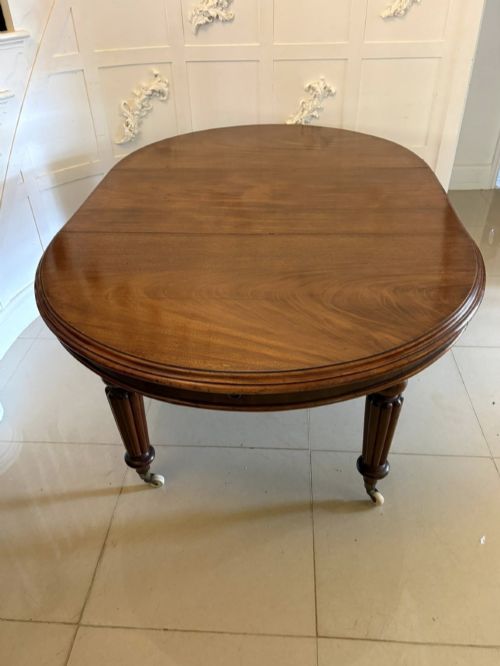
Victorian extendable tables frequently employ heavy mahogany construction paired with substantial turned legs, often resting on brass castors. The timber typically exhibits a deep, rich patina developed over generations of polishing.
Many examples from this era incorporate wind-out systems or drop-leaf configurations. Carved embellishments such as claw and ball feet also point directly towards mid-to-late nineteenth-century production.
Can I seat twelve people?
Yes, larger triple pillar tables dating from the nineteenth and early twentieth centuries frequently extend to accommodate ten or twelve diners comfortably. These substantial pieces often measure eleven to thirteen feet in length when fully opened.
Buyers seeking high seating capacity should look for multi-pillar configurations or long refectory formats. These designs distribute weight evenly across multiple pedestals or sturdy legs to maintain balance.